 Garden
Affiliate Disclosure
Some links on this page are affiliate links. As an Amazon Associate, we earn from qualifying purchases — at no extra cost to you. We do not buy, test, or physically handle the products we cover; our rankings come from aggregated owner reviews, ratings and expert consensus. Commissions never change our verdicts. How we rank · full disclosure.
The most reliable natural way to kill weeds is to combine hand-pulling and mulching for garden beds with boiling water or horticultural vinegar for weeds in cracks and paths. Pulling removes the whole plant (roots and all) when the soil is moist; a thick mulch smothers new weeds before they start; and boiling water or strong vinegar spot-kills weeds in pavement where nothing should grow. No natural method matches a synthetic systemic herbicide for one-pass control of deep-rooted perennials, so persistence and repetition are the trade for safety.
Below is what each natural method actually does, where it works, and where it disappoints — plus how to stop weeds coming back, which matters more than any single kill. Our guidance reflects extension research and gardener consensus rather than first-hand trials, as described in how we rank.
Hand-pulling: still the best for perennials
For weeds with taproots or spreading roots — dandelions, thistle, bindweed, dock — pulling beats spraying because it removes the whole plant rather than just burning the top. The catch is getting the entire root.
- Pull when the soil is moist, after rain or watering, so the roots slide out rather than snapping.
- Grip low, at the base of the plant, and pull slowly and steadily straight up to lift the root intact.
- Use a weeding tool for taproots — a fishtail weeder or dandelion fork levers out the full root of dandelions and similar.
- Remove pulled weeds from the bed, especially any that have set seed, so they do not reroot or scatter seed.
Fragments of some perennials (bindweed, quackgrass) resprout from small root pieces, so those need repeated pulling over a season to exhaust the roots. Consistency wins.
Mulch: prevention that does the heavy lifting
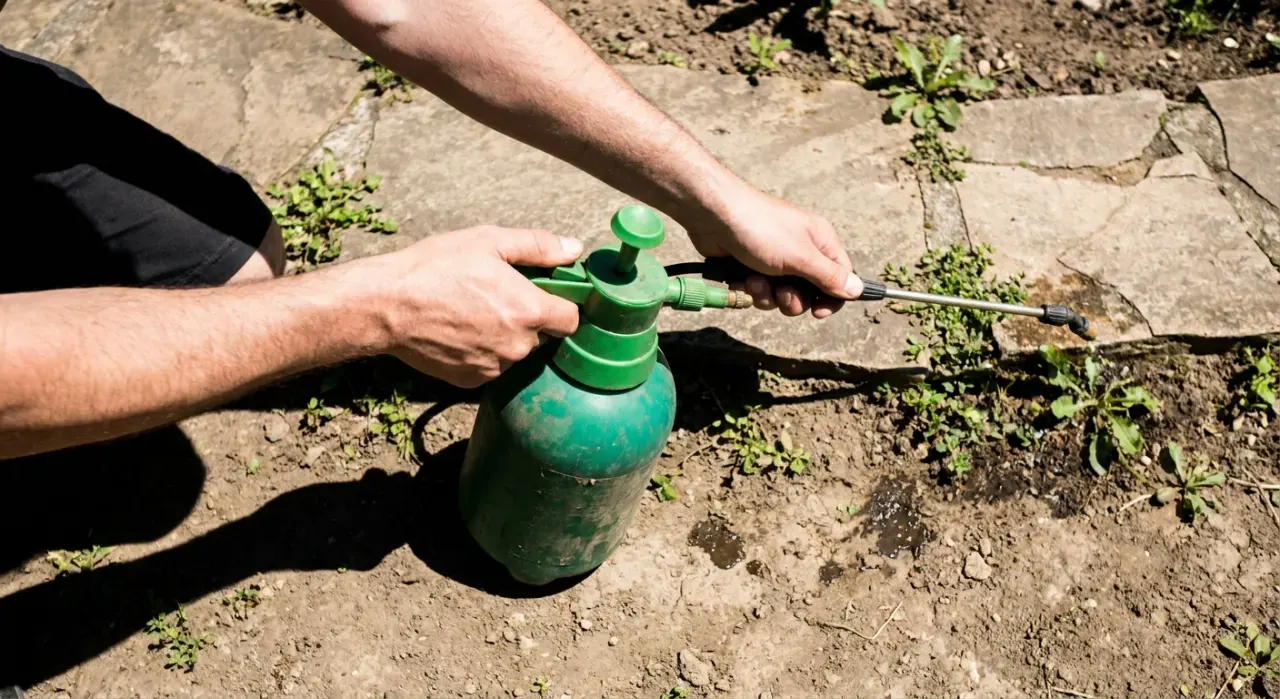
The single most effective natural weed strategy is not killing weeds but preventing them, and mulch is how. A thick mulch layer blocks the light weed seeds need to germinate and smothers small seedlings.
- Apply 2 to 3 inches of organic mulch — bark, wood chips, straw, or shredded leaves — over weed-free soil around plants.
- Lay cardboard or several sheets of newspaper underneath for stubborn areas; it smothers existing weeds as it breaks down (a technique called sheet mulching).
- Keep mulch a couple inches off plant stems to prevent rot.
- Refresh it as it decomposes, since a thinning layer lets weeds back in.
Mulch also conserves moisture and feeds the soil as it breaks down, so it does several jobs at once. For choosing the right material, see best mulch for flower beds.
Boiling Water to Kill Weeds Naturally
For weeds in driveway cracks, patio joints, and gravel paths, a kettle of boiling water is one of the best natural tools there is — free, instant, and chemical-free.
- Boil a full kettle and carry it carefully to the weeds.
- Pour directly over the crown and base of each weed, soaking the root zone.
- Repeat on regrowth for deep-rooted perennials, which often need two or three treatments.
Boiling water is completely non-selective and will kill or scald any plant it touches, so keep it away from grass and ornamentals. It is ideal precisely where you want nothing to grow at all.
Vinegar for Killing Weeds Naturally
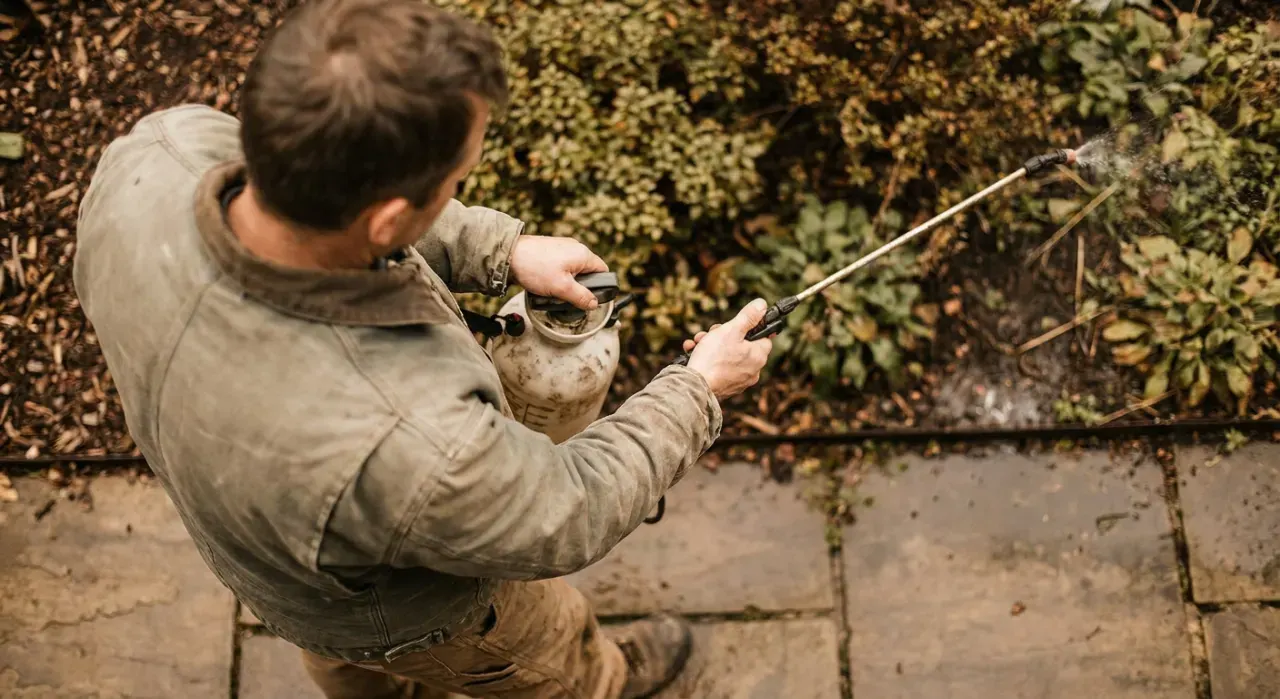
Vinegar is the most misunderstood natural weed killer. The acetic acid burns plant tissue on contact, but strength matters enormously.
| Type | Acetic acid | What it does |
|---|---|---|
| Household vinegar | 5% | Burns tops of young annual weeds; roots usually survive and regrow |
| Horticultural vinegar | 20 to 30% | Kills many weeds outright; caustic, needs eye and skin protection |
Apply on a hot, sunny day for best effect, spray to thoroughly wet the foliage of young weeds, and expect to repeat on established perennials. Adding a little dish soap helps it stick. Remember vinegar is non-selective — it kills whatever it lands on — and horticultural-strength vinegar is a genuine acid that demands gloves and eye protection. It can also acidify soil with repeated use, so keep it out of beds you plan to plant. Compare with conventional options in best weed killer.
Other natural methods and their limits
Several more natural tactics have a place, each with clear boundaries.
- Flame weeding — a propane weed torch briefly heats weeds until their cells burst; excellent for cracks and gravel, but a fire risk in dry conditions and never for use on or near mulch or dry vegetation.
- Corn gluten meal — a natural pre-emergent that suppresses seed germination; it does not kill existing weeds and results are inconsistent, but it is a soil-safe preventive for lawns.
- Smothering with tarps or landscape fabric — blocks light to clear a whole area over weeks; effective for reclaiming beds before planting.
- Solarization — covering moist soil with clear plastic through hot summer weeks cooks weed seeds in the top layer.
Notably avoid using salt in garden areas: it works but persists in soil and can sterilize the ground and leach into nearby beds. Reserve it, if at all, for pavement you never intend to plant.
Preventing weeds long term
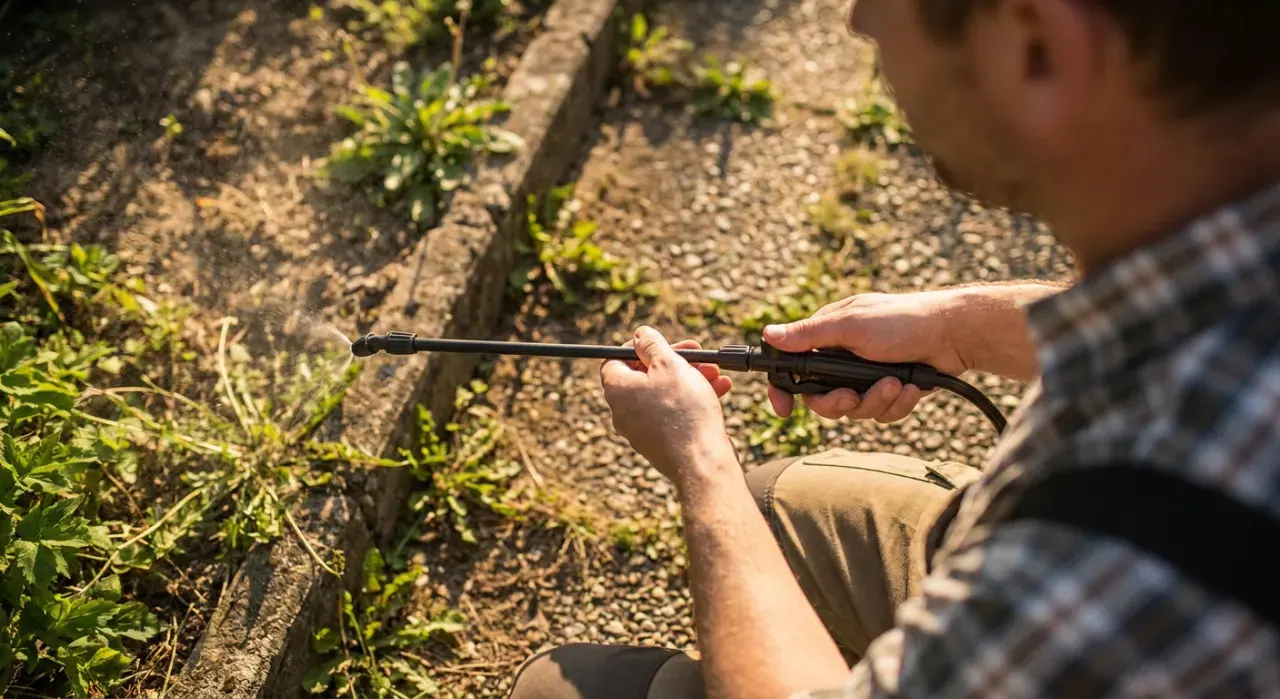
Killing weeds one by one is endless; the real win is a garden that resists them. Natural weed control is mostly prevention.
- Keep soil covered — mulch, dense planting, or groundcovers leave no bare ground for weeds to colonize.
- Do not let weeds set seed. One season of seeding fills the soil seed bank for years; the old saying "one year's seeding, seven years' weeding" holds.
- Weed little and often when weeds are small and easy, rather than facing a jungle.
- Plant densely so desirable plants outcompete weeds for light and space.
- Improve the lawn's health so thick turf crowds out weeds; see how to identify lawn weeds.
Common Natural Weed-Killing Mistakes
A few errors undercut natural weed control.
- Expecting 5 percent vinegar to kill perennials. It burns tops only; use horticultural strength or pull the roots.
- Using salt in beds. It sterilizes soil for a long time and migrates into surrounding areas.
- Leaving bare soil. Uncovered ground is an open invitation; mulch it.
- Letting weeds seed before dealing with them. This multiplies next year's work enormously.
- Flame weeding near mulch or in dry conditions. A real fire hazard; keep it to damp cracks and pavement.
For the fuller chemical-free approach, see kill weeds without chemicals, and if you decide a targeted product is warranted, compare options in best weed killer. Everything else is at the pest and weed control hub.