 Garden

Affiliate Disclosure
Some links on this page are affiliate links. As an Amazon Associate, we earn from qualifying purchases — at no extra cost to you. We do not buy, test, or physically handle the products we cover; our rankings come from aggregated owner reviews, ratings and expert consensus. Commissions never change our verdicts. How we rank · full disclosure.
To treat septoria leaf spot, strip the affected lower leaves, mulch to stop soil splash, and protect the healthy foliage with copper or chlorothalonil. Septoria leaf spot is a fungal disease (Septoria lycopersici) of tomatoes that shows as many small, round spots with tan centers and tiny black specks, starting on the oldest, lowest leaves and climbing the plant. Infected leaves cannot be healed, but removing them early, improving airflow, and applying a protectant on schedule keeps the plant productive. Always follow the label.
We do not test or physically handle the plants and products we cover; our guidance draws on horticultural extension research and the aggregated experience in thousands of owner reviews, as explained in how we rank.
What septoria leaf spot is and how to confirm it
Septoria leaf spot is caused by the fungus Septoria lycopersici. It is primarily a tomato disease, though it can affect other members of the nightshade family and related weeds. It attacks leaves and stems but rarely the fruit directly — the damage to the crop comes from losing so much foliage that the plant weakens and the tomatoes are exposed to sun.
The diagnostic sign is the spot: numerous small, circular lesions, usually about an eighth of an inch across, each ringed by a dark brown margin around a lighter tan or gray center. The giveaway is in those centers — tiny black dots, the fungal fruiting bodies (pycnidia), visible with a hand lens. A single leaf can carry dozens of these spots, far more than early blight produces. As the spots multiply the leaf yellows and dies, and infection moves up the plant from the oldest leaves toward the youngest.
It favors warm, wet, humid weather. The fungus overwinters on infected debris and on nightshade weeds, and spreads by splashing water — rain or overhead irrigation throwing spores from the soil and lower leaves onto foliage above.
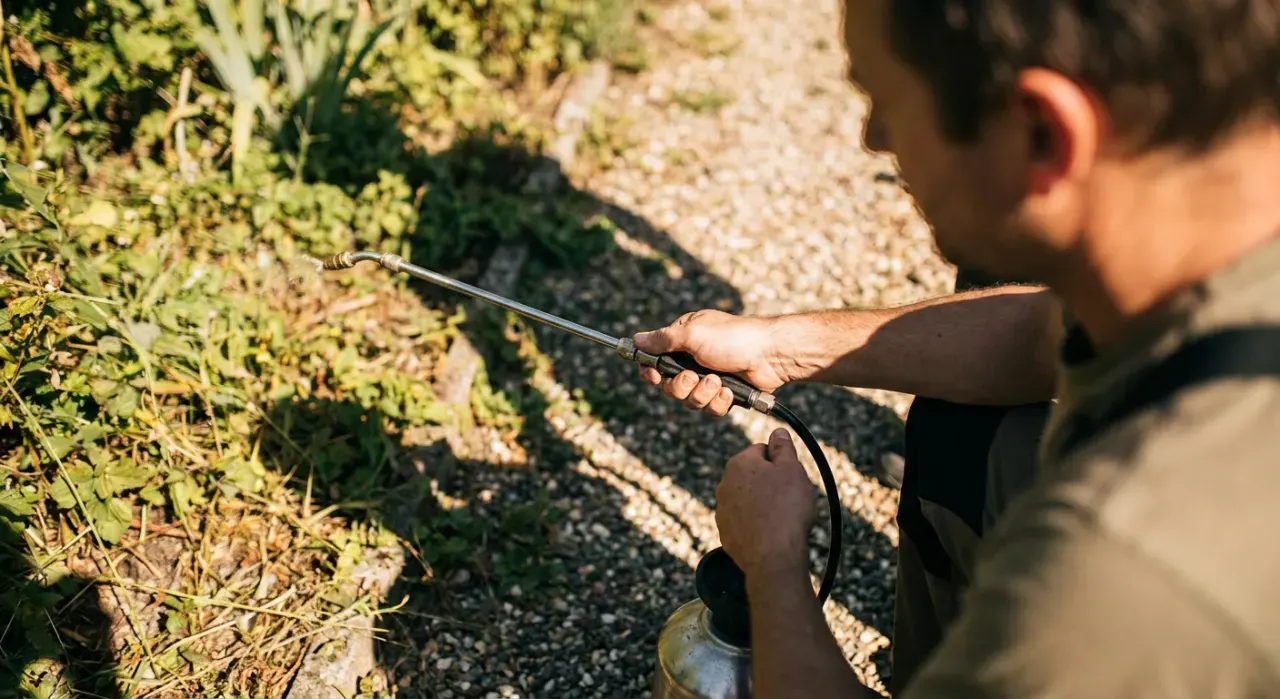
Telling septoria from early and late blight
| Disease | Spot appearance | Number of spots | Pathogen |
|---|---|---|---|
| Septoria leaf spot | Small, tan center, dark margin, black specks | Many per leaf | Fungus (Septoria) |
| Early blight | Larger, dark, concentric rings, yellow halo | Fewer, larger | Fungus (Alternaria) |
| Late blight | Large greasy gray-green blotches, white fuzz below | Spreading blotches | Water mold (Phytophthora) |
Many tiny speck-centered spots mean septoria. Few large bullseyes mean early blight — see how to treat early blight. Large, fast, greasy blotches mean late blight, covered in how to treat tomato blight.
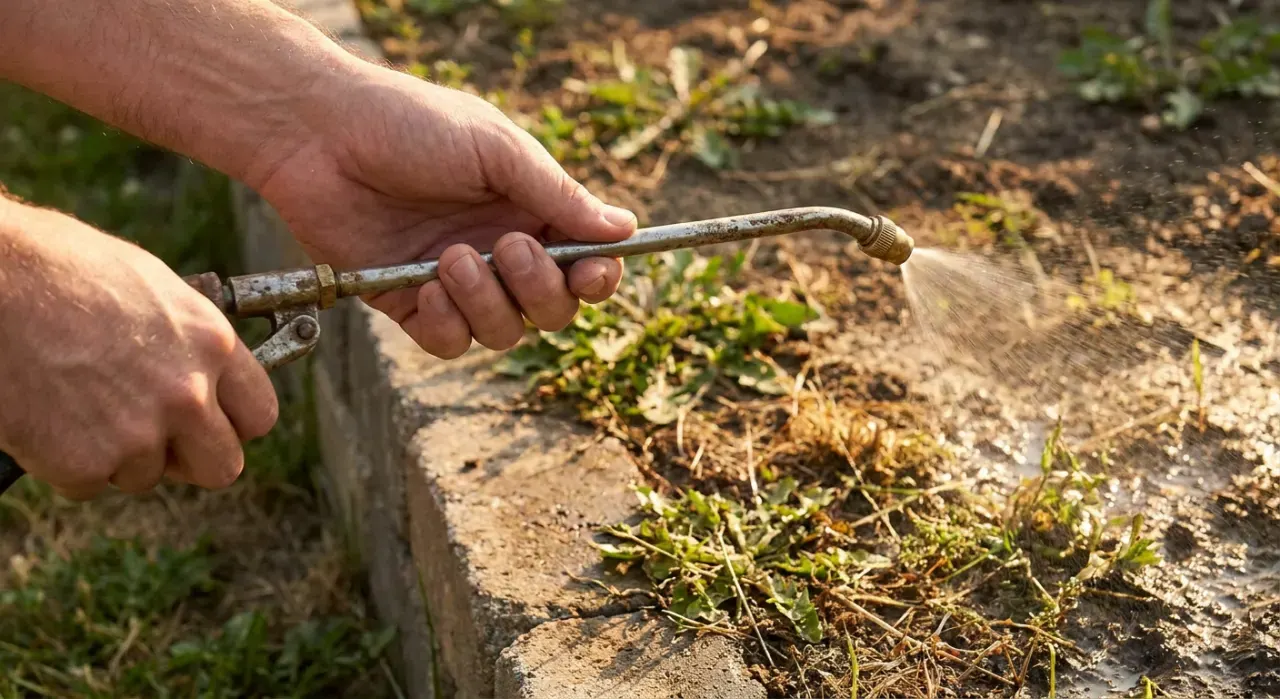
The treatment path, least-toxic first
- Sanitation — Remove and bag infected lower leaves as soon as you see them, and clear fallen debris. Do not compost diseased tomato foliage back into your beds.
- Cultural correction — Mulch heavily to block the soil splash that carries spores up, stake or cage plants off the ground, thin for airflow, and water at the base in the morning so leaves dry fast.
- Organic protectants — Apply copper (copper hydroxide or copper octanoate) or a Bacillus-based biofungicide to healthy foliage, covering both surfaces, and reapply after rain per label.
- Broad protectant fungicides — For stronger protection, chlorothalonil or mancozeb are the standard home-garden choices, applied preventively on schedule.
- Rotate actives — Alternate active ingredients through the season to slow resistance.
These products protect healthy tissue rather than cure infected leaves, so start early and keep coverage up through wet stretches. Read the label — in the United States the pesticide label is legally binding under FIFRA, and it states the approved crops, the rate, and the days-to-harvest interval you must respect before picking tomatoes.
Why mulch and lower-leaf removal matter most
Septoria, like early blight, gets onto the plant mainly by splashing from the soil and lowest leaves. Two low-cost habits break that path. A thick mulch layer covers the soil so rain and irrigation cannot throw spore-laden droplets onto the foliage. Removing the bottom several inches of leaves takes away the first rung the fungus climbs, and keeps the canopy off the ground where it dries faster. Done early and kept up, these two moves often do more than any spray and cost nothing.
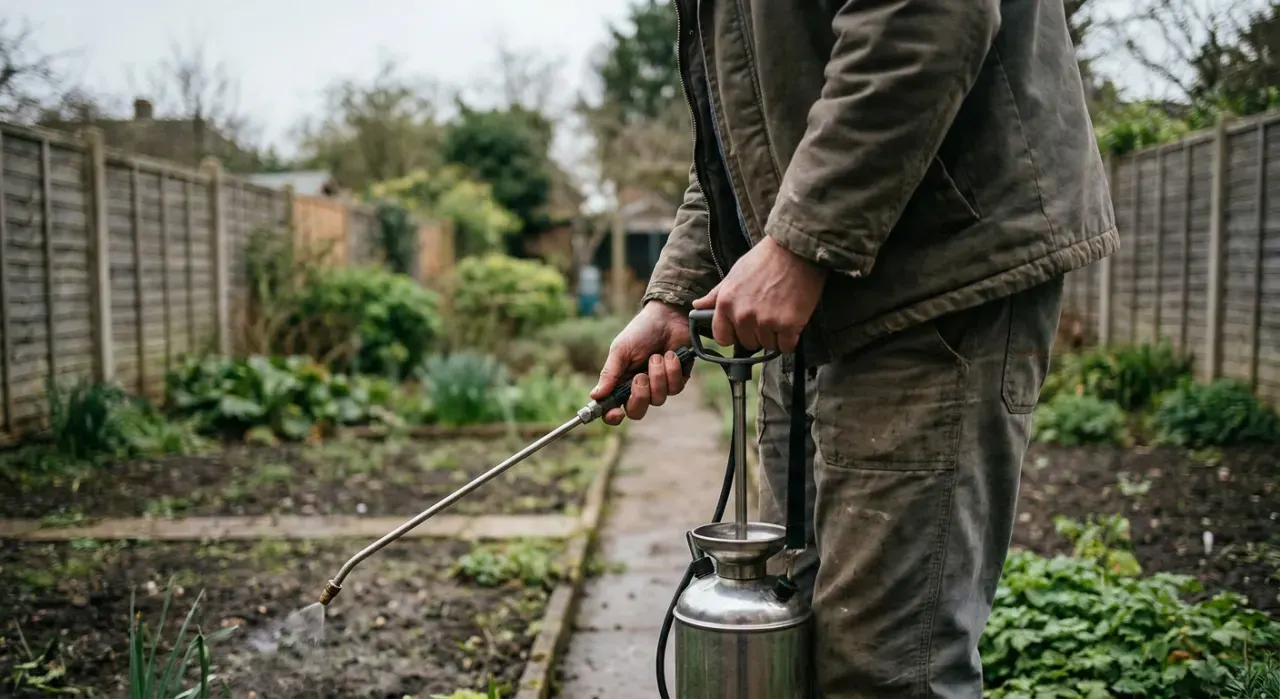
Why septoria climbs the plant, and how to stay ahead of it
Understanding the pattern of spread makes the timing of your response obvious. The fungus starts low because that is where the spores land first — from overwintered debris and soil at the base of the plant — and each new generation of spores produced in those tiny black pycnidia is splashed and blown a little higher. Every rain or overhead watering event moves the front upward. That is why the disease appears to creep from the ground toward the growing tips over the course of weeks.
The practical lesson is that you win by staying above the front rather than chasing it. Remove leaves at and just below the lowest healthy foliage before the spots reach them, keep mulch intact so the base is never re-inoculated by splash, and lay down protectant on the leaves in the upper canopy that you most need to keep — those are the ones feeding the fruit. Once you are consistently working ahead of the climb, a plant can carry a light infection at its base all season and still ripen a full crop up top. Fall behind, and the same plant is bare from the ground up by late summer with fruit exposed to sunscald.
Warm, wet years accelerate everything, so scout more often after rainy spells and tighten your protectant schedule when humidity stays high. In a dry summer with careful base watering, septoria may barely register at all.
Preventing it next season
- Sanitation — clear and dispose of all tomato debris at season's end, and pull nearby nightshade-family weeds that harbor the fungus.
- Crop rotation — keep tomatoes out of the same bed for a couple of years to let soil inoculum decline.
- Mulch — a permanent barrier against soil splash.
- Spacing and support — cage or stake for airflow and to lift foliage off the soil.
- Base watering in the morning — keep leaves dry.
- Routine lower-leaf removal — take off the bottom leaves early, and start a protectant program in warm wet spells before symptoms build.
For the other problems that hit tomatoes, compare how to treat blossom end rot (a calcium and watering issue) and the two blight pages linked above.
Related: Pest & Weed Control hub and how we rank.