 Garden

Affiliate Disclosure
Some links on this page are affiliate links. As an Amazon Associate, we earn from qualifying purchases — at no extra cost to you. We do not buy, test, or physically handle the products we cover; our rankings come from aggregated owner reviews, ratings and expert consensus. Commissions never change our verdicts. How we rank · full disclosure.
To treat tomato blight, first tell which one you have, then strip affected leaves, mulch, and protect the healthy foliage with copper or chlorothalonil. "Tomato blight" covers two diseases: early blight (the fungus Alternaria), which creeps up slowly with target-ring spots and is manageable, and late blight (the water mold Phytophthora infestans), which explodes with greasy gray-green blotches and can kill plants in days. Early blight you manage; late blight often means removing and destroying plants to protect others. Infected leaves cannot be healed; protectants defend the rest. Always follow the label.
We do not test or physically handle the plants and products we cover; our guidance draws on horticultural extension research and the aggregated experience in thousands of owner reviews, as explained in how we rank.
The two blights, and why the difference matters
Both diseases are called tomato blight and both hit tomatoes and potatoes, but they are biologically different and demand different responses, so identification is the first job.
Early blight is caused by the fungus Alternaria solani. It starts on the oldest, lowest leaves as dark brown spots with concentric rings inside them — a bullseye or tree-ring pattern — ringed by a yellow halo, and works its way up the plant leaf by leaf over weeks. It also produces dark, leathery, ringed rot at the stem end of fruit. It is a slow, chronic disease you can usually live with and manage all season.
Late blight is caused by Phytophthora infestans, an oomycete or water mold — the same pathogen that caused the Irish potato famine. It appears as large, irregular, water-soaked blotches that look greasy and are gray-green to brown, on leaves, stems and green fruit alike. In humid weather a telltale white fuzzy growth develops at the blotch margins on leaf undersides. It spreads explosively in cool, wet, humid weather, can destroy a plant in a matter of days, and can travel on the wind to gardens far away. Firm brown lesions on green fruit are a classic sign.
How to Tell the Two Tomato Blights Apart Quickly
| Feature | Early blight | Late blight |
|---|---|---|
| Pathogen | Fungus (Alternaria) | Water mold (Phytophthora infestans) |
| Spots | Dark, concentric target rings, yellow halo | Large greasy gray-green water-soaked blotches |
| Underside | Nothing distinctive | White fuzzy growth in humidity |
| Speed | Slow, bottom-up over weeks | Explosive, whole plant in days |
| Weather | Warm, alternating wet/dry | Cool, wet, humid |
| Response | Manage and keep producing | Often remove and destroy plants |
Slow decline from the bottom with ringed spots is early blight; fast, greasy, whole-plant collapse in cool wet weather is late blight. If you want the detailed early-blight-only plan, see how to treat early blight; and rule out the third look-alike with how to treat septoria leaf spot.
Treating Early Tomato Blight
- Sanitation — Remove and bag infected lower leaves and any fruit with stem-end rot; do not compost diseased debris.
- Cultural correction — Mulch heavily to block soil splash, stake or cage plants off the ground, thin for airflow, water at the base in the morning, and keep plants well fed and unstressed.
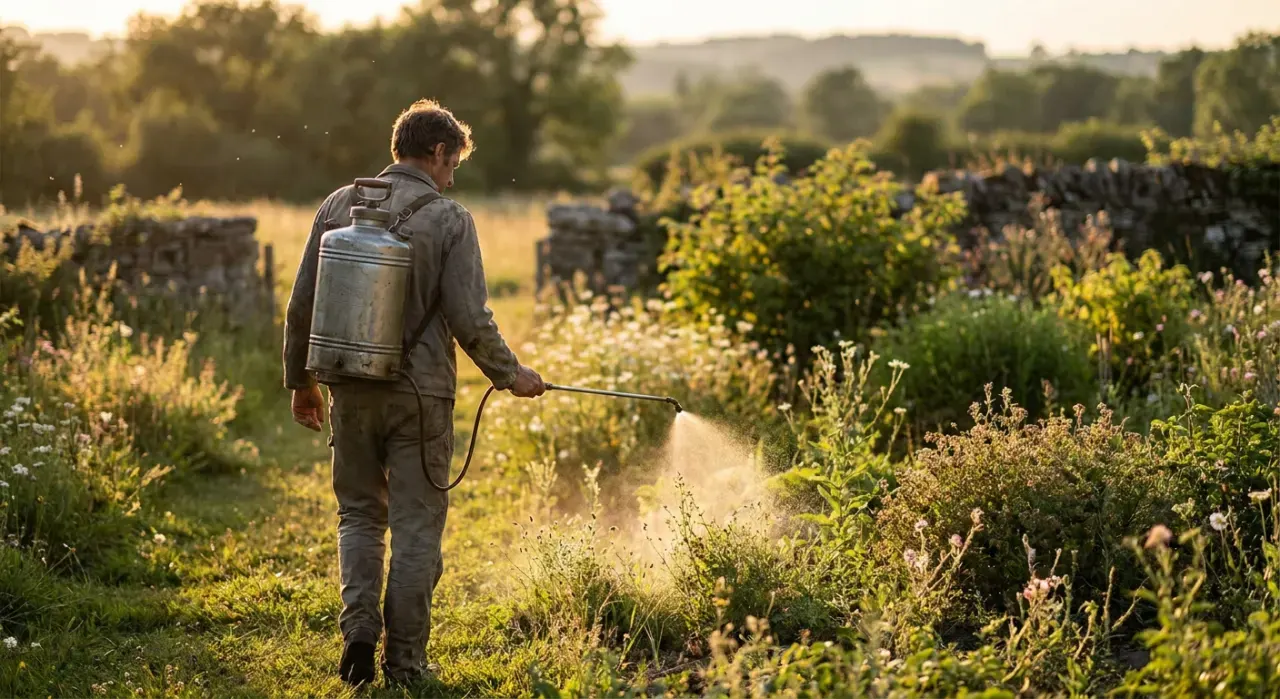
- Organic protectants — Apply copper or a Bacillus-based biofungicide to healthy foliage, covering both surfaces, and reapply per label.
- Broad protectant fungicides — Chlorothalonil or mancozeb give stronger protection applied preventively; rotate actives to slow resistance.
Early blight is a marathon: start early, keep coverage up, and you can usually hold it below the fruit and harvest normally.
Treating Late Tomato Blight — Act Fast
- Identify and act immediately — Late blight moves in days, so speed matters more than with any other tomato disease.
- Remove and destroy — Pull entire infected plants, bag them, and dispose of them (or, where permitted, burn or deep-bury) rather than composting. This protects your remaining plants and neighboring gardens from the wind-borne spores.
- Protect the rest — On healthy plants nearby, apply a protectant that specifically lists late blight — copper or chlorothalonil are common choices — before the disease reaches them, and reapply after rain.
- Guard the potatoes too — Because late blight also hits potatoes, remove infected potato foliage, and never leave cull potatoes or volunteers that let it overwinter.
A key product note: late blight is a water mold, so confirm the label names late blight, since some fungicides aimed at true fungi are weaker against oomycetes. And read the label generally — in the United States the pesticide label is legally binding under FIFRA and states the approved crops, rate, and days-to-harvest interval.
What to do about the fruit
With early blight, fruit is usually fine apart from the occasional stem-end rot, which you simply cut out. With late blight, firm brown lesions can appear on green and ripening fruit; badly affected fruit should be discarded rather than eaten or stored, as the lesions rot quickly. Green fruit from a plant you are removing for late blight can sometimes be ripened indoors if it shows no lesions, but inspect it closely first and discard anything with a spot. When in doubt, do not store questionable fruit, because a single infected tomato can rot a whole batch.
Preventing both blights next season
- Blight-tolerant varieties — Mountain Magic, Defiant, Iron Lady and similar tolerate both blights far better than heirlooms.
- Sanitation — clear and dispose of all tomato and potato debris; remove cull potatoes and volunteers that carry late blight over winter.
- Crop rotation — keep tomatoes and potatoes out of the same bed for two to three years.
- Mulch — a permanent barrier against the soil splash that spreads early blight.
- Spacing, staking and base watering — airflow and dry foliage slow both diseases.
- Routine lower-leaf removal and preventive protectant — take off the bottom leaves early and begin protection before symptoms during warm wet or cool wet spells.
For the tomato problems that are not blight at all, see how to treat tomato leaf curl and how to treat blossom end rot.
Related: Pest & Weed Control hub and how we rank.