 Garden

Affiliate Disclosure
Some links on this page are affiliate links. As an Amazon Associate, we earn from qualifying purchases — at no extra cost to you. We do not buy, test, or physically handle the products we cover; our rankings come from aggregated owner reviews, ratings and expert consensus. Commissions never change our verdicts. How we rank · full disclosure.
Yes. A True HEPA air purifier captures pet dander effectively, because dander particles are well within the size range HEPA media is certified to trap. True HEPA removes at least 99.97 percent of particles at 0.3 micrometers, and a meaningful share of airborne cat and dog allergen travels on particles between 1 and 5 micrometers. The limit is what a purifier cannot reach: most dander settles onto carpet, upholstery and bedding within minutes, where it is stirred back up by movement. Filtration plus vacuuming plus washing pet bedding is the combination that works.
We never buy, test or physically handle the products we rank; recommendations come from aggregated owner reviews and expert consensus, described in how we rank. More at the pets at home hub. This page is general information, not medical advice.
What exactly is pet dander?
It is not hair. Dander is microscopic flakes of shed skin, and the allergenic part is a set of proteins carried on those flakes and in saliva, urine and sebaceous secretions. In cats the principal allergen is Fel d 1, produced in skin and saliva and spread across the coat during grooming; in dogs the main ones are Can f 1 and Can f 2. Because the proteins ride on very small, light particles, they stay airborne longer than household dust and travel on clothing into homes and buildings with no pets at all, which is why cat allergen is detectable almost everywhere.

What should you look for in a purifier?
Three specifications, and one thing to avoid:
| Specification | What to look for |
|---|---|
| Filter type | True HEPA with a stated 99.97% at 0.3 micrometers |
| CADR | Enough for 4–5 air changes per hour in the room |
| Sealed housing | Air must pass through the filter, not around it |
| Noise at working speed | Under about 50 dB so it can run continuously |
| Avoid | Ozone generators; the EPA advises against them indoors |
How big does the purifier need to be?
Size by air changes, not by the box claim. The Association of Home Appliance Manufacturers publishes CADR figures for smoke, dust and pollen, and a widely used rule is a smoke CADR of at least two-thirds of the room area in square feet. For allergen control, aim higher, at four to five air changes per hour, which usually means choosing a unit rated for roughly twice your actual room size. The practical benefit of oversizing is quiet: a large unit on low moves the same air as a small unit on high, and a purifier that is too loud to leave running does nothing.
What else reduces dander in the home?
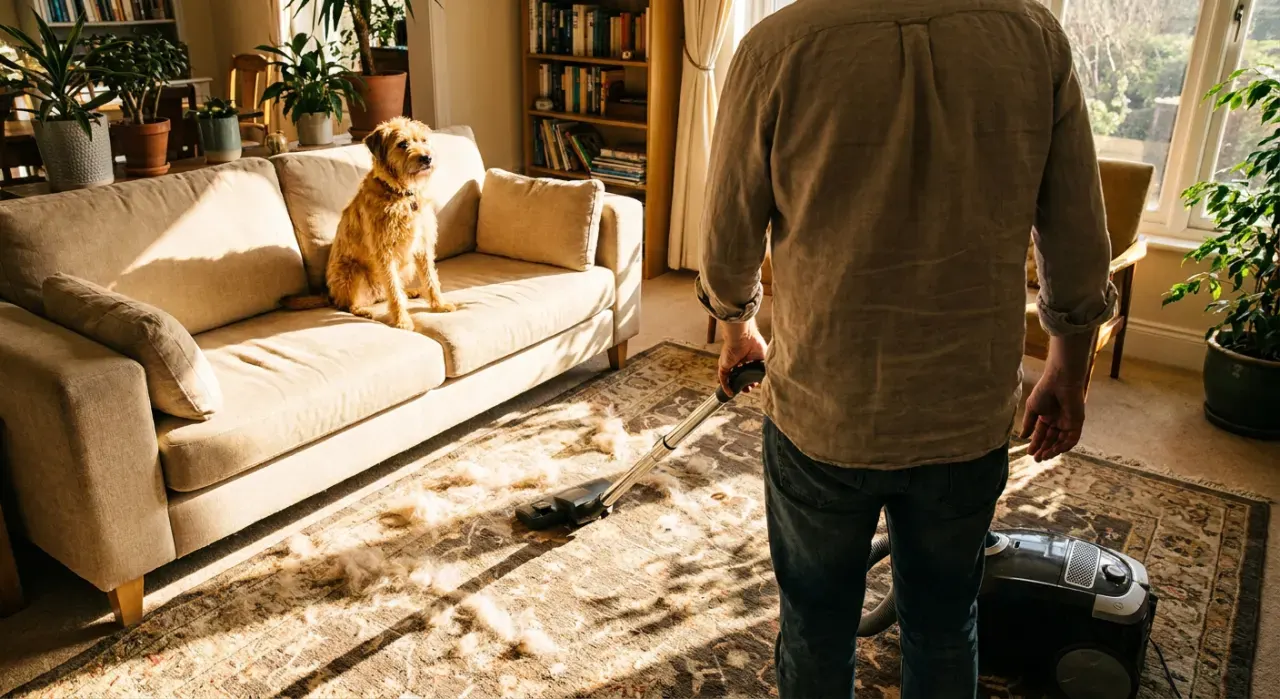
The reservoir on surfaces matters more than the air in most homes. Vacuum two or three times a week with a sealed HEPA vacuum so fine particles are not blown back out of the exhaust. Wash pet bedding weekly in hot water, and keep washable covers on the furniture the pet uses. Keep the pet out of the bedroom, which is the single highest-value rule for anyone with symptoms. Hard flooring holds far less allergen than carpet, and where carpet stays, periodic deep cleaning helps. Our page on how often to wash a dog bed covers the laundry side.
What else should you read?
For odor rather than particles, see do air purifiers help with dog smell. The consensus picks are in best air purifier for pets, and for hair on floors see best pet hair vacuum and best robot vacuum for pet hair. For filter fundamentals read True HEPA versus HEPA-type and do air purifiers help with allergies. More in the pets at home hub.