 Garden

Affiliate Disclosure
Some links on this page are affiliate links. As an Amazon Associate, we earn from qualifying purchases — at no extra cost to you. We do not buy, test, or physically handle the products we cover; our rankings come from aggregated owner reviews, ratings and expert consensus. Commissions never change our verdicts. How we rank · full disclosure.
The short version: the best above-ground pool heater for most people is the FibroPool FH255 55,000 BTU electric heat pump. It holds a set temperature regardless of weather, and because a heat pump moves heat rather than generating it, it delivers roughly five times more heat than it consumes in electricity. If you would rather not run a 240V circuit or add to your power bill, the GAME SolarPRO Curve is the zero-running-cost alternative — slower, weather-dependent, and genuinely enough for a pool used in high summer.
Those two options describe the real decision. Heat pumps cost a lot up front, need electrical work, and then run cheaply and predictably. Solar costs little, needs no wiring, and works only when the sun does. Resistive electric heaters exist and we have not ranked one, because at one unit of heat per unit of electricity they are an expensive way to warm several thousand gallons. Whichever you choose, a solar cover is not optional — evaporation is the single largest heat loss from an uncovered pool, and a cover roughly halves what any heater has to do. Everything else is at the pools and spas hub.
Top Picks at a Glance

Our #1 Pick: FibroPool FH255 Heat Pump
The physics is what makes this category interesting. A resistive heater turns one unit of electricity into one unit of heat. A heat pump uses that same unit of electricity to run a compressor that extracts heat from the outside air and moves it into the water — and it can move several times more heat than the electricity it consumed. The manufacturer quotes a coefficient of performance around 5.9 for this unit, which is why it costs a fraction of an electric heater to run. What that fraction comes to in dollars depends on where you live; the EIA publishes residential electricity prices state by state.
Consensus Score ███████░░░ 7.6 — owners consistently report low running costs and reliable temperature holding
At 55,000 BTU it is sized for above-ground pools up to roughly 10,000 gallons, and the practical experience owners describe is a few degrees a day of gain, then a comfortable hold once the pool reaches the set point. That distinction matters: heat pumps are unremarkable at heating a cold pool quickly and excellent at keeping a warm one warm, which is why pairing one with a solar cover changes its economics completely.
The cabinet is weatherproof steel with a titanium heat exchanger, which is the specification to look for if you run a salt system — titanium tolerates salt water where cheaper exchangers corrode. The digital controller holds a set temperature without intervention, and the whole unit plumbs inline after the filter with standard fittings.
The recurring criticisms are real and mostly about installation rather than performance. It needs a dedicated 240V circuit, and owners regularly report the cost of the electrician being a significant unbudgeted addition. It is heavy and needs a level, solid pad with clearance around it for airflow. Output falls as air temperature drops, so it becomes progressively less effective below roughly 50°F ambient, which surprises owners hoping to swim in November. Fan noise is described as noticeable, particularly on a small lot. And several reviewers report support being slow when a unit does develop a fault.
Check price on Amazon → (paid link)
Best Above-Ground Pool Heaters 2026: The Ranked Field
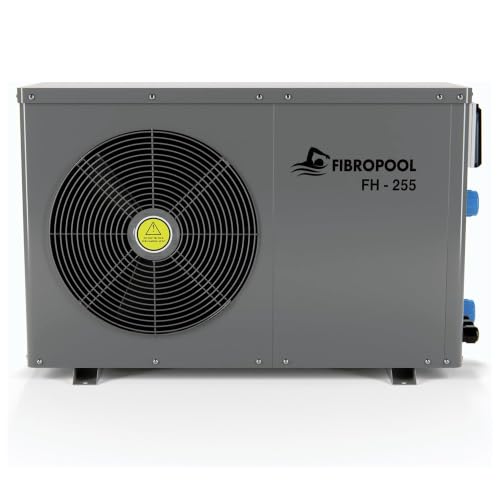
Best for above-ground pools up to about 10,000 gallons that need a reliable, controllable temperature
- 55,000 BTU output on 240V, no gas connection needed
- Quoted COP around 5.9 — it moves far more heat than it consumes
- Digital thermostat holds a set temperature
- Weatherproof steel cabinet with a titanium heat exchanger
Why buy it: a heat pump moves heat rather than making it, so it costs a fraction of a resistive heater to run while actually holding a set temperature.
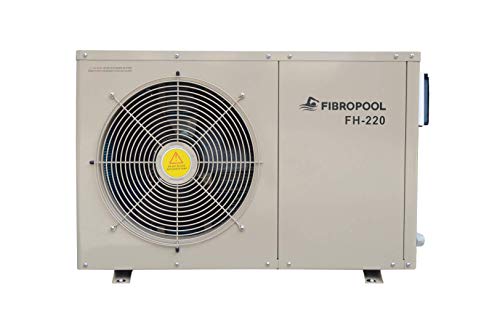
Best for small above-ground pools up to about 5,000 gallons and spas
- 20,000 BTU output, sized for smaller volumes
- 240V electric, no propane or natural gas
- Digital controller with a set-and-forget thermostat
- Quoted COP around 4.85
Why buy it: buying a heat pump matched to a small pool costs far less up front and still holds a temperature, which oversized units do wastefully.
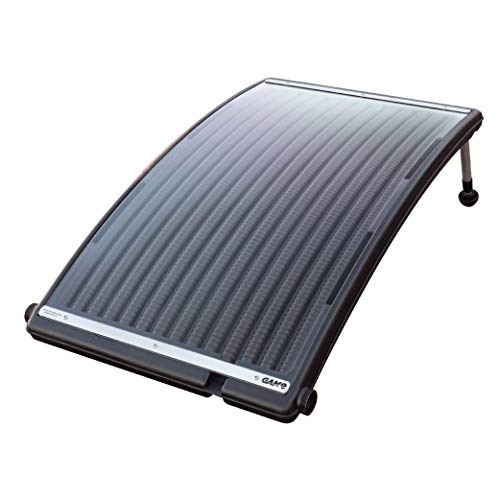
Best for owners who want warmer water without an electricity bill or an electrician
- No electricity, no gas, no wiring — runs on your filter pump flow
- Curved collector under a clear heat-trapping dome
- Adjustable legs to angle it at the sun
- Intex adapters, hoses and clamps included
Why buy it: nothing else here costs zero to run, and for a pool used mostly in high summer that is often all the heating you need.

Best for a first, cheap attempt at extending the season by a few weeks
- 47 in. flat mat, lies on the ground or a slope
- Plumbs inline with an Intex-style filter pump
- Hose attachment and adaptors included
- Rolls flat for winter storage
Why buy it: for the price of a couple of bags of shock you find out whether your yard has enough sun to make solar worth pursuing.

Best for owners who want quiet operation, app control and the lowest running cost
- Inverter compressor modulates output instead of cycling on and off
- 62,000 BTU with WiFi app control
- Titanium heat exchanger for salt-system compatibility
- Markedly quieter than a fixed-speed heat pump
Why buy it: an inverter runs at low output most of the time, which is both far quieter and cheaper than a fixed-speed unit slamming on and off.
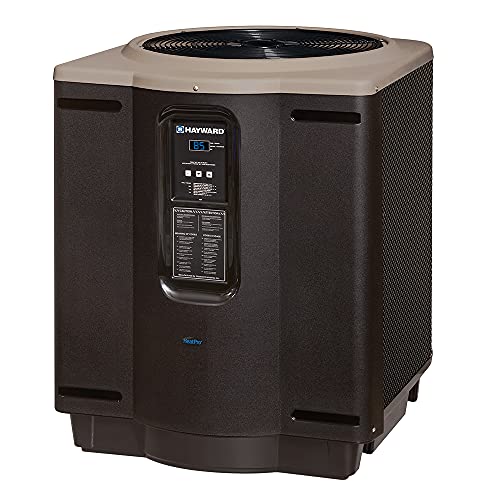
Best for very large above-ground pools and in-ground pools that need real output
- 140,000 BTU for large volumes and cool-weather use
- Titanium heat exchanger, corrosion-resistant cabinet
- Established brand with a real service network
- Digital control with an LCD display
Why buy it: at this output it will actually heat a large pool in a day rather than a week, which smaller units simply cannot do.
Quick Comparison
| Product | Best for | Rating | Price | Buy |
|---|---|---|---|---|
| FibroPool FH255 55,000 BTU Electric Pool Heat Pump | Best Overall | — | Check (paid link) | |
| FibroPool FH220 Pool Heat Pump 20000 BTU Electric | Best for Small Pools | — | Check (paid link) | |
| GAME SolarPRO Curve Solar Pool Heater for Above-Ground and Inground Pools | Best Zero-Running-Cost | — | Check (paid link) | |
| Intex Solar Pool Water Heater Mat for 8,000 Gallon Above Ground Pool | Best Budget | — | Check (paid link) | |
| FibroPool FH285-i Inverter Pool Heat Pump 62000 BTU | Best Premium | — | Check (paid link) | |
| Hayward HeatPro 140,000 BTU Pool Water Heater Heat Pump | Best for Large Pools | — | Check (paid link) |
How We Rank
We do not buy or physically handle these heaters. Rankings come from aggregating star ratings and review volume across large owner-review sets, weighting recent reviews above older ones, checking stated BTU outputs, coefficient of performance figures, voltage and flow requirements and heat-exchanger materials against manufacturer documentation, and reading negative reviews closely — which here means separating genuine reliability problems from installation and expectation problems.
Four factors set the order. Running cost per unit of heat delivered, since a heater is a long-term operating expense rather than a purchase. Output matched to realistic pool sizes, because an undersized heater never catches up and an oversized one wastes money. Installation burden, meaning wiring, pad and plumbing requirements. And owner satisfaction, weighted by review volume and read with attention to climate. Prices were checked at the time of writing. Full method: how we rank.
The Heaters, Reviewed
1. FibroPool FH255 — Best Overall
Covered above. Consensus Score ███████░░░ 7.6. Strengths: excellent running cost from a high coefficient of performance; holds a set temperature without attention; titanium heat exchanger suits salt systems; weatherproof cabinet; and no gas connection or propane deliveries. Recurring complaints: a dedicated 240V circuit and licensed electrician add substantially to the real cost; it is heavy and needs a proper pad with airflow clearance; output falls off in cool weather; fan noise on a small lot; and mixed reports of after-sales support.
2. FibroPool FH220 — Best for Small Pools
The correctly sized option for a small above-ground pool or a spa, and worth taking seriously rather than defaulting to a bigger unit. Twenty thousand BTU is enough to warm and hold a pool up to around 5,000 gallons, it costs far less up front, and it draws less current — which can be the difference between a straightforward electrical install and a panel upgrade.
Consensus Score ███████░░░ 7.4 — good ratings from owners who matched it to pool size
Recurring complaints: owners with larger pools rate it poorly, which is a sizing error rather than a fault. Warm-up from cold is slow. Several reviewers report it struggling once ambient temperatures drop into the 50s. And it still needs 240V wiring, which surprises buyers who assumed a smaller unit would plug in.
3. GAME SolarPRO Curve — Best Zero-Running-Cost
The other philosophy entirely. No wiring, no electrician, no running cost — just a curved collector under a clear dome plumbed into your existing filter circuit. It gathers more energy per square foot than a flat mat and the adjustable legs let you aim it, and for a pool used mostly in high summer it may be all the heating that is genuinely needed.
Consensus Score ███████░░░ 7.3 — good ratings where expectations were realistic
Recurring complaints: leaks at the hose adapters out of the box are the most common. The plastic housing cracks after seasons in strong sun. It restricts flow noticeably on weak pumps. A single unit on a large pool produces very little. And it must be drained before winter or it will split.
4. Intex Solar Pool Water Heater Mat — Best Budget
The cheapest possible experiment. A flat 47 in. mat that plumbs inline with an Intex-style pump and lies on the ground, a slope or a shed roof. Its real value is diagnostic: for very little money you find out whether your yard receives enough unshaded midday sun for solar heating to be worth investing in properly.
Consensus Score ██████░░░░ 6.9 — polarized ratings driven by expectations more than by the product
Recurring complaints: output is the main one — a single mat on a full-size pool produces a change most owners struggle to measure. Fitting leaks are common. The mat kinks and restricts flow on uneven ground. And the thin material punctures easily on gravel.
5. FibroPool FH285-i Inverter — Best Premium
The refined version. A fixed-speed heat pump runs flat out or not at all, cycling on and off; an inverter modulates compressor speed and spends most of its life running gently. That is quieter, easier on the compressor and more efficient in real use, and the app control means you can bring the pool up before a weekend without walking outside.
Consensus Score ███████░░░ 7.7 — high satisfaction, with cost and complexity the reservations
Recurring complaints: price is the obvious one. App and WiFi connectivity problems recur in reviews. Owners report the electronics being more complex and therefore more to go wrong than a simple fixed-speed unit. And it still needs the same 240V install and airflow clearance as any heat pump.
6. Hayward HeatPro 140,000 BTU — Best for Large Pools
Serious output for a large volume. At 140,000 BTU it will genuinely raise a big pool in a day rather than a week, and Hayward carries a real dealer and service network, which is worth more on a four-figure appliance than any spec sheet. Titanium heat exchanger and a corrosion-resistant cabinet mean it copes with salt systems and coastal air.
Consensus Score ███████░░░ 7.5 — respected and durable, with cost and installation the barriers
Recurring complaints: cost, both purchase and installation, is far beyond what most above-ground pool owners expect to spend. It is large, heavy and needs generous clearance for airflow. Owners report needing a substantial electrical supply that often means panel work. And several reviewers note that at this size professional installation is effectively mandatory.

How to Choose an Above-Ground Pool Heater
Decide first whether you want warmth on demand or just a longer season, because that single question separates heat pumps from solar. If you want to swim on a cool October evening, you need a heat pump and you need to accept the electrical work. If you want the pool a few degrees warmer through July and August and to open a couple of weeks earlier, solar plus a cover will do it for a fraction of the money.
Then size by gallons and be honest about your climate. Match BTU output to pool volume using the manufacturer guidance rather than optimism — an undersized heat pump never catches up and simply runs constantly. Remember too that heat pumps extract heat from air, so their output falls as ambient temperature drops; a unit that performs well in August will struggle in the 50s, and in genuinely cold conditions it will stop being useful altogether.
Budget for the installation, not just the box. A heat pump needs a dedicated 240V circuit, a level solid pad, clearance around the cabinet for airflow, and plumbing into the return side after the filter — and the filter pump has to run whenever the heater does, which carries its own cost: ENERGY STAR puts a pool pump at half speed at one-eighth the energy use. The electrician is frequently the largest surprise in the whole project. Get a quote before you buy the heater, not after.
Finally, treat the electrical and safety requirements as non-negotiable. Pool equipment is covered by specific National Electrical Code provisions including GFCI protection and equipotential bonding of metallic pool parts, and those exist because water and electricity around swimmers is a life-safety issue rather than a formality. Use a licensed electrician, obtain any permit your jurisdiction requires, and never run a heater from an extension cord or an unbonded circuit. Codes and inspection requirements vary considerably by state and municipality, so confirm yours locally before ordering.
What Owners Actually Complain About
Unbudgeted installation cost is the loudest complaint in this category and it is almost always the electrical work. Buyers see the heater price, not the dedicated 240V circuit, the trenching, the disconnect and sometimes a panel upgrade. Get that quoted first and the rest of the decision becomes much clearer.
Falling output in cool weather generates a steady stream of disappointed reviews every fall. A heat pump extracts heat from the air, so as the air cools it produces less. This is the technology behaving normally, not a defect, but it is rarely explained clearly at the point of sale.
Noise is a genuine and under-discussed issue. A fixed-speed heat pump has a fan and a compressor, and on a small suburban lot that is audible to you and to your neighbors. Inverter units are markedly quieter and it is a large part of what the premium buys.
Leaks and freeze damage dominate the solar side of the category — hose adapters that weep from day one, and collectors that split because they were not drained at closing. And slow support appears in reviews across the smaller heat-pump brands, which is a real argument for paying more for a manufacturer with a service network.
The Verdict
For a typical above-ground pool the FibroPool FH255 is the heater to buy: cheap to run, holds a temperature without attention, and no gas connection. Size down to the FH220 for a small pool or spa, up to the Hayward HeatPro for a large one, and step across to the FH285-i inverter if noise or absolute running cost matters. If the electrical work is the obstacle, the GAME SolarPRO Curve gives you a warmer pool for nothing per month, with the Intex mat as a cheap way to test the idea first. And on any of these, a solar cover is the accessory that changes the running cost most.
Check price on Amazon → (paid link)
Next: cut your heat losses with best pool solar cover, compare collectors in best solar pool heater, set expectations with how long does it take to heat a pool 10 degrees, or read how to keep an above-ground pool warm.