 Garden
Affiliate Disclosure
Some links on this page are affiliate links. As an Amazon Associate, we earn from qualifying purchases — at no extra cost to you. We do not buy, test, or physically handle the products we cover; our rankings come from aggregated owner reviews, ratings and expert consensus. Commissions never change our verdicts. How we rank · full disclosure.
The short version: for most backyard pools the best cordless pool vacuum is the AIPER Seagull SE — around 90 minutes of runtime, its own onboard filter so debris never reaches your cartridge, and self-parking retrieval, all for roughly a quarter of what a premium cordless robot costs. It suits flat-bottomed pools; if yours is in-ground with walls that need scrubbing, the AIPER Scuba S1 is the model to step up to.
Cordless cleaning splits into two quite different tools, and buying the wrong one is the most common mistake in this category. A cordless robot is a self-driving machine you drop in and leave; it cleans the whole floor and, on better models, the walls. A cordless handheld is a battery vacuum on a pole that you push around yourself; it is for steps, spas and spot jobs, and it will not clean a pool. Both are covered below. For pump-driven alternatives, see the best pool vacuum roundup, and for the full field of robots, best robotic pool cleaner. Everything else is at the pools and spas hub.
Top Picks at a Glance
Our #1 Pick: AIPER Seagull SE
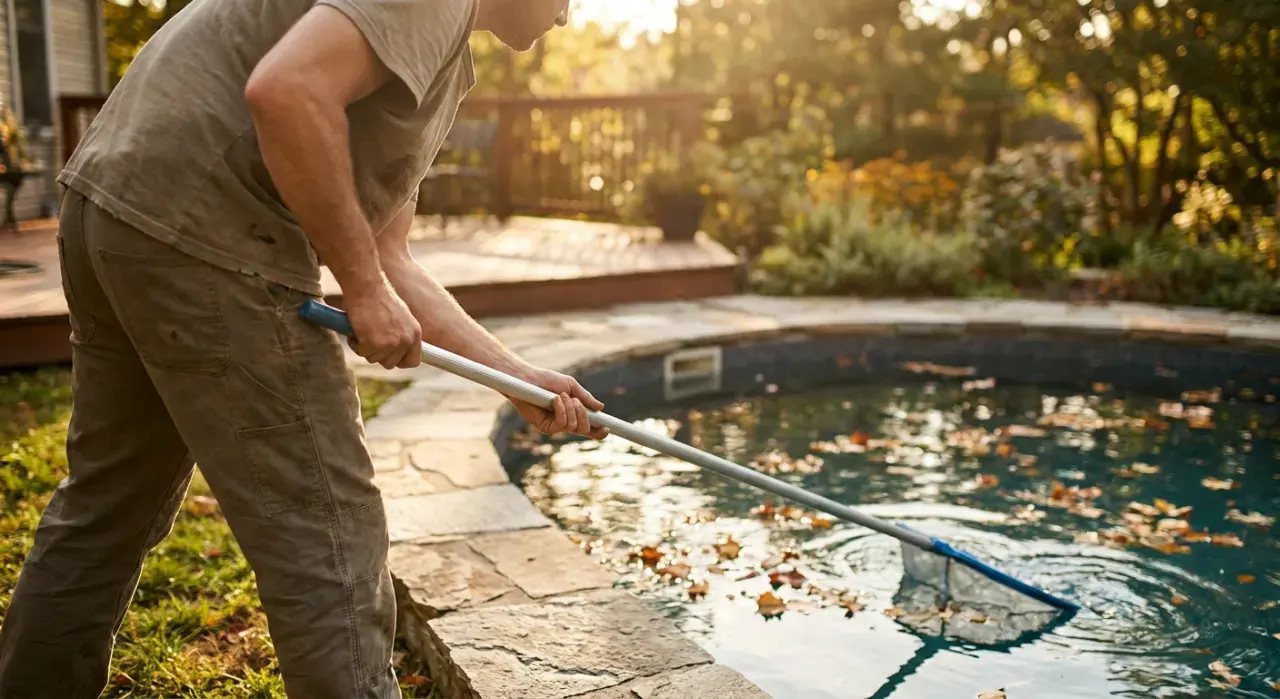
The reason a cordless robot exists is independence. Suction-side and pressure-side cleaners run on borrowed energy from your filter pump — energy that is not cheap, since ENERGY STAR puts a pool pump running at half speed at one-eighth the energy use — and on above-ground pools that pump is very often only just adequate on a good day — undersized to start with, then throttled further by a loading cartridge and a skimmer basket full of leaves. The Seagull SE ignores all of it. Battery, motor and filter all travel with the machine.
Consensus Score ███████░░░ 7.4 — owners consistently report it working on pools where pump-driven cleaners had failed
In practice you get roughly 90 minutes of cleaning per charge, which is enough for a full pass on a typical above-ground pool with time to spare. When the battery drops it drives itself to the wall and parks, so retrieval is a matter of reaching down with a pole rather than dredging the middle of the pool. Everything it picks up stays in its own basket, which quietly saves you money — a cartridge that is not filtering leaf litter lasts longer between replacements, and the pump works less. What the saved pump hours are actually worth depends on where you live; the EIA publishes residential electricity prices state by state.
It is also, at this price, the only serious option. Cordless robots below about $200 are largely rebadged units with short runtimes and thin support; the tier above starts around $700. The Seagull SE sits in the gap and, judged on the owner-review record, earns its place there.
The consensus criticisms deserve equal weight, because they are specific rather than vague. It is designed for flat floors: a deep-end slope, a pronounced liner wrinkle or a contoured base will strand it or leave whole sections untouched, and that accounts for a large share of the one-star reviews. Its coverage pattern is repetitive rather than systematic, so corners get missed. Battery capacity fades over several seasons and a minority of owners report units that stop taking a charge after about a year. And the basket needs rinsing after every run — leave it to bake dry and the mesh clogs permanently.
Check price on Amazon → (paid link)
Best Cordless Pool Vacuums 2026: The Ranked Field

Best for flat-bottomed above-ground pools up to about 40 ft across
- Around 90 minutes of runtime per charge
- Self-parks at the wall when the battery drops
- Onboard filter basket — debris never reaches your cartridge
- No hose, no cord, no pump connection
Why buy it: it is the cheapest true cordless robot that still cleans a whole above-ground pool unattended, and it works no matter how tired your filter pump is.

Best for in-ground pools up to about 1,600 sq ft with walls that need scrubbing
- Climbs walls and passes the waterline, not just the floor
- WavePath navigation rather than random bouncing
- Around 150 minutes of runtime
- Dual filtration for fine and coarse debris
Why buy it: it is the cordless model that actually handles a proper in-ground pool, walls included, without a cable in the water.

Best for steps, corners, spas and five-minute clean-ups
- Rechargeable battery, no hose or pump connection
- Telescoping aluminum shaft with a shaft adapter
- Two interchangeable brush heads
- Automatic shut-off when lifted out of the water
Why buy it: nothing here gets a small job done faster, because there is genuinely nothing to set up before you start.

Best for hot tubs, steps, inflatable pools and stubborn sand in corners
- Around 70 minutes of runtime on a two-hour charge
- Two suction modes for light debris and packed sand
- Straight-line and brush-tipped heads included
- Works in above-ground, in-ground, spa and inflatable pools
Why buy it: the higher-flow mode lifts packed sand and silt that the cheaper handhelds simply push around.

Best for owners who want the retrieval problem solved as well as the cleaning
- Parks at the surface at the end of a cycle
- Drains its own water before you lift it out
- Double-pass waterline scrubbing
- Cleans floor, walls and waterline
Why buy it: surface parking and self-draining fix the two things owners hate most about cordless robots — fishing them out, and lifting 20 lb of waterlogged plastic.
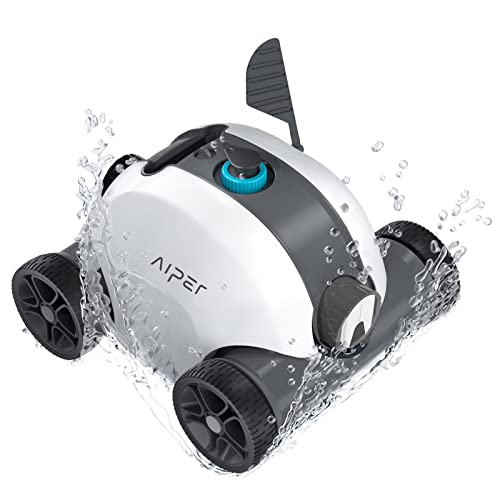
Best for flat above-ground pools to 35 ft and flat-floored in-ground pools to about 861 sq ft
- Dual-drive motors for faster floor coverage
- Around 90 minutes per charge
- Self-parking retrieval at the wall
- Handles inclines up to about 15 degrees
Why buy it: it moves noticeably faster across the floor than the entry-level models, so a mid-sized pool actually gets finished inside one charge.
Quick Comparison
| Product | Best for | Rating | Price | Buy |
|---|---|---|---|---|
| AIPER Seagull SE Cordless Robotic Pool Vacuum | Best Overall | — | Check (paid link) | |
| AIPER Scuba S1 Cordless Robotic Pool Cleaner | Best for In-Ground Pools | — | Check (paid link) | |
| Intex Handheld Rechargeable Pool Vacuum with Telescoping Aluminum Shaft | Best Budget Handheld | — | Check (paid link) | |
| AIPER Pilot H2 Cordless Handheld Rechargeable Pool Vacuum | Best Handheld for Steps and Spas | — | Check (paid link) | |
| Beatbot AquaSense 2 Cordless Robotic Pool Vacuum Cleaner | Best Premium | — | Check (paid link) | |
| AIPER Seagull 1000 Cordless Robotic Pool Cleaner with Dual-Drive Motors | Best for Mid-Size Pools | — | Check (paid link) |
How We Rank
We do not buy or physically handle these machines. Rankings come from aggregating star ratings and review volume across large owner-review sets, weighting recent reviews above launch-window ones, checking published runtimes, pool-size ratings, charge times and filtration specifications against manufacturer documentation, and reading the one- and two-star reviews carefully. In this category those reviews are unusually consistent, which makes them useful — they cluster around battery life, retrieval and pool shape rather than around cleaning ability.
Four factors set the order. Usable runtime against pool size, because a robot that cannot finish in one charge is not really unattended. Retrieval, which sounds trivial and is the single biggest day-to-day difference between models. Battery longevity, read from reviews written a year or more after purchase rather than from launch-week enthusiasm. And owner satisfaction, weighted by review volume and read with attention to pool type, because the same machine is rated brilliantly on a flat pool and terribly on a sloped one. Prices were checked at the time of writing and move sharply with the season. Full method: how we rank.
The Cleaners, Reviewed
1. AIPER Seagull SE — Best Overall
Covered above. Consensus Score ███████░░░ 7.4. Strengths: completely independent of the filter pump; about 90 minutes per charge; self-parking retrieval; onboard filtration that spares your cartridge; light enough to lift out one-handed; and by far the lowest price for a genuine cordless robot. Recurring complaints: flat floors only — slopes and wrinkled liners defeat it; repetitive coverage that misses corners; battery capacity fading over several seasons; charging failures reported after about a year by a minority; and a basket that must be rinsed after every cycle.
2. AIPER Scuba S1 — Best for In-Ground Pools
The step up that makes cordless viable on a real in-ground pool. It climbs the walls and passes the waterline rather than confining itself to the floor, runs around 150 minutes, and follows a deliberate path instead of bouncing off the sides at random. Dual filtration means it holds fine debris as well as leaves, which matters in spring when pollen is the main problem.
Consensus Score ███████░░░ 7.8 — strong ratings with battery longevity the open question
Recurring complaints: retrieval, most often — owners report it stopping mid-pool rather than surfacing, which means a pole and a stretch. Battery runtime is reported shortening by the second season. Several reviewers describe the filter basket clips breaking. And it loses traction on steep slopes and on smooth tile, so pools with an aggressive deep end still leave work for a brush.
3. Intex Handheld Rechargeable Vacuum — Best Budget Handheld
Not a robot and not pretending to be one. This is a battery vacuum head on a telescoping aluminum pole with two brush heads and a reusable filter bag. Nothing to prime, nothing to plug in, no hose to uncoil — you charge it, extend the pole and clean the steps. For spas, corners and the aftermath of a windy afternoon, that immediacy is genuinely the point.
Consensus Score ██████░░░░ 7.0 — reasonable ratings inside a clearly limited role
Recurring complaints: runtime and capacity, overwhelmingly. Owners report the battery being fine for spot work and nowhere near enough for a whole pool, and the small filter bag filling within minutes. Suction is modest and struggles with anything heavier than fine silt. Several reviewers report the head seal letting fine debris back into the water, and the telescoping pole is widely described as flimsy at full extension.
4. AIPER Pilot H2 — Best Handheld for Steps and Spas
A more serious handheld. Two suction modes — a standard flow for routine work and a higher-flow mode for packed material — plus about 70 minutes of runtime and two head shapes. The high-flow setting is the reason to choose it over the cheaper handhelds: packed sand in a hot tub footwell or silt in a step corner needs more than gentle suction, and this has it.
Consensus Score ███████░░░ 7.5 — well rated within the handheld category
Recurring complaints: the high-flow mode drains the battery quickly, so the 70-minute figure applies to standard mode. Owners report the filter needing emptying constantly on a dirty pool. The pole supplied is described as short by several reviewers with deep pools. And like every handheld it is a spot tool — buyers expecting it to clean a whole pool floor rate it poorly, which is a mismatch of expectations rather than a defect.
5. Beatbot AquaSense 2 — Best Premium
The model that fixes the two genuinely irritating things about cordless robots. At the end of a cycle it parks at the surface rather than on the floor, so you are not fishing for it. And it drains its own water before you lift it out, which turns a heavy, awkward lift into an ordinary one. Cleaning covers floor, walls and a double-pass waterline scrub.
Consensus Score ███████░░░ 7.9 — high ratings, with price the obvious brake
Recurring complaints: cost, first — this is several times the price of a competent cordless robot. Surface parking is reported as inconsistent by a minority, which undercuts the main selling point when it fails. App connectivity frustrations recur. And the long-term reliability record is thinner than the established brands simply because the product is newer, which is a genuine reason for caution at this price.
6. AIPER Seagull 1000 — Best for Mid-Size Pools
Dual drive motors move it across the floor noticeably faster than the entry-level models, which is what a mid-sized pool needs if it is going to be finished inside a single 90-minute charge. It handles inclines up to about 15 degrees, self-parks for retrieval, and covers flat above-ground pools to 35 ft or flat-floored in-ground pools to around 861 sq ft.
Consensus Score ██████░░░░ 7.1 — decent ratings with the usual flat-floor caveat
Recurring complaints: the incline limit is lower than many buyers assume, and pools with a proper deep end defeat it. Owners report it climbing partway up a wall and sliding back. Battery degradation appears in second-year reviews as it does across the range. And several reviewers note the basket being smaller than the coverage area justifies, so a leafy pool needs two runs.
How to Choose a Cordless Pool Vacuum
Start with the floor, not the size. Almost every disappointing review in this category traces back to a pool shape the machine was never designed for. Entry-level cordless robots are flat-floor tools: a gentle taper is usually fine, a proper deep-end slope is not, and a liner with pronounced wrinkles will strand one. If your pool has a real deep end, you need a model that explicitly states an incline rating and wall-climbing ability, and you should expect to pay for it.
Then match runtime to area honestly. A 90-minute machine will finish a 15 ft round above-ground pool comfortably and will not finish a 20 by 40 ft in-ground pool. Battery capacity also fades — plan on the machine having noticeably less endurance in its third season than in its first, and buy a margin rather than the exact fit.
Think hard about retrieval, because it is the part you will do every single time. Self-parking at the wall is good; surfacing at the end of a cycle is better; a robot that simply stops wherever the battery ran out is a pole-and-shoulder job twice a week. Weight matters here too — a machine full of water is far heavier than its dry spec, and models that drain themselves make a real difference to anyone who would rather not lift 20 lb overhead out of a pool.
Finally, check what the filter actually catches and how it empties. A coarse basket returns fine silt and pollen to the water; a fine or dual basket holds it but clogs faster and needs rinsing after every run. Neither is wrong, but they suit different problems. On safety, keep the pool clear of swimmers while a cleaner is running, charge the battery indoors or somewhere dry and GFCI-protected rather than beside the water, and store the unit out of freezing temperatures over winter — cold storage is one of the quietest killers of lithium packs.
What Owners Actually Complain About
Battery degradation is the defining long-term complaint of the whole category, and it is worth being blunt about: on most cordless cleaners the battery is not user-replaceable at a sensible price, so when it stops holding charge the machine is finished. Two-year reviews are far more informative than launch-week ones, and they consistently describe shorter cycles rather than sudden failure.
Retrieval is the daily grievance. Owners describe standing at the edge with a pole trying to hook a robot parked in the middle of the deep end. Models that self-park at a wall are better; models that surface are better still. This is the feature most people underrate before buying and complain about afterwards.
Pool shape mismatch generates most of the extreme one-star reviews, and most of it is avoidable. A flat-floor robot in a sloped pool will get stuck, skip sections and climb nothing — that is not a defect, it is the wrong machine. Check the incline rating before the price.
Filter baskets attract a steady stream of small complaints: clips that snap, mesh that tears, fine debris passing straight through, and baskets too small for the coverage area. And coverage gaps are universal — steps, benches, tight corners and the area around a ladder need a manual brush regardless of what you buy.
The Verdict
For most backyard pools the AIPER Seagull SE is the cordless pool vacuum to buy: it cleans a flat pool thoroughly, keeps debris out of your filter, and costs a fraction of the premium field. For an in-ground pool with walls that need scrubbing, the AIPER Scuba S1 is the sensible upgrade, and the Seagull 1000 sits usefully in between for mid-sized flat pools. If retrieval and lifting are what you dread, the Beatbot AquaSense 2 is the model that engineered those problems away, at a price. And no matter which robot you own, keep a handheld — the Intex for occasional work, the AIPER Pilot H2 if you have sand — because steps and corners are still a manual job.
Check price on Amazon → (paid link)
Next: see the corded field in best robotic pool cleaner, weigh the honest case in are robotic pool cleaners worth it, learn the manual method in how to vacuum a pool manually, or check the pump behind it all in best pool filter pump.