 Garden
Affiliate Disclosure
Some links on this page are affiliate links. As an Amazon Associate, we earn from qualifying purchases — at no extra cost to you. We do not buy, test, or physically handle the products we cover; our rankings come from aggregated owner reviews, ratings and expert consensus. Commissions never change our verdicts. How we rank · full disclosure.
The short version: for weekly shocking of a chlorine pool, In The Swim 68% cal-hypo is the best buy — the highest available chlorine in common supply, no cyanuric acid added, and pre-measured 1 lb bags that dose 10,000 gallons each. If your pool is vinyl-lined and you would rather not pre-dissolve every time, the fast-dissolving Clorox Pool&Spa XtraBlue is the safer habit, and if you want to swim the same afternoon, chlorine-free potassium monopersulfate is the answer.
Shock is not one product. There are three genuinely different chemistries sold under the word, and choosing between them is most of the decision. Calcium hypochlorite is strong, cheap per unit of chlorine, adds calcium and raises pH. Dichlor is pH-neutral and dissolves instantly, but adds cyanuric acid with every dose. Potassium monopersulfate adds no chlorine at all — it oxidizes organic waste so your existing chlorine can get on with sanitizing. Which you want depends on your water, not on the label. All three exist to restore the routine sanitizing the CDC's healthy swimming guidance describes, once it has stopped holding. For where shock fits alongside daily sanitizing, see best pool chlorine tablets, and check where you actually stand with best pool test strips. Everything else is at the pools and spas hub.
Top Picks at a Glance
Our #1 Pick: In The Swim 68% Cal-Hypo Pool Shock
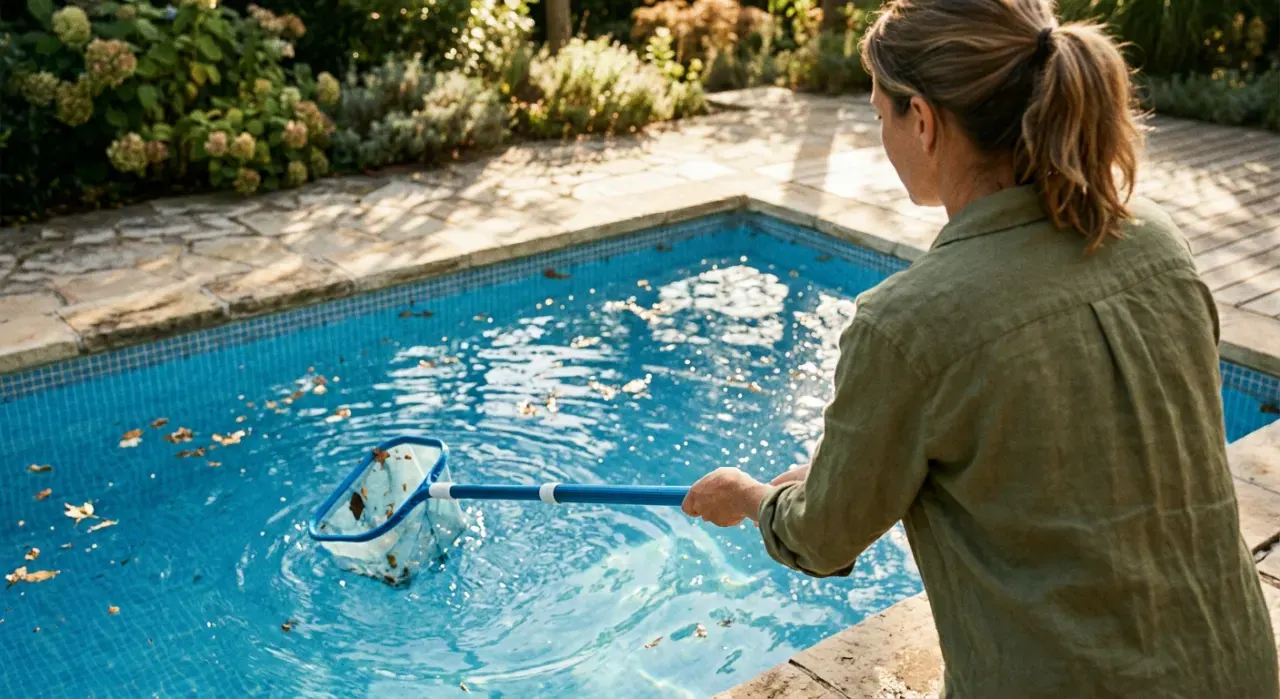
The case for this one is arithmetic. Most retail shock sits between 47 and 56 percent available chlorine. At 68 percent, a single pound does the work of roughly a pound and a third of the common stuff, which means fewer bags per season, less packaging, and — the part owners notice — a genuinely lower cost per unit of chlorine delivered even though the sticker price looks higher.
Consensus Score █████████░ 8.8 — owners consistently report faster clearing and fewer bags used per season
The second argument is what it does not contain. Cal-hypo carries no cyanuric acid. Every dose of dichlor-based shock adds stabilizer to your water, and stabilizer never leaves except by dilution. Shock weekly with dichlor through a season and many pools drift past 100 ppm cyanuric acid, at which point free chlorine becomes progressively less effective and owners find themselves adding more chemical for less result. Cal-hypo sidesteps that entirely, which is why pool professionals lean on it for maintenance dosing.
Practically, the 24-bag pack covers most of a season on a mid-sized pool, each bag is sealed so the rest of the box does not degrade once you open it, and one bag treats 10,000 gallons at maintenance strength. For a green pool you simply use more.
The recurring criticisms are real. Cal-hypo raises calcium hardness, which is a genuine problem if you already have hard fill water — over 400 ppm and you start seeing scale on tile and heater elements. It raises pH too, so you will be adding acid more often. It must be pre-dissolved in a bucket of water before it goes into a vinyl pool, because undissolved granules that settle on a liner bleach permanent white marks, and a steady stream of one-star reviews are exactly that story. Owners also report bags arriving damp or clumped, and the packaging tearing in shipping. And it is chemically aggressive — never let it contact trichlor tablets.
Check price on Amazon → (paid link)
Best Pool Shock 2026: The Ranked Field

Best for weekly shocking of in-ground and above-ground pools on a chlorine system
- 68% calcium hypochlorite — high available chlorine per pound
- One 1 lb bag treats 10,000 gallons
- Individually sealed bags stay dry between uses
- Adds no cyanuric acid, so stabilizer does not creep upward
Why buy it: it is the strongest cal-hypo in common retail supply, so you use less product per shock and your stabilizer level stays where you set it.

Best for routine weekly dosing where convenience beats maximum strength
- Around 52% available chlorine
- Pre-measured 1 lb bags, one per 10,000 gallons
- Widely stocked, so refills are easy
- Suits all pool surfaces including vinyl and fiberglass
Why buy it: a lower concentration dissolves more forgivingly, which matters if you are the kind of owner who pours straight from the bag.
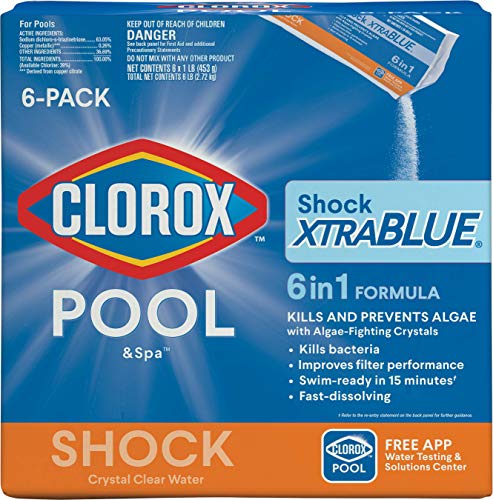
Best for vinyl-lined pools where bleaching and pH swings are the worry
- Fast-dissolving formula for quick clearing of cloudy water
- Formulated to be gentler on liners than raw cal-hypo
- Helps control green, mustard and black algae
- Six pre-measured 1 lb bags
Why buy it: the fast-dissolving blend is far less likely to sit on a vinyl floor and bleach a permanent white patch.

Best for shocking on a Friday and swimming the same afternoon
- Potassium monopersulfate — oxidizes without adding chlorine
- Swim time typically about 15 minutes after dosing
- Will not raise chlorine, calcium or cyanuric acid
- Compatible with salt-chlorinated pools
Why buy it: it burns off body oils, sweat and sunscreen without the wait, which is exactly what a busy pool needs mid-week.

Best for green pools, algae blooms and post-storm recovery
- 70% available chlorine — the highest here
- Fast dissolving and non-stabilized
- Designed for heavy, corrective doses
- One bag per 10,000 gallons at maintenance strength
Why buy it: when a pool has gone green you need chlorine fast and in quantity, and this delivers more per bag than anything else in the field.

Best for buying a full season of cal-hypo in one go
- Calcium hypochlorite granules in pre-measured 1 lb bags
- 24-pack covers most of a season on a mid-size pool
- No stabilizer added
- Dissolves quickly when pre-mixed in a bucket
Why buy it: buying a season at a time is meaningfully cheaper per pound than restocking six bags at a time in July.
Quick Comparison
| Product | Best for | Rating | Price | Buy |
|---|---|---|---|---|
| In The Swim Pool Shock 68% Cal-Hypo Granular Sanitizer 24 x 1 Pound | Best Overall | — | Check (paid link) | |
| HTH Super Shock Treatment Swimming Pool Chlorine Cleaner 1 lb 12 Pack | Best for Weekly Maintenance | — | Check (paid link) | |
| Clorox Pool&Spa Pool Shock XtraBlue 6 x 1 lb Bags | Best for Vinyl Liners | — | Check (paid link) | |
| In The Swim Chlorine-Free Pool Shock Oxidizer 24 x 1 Pound Bags | Best Swim-Soon Option | — | Check (paid link) | |
| In The Swim Super Pool Shock Non-Stabilized 70% Available Chlorine 24 x 1 Pound | Best for Killing Algae | — | Check (paid link) | |
| GLB Calcium Hypochlorite Pool Shock 1-Pound 24-Pack | Best Value | — | Check (paid link) |
How We Rank
We do not buy or physically handle these products. Rankings come from aggregating star ratings and review volume across large owner-review sets, weighting recent reviews above older ones, checking stated available-chlorine percentages, active ingredients and dosing rates against manufacturer labels and safety data sheets, and reading negative reviews closely. In this category the complaints are unusually informative because they separate cleanly into chemistry problems — bleached liners, pH swings, calcium build-up — and logistics problems like damp bags and torn packaging.
Four factors set the order. Available chlorine per pound, since that is what you are actually buying. Side effects on water balance, meaning what each product adds to calcium, pH and cyanuric acid over a season. Surface safety, because vinyl liners are unforgiving of undissolved granules. And owner satisfaction, weighted by review volume and read with attention to pool type and water chemistry. Prices were checked at the time of writing and chlorine pricing has been volatile for several years. Full method: how we rank.
The Shocks, Reviewed
1. In The Swim 68% Cal-Hypo — Best Overall
Covered above. Consensus Score █████████░ 8.8. Strengths: highest routinely available concentration; no cyanuric acid added; excellent cost per unit of chlorine; sealed 1 lb bags that dose 10,000 gallons; and enough strength that a green pool can be corrected without buying a second box. Recurring complaints: it raises calcium hardness and pH; it must be pre-dissolved on vinyl or it bleaches the liner; bags arriving damp or clumped; packaging damage in transit; and the usual, serious warning against storing it near trichlor.
2. HTH Super Shock Treatment — Best for Weekly Maintenance
The supermarket standard, and there is a decent argument for it. At roughly 52 percent available chlorine it is weaker than the 68 percent product, but weaker also means more forgiving — it dissolves more readily and is less likely to punish a careless pour. It is stocked almost everywhere, so a mid-season top-up does not require a delivery window, and the pre-measured bags make dosing simple.
Consensus Score ████████░░ 8.1 — reliable ratings with value the main reservation
Recurring complaints: owners doing the arithmetic point out that the cost per unit of chlorine is worse than the higher-concentration products. It still raises calcium and pH. Reports of cloudy water immediately after dosing are common, usually from undissolved calcium rather than a fault. And several reviewers note bag sizes and concentrations varying between production runs, which makes precise dosing awkward.
3. Clorox Pool&Spa Shock XtraBlue — Best for Vinyl Liners
The one to buy if your pool has a vinyl liner and you are honest about your habits. Its selling point is how quickly it dissolves, which is precisely what protects a liner: granules that go into solution before they reach the floor cannot bleach it. It also targets mustard and black algae in addition to ordinary green, and it is formulated to be gentler on pH than raw cal-hypo.
Consensus Score ███████░░░ 7.8 — well liked for convenience, criticised on strength per dollar
Recurring complaints: value is the loudest — it is among the most expensive here per unit of chlorine. Several owners report it clearing cloudiness less dramatically than a strong cal-hypo dose on a badly neglected pool. The blue dye in the formula is cosmetic and some reviewers object to paying for it. And the six-bag pack runs out fast on a large pool.
4. In The Swim Chlorine-Free Shock — Best Swim-Soon Option
A completely different chemistry doing a genuinely different job. Potassium monopersulfate oxidizes the organic load — sweat, body oil, sunscreen, urine — that otherwise combines with your chlorine to form chloramines. It does not sanitize, and it does not kill algae. What it does is free your existing chlorine to do its job, and it lets people back in the water in around 15 minutes rather than the next morning.
Consensus Score ████████░░ 8.3 — high satisfaction among owners who understood what they were buying
Recurring complaints: the biggest is expectation. Owners who bought it to clear a green pool rate it terribly, because it will not do that — it is an oxidizer, not a sanitizer. It is expensive per pound. Some test kits give a false free-chlorine reading for a day or so after dosing, which confuses people. And it does nothing for algae, so a pool with a bloom needs cal-hypo as well.
5. In The Swim Super Pool Shock 70% — Best for Killing Algae
The heavy artillery. At 70 percent available chlorine and non-stabilized, this is what you reach for when a pool has gone green after a week away or a storm has dumped organic matter into it. Fast dissolving matters at corrective doses, because you are adding several pounds at once and you want it in solution quickly rather than sitting in drifts on the floor.
Consensus Score ████████░░ 8.5 — strongly rated for corrective work
Recurring complaints: at this concentration it is unforgiving. Owners report bleached vinyl from granules that were not pre-dissolved, and bleached swimwear from swimming too soon. It drives pH up sharply at corrective doses, so acid and retesting are part of the job. The calcium load on a heavy shock is substantial in hard water. And several reviewers report the bags being harder to open cleanly than the standard product.
6. GLB Calcium Hypochlorite Shock — Best Value
A straightforward season-in-a-box: 24 pre-measured pounds of cal-hypo granules with no stabilizer, at a price per pound that beats buying six bags at a time in July when demand peaks. If you have a mid-sized pool and shock weekly, this is roughly what you will use between opening and closing.
Consensus Score ███████░░░ 7.9 — solid ratings, with consistency the recurring gripe
Recurring complaints: owners report variation between batches in how readily it dissolves, with some boxes clumping. Damp or hardened bags appear regularly in reviews, usually a storage or shipping issue rather than a formulation one. It carries the same calcium and pH effects as any cal-hypo. And a 24 lb box is a serious storage commitment in a hot garage, which is exactly where it should not be kept.
How to Choose a Pool Shock
Start with your cyanuric acid reading, because it decides whether you can use dichlor at all. Stabilizer protects chlorine from sunlight, and a pool needs some — commonly 30 to 50 ppm — which is why the CDC lifts the free-chlorine floor from at least 1 ppm to at least 2 ppm in any pool running stabilized chlorine. But it accumulates and only leaves through dilution, and above roughly 100 ppm the free chlorine you are paying for becomes measurably less effective. If your stabilizer is already high, every shock you buy should be cal-hypo or chlorine-free.
Then look at calcium hardness. Cal-hypo adds calcium with every dose, which is harmless in soft water and a genuine nuisance in hard water where scale forms on tile, heater elements and salt cells. If your fill water is hard and hardness is already above roughly 400 ppm, either use a chlorine-free oxidizer for routine work and cal-hypo only for correction, or plan on partial drain-and-refill.
Match the product to your surface and your habits. Undissolved granules bleach vinyl, full stop. If you are the kind of owner who walks around the pool broadcasting shock from the bag, buy a fast-dissolving product and use it at dusk with the pump running. If you are willing to fill a bucket with pool water, add the shock to the water — never the reverse — and pour the solution slowly into the return flow, you can use anything here safely.
Finally, be serious about storage and handling, because this is the one product category on the site where getting it wrong can start a fire. Calcium hypochlorite and trichlor react violently on contact, and shed fires from cross-contaminated containers and shared scoops are a documented and recurring cause of pool chemical incidents. Keep every product in its original sealed container, use a separate dedicated scoop for each, store cool and dry and off the floor, never stack organic material like rags or fertiliser nearby, and add chemicals to the pool one at a time with the pump running rather than in combination.
What Owners Actually Complain About
Bleached vinyl liners are the single most damaging complaint in this category and are almost entirely preventable. Granules that sink before dissolving sit on the floor and strip the pattern permanently. Pre-dissolve in a bucket, or buy a fast-dissolving product, and brush the floor afterwards.
Cloudy water after shocking generates a steady stream of confused reviews. In hard water, cal-hypo commonly leaves a temporary calcium haze that clears in a day with the filter running. It reads as a product fault and usually is not — though if it happens every time, your calcium hardness is telling you something.
Damp, clumped or torn bags is the most common logistics complaint across every brand, and it is largely a shipping-and-storage issue. Chlorine products are hygroscopic; a box that sat on a humid dock will arrive lumpy. Buy from a seller with turnover, and store the box somewhere dry and cool the moment it arrives.
Rising pH and stabilizer creep is the slow complaint that shows up in second-season reviews. Cal-hypo pushes pH up; dichlor pushes cyanuric acid up. Both are manageable, and both surprise owners who never test for them. And expectation mismatch accounts for most of the extreme one-star reviews on the chlorine-free product — it is an oxidizer, and it was never going to clear a green pool.
The Verdict
For routine weekly shocking, In The Swim 68% cal-hypo is the best pool shock to buy: strongest per pound, no stabilizer creep, and the lowest real cost per unit of chlorine. Buy HTH Super Shock if you value picking it up locally, and Clorox XtraBlue if you have a vinyl liner and dose straight from the bag. Keep a box of In The Swim Super Shock 70% for the week the pool goes green, and a box of chlorine-free oxidizer for the Fridays when people want to swim that afternoon. And if you shock every week all season, the GLB 24-pack is the cheapest way to own a season of cal-hypo.
Check price on Amazon → (paid link)
Next: prevent the problem rather than correcting it with best pool algaecide, keep daily chlorine steady with best pool chlorine tablets, check where you stand using best pool test strips, or read how long after adding chlorine can you swim.