 Garden
Affiliate Disclosure
Some links on this page are affiliate links. As an Amazon Associate, we earn from qualifying purchases — at no extra cost to you. We do not buy, test, or physically handle the products we cover; our rankings come from aggregated owner reviews, ratings and expert consensus. Commissions never change our verdicts. How we rank · full disclosure.
The short version: the best pool test strips for most owners are AquaChek 7-Way Silver — seven readings in one dip, including the cyanuric acid pad that cheaper strips leave off, and the most consistent color blocks in the category. If you would rather test twice as often for the same money, JNW Direct 7-in-1 covers the same seven readings at roughly half the price per test, and testing more often is worth more than testing more precisely.
Strips are a management tool, not a laboratory. They tell you whether your pool is drifting and in which direction, which is exactly what weekly maintenance requires — and drifting away from the ranges the CDC's healthy swimming guidance sets is what you are watching for. What they cannot do is measure accurately at shock-level chlorine, where the pad bleaches out entirely, or settle an argument about a stubborn problem. For that you want a titration kit, and one is included in this ranking as the honest counterpoint. Once you know your numbers, act on them with chlorine tablets, shock and algaecide. Everything else is at the pools and spas hub.
Top Picks at a Glance
Our #1 Pick: AquaChek 7-Way Silver Test Strips
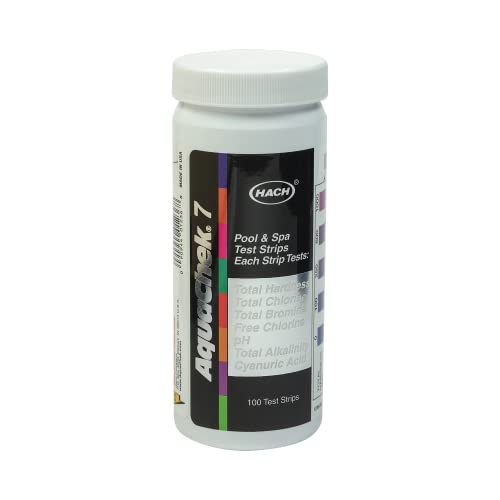
The reason these lead is the seventh pad. Most inexpensive strips read chlorine, pH, alkalinity and hardness — useful, but they omit cyanuric acid, and cyanuric acid is the number that explains the single most baffling situation in pool ownership: a test showing plenty of free chlorine in a pool that is nonetheless going green. Stabilizer accumulates from every trichlor tablet, never leaves except by dilution, and above roughly 100 ppm it progressively blunts the chlorine you are paying for.
Consensus Score ████████░░ 8.5 — owners consistently report clear, distinguishable color blocks and repeatable readings
The second reason is readability. Colour-matching is the whole mechanism of a test strip, and it lives or dies on how distinguishable adjacent blocks are on the chart. AquaChek strips draw consistently favorable comparisons here — the steps are far enough apart that a reading is a decision rather than a guess, which is not true of every budget alternative. At 100 strips per bottle they are also cheap enough per test that there is no excuse for skipping a week.
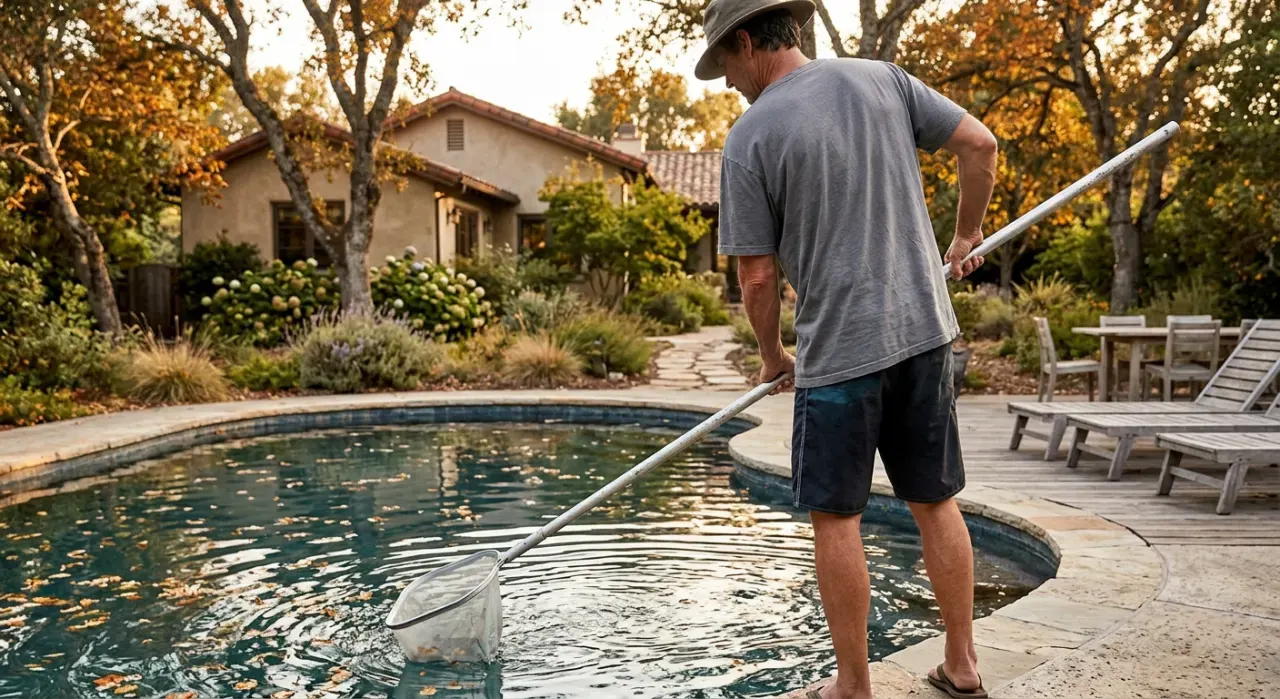
Practically, the routine is 15 seconds and looks like this: dip the strip into water drawn elbow-deep away from a return jet and away from any floating dispenser, remove without shaking, hold level, and read against the bottle label in natural daylight at the stated interval. Doing that consistently produces far more reliable results than any upgrade in strip brand.
The consensus criticisms are honest ones. Strips are approximate by nature, and at high chlorine the chlorine pad bleaches white and can read as low or zero — which is exactly backwards and has caused more than one owner to add more shock to an already-overdosed pool. Colour matching is genuinely subjective, and reviewers with color vision deficiency say so plainly. The bottle must be kept sealed and dry; wet fingers in the tube ruin the rest. And a minority report bottles arriving close to their expiry date, which shortens their useful life considerably.
Check price on Amazon → (paid link)
Best Pool Test Strips 2026: The Ranked Field
Best for weekly testing of a chlorine or bromine pool
- Seven readings: free and total chlorine, bromine, pH, alkalinity, hardness, cyanuric acid
- Cyanuric acid pad — the reading most cheap strips omit
- 100 strips per bottle
- Results in about 15 seconds
Why buy it: it is the only mainstream strip that reads stabilizer as well as everything else, and stabilizer is the number that quietly ruins pools.

Best for testing often enough to actually catch problems early
- Seven pads including cyanuric acid and hardness
- 100 strips at roughly half the price per test
- Dip two seconds, read at 30 seconds
- Includes a downloadable guide with target ranges
Why buy it: the cheapest way to test twice a week instead of once, which catches drift before it becomes a green pool.
Best for owners who would rather be told what to add than interpret a color chart
- Phone app scans the strip and reads the colors for you
- Gives dosing advice based on your pool volume
- Seven readings including cyanuric acid
- 50 strips plus the reader kit
Why buy it: phone scanning removes the color-matching guesswork that makes two people read the same strip differently.

Best for spas and hot tubs on bromine or chlorine
- Six pads: chlorine, bromine, pH, hardness, alkalinity and more
- Ranges scaled for the higher sanitizer levels a spa runs
- 100 strips per bottle
- Includes an e-book with spa target ranges
Why buy it: spa water runs at sanitizer levels that peg a pool strip, so a spa-scaled strip actually gives you a usable reading.

Best for anyone who wants numbers they can actually trust, especially at high chlorine
- FAS-DPD titration for free chlorine, accurate to 0.2 ppm
- Reads acid and base demand, alkalinity, hardness and cyanuric acid
- Large 2 oz reagent bottles for a long service life
- The reference kit most pool professionals carry
Why buy it: a titration measures rather than estimates, so it stays accurate at the shock-level chlorine where every strip goes blank.

Best for daily free-chlorine checks between full weekly tests
- Single-pad free chlorine reading, no other variables
- Four bottles for a long season of daily checks
- Direct DPD-style free chlorine measurement
- Fast read with a simple two-color comparison
Why buy it: a dedicated free-chlorine strip is far easier to read accurately than one pad among seven on a crowded strip.
Quick Comparison
| Product | Best for | Rating | Price | Buy |
|---|---|---|---|---|
| AquaChek 7-Way Pool and Spa Test Strips Silver 100 Strips | Best Overall | — | Check (paid link) | |
| JNW Direct 7-in-1 Pool Test Strips 100 Strips | Best Value | — | Check (paid link) | |
| AquaChek Select Connect 7-Way Pool and Spa Test Strips Complete Kit | Best App-Connected | — | Check (paid link) | |
| JNW Direct Hot Tub and Pool 6-in-1 Test Strips 100 Strips | Best for Hot Tubs | — | Check (paid link) | |
| Taylor Service Complete Pool Water Test Kit K-2006C | Best Accuracy | — | Check (paid link) | |
| AquaChek Free Chlorine Swimming Pool Test Strips 4-Pack | Best for Chlorine Only | — | Check (paid link) |
How We Rank
We do not buy or physically handle these products. Rankings come from aggregating star ratings and review volume across large owner-review sets, weighting recent reviews above older ones, checking the number and type of test pads, stated read times and measurement ranges against manufacturer documentation, and reading negative reviews closely. In this category the negative reviews are especially useful because they separate into problems with the product — degraded strips, close expiry dates — and problems with technique, which are far more common.
Four factors set the order. What the strip actually measures, with cyanuric acid weighted heavily since it is the reading owners most often lack. Colour-chart readability, judged from owner reports of ambiguity between adjacent blocks. Cost per test, because frequency of testing beats precision of testing for real-world pool management. And owner satisfaction, weighted by review volume. Prices were checked at the time of writing. Full method: how we rank.
The Test Kits, Reviewed
1. AquaChek 7-Way Silver — Best Overall
Covered above. Consensus Score ████████░░ 8.5. Strengths: seven readings including cyanuric acid; distinguishable color blocks; 100 strips per bottle; a 15-second read; and the brand most widely used by pool professionals for quick checks. Recurring complaints: the chlorine pad bleaches out and misreads at shock level; color matching is subjective; the bottle must be kept scrupulously dry; some bottles arrive near expiry; and the hardness pad in particular is criticised as hard to distinguish.
2. JNW Direct 7-in-1 — Best Value
The same seven readings for roughly half the price per test, and that matters more than it sounds. The most common testing failure is not inaccuracy, it is not testing — and a strip cheap enough to use twice a week catches a pH drift on Wednesday instead of finding algae on Sunday. The supplied guide with target ranges is a genuine help for a first-season owner.
Consensus Score ████████░░ 8.1 — very strong value ratings, slightly behind on chart clarity
Recurring complaints: the color chart is the main criticism, with several owners describing adjacent blocks as harder to separate than the premium brands. Reports of the cyanuric acid pad reading high or low compared with a professional test recur. Bottle caps are described as loose by some reviewers. And the same bleaching problem at high chlorine applies here as everywhere.
3. AquaChek Select Connect — Best App-Connected
The version that removes the color matching. You dip the strip, photograph it with the phone app inside the supplied reader, and the app converts the colors into numbers and tells you what to add based on your pool volume. For anyone who finds color charts ambiguous — and for anyone with color vision deficiency — that is a meaningful improvement rather than a gimmick.
Consensus Score ███████░░░ 7.5 — good ratings held back by app dependence
Recurring complaints: app dependence is the recurring theme, with owners reporting scanning failures in bright sun or shade, and frustration when app updates change the workflow. It supplies 50 strips rather than 100 at a higher price. Several reviewers report the dosing advice being generic. And an app-based product is only supported for as long as the manufacturer maintains it.
4. JNW Direct Hot Tub and Pool 6-in-1 — Best for Hot Tubs
Spa water is not pool water with a heater. It runs hotter, carries a far higher bather load per gallon, and is typically sanitized at higher levels — the CDC puts the floor at 3 ppm free chlorine in a hot tub against 1 ppm in a pool — which pegs a pool-scaled strip at the top of its range and tells you nothing. These strips are scaled for that, cover bromine as well as chlorine, and come 100 to a bottle so testing before every soak is realistic.
Consensus Score ███████░░░ 7.9 — well rated within the spa use case
Recurring complaints: owners report the pads degrading faster than pool strips, which is at least partly the humid environment they live in. No cyanuric acid pad, which matters less in a covered spa but is still a gap. Several describe the bromine and chlorine blocks as easy to confuse. And a bottle of 100 will often expire before a single spa owner uses it.
5. Taylor K-2006C — Best Accuracy
The honest counterweight to this whole category. A FAS-DPD titration counts drops until a color change occurs, which is a measurement rather than a visual comparison, and it stays accurate at the high chlorine levels where every strip bleaches out. It reads acid and base demand — telling you not just that pH is off but how much acid to add — alongside alkalinity, hardness and cyanuric acid. This is the kit most service technicians carry.
Consensus Score █████████░ 9.0 — the highest-rated product in this roundup, in a different price bracket
Recurring complaints: cost is the obvious one, at several times the price of a season of strips. It takes five to ten minutes rather than fifteen seconds, so nobody uses it twice a week. Reagents have a shelf life and refills add ongoing cost. The instructions are widely described as intimidating for a first-time user. And the small dropper bottles are easy to spill.
6. AquaChek Free Chlorine Strips — Best for Chlorine Only
A single-pad strip that does one job well. Reading free chlorine off a crowded seven-pad strip means locating the right block and comparing it against a chart of similar shades; a dedicated free-chlorine strip is a simple two-color comparison and far harder to misread. The four-bottle pack is designed for daily checks between full weekly tests.
Consensus Score ███████░░░ 7.7 — good ratings inside a deliberately narrow role
Recurring complaints: owners expecting a full test panel rate it poorly, which is a mismatch rather than a fault. Four bottles is more than most pools need in a season and some will expire unused. The pad still bleaches at very high chlorine. And several reviewers note the price is high for a single-parameter strip.
How to Choose Pool Test Strips
Check what the strip measures before you look at anything else, and specifically whether it reads cyanuric acid. A pool run on trichlor tablets gains stabilizer every week, and above roughly 100 ppm your chlorine becomes progressively less effective no matter how much you add. A strip without that pad will happily tell you everything is fine while the pool turns green.
Prefer cost per test to precision. Strips are approximate by design, and the marginal accuracy difference between a good budget strip and a premium one is smaller than the difference between testing twice a week and testing once a fortnight. Buy the cheap accurate-enough option and use it constantly.
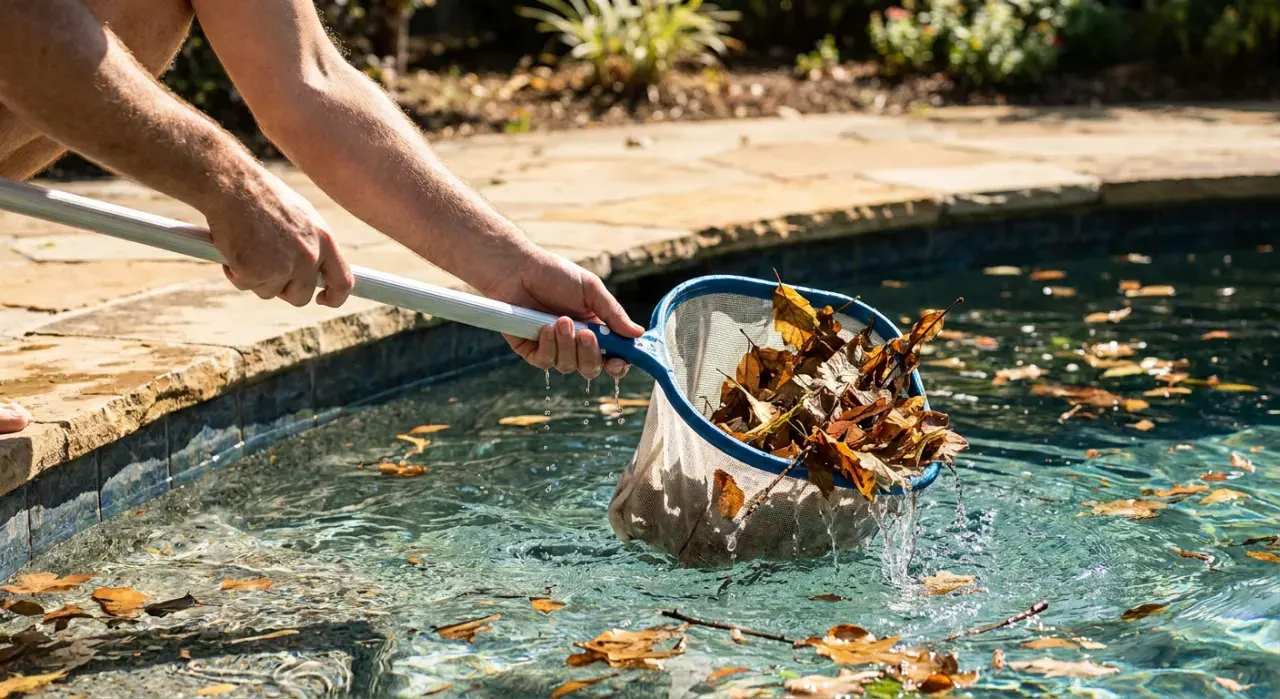
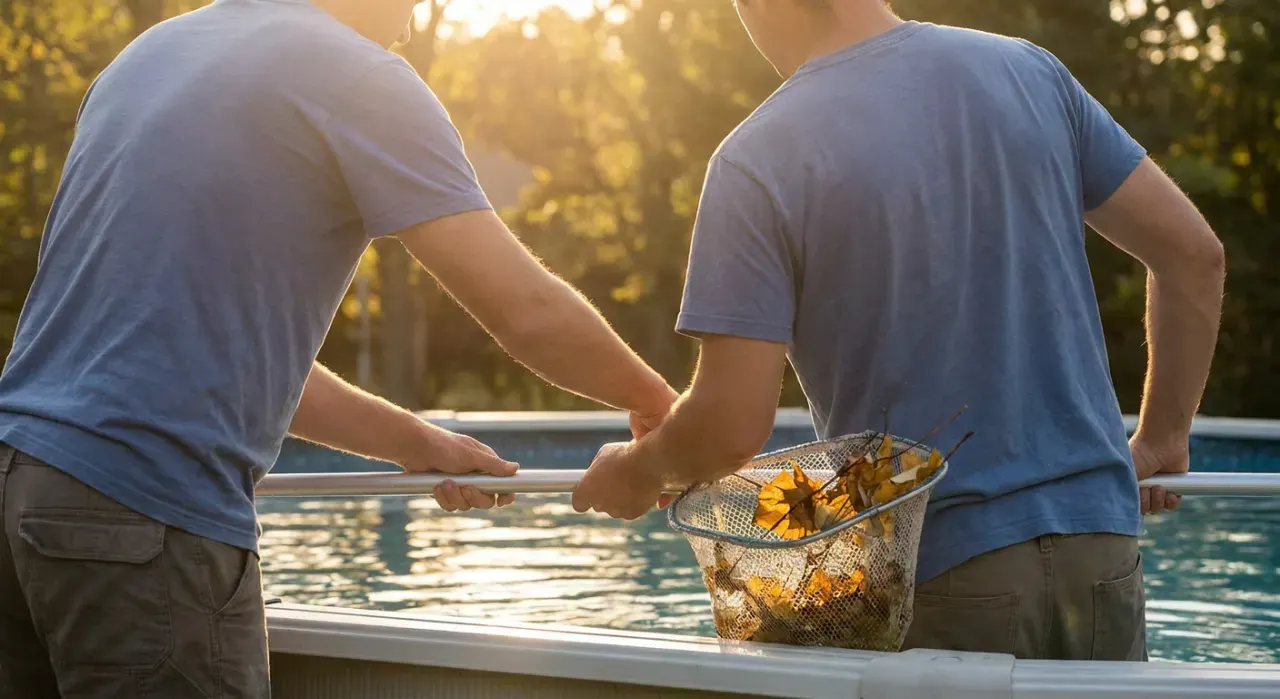
Get the technique right, because it dominates the result. Draw your sample elbow-deep, away from return jets and well away from a floating chlorine dispenser, since water near either is not representative. Dip for the stated time, do not shake the strip, hold it level so colors do not run into each other, and read at the stated interval in natural daylight. Store the bottle sealed, dry and out of the sun, and never put wet fingers inside it.
Finally, keep a titration kit for problems even if strips do your weekly work. When a pool has been shocked heavily, every strip in this list will bleach out and read low, and adding more chlorine on the basis of that reading is a genuinely bad outcome. A FAS-DPD kit is the tool for that situation, for confirming a suspicious stabilizer reading, and for the once-a-season sanity check that tells you your strips are still honest. Note also that no home test measures everything — for suspected metals or salt-cell problems, a pool-store or lab test is still the right call.
What Owners Actually Complain About
Bleaching at high chlorine is the most consequential complaint and it applies to every strip made. Above roughly 10 ppm free chlorine the pad oxidizes to white, and a white pad can read as the lowest value on the chart. Owners who shock and then test an hour later routinely believe they added too little. Wait, dilute the sample, or use a titration kit.
Colour-matching ambiguity is the everyday grievance, and it is worse for the hardness and alkalinity pads than for chlorine and pH. Reviewers with color vision deficiency consistently rate strips lower, which is a real accessibility issue and the strongest argument for the app-based reader.
Degraded or expiring strips generate a steady stream of one-star reviews. Some of this is genuine — bottles shipped near expiry — and much of it is storage: an open bottle in a humid pool shed is finished within weeks. Cap it immediately, keep it indoors, and never store it in the pump house.
Disagreement with the pool store is a recurring theme, and it is usually a fair fight neither side wins. The store test is generally more precise, but it is also a sample carried in a car for twenty minutes and read by someone with a commercial interest in the result. And sampling error — testing right next to a return or under a chlorine floater — invalidates more results than any product defect.
The Verdict
For most pools, AquaChek 7-Way Silver is the test strip to buy: seven readings including stabilizer, and the clearest color chart in the category. If price per test is what stops you testing regularly, JNW Direct 7-in-1 is the better real-world choice, because a strip you actually use beats a strip you ration. Choose AquaChek Select Connect if color matching is genuinely difficult for you, and the JNW 6-in-1 if a spa is what you are testing. Whatever you use weekly, keep a Taylor K-2006C in the cupboard for the day a problem needs a real measurement rather than an estimate.
Check price on Amazon → (paid link)
Next: interpret the readings in what should pool pH and chlorine levels be, act on them with best pool chlorine tablets and best pool shock, or diagnose a stubborn pool with why does my pool keep losing chlorine.