 Garden


Affiliate Disclosure
Some links on this page are affiliate links. As an Amazon Associate, we earn from qualifying purchases — at no extra cost to you. We do not buy, test, or physically handle the products we cover; our rankings come from aggregated owner reviews, ratings and expert consensus. Commissions never change our verdicts. How we rank · full disclosure.
The most common reason a pool keeps losing chlorine is cyanuric acid that is out of range. Without stabilizer, ultraviolet light destroys most of the free chlorine in an outdoor pool within a few hours of midday sun. With too much stabilizer, above roughly 80 to 100 ppm, chlorine is chemically bound and the reading falls despite dosing. The other five causes are organic chlorine demand from early algae, high combined chloramines, phosphates and nitrates, pH above 7.8 reducing chlorine effectiveness, and inadequate circulation. Test cyanuric acid first.
How does cyanuric acid control chlorine loss?
Cyanuric acid is a UV shield. It forms a reversible bond with hypochlorite, protecting a reservoir of chlorine from sunlight and releasing it as free chlorine is consumed. Unstabilized chlorine in a sunlit pool falls dramatically within hours; at 30 to 50 ppm cyanuric acid, that same chlorine can last through the day.
The catch is that the protection has a cost. As stabilizer rises, a proportionally higher free chlorine level is needed for the same sanitizing power. The widely used working rule is to hold free chlorine at about 7.5 percent of the cyanuric acid reading.
| Cyanuric acid | Minimum free chlorine | Target free chlorine | Verdict |
|---|---|---|---|
| 0 ppm | 1 ppm | 2 - 3 ppm | Burns off in hours outdoors |
| 30 ppm | 2 ppm | 3 - 4 ppm | Ideal for most chlorine pools |
| 50 ppm | 4 ppm | 5 - 6 ppm | Good; usual salt-pool floor |
| 80 ppm | 6 ppm | 7 - 8 ppm | Workable but demanding |
| 100 ppm | 8 ppm | 9 - 11 ppm | Too high; dilute |
| 150 ppm | 11 ppm | 12 - 15 ppm | Chlorine lock; partial drain required |
Cyanuric acid only leaves by dilution — draining and refilling, or heavy rain overflow. Nothing you add removes it. If you use trichlor tablets or dichlor granules, stabilizer climbs continuously as a side effect, which is how pools drift into lock without anyone adding stabilizer deliberately.
What is chlorine demand and how do I test for it?
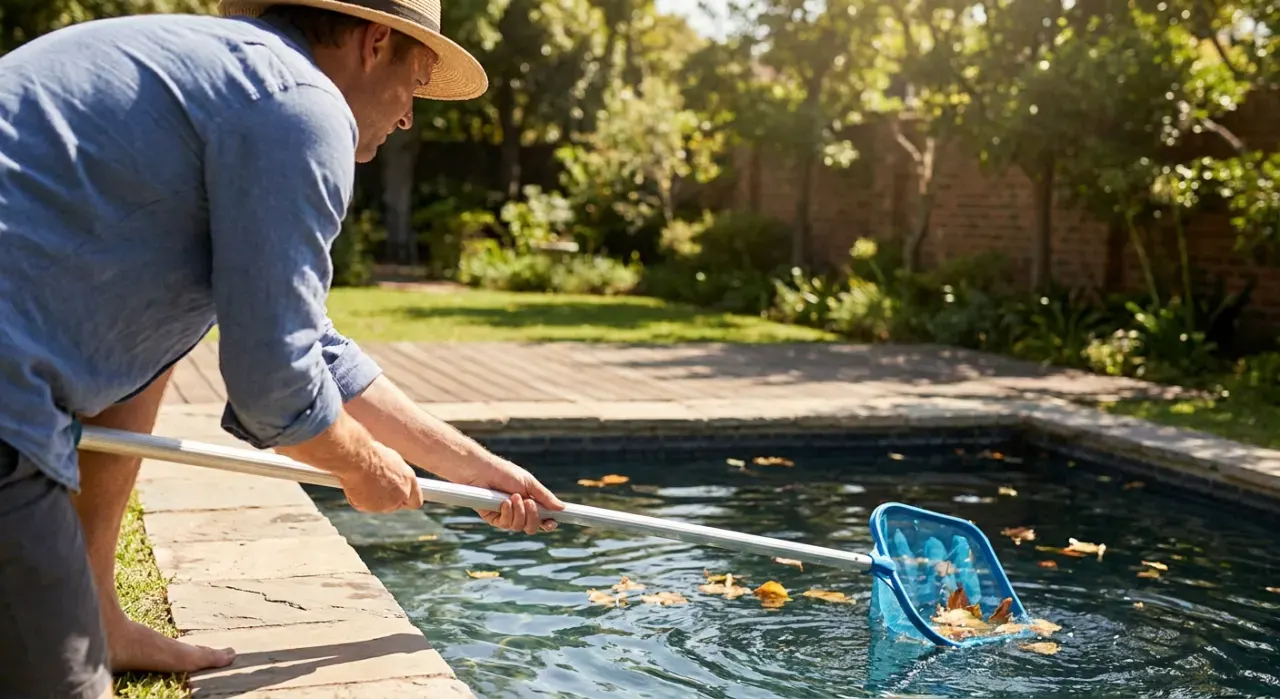
Chlorine demand is organic material consuming chlorine faster than you can add it. Early algae is the usual culprit, and it is often invisible: a film on the shaded wall, growth in the light niche, or a colony behind the ladder. Ammonia from decomposing organics, bather waste, sunscreen, lawn clippings and pollen all count too.
The diagnostic is the overnight chlorine loss test. Raise free chlorine in the evening, record the level after full dark, and record it again before sunrise. With sunlight removed, healthy water loses under 1 ppm. Losing 2, 3 or 5 ppm overnight means active organic demand, and the answer is a proper shock held at the appropriate level for your cyanuric acid until overnight loss drops below 1 ppm — not a single dose.
What else consumes chlorine?
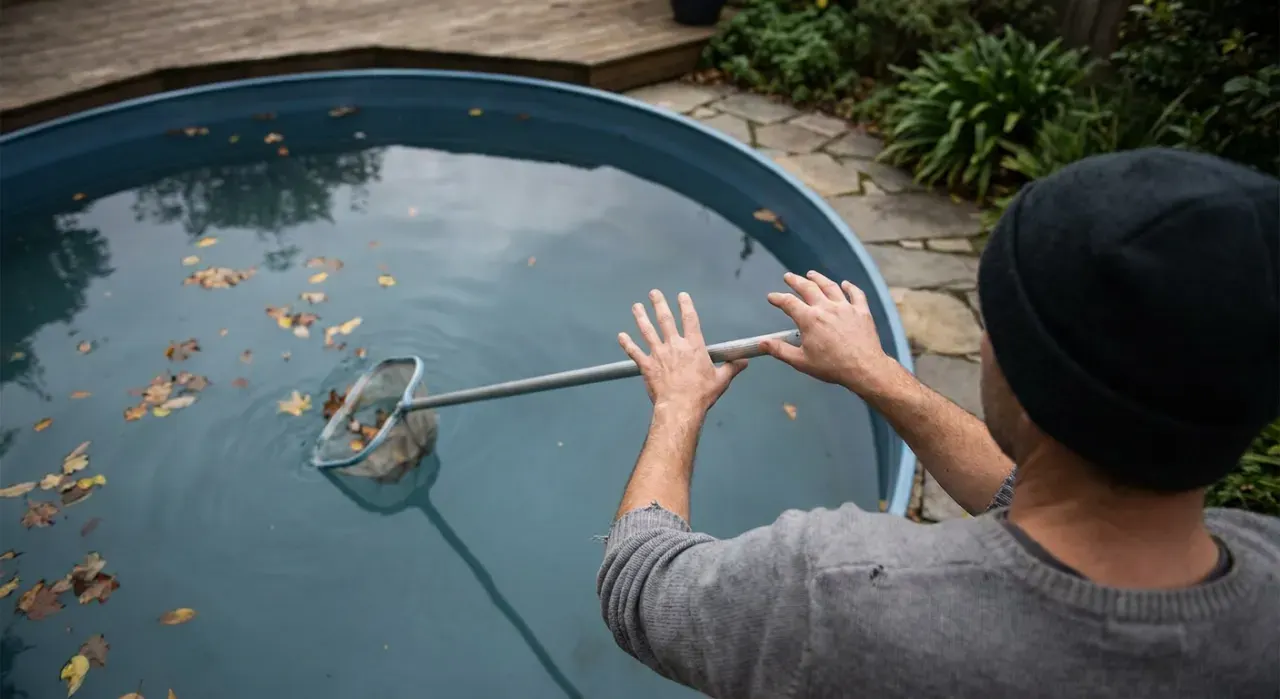
| Cause | How to spot it | Fix |
|---|---|---|
| Combined chloramines above 0.5 ppm | Strong chlorine smell, eye irritation | Shock to breakpoint, roughly 10x the combined reading |
| pH above 7.8 | Test strip or drop kit | Muriatic acid to 7.2 - 7.6; chlorine works far better at lower pH |
| Phosphates above ~500 ppb | Algae returns despite good chlorine | Phosphate remover; check for fertilizer runoff |
| Metals, especially iron and copper | Staining, well or hauled fill water | Sequestrant at every refill |
| Heavy bather load | After a party or hot weekend | Shock the same evening |
| Poor circulation | Dead zones, algae only in corners | Longer run time; see the pump schedule guide |
| Dilution from rain or backwashing | Cyanuric acid drops too | Re-stabilize after heavy rain |
| Water above 85°F | Seasonal | Expect 30 - 50% higher consumption |
Could my test be lying to me?
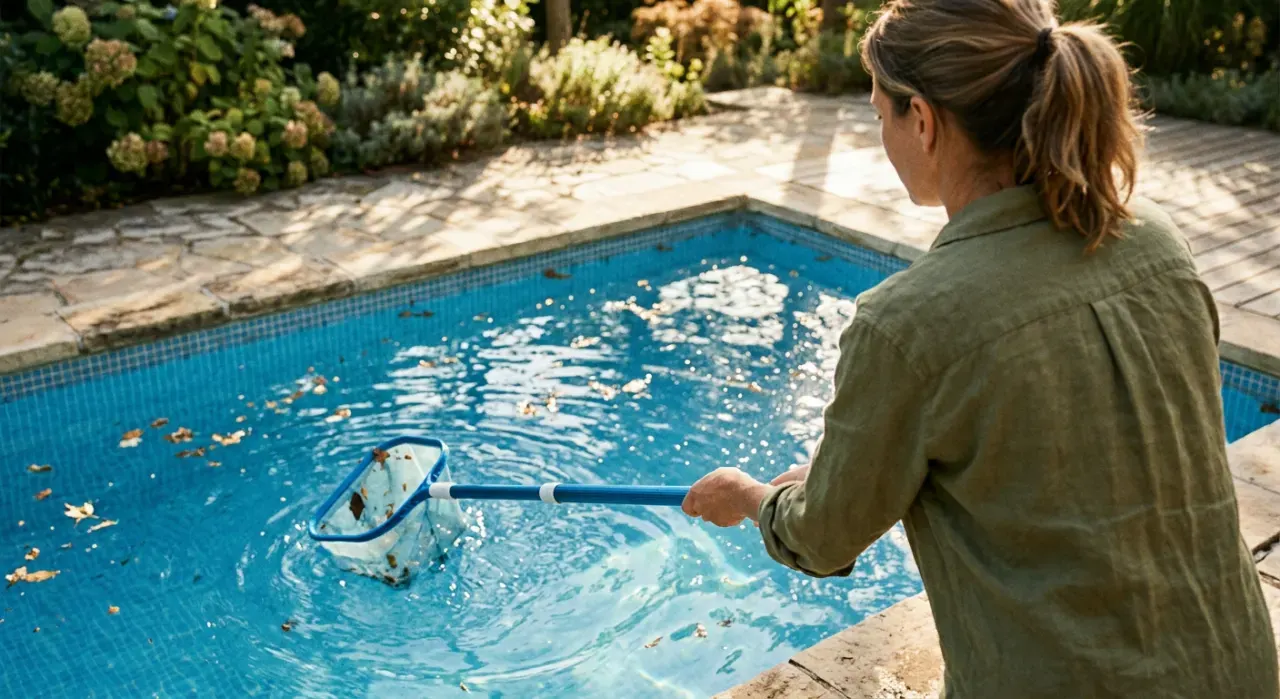
Frequently, and this is worth checking before you spend anything. Three specific traps.
DPD bleach-out. If free chlorine is very high, roughly above 10 ppm, DPD reagent flashes pink and then goes clear almost immediately. Read casually, that looks like zero chlorine, and people respond by adding more. If the sample flashed color before clearing, dilute the sample with distilled water by half, retest, and double the result.
Expired reagents. DPD and OTO reagents degrade, typically within a year of opening, and give low readings. Replace them annually and store them out of heat and light.
Test strips at high ranges. Strips are convenient and roughly accurate at low chlorine, and unreliable above about 5 ppm and for cyanuric acid. For diagnosing a chlorine problem, use a drop-based FAS-DPD kit that measures free and combined chlorine separately. The distinction between the two is the entire diagnosis.
Target ranges for every reading are listed in what pool pH and chlorine levels should be. The CDC's healthy swimming guidance puts the operating floor at 1 ppm free chlorine and pH 7.2 to 7.8 for pools, with a higher floor for hot tubs.
What order should I work through this in?
- Test cyanuric acid. Below 30 ppm, add stabilizer. Above 90 ppm, plan a partial drain.
- Test pH and bring it to 7.2 to 7.6 before anything else, since chlorine is far more effective at lower pH.
- Run an overnight chlorine loss test to separate sunlight loss from organic demand.
- If overnight loss is high, shock and hold the level until it falls below 1 ppm, brushing daily.
- If overnight loss is fine but daytime loss is severe, the problem is stabilizer or circulation. Extend pump run time — see how many hours a day to run a pool pump.
- Only after all of that, look at phosphates and metals.
We never buy, test or physically handle the products we rank. Recommendations come from aggregated owner reviews, star ratings, review volume and expert consensus — see how we rank.
More from this hub: Pools & Spas · Best pool pumps · Cloudy water after shocking · Swimming after adding chlorine · How we rank