 Garden

Affiliate Disclosure
Some links on this page are affiliate links. As an Amazon Associate, we earn from qualifying purchases — at no extra cost to you. We do not buy, test, or physically handle the products we cover; our rankings come from aggregated owner reviews, ratings and expert consensus. Commissions never change our verdicts. How we rank · full disclosure.
No generator brand is best at everything, and the ones that market themselves that way are the ones to distrust. The useful question is narrower: which brand is best at the specific job you are buying for. Honda owns reliability at the small inverter end and charges accordingly. Westinghouse owns home backup by sheer breadth of well-reviewed models. DuroMax builds for sustained heavy load. WEN competes at the bottom without giving up the features that matter. Generac dominates permanently installed standby systems. And the battery brands — Jackery, EcoFlow, Anker, Bluetti — are a different industry that happens to share a search term.
One Model Per Brand, at a Glance
What Each Brand Is Actually For
| Brand | Strongest at | Weakest at | Typical position |
|---|---|---|---|
| Honda | Small inverter reliability, resale value, quietness | Price; almost absent above 7,000W | Premium |
| Westinghouse | Home backup breadth, dual and tri-fuel, transfer-switch readiness | Weight and noise on open-frame models | Mainstream |
| Champion | Warranty, US support network, parts availability | Rarely leads on specification | Mainstream |
| DuroMax / DuroStar | Heavy sustained load, metal frames, copper windings | Loud; heavy; not aimed at quiet use | Heavy duty |
| WEN | Price, fuel shut-off valves, light inverter units | Long-term parts supply on older models | Budget |
| Generac | Installed standby systems, dealer coverage | Portables rate below its standby reputation | Standby specialist |
| Kohler | Standby engine build quality, quieter running | Smaller dealer network, higher price | Premium standby |
| Jackery | Battery power stations, largest owner base | Not a fuel generator maker at all | Battery |
| EcoFlow | Recharge speed, expandable battery systems | Complexity; firmware-dependent features | Battery |
| Anker (SOLIX) | Surge headroom per dollar | Smaller range than the leaders | Battery |
The Badge on the Tank Is Not Always the Manufacturer
Several familiar names in this category are licensed brands rather than the original companies. Westinghouse generators are made under license by a separate manufacturer, not by the historic Westinghouse Electric Corporation. That is standard practice across appliances and tools and it is not a scandal — but it does mean brand heritage tells you very little. Judge these products on their current owner-review record, not on a name that was famous in 1950.
The same applies in reverse. Several budget brands with unfamiliar names build perfectly competent machines, and a few well-known names sell rebadged units from the same handful of Chinese factories that supply everyone else. What actually separates good from bad at any price point is narrower than the badge: copper rather than aluminum alternator windings, a real fuel shut-off valve, a CO shutdown sensor, low-oil protection, and — most practically — whether you can still buy a carburetor for it in five years.
Our Pick for Most Buyers: Westinghouse
Westinghouse takes the top spot not because its machines are the finest engineered here — Honda's are — but because of what its owner-review record makes possible. Across the home backup sizes most people are shopping, Westinghouse has more well-reviewed models with more long-term owners than anyone else. That means the failure modes are documented rather than inferred: you can find out what breaks at year three before you spend the money.
The range is also unusually coherent. Outlet configurations and transfer-switch readiness are consistent across models, which sounds dull until you are trying to match a generator to an inlet box an electrician already installed. Dual fuel is available at almost every size, and tri-fuel at the top, which matters more than raw wattage for a machine that has to start after eight months in a garage.
The honest weaknesses are consistent in the owner record too. Open-frame Westinghouse units are loud, the large ones are heavy enough to need two people and a plan, and — like every gasoline generator — they will not start on stale fuel. None of that is brand-specific; it is the physics of the category.
Check price on Amazon → (paid link)

The Brands, With a Representative Model

Best for home backup buyers who want the widest well-reviewed range
- 12,500 peak / 9,500 running watts, dual fuel
- Dominant share of well-reviewed home backup listings
- Consistent outlet and transfer-switch layout across the range
- Three-year warranty with a US service network
Why buy it: Westinghouse has the deepest owner-review record in US home backup, which means the failure modes are documented rather than guessed at — the single most useful thing a brand can offer.

Best for buyers who want a phone number that answers and parts that exist
- 4,000 starting / 3,500 running watts, inverter output
- Free 3-year warranty and lifetime technical support
- Large US dealer and parts network
- Economy Mode for lower noise and fuel burn
Why buy it: Champion competes on support rather than specification, and for a machine used a few times a year the ability to get a carburetor in three days is worth more than 200 extra watts.

Best for contractors, farms and homes that work a generator hard
- 13,000 peak / 10,500 running watts, dual fuel
- All-metal frame, 500cc engine, copper windings
- Full outlet panel with 50A and 30A twist-lock
- Positioned squarely at sustained heavy load
Why buy it: DuroMax build to a heavier standard than the homeowner brands — copper windings and steel frames — and the long-ownership reviews reflect it.
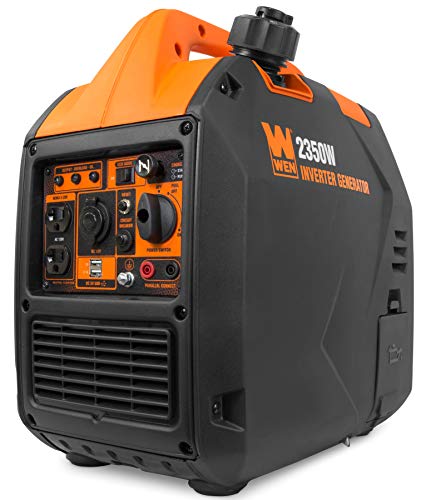
Best for camping, tailgating and occasional light backup on a budget
- 2,350 surge / 1,900 running watts, inverter output
- Fuel shut-off valve to clear the carburetor before storage
- Ultra-light at around 39 pounds
- Two-year warranty
Why buy it: WEN undercut everyone on price without dropping the features that actually matter, and the fuel shut-off valve is a better predictor of long-term satisfaction than almost anything on a spec sheet.

Best for silent, indoor-safe backup with no carbon monoxide risk
- 1070Wh LiFePO4 battery, 1500W AC output
- Roughly 4,000 cycles to 70 percent capacity
- Full AC recharge in about an hour
- The largest owner-review base in the power station category
Why buy it: the brand that made portable power stations mainstream, and the one with enough long-term owners for capacity fade and firmware issues to be visible rather than speculative.

Best for fast recharging and expandable battery systems
- 1024Wh LiFePO4, 1800W AC with 3600W surge
- Roughly one-hour AC recharge from empty
- X-Boost mode for higher-wattage resistive loads
- Expandable with additional battery modules
Why buy it: EcoFlow push the engineering hardest — recharge speed and expandability are genuinely ahead of the category, which is the argument for buying the brand rather than the cheapest kilowatt-hour.
Quick Comparison
| Product | Best for | Rating | Price | Buy |
|---|---|---|---|---|
| Westinghouse WGen9500DF 12500 Peak Watt Dual Fuel Home Backup Generator, Remote Electric Start | Best Brand Overall — Westinghouse | — | Check (paid link) | |
| Champion Power Equipment 4000-Watt RV Ready Portable Inverter Generator with Quiet Technology | Best for Service and Warranty — Champion | — | Check (paid link) | |
| DuroMax XP13000EH 13000 Watt Dual Fuel Portable Generator with Electric Start | Best Heavy-Duty Brand — DuroMax | — | Check (paid link) | |
| WEN 56235i 2350-Watt Super Quiet Portable Inverter Generator with Fuel Shut Off | Best Budget Brand — WEN | — | Check (paid link) | |
| Jackery Explorer 1000 v2 Portable Power Station, 1070Wh, 1500W, LiFePO4 | Best Battery Brand — Jackery | — | Check (paid link) | |
| EF ECOFLOW Delta 3 Classic Portable Power Station, 1024Wh, 1800W AC | Best Technology Brand — EcoFlow | — | Check (paid link) |
Where Honda Fits
Honda deserves its reputation and does not need defending, but it also does not appear in the list above, and it is worth explaining why. Honda's generator business is concentrated in small and mid-size inverter units — the EU series — where it is genuinely the reliability benchmark and holds resale value better than anything else in the category. Above roughly 7,000 watts, where most home backup buying happens, Honda barely competes. And the price premium is real: two to three times a comparable Westinghouse or Champion.
That premium is defensible if you will use the machine often and for many years — a contractor, a full-time RVer, a market trader. It is much harder to justify for a machine that runs twelve hours a year during outages, where a mainstream brand with a good warranty and available parts delivers the same practical outcome for a third of the money.
How We Rank
We do not buy, run or test these machines. Brand rankings come from aggregated owner ratings across each brand's most-owned models, weighted toward reviews written after a season or more where starting reliability, parts availability and service experience surface, and cross-checked against published specifications. Four things carry the weight: consistency across the range rather than one standout model; parts and service availability, which decides whether a machine is repairable or disposable; safety equipment such as CO shutdown sensors and low-oil protection; and how the brand's own long-ownership reviews read, which is where a reputation either holds up or does not. Prices were checked at the time of writing. Full method: how we rank.
What Owners Complain About, By Brand
Westinghouse: weight, open-frame noise, and assembly instructions that owners repeatedly describe as thin. Output figures on propane catch buyers who sized for gasoline.
Champion: generally strong service reports, but owners note specifications that trail rivals at the same price, and some inverter models are heavier than competitors of equal output.
DuroMax and DuroStar: noise is the dominant complaint, along with weight. These are not machines for a suburban lot with close neighbors.
WEN: excellent value reports, with recurring concern about parts availability for discontinued models and a warranty period shorter than Champion's.
Generac portables: the standby reputation does not fully carry over; owner ratings on the portable range sit below the brand's standby reputation.
Battery brands: across all four, the recurring complaints are fan noise under load, optimistic runtime displays, and solar panels not being included despite product names that say "solar generator". Our power station guide covers that in detail.
Whichever Brand You Buy
Brand makes no difference to the two things that actually kill people. Run any fuel generator outdoors only, at least 20 feet from the house, exhaust pointed away from doors, windows and vents — never in a garage, a basement, or under a carport, even with the door open. The US Consumer Product Safety Commission states that one portable generator can emit as much carbon monoxide as hundreds of cars and links more than 100 US deaths a year to generator CO; it is colorless and odorless, so you get no warning. Fit CO alarms on every level of the home. And never plug a generator into a wall outlet — backfeeding energizes the utility line and can electrocute the crews restoring your power. A transfer switch or interlock kit fitted by a licensed electrician is the only correct method.
The Verdict
Buy Westinghouse for home backup, because the breadth of well-reviewed models and the dual and tri-fuel coverage suit the job better than anything else at the price. Buy Champion if service and warranty reassurance matter more to you than specification. Buy DuroMax if the machine will work hard for hours at a time and noise is not a constraint. Buy WEN if the budget is firm and the use is occasional. Buy Honda if you will use it constantly for a decade. And if what you actually need is silent, indoor-safe power for electronics and a fridge, buy a battery from Jackery or EcoFlow instead — different industry, different problem, and often the right answer. Check price on Amazon → (paid link)
Sources: US Consumer Product Safety Commission Carbon Monoxide Information Center; ESFI portable generator safety.
More from this hub: power tools & workshop · best portable generators · best whole house generators · how long generators last · how we rank.