 Garden


Affiliate Disclosure
Some links on this page are affiliate links. As an Amazon Associate, we earn from qualifying purchases — at no extra cost to you. We do not buy, test, or physically handle the products we cover; our rankings come from aggregated owner reviews, ratings and expert consensus. Commissions never change our verdicts. How we rank · full disclosure.
The verdict in 90 seconds
The DEWALT DXV09P is a workshop vacuum that behaves like a jobsite tool, which is exactly what most garages need. Nine gallons is the size that stops you emptying mid-job, the drum and wheels survive being knocked around, and the suction through a wide 1-7/8 inch hose picks up screws and wood offcuts without jamming. Owners rate it near the top of the category. What it will not do out of the box is handle fine dust — the standard filter passes drywall and concrete dust straight into the room — and it is loud enough to need hearing protection.
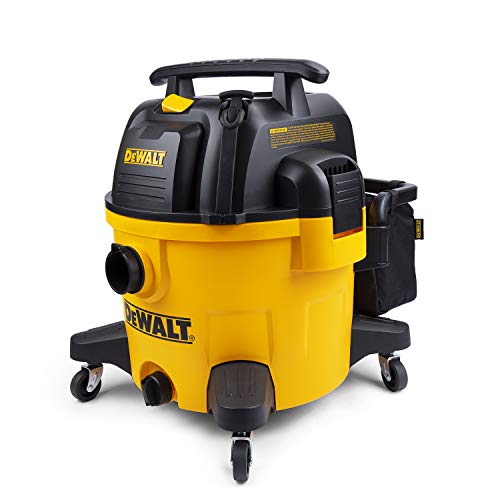
Best for a garage or jobsite where the vacuum has to survive being knocked over
- 9 gallon polypropylene tank rated 5 peak HP
- Wet pickup, dry pickup and blower functions
- 1-7/8 in. x 7 ft. hose with a rubber-lined connection
- Large rear wheels and front casters with on-board accessory storage
Why buy it: the tank and the wheels are the reason it survives a workshop, and 9 gallons is the size that stops you emptying it mid-job.

What owners consistently praise
Suction that matches the claims. The recurring comparison in reviews is against older or cheaper shop vacs, and owners consistently report this one lifting wet sawdust, gravel, screws and shop debris without stalling. The wide hose is the reason — narrow hoses are where most cheap vacuums lose their advantage.
Build quality. The polypropylene drum, the latches and the rubber-lined hose connection all draw praise. Owners describe it surviving falls off a tailgate and being dragged across concrete, and the large rear wheels roll over cords and thresholds instead of catching on them.
Nine gallons is the right size. Big enough for a bathroom demo or a weekend of woodworking, small enough to wheel through a door and store under a bench. Owners who previously owned a 5-gallon describe not going back; owners who tried a 16 describe not having anywhere to put it.
The blower function. Reversing the hose clears leaves off a driveway, sawdust off a bench and debris out of a garage corner. Not a leaf blower substitute, but it costs nothing and gets used.
On-board storage. Hose, wand sections and nozzles clip to the body, so the accessories are still with the vacuum a year later — a detail that owners of other vacuums specifically say they miss.
What owners actually complain about
Noise. The top complaint, and unavoidable in the class. A high-airflow motor a few feet away is loud enough that NIOSH-recommended hearing protection is sensible for anything longer than a quick pickup. Owners describe conversation being impossible while it runs.
Fine dust defeats the standard filter. Drywall and concrete dust blind the cartridge within minutes, suction collapses, and a fine haze exits the exhaust. This is not a defect — it is what a general-purpose filter does — but it catches out owners who bought the vacuum specifically for a remodel. A fine-dust filter plus a drum bag fixes it and costs extra.
Hose length and stiffness. Seven feet is short once the vacuum is parked, and owners report the hose holding a coil and kinking at the port in cold weather. Extension hoses are available and add cost.
Cord length. Around ten feet, so an extension cord is effectively standard equipment for garage work. A frequent, mild irritation.
Casters and wheel sockets. The most commonly reported hardware failure is a front caster popping out of its socket, usually when the vacuum is dragged by the hose rather than pushed. Replacements are cheap; the annoyance is real.
Filter seating. Several owners report dust escaping past the cartridge when it is not fully seated on the cage, which presents as the vacuum blowing dust out the back. Worth checking before blaming the filter.
Wet pickup discipline. Forget to remove the cartridge filter before vacuuming water and it soaks, then smells. It appears often enough in reviews to be worth a note on the drum.

Getting the best out of it
Set the filtration up for the job before you start. For sawdust and general shop debris the standard cartridge is fine. For drywall, plaster, concrete or joint compound, fit a fine-dust cartridge and a collection bag together — the bag catches the bulk so the filter is not doing all the work, and the pair keeps suction usable for a whole room instead of ten minutes. Tap or brush the filter clean between sessions rather than washing it, unless it is a washable type, and let it dry completely before refitting.
Two habits protect the machine. Push or carry it rather than dragging it by the hose, which is what pulls casters out of their sockets. And after any wet pickup, drain the drum, wipe it out and leave the lid off overnight — a shop vacuum that smells is almost always one that had water left in it. If you plan to connect it to a sander or a miter saw, buy the correct tool-port adaptor rather than improvising with tape, because a leaking connection loses more airflow than most people expect.
Who it suits, and who should buy something else
Buy it if you want one vacuum for a garage or workshop and it needs to handle wet, dry, heavy and awkward without complaint.
Buy a compact vacuum instead if the work is cars and workbenches — the Armor All AA255 is a fraction of the size and gets used far more often for small jobs.
Buy a fine-dust extractor instead if the main job is drywall sanding or concrete grinding. Filtration and automatic filter cleaning are what matter there, not tank size — see best shop vac for fine dust.
Check the sizing first with what size shop vac do I need, and compare the whole field in our best shop vac guide.

Specifications
| Spec | DEWALT DXV09P |
|---|---|
| Tank capacity | 9 gallons, polypropylene |
| Motor | 5 peak HP, 120 V |
| Hose | 1-7/8 in. diameter, 7 ft. long |
| Cord | Approximately 10 ft. |
| Functions | Wet pickup, dry pickup, blower |
| Filtration | General-purpose cartridge; fine-dust and HEPA filters sold separately |
| Drain | Bottom drain port |
| Mobility | Large rear wheels plus front casters |
| Accessories | Wands, utility and crevice nozzles, on-board storage |
| Warranty | 3 year limited |
The bottom line
This is the shop vacuum most home workshops should own: the right tank size, a hose wide enough to swallow real debris, and a body built to be treated badly. Budget for a fine-dust filter and a pack of drum bags at the same time if any part of your work involves sanding, keep a set of ear defenders on the handle, and push it rather than dragging it by the hose.
Check price on Amazon → (paid link)
Next: set up collection properly with how to use a shop vac for dust collection, solve the haze in why does my shop vac blow dust out the back, check the wet rules in can a shop vac pick up water, or start from the power tools and workshop hub.