 Garden

Affiliate Disclosure
Some links on this page are affiliate links. As an Amazon Associate, we earn from qualifying purchases — at no extra cost to you. We do not buy, test, or physically handle the products we cover; our rankings come from aggregated owner reviews, ratings and expert consensus. Commissions never change our verdicts. How we rank · full disclosure.
Buy dual fuel if the generator will mostly sit; buy gasoline-only if it will be used regularly. That is the whole decision in one line. Dual fuel costs $100 to $250 more and produces roughly 8 to 12 percent less power on propane than on gasoline — but propane does not go stale, and stale gasoline is far and away the most common reason a stored generator refuses to start when a storm arrives. A gasoline-only machine is better value per watt and mechanically simpler, and that matters if it never sits long enough for fuel to spoil.
The comparison, side by side
| Gasoline only | Dual fuel (gas + propane) | |
|---|---|---|
| Purchase price | Lower — best watts per dollar | $100–$250 more for the same output |
| Output | Full rated figure | Full on gasoline, 8–12% less on propane |
| Fuel shelf life | ~30 days before degradation begins | Propane: indefinite |
| Starting after long storage | The main weakness | The main strength |
| Engine cleanliness | Carbon and varnish buildup | Propane burns notably cleaner |
| Cold weather | Reliable | Propane output falls below ~20°F |
| Run time per fuel unit | Longer per gallon | A 20lb bottle is roughly 4.6 gallons equivalent |
| Fuel availability in a storm | Gas stations need power to pump | Bottle exchange is often still available |
| Complexity | Simple carburetor | Extra regulator, hose and changeover |
| Storing fuel at home | Gasoline degrades and is a fire risk | Propane bottles store safely outdoors for years |

Why propane solves the problem it solves
US pump gasoline typically contains up to 10 percent ethanol and begins deteriorating within about 30 days. Two things go wrong in storage. The volatile fractions evaporate, leaving a sticky varnish that settles in the carburetor and blocks the main jet — a passage roughly the diameter of a pin. And ethanol draws moisture out of the air, which separates out and corrodes the tank and fuel system from the inside.
That single mechanism is behind most of the "it ran fine, then it wouldn't start" reviews across every generator brand. It is the reason our troubleshooting guide starts with fuel rather than spark.
Propane simply does not do any of it. It is chemically stable, it does not absorb water, and it leaves nothing behind in the fuel system. A dual fuel generator stored with the propane hose connected and the gasoline tank empty is a machine that starts, and owners report exactly that in the review record.
The output penalty is real
Propane carries less energy per unit delivered to the cylinder than gasoline vapor, so the same engine makes less power on it. Manufacturers publish both figures, and it is worth reading them rather than the headline.
| Fuel | Typical output vs gasoline | Notes |
|---|---|---|
| Gasoline | 100% (the rated figure) | Highest output, shortest shelf life |
| Propane (LPG) | 88–92% | Indefinite storage, cleaner burn |
| Natural gas | 70–80% | Unlimited supply, lowest output |
Size for the fuel you will actually use. If you plan to run on propane through outages, a generator rated 9,500 running watts on gasoline is an 8,500-watt generator in practice, and your circuit list needs to fit inside that. This catches people out particularly on well pumps, where the surge headroom you thought you had quietly disappears.

Where tri-fuel fits
Tri-fuel machines add a natural gas option to the same engine, and if your house already has a gas line this is the most consequential upgrade in the whole category. A generator plumbed to a house gas line by a licensed installer never needs refueling, never has fuel go stale, and does not require you to store 40 gallons of gasoline or a rack of propane bottles. It gets a portable generator closer to standby behavior than anything else short of an installed system.
The costs are the connection — typically $500 to $2,000 depending on the run and whether the meter needs upsizing — and the output penalty, which on natural gas is the largest of the three fuels at 20 to 30 percent below the gasoline rating. Size accordingly. Our whole house generator guide covers the tri-fuel option in more detail.
Three machines that illustrate the choice

Best for home backup, where storage readiness matters more than peak output
- 12,500 peak / 9,500 running watts on gasoline
- Runs on gasoline or a standard 20lb propane bottle
- Transfer switch ready 30A and 50A outlets
- Remote electric start with an onboard battery
Why buy it: the classic argument for dual fuel: stored on propane it starts after two years in a garage, and the gasoline option is still there when you need the extra output.
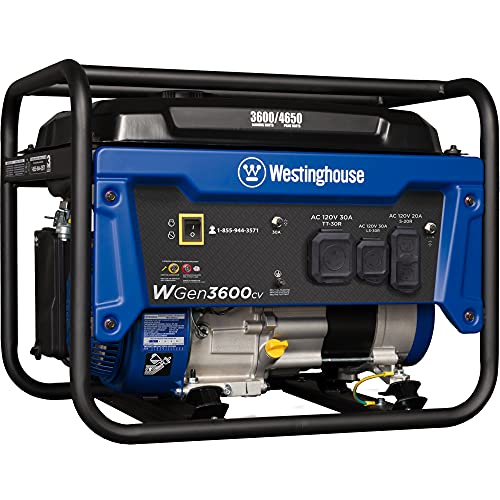
Best for buyers who will use the machine regularly and want maximum value
- 4,650 peak / 3,600 running watts on gasoline
- Built-in CO sensor with automatic engine shutdown
- RV Ready 30A TT-30R outlet
- Simpler fuel system with fewer parts to go wrong
Why buy it: gasoline-only machines cost less per watt and have one fewer regulator and hose to fail — a fair trade if the generator gets used often enough that fuel never goes stale.

Best for homes with a natural gas line, where fuel should never run out
- 14,500 peak / 11,500 running watts on gasoline
- Gasoline, propane, or a permanent natural gas connection
- CO sensor with automatic shutdown
- 50A and 30A transfer-switch outlets
Why buy it: natural gas removes the fuel problem entirely, which is the one genuine advantage a permanently installed standby generator has over a portable.

How to decide, in four questions
- How often will it run? Under about 20 hours a year, buy dual fuel — the storage problem is your problem. Regularly, buy gasoline-only and spend the savings on watts.
- Do you have a natural gas line? If yes, tri-fuel is worth serious consideration, because unlimited fuel is a capability nothing else offers.
- How cold does it get? Below 20°F propane output falls and a small bottle can struggle. In genuinely cold climates, plan on gasoline as the primary fuel and propane as the storage state.
- Where will you get fuel during an outage? Gas stations cannot pump without power. Propane exchange cages at hardware stores are mechanical and often still work. In a regional outage that difference is not theoretical.
Both fuels produce the same lethal gas
Nothing about propane makes a generator safe to run indoors. A propane-fueled generator produces carbon monoxide in exactly the same lethal quantities as a gasoline one. Run any fuel generator outdoors only, at least 20 feet from the house, with the exhaust pointed away from doors, windows and vents — never in a garage, a basement, a shed or under a carport, even with the door open. The US Consumer Product Safety Commission states one portable generator can emit as much carbon monoxide as hundreds of cars and links more than 100 US deaths a year to generator CO. It is colorless and odorless, so nothing warns you. Fit CO alarms on every level of the home.
And whichever fuel you choose, never plug a generator into a wall outlet to power the house. Backfeeding energizes the utility line and can electrocute the crews restoring your power. A transfer switch or interlock kit installed by a licensed electrician is the only correct method.
Propane adds two specific rules: store bottles upright, outdoors, away from the house and any ignition source, never in a basement or garage; and check the hose and regulator connection with soapy water for leaks before every use.
Where to go next
Our ranked best portable generators compares dual fuel and gasoline-only models on aggregated owner ratings, and the best generators under $500 covers the budget end, where dual fuel is rare. For storage practice that keeps either type starting, see how long generators last. Everything sits under the power tools and workshop hub.
Source: US Consumer Product Safety Commission Carbon Monoxide Information Center.
We never buy or physically handle the equipment we rank — our recommendations come from aggregated owner reviews and expert consensus, and the method is on how we rank. Check dual fuel prices on Amazon → (paid link)