 Garden
Affiliate Disclosure
Some links on this page are affiliate links. As an Amazon Associate, we earn from qualifying purchases — at no extra cost to you. We do not buy, test, or physically handle the products we cover; our rankings come from aggregated owner reviews, ratings and expert consensus. Commissions never change our verdicts. How we rank · full disclosure.
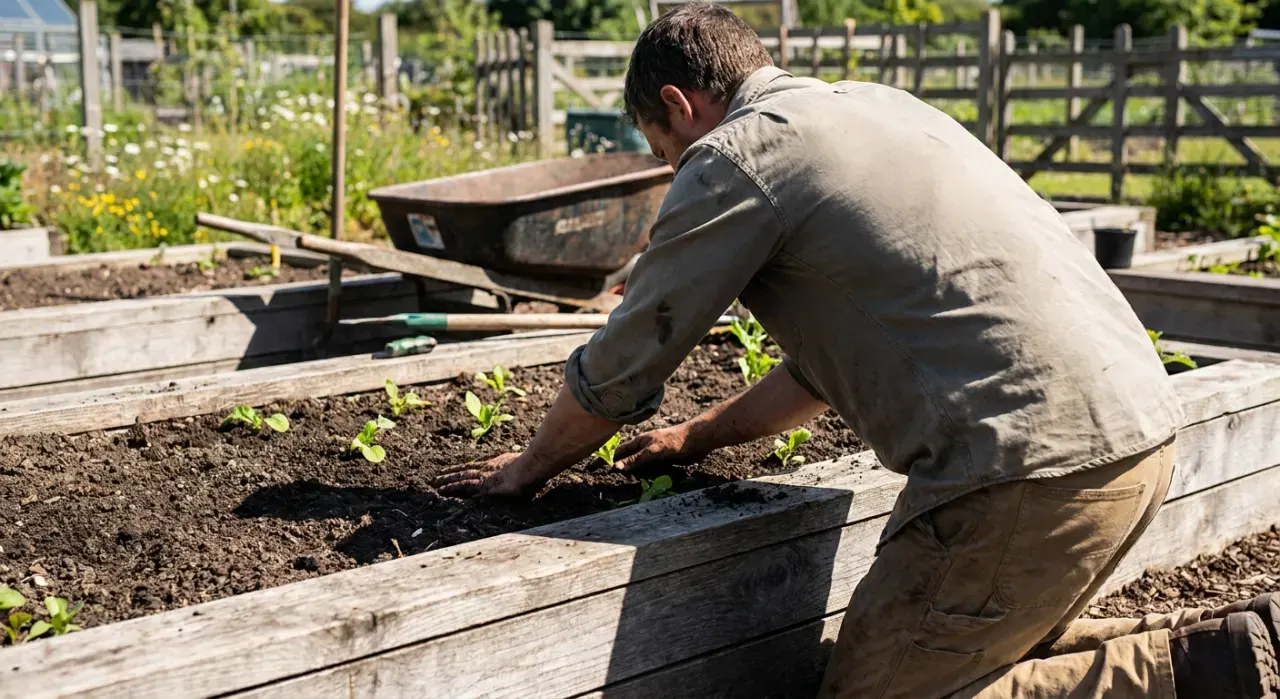
To fill a raised garden bed, use a balanced soil blend where the roots grow, and save money on deep beds by layering bulky organic matter underneath. A reliable mix is roughly 60 percent topsoil or raised-bed soil, 30 percent compost, and 10 percent aeration material like perlite or coarse sand. For beds deeper than about 12 to 18 inches, fill the bottom third to half with logs, branches, leaves, or straw, then cap it with that soil mix. Avoid the two classic mistakes: filling with pure compost (too soggy) or pure topsoil (too dense).
Getting the fill right is the biggest single factor in how a raised bed performs, and it is where most of the cost sits. Below are the ratios, a cheap deep-fill method, and how to calculate exactly how much you need. Our product rankings draw on aggregated owner reviews and expert consensus, not first-hand testing — see how we rank.
Start with depth: it changes everything
How you fill a bed depends first on how deep it is, because depth decides whether you can economize at the bottom.
| Bed depth | Approach |
|---|---|
| 6 to 11 inches (shallow) | Fill entirely with quality soil mix; roots need all of it |
| 12 to 18 inches (standard) | Bottom layer of bulky organics optional, top with soil mix |
| 18+ inches (deep) | Bottom third to half bulky organics, top with soil mix |
Most vegetables root in the top 6 to 12 inches, so a deep bed does not need premium soil all the way down. That is the key to filling a tall bed affordably. For guidance on how deep to build in the first place, see how deep should a raised bed be.
The soil mix that works
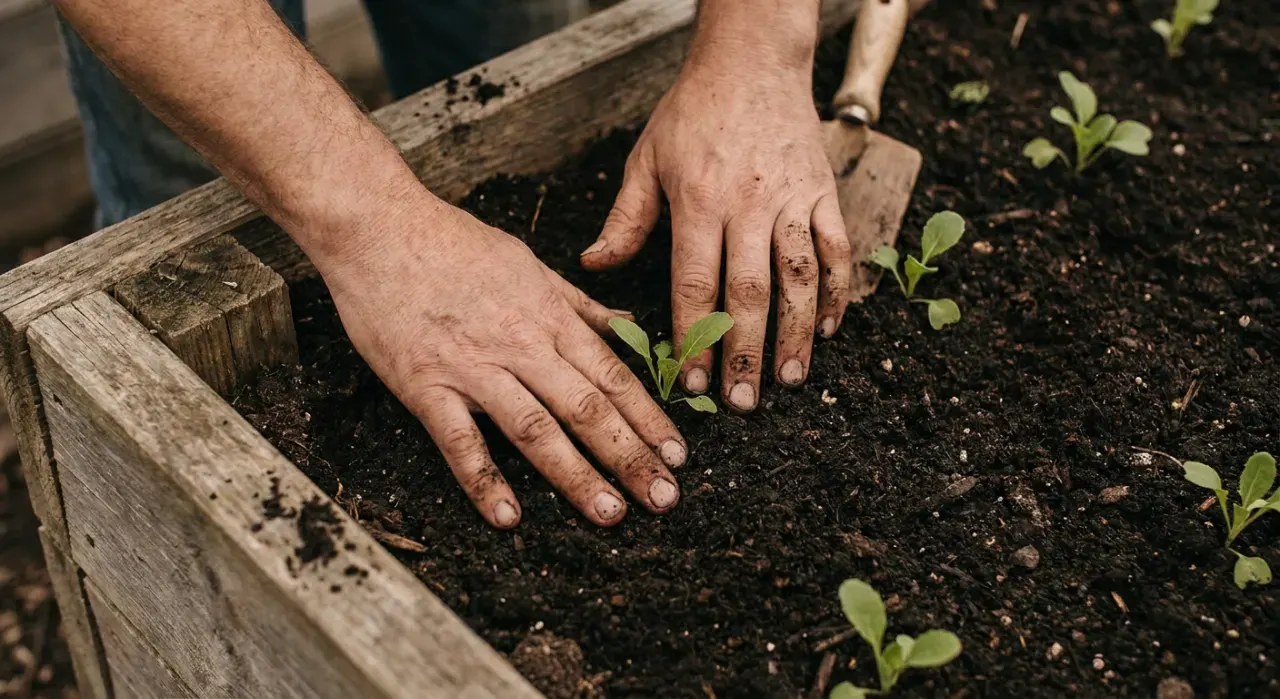
The growing layer is where you should not cut corners. A good raised-bed mix drains freely, holds moisture, and carries enough nutrition for a season of growth. Two proven recipes:
- The 60/30/10 blend: 60 percent topsoil or bagged raised-bed soil, 30 percent compost, 10 percent aeration (perlite, coarse sand, or fine bark). Balanced and forgiving.
- Mel's Mix (square-foot gardening): one-third compost, one-third peat moss or coconut coir, one-third coarse vermiculite. Light, excellent for shallow beds, but pricier and needs more feeding over time.
Whichever you choose, blend the components before or as you fill rather than leaving them in layers, so drainage and fertility are even throughout the root zone. For the full breakdown of ratios and why each ingredient matters, see the best soil mix ratio for a raised bed, and for ready-to-use options, best soil for a raised garden bed.
What not to fill it with
The wrong fill causes more raised-bed failures than pests or watering, so it is worth being clear about what to avoid.
- Pure compost. Too rich and too water-retentive, it slumps into a dense, soggy mass that suffocates roots and can burn seedlings with excess nutrients.
- Pure topsoil or fill dirt. Compacts hard, drains badly, and offers little nutrition. Bagged "topsoil" is often low quality.
- Native clay alone. Turns to a brick in a contained bed; if you must use it, cut it heavily with compost and aeration.
- Potting mix throughout a large bed. Fine for containers, but expensive and too light to fill a big bed by itself.
The goal is a middle ground: rich but well-drained, moisture-holding but never waterlogged.
Filling a deep bed cheaply
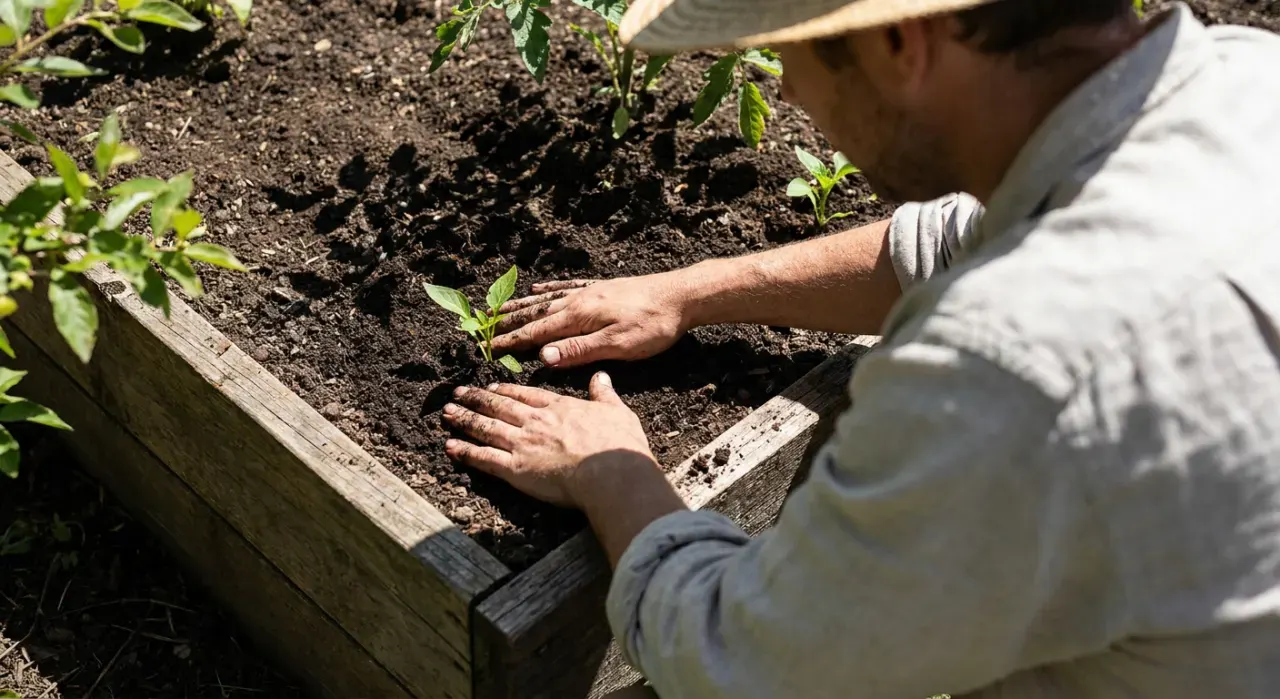
Deep beds are expensive to fill with bought soil, but you rarely need soil at the bottom. Bulky organic matter fills the void, costs little or nothing, and slowly breaks down into rich material.
- Suppress weeds first. If the bed sits on grass or weeds, lay plain cardboard on the ground to smother them.
- Add coarse woody material. Logs, branches, and untreated wood chips go in the bottom, filling the lowest third to half of a deep bed (the hugelkultur approach).
- Layer in lighter organics. Fall leaves, straw, grass clippings, and small twigs fill gaps around the wood.
- Add a transition layer of compost or aged manure over the organics.
- Cap with the soil mix. Fill the top 8 to 12 inches with your 60/30/10 blend, where the roots will actually grow.
Expect the bed to settle over the first season as the organic base decomposes; top it up with more soil and compost each spring. Other budget strategies are collected in the cheapest way to fill a raised bed.
Calculating how much you need
Buying the right amount avoids both wasted money and a half-filled bed. The math is simple.
- Volume in cubic feet = length (ft) x width (ft) x depth (ft).
- Cubic yards = cubic feet divided by 27 (bulk soil is sold by the yard).
- Add about 10 percent for settling after watering.
| Bed size | Depth | Volume needed |
|---|---|---|
| 4 x 4 ft | 12 in | 16 cu ft (~0.6 cu yd) |
| 4 x 8 ft | 12 in | 32 cu ft (~1.2 cu yd) |
| 4 x 8 ft | 18 in | 48 cu ft (~1.8 cu yd) |
For anything larger than one small bed, buying soil in bulk by the cubic yard is dramatically cheaper than bagged product, which typically comes in 1.5 or 2 cubic-foot bags.
Finishing and maintaining the bed
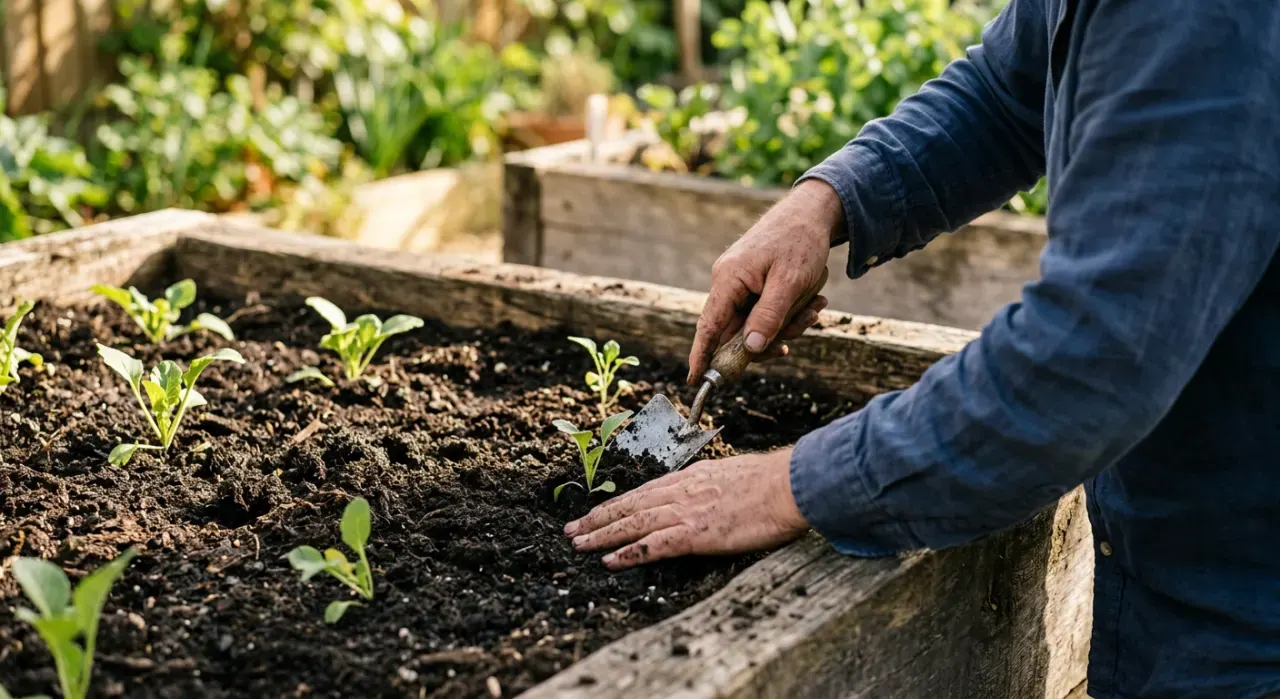
Once filled, a few steps set the bed up for the season and keep it productive year after year.
- Water it in. A thorough first watering settles the mix and reveals low spots to top up.
- Mulch the surface. A couple of inches of straw or shredded leaves conserves moisture and suppresses weeds — see should you mulch a raised garden bed.
- Replenish each season. Beds lose volume as organic matter breaks down, so add an inch or two of compost every spring.
- Feed as needed. Even a rich mix depletes over a season; side-dress hungry crops with compost or an organic fertilizer.
The bottom line
Fill the root zone with a balanced blend — about 60 percent topsoil, 30 percent compost, and 10 percent aeration — and save money on deep beds by layering free bulky organics underneath. Avoid the extremes of pure compost or pure topsoil, calculate your volume before buying, and top the bed up with compost each spring. Get the fill right and a raised bed rewards you with years of productive, low-maintenance growing.
Explore more at the raised beds and planters hub, including best soil for a raised garden bed and the best soil mix ratio.