 Garden

Affiliate Disclosure
Some links on this page are affiliate links. As an Amazon Associate, we earn from qualifying purchases — at no extra cost to you. We do not buy, test, or physically handle the products we cover; our rankings come from aggregated owner reviews, ratings and expert consensus. Commissions never change our verdicts. How we rank · full disclosure.
The short answer: start with HOME GROWN Broccoli Seeds — the fastest, most forgiving, most nutrient-dense first crop, and cheap in bulk. Buy the 16oz four-seed mix for the lowest cost per tray, and a ready-blended salad mix if you want a varied crop from a single bag without measuring anything yourself.
Seed is where microgreen economics are won or lost. The tray you grow in is a one-time purchase; the seed is what you buy again and again, and the difference between a fresh, high-germination bulk bag and a stale supermarket packet shows up in your first tray as either a dense green mat or a patchy, moldy disappointment. This page ranks six seeds and blends on germination, flavor, and above all cost per tray, because that last number decides whether growing your own greens actually saves money.
What Makes a Microgreen Seed Worth Buying
Not all seed is equal, and the differences that matter are specific:
- Germination rate and freshness. Seed sold in bulk for sprouting is tested for high germination and handled for raw consumption. A high, even germination is the whole difference between a clean crop and a moldy one.
- Cost per tray, not per bag. A one-pound bag looks expensive next to a small packet, yet costs a fraction as much per tray. This is the number that decides whether the habit is affordable.
- Flavor and speed. Broccoli and alfalfa are mild and fast; radish and arugula bring pepper; a blend balances them. Match the seed to how you actually eat.
- Non-GMO and untreated. Because you eat the crop raw and young, seed should be non-GMO, untreated, and sold for sprouting rather than coated field seed.

The Microgreen Seeds at a Glance
Our #1 Pick: HOME GROWN Broccoli Seeds
Broccoli is the seed we would tell anyone to buy first, and this bulk bag is the version that makes eating it daily genuinely cheap. It germinates fast and evenly, stands up to the mistakes every beginner makes, and is ready to cut in about five days — the shortest satisfying feedback loop in the whole hobby.
Why broccoli leads. Beyond being easy, broccoli microgreens are the nutritional headline of the category thanks to their sulforaphane content, which is why they are the crop most people grow more of once they start. The 8oz bulk bag sows many trays, so the cost per harvest is low enough that a tray on the counter becomes a standing habit rather than an occasional project. It is heirloom and non-GMO, which is exactly what you want in something eaten raw and days old.
Consensus Score █████████░ 8.9 — an enormous, long-standing review base and a reputation as the default first microgreen seed.
Where it is weak. It is a single flavor, so a household that wants variety will pair it with radish or a blend. And like all dense brassica crops it punishes over-sowing with mold — sow an even single layer, not a pile. That aside, there is very little to criticize in the crop that defines the category.
Check price on Amazon → (paid link)
The Microgreen Seeds, Ranked

Best for the single most reliable, nutrient-dense first crop to learn on and eat daily
- Heirloom, non-GMO, high stated germination
- Rich in sulforaphane — the reason broccoli leads the category
- Ready to cut in about five days
- 8oz bag sows many trays
Why buy it: Broccoli is the microgreen everyone should start with, and this is the bulk bag that makes it cheap to do daily — fast, forgiving, and the most nutrient-dense common green on the page.

Best for one bag that grows a varied, ready-to-eat salad rather than a single flavor
- Four seeds blended for balanced flavor and color
- Organic and non-GMO
- Fast-growing across the whole mix
- 1lb bag for repeat sowing
Why buy it: The convenience pick: four complementary seeds pre-blended so a single tray yields a full-flavored salad — mild broccoli and alfalfa balanced by the pepper of radish — with nothing to measure or mix yourself.
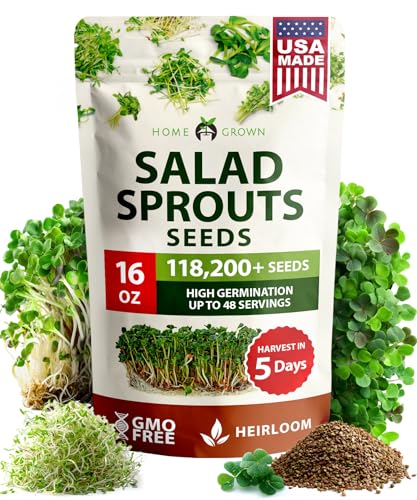
Best for the lowest cost per tray for a household eating microgreens every day
- 16oz resealable bag — roughly 118,000 seeds
- Four-seed blend for a balanced crop
- Non-GMO across the mix
- Lowest cost per tray here
Why buy it: The best pure economics on the page — a full pound of blended seed that drops the cost per tray far enough that daily microgreens become a habit rather than a treat.

Best for a sharp, peppery green to lift salads and sandwiches, grown solo
- Heirloom, non-GMO, high stated germination
- Distinct peppery arugula flavor
- Year-round indoor or hydroponic growing
- Lowest sticker price here
Why buy it: The cheapest way to add a distinct flavor to your rotation — arugula microgreens carry all the pepper of the mature leaf in a fraction of the growing time, and this bulk bag costs pocket change.

Best for buyers who want certified-organic broccoli seed and will pay a little more for it
- Certified organic, non-GMO
- High sulforaphane content
- Fast-growing microgreen or sprout
- 8oz resealable bag
Why buy it: The organic answer to our top pick: the same fast, sulforaphane-rich broccoli crop with a certified-organic label for buyers who want that assurance on food they grow to eat raw.

Best for mild, crunchy alfalfa in bulk for sprouts and microgreens alike
- Certified organic, non-GMO
- Mild flavor that suits any dish
- Grows as sprouts or microgreens
- Large 16oz bag
Why buy it: The gentle all-rounder: mild, crunchy alfalfa that goes on anything without overpowering it, certified organic and sold in a bulk bag that keeps the per-tray cost low.
Quick Comparison
| Product | Best for | Rating | Price | Buy |
|---|---|---|---|---|
| HOME GROWN Broccoli Seeds, 8oz Bulk Heirloom Non-GMO | Best Microgreen Seeds Overall | — | Check (paid link) | |
| Nature Jim's Sprouts Salad Mix (Broccoli, Alfalfa, Clover, Radish), 1lb Organic | Best Salad Mix | — | Check (paid link) | |
| HOME GROWN Premium Sprouting Seeds Mix, 16oz (Broccoli, Alfalfa, Radish, Clover) | Best Value Bulk Pack | — | Check (paid link) | |
| HOME GROWN Arugula Roquette Seeds, Bulk Heirloom Non-GMO | Best Peppery Single Seed | — | Check (paid link) | |
| Nature Jim's Sprout Organic Broccoli Seeds, 8oz Non-GMO | Best Organic Broccoli | — | Check (paid link) | |
| Nature Jim's Organic Alfalfa Sprouting Seeds, 16oz Non-GMO | Best Premium Organic Alfalfa | — | Check (paid link) |
How to Choose the Right Seed
Decide between a single seed and a blend first. A single seed like broccoli or radish gives you a clean, predictable flavor and lets you learn one crop well; a pre-blended salad mix gives variety and color from one tray with nothing to measure. Beginners are usually happiest starting with a single easy seed and adding a blend once the basics feel routine. Then buy for cost per tray, not sticker price. A one-pound bag almost always beats a small packet on the only number that matters over a year of growing, and microgreen seed stores for years, so bulk rarely goes to waste even in a one-person kitchen.
Seed is only one leg of the setup. Grow it in the right vessel — our best microgreen trays guide covers soil and soil-free trays, our best microgreen kit guide covers complete starter kits, and best microgreens growing kits covers the fuller countertop systems.
The Mistakes That Waste Good Seed
Even the best seed disappoints when the handling is wrong, and the errors repeat. Buying tiny packets instead of bulk is the quiet money-waster — the cost per tray is several times higher, and microgreen seed stores for years, so bulk rarely goes stale. Sowing too densely is the crop-killer, trapping moisture and growing mold rather than clean greens. Using treated garden seed meant for the ground, not raw eating, is a real risk with a coated packet from the shed. And storing seed warm and humid quietly drops germination over a season. Keep seed cool, dry and sealed; buy it by the pound; sow an even single layer — and the same bag will grow tray after reliable tray. The vessel matters too, which is why the tray and kit guides sit alongside this one.
How We Rank Microgreen Seeds
We do not buy, grow or physically handle these seeds. These rankings come from reading aggregated owner reviews across the category, weighted toward the outcomes growers report most: even germination, freshness on arrival, and how the crop actually tasted. We read star ratings across the whole review base rather than at a flattering figure, and treat long-tail reviews from repeat buyers — the people who have grown many trays from the same supplier — as the strongest signal, because consistency bag to bag is what a seed brand lives or dies on. Cost per tray is calculated from bag size rather than sticker price. Prices were current at the time of writing and change often. Full method on how we rank.
The Verdict
HOME GROWN Broccoli Seeds are the microgreen seeds we would put in a friend's first tray: fast, forgiving, nutrient-dense, and cheap by the bag. Reach for the 16oz four-seed mix for the lowest cost per tray, the salad mix for variety without measuring, and arugula when you want a peppery lift. Grow them in gear from our best microgreen trays and best microgreen kit guides, browse the full small-space gardening hub, or see every guide at resources. Check the current broccoli seed price on Amazon → (paid link)