 Garden


Affiliate Disclosure
Some links on this page are affiliate links. As an Amazon Associate, we earn from qualifying purchases — at no extra cost to you. We do not buy, test, or physically handle the products we cover; our rankings come from aggregated owner reviews, ratings and expert consensus. Commissions never change our verdicts. How we rank · full disclosure.
The short answer: for a real setup, buy the RooTrimmer 1020 solid + mesh 10-pack — the standard flat size, paired for proper bottom-watering, in the quantity a rack needs. Buy the 10-pack of solid flats if you just want the cheapest workhorse trays, and the Bootstrap Farmer 5-pack if you are done replacing cracked ones.
The tray is the least glamorous part of growing microgreens and the part that quietly decides whether your setup works. Get the size wrong and none of your domes or mats fit; get the drainage strategy wrong and you either drown the crop or grow mold; buy trays too thin and you spend every season replacing cracked ones. This page ranks six trays on those unspectacular but decisive points, and explains the two-tray system that most successful growers converge on.
What Makes a Microgreen Tray Worth Buying
Trays differ on fewer axes than seeds, but each one is decisive:
- Size and standardization. The 20"x10" 1020 flat is the format every accessory is built for. Buying non-standard sizes means nothing else fits.
- Solid vs mesh. A mesh or hole tray holds the crop; a solid no-hole tray beneath holds the water. The best setups use both, nested, so you bottom-water and never wet the leaves.
- Durability. Cutting a dense crop flexes the tray hard. Thin flats crack within a season; a 2.0mm tray survives years, which can make it cheaper per crop despite the higher price.
- Soil-free option. Lidded soil-free trays skip the mess entirely and reset in seconds — ideal for a small kitchen, if lower-yielding than a full soil flat.

The Microgreen Trays at a Glance
Our #1 Pick: The RooTrimmer 1020 Solid + Mesh Set
This set tops the list because it gives you the complete watering system rather than half of it. You get ten solid 1020 flats and ten mesh-bottom trays, and the whole method of growing clean microgreens falls out of that pairing: sow into the mesh tray, nest it inside a solid tray, and water into the base so moisture wicks up to the roots without ever touching the leaves.
Why the pairing matters. Wetting the tops of microgreens is the single biggest cause of mold, and top-watering does exactly that. Bottom-watering avoids it, but it only works if you own both tray types in matching sizes — which most kits and cheap multipacks quietly leave you short of. Buying them paired, ten of each, in the standard 20"x10" size means every dome, mat and rack you add later just fits, and you can run a staggered rack of crops the way a small market grower does.
Consensus Score ████████░░ 8.6 — well regarded as a genuine scale-up system rather than a starter novelty, with the caveat that ten of each tray is more than a casual grower needs.
Where it is weak. It is aimed at volume, so a once-a-week kitchen grower is paying for trays they will not use — the two-pack SUNPRO or a single soil-free tray is the right scale for them. And the trays are mid-weight rather than the near-indestructible 2.0mm of the Bootstrap Farmer, so heavy commercial handling will wear them faster.
Check price on Amazon → (paid link)

The Microgreen Trays, Ranked

Best for the grower who wants the standard 1020 system with paired mesh and solid trays to scale up
- Ten solid 1020 trays paired with ten mesh-bottom trays
- Nest a mesh tray in a solid one for bottom-watering
- Heavy-duty flats for microgreens, soil blocks and wheatgrass
- Standard 20"x10" size fits common humidity domes and racks
Why buy it: The most complete tray system here: the classic 1020 pairing of a mesh tray inside a solid one, ten of each, so you can bottom-water, drain, and run a rack of crops the way commercial growers do.

Best for the cheapest way to get ten standard flats for microgreens and seed starting
- Ten solid 20"x10" flats at the lowest cost per tray
- No holes — use as a base or line for microgreens
- Works for soil or hydroponic growing
- Fits standard humidity domes and heat mats
Why buy it: Ten standard flats for the price others charge for two or three — the no-frills workhorse tray that most microgreen growers actually build their setup around.
Best for soil-free microgreens and sprouts with a humidity lid included
- Includes a humidity lid for even germination
- Food-grade PP with built-in drainage
- Soil-free — rinse clean between crops
- Large capacity for microgreens or wheatgrass
Why buy it: The tidiest single-tray option: a drained soil-free tray with a humidity lid already in the box, so it germinates evenly and rinses clean without any soil to buy or clear up.

Best for a grower who is tired of cracked flimsy trays and wants ones that last years
- Extra-strength 2.0mm polypropylene
- Reinforced against the cracking that kills cheap trays
- Standard 1020 no-hole flat
- Built for repeated commercial-style reuse
Why buy it: The tray that stops the cycle of replacing cracked flats every season — thick 2.0mm polypropylene that survives being stacked, flexed and bottom-watered for years, which cheaper trays simply do not.

Best for buying flats in bulk as bases and bottom-water reservoirs
- Ten no-hole 10x20 flats
- Ideal as bases under mesh trays
- Soil or hydroponic use
- Low cost per tray in bulk
Why buy it: A bulk pack of solid flats to sit beneath mesh trays as watering reservoirs — the unglamorous half of a proper microgreen setup that most kits leave you short of.
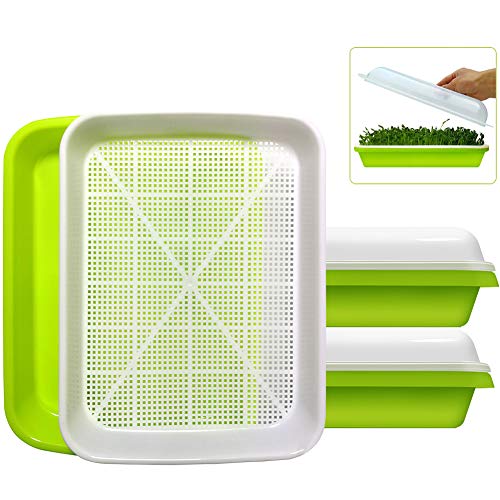
Best for a small kitchen running one or two soil-free crops at a time
- Two trays with humidity lids
- BPA-free food-grade, soil-free
- Large capacity for wheatgrass and microgreens
- Stagger sowing between the two trays
Why buy it: The right scale for a single kitchen: two lidded soil-free trays that let you stagger crops a few days apart, so there is always one ready to cut without committing to a ten-tray rack.
Quick Comparison
| Product | Best for | Rating | Price | Buy |
|---|---|---|---|---|
| RooTrimmer 1020 Trays + Mesh-Bottom Trays, 20"x10" (10+10 Pack) | Best Microgreen Trays Overall | — | Check (paid link) | |
| 10 Plant Growing Trays, 20"x10" No Drain Holes | Best Value | — | Check (paid link) | |
| Seed Sprouter Tray with Lid, BPA-Free PP | Best Soil-Free Tray with Lid | — | Check (paid link) | |
| Bootstrap Farmer 1020 Trays, 5-Pack (2.0mm No-Hole) | Best Premium Heavy-Duty | — | Check (paid link) | |
| 10x20 Plastic Propagation Trays, 10-Pack No Holes | Best Bulk No-Hole Set | — | Check (paid link) | |
| SUNPRO Seed Sprouter Trays, 2-Pack with Humidity Lid | Best Small-Batch Tray | — | Check (paid link) |
How to Choose the Right Trays
Match the quantity to your appetite. A household eating microgreens daily wants a rack, and a rack wants a paired 1020 system like the RooTrimmer set. A once-a-week kitchen is better served by a two-pack or a single lidded soil-free tray — buying ten trays you will not fill is not a saving. Then decide soil or soil-free. Soil flats give a denser, longer-standing crop and want the two-tray bottom-watering system; soil-free lidded trays are cleaner, faster to reset, and ideal for a small space. Finally, buy for durability if you grow often — a thicker tray reused for years quietly costs less per crop than a cheap one replaced every season.
Trays are one leg of the setup. Pair them with the right seed from our best microgreen seeds guide, or if you would rather buy everything bundled, compare complete systems in our best microgreen kit and best microgreens growing kit guides.

The Mistakes That Ruin a Tray Setup
Tray problems are almost always setup problems, not product ones. Buying a non-standard size is the first — anything that is not a 1020 flat leaves your domes, mats and racks not fitting, and the whole point of the standard is that everything interlocks. Owning only one tray type is the next: without a solid tray beneath a mesh one you cannot bottom-water, and top-watering is what grows mold. Buying trays too thin to survive harvest means replacing cracked flats every season, so a heavier tray is often cheaper per crop. And skipping the periodic sanitize lets root residue build into a mold problem on reused trays. Buy standard-size trays in both forms, thick enough to last, and clean them between crops — the setup then just works.
How We Rank Microgreen Trays
We do not buy, grow in or physically handle these trays. These rankings come from reading aggregated owner reviews across the category, weighted toward the failure that dominates the critical reviews: trays that crack or warp under the handling that cutting a crop demands. We read star ratings across the whole review base, and treat long-tail reviews from growers on their tenth or twentieth crop as the strongest durability signal, because a tray's real value is how many crops it survives, not how it looks new. We check that trays are the standard 1020 size so accessories fit, and note clearly whether a listing includes the mesh or solid tray you actually need. Prices were current at the time of writing and change often. Full method on how we rank.
The Verdict
The RooTrimmer 1020 solid + mesh set is the tray system we would build a real microgreen setup around: standard-sized, paired for clean bottom-watering, and enough of each to run a rack. Drop to the 10-pack of solid flats for the cheapest workhorse trays, the Bootstrap Farmer 5-pack if you want trays that outlast the hobby, and a lidded two-pack for a small kitchen. Then buy seed by the pound from our best microgreen seeds guide, browse the full small-space gardening hub, or see every guide at resources. Check the current RooTrimmer price on Amazon → (paid link)