 Garden

Affiliate Disclosure
Some links on this page are affiliate links. As an Amazon Associate, we earn from qualifying purchases — at no extra cost to you. We do not buy, test, or physically handle the products we cover; our rankings come from aggregated owner reviews, ratings and expert consensus. Commissions never change our verdicts. How we rank · full disclosure.
The short answer: herbs and salad want 1 to 2 gallons and 6 to 8 inches deep; bush beans, chard and beets want 3 to 5 gallons and 8 to 10 inches; peppers, eggplant and bush cucumbers want 5 gallons and 12 inches; a determinate tomato wants 10 gallons; an indeterminate tomato wants 15 to 20 gallons and 14 to 18 inches deep. Carrots are the exception where depth beats volume — 12 inches minimum, whatever the width.
Undersizing containers is the single most common reason a container garden underperforms, and it is entirely avoidable. Root volume determines how much water a plant can reach between waterings, how much nutrition it can draw before the mix is exhausted, and therefore how much it produces. The table below is the version worth taping inside a cupboard door.
Container Size by Crop
Minimum is the smallest container in which the crop will actually finish and produce. Recommended is the size at which it stops being a struggle and the watering load drops to something a working person can sustain.
| Crop | Min. depth | Min. volume | Recommended | Plants per container / spacing |
|---|---|---|---|---|
| Tomato — indeterminate | 14 in. | 15 gal | 20 gal | 1 plant |
| Tomato — determinate / patio | 12 in. | 7 gal | 10 gal | 1 plant |
| Tomato — dwarf / micro | 8 in. | 3 gal | 5 gal | 1 plant |
| Pepper — bell | 12 in. | 5 gal | 7 gal | 1 plant |
| Pepper — hot / compact | 10 in. | 3 gal | 5 gal | 1 plant |
| Eggplant | 12 in. | 5 gal | 7 gal | 1 plant |
| Cucumber — bush type | 12 in. | 5 gal | 7 gal | 1–2 plants |
| Cucumber — vining, trellised | 12 in. | 7 gal | 10 gal | 1 plant |
| Zucchini / summer squash | 14 in. | 10 gal | 15 gal | 1 plant |
| Bush beans | 8 in. | 3 gal | 5 gal | 4–6 plants, 3 in. apart |
| Pole beans (with trellis) | 10 in. | 5 gal | 7 gal | 3 plants, 4 in. apart |
| Peas — bush / dwarf | 8 in. | 3 gal | 5 gal | 6–8 plants, 2 in. apart |
| Potatoes | 14 in. | 10 gal | 15 gal | 2–3 seed pieces per 10 gal |
| Carrots — half-long | 12 in. | 3 gal | 5 gal | 2–3 in. apart |
| Carrots — round / baby | 8 in. | 2 gal | 3 gal | 2 in. apart |
| Beets | 10 in. | 3 gal | 5 gal | 3–4 in. apart |
| Radishes | 6 in. | 1 gal | 2 gal | 2 in. apart |
| Turnips | 10 in. | 3 gal | 5 gal | 4 in. apart |
| Onions — bulbing | 8 in. | 3 gal | 5 gal | 4–5 in. apart |
| Garlic | 8 in. | 3 gal | 5 gal | 4–6 in. apart |
| Scallions | 6 in. | 1 gal | 2 gal | 1–2 in. apart |
| Lettuce — leaf | 6 in. | 1 gal | 2 gal | 6 in. apart |
| Lettuce — head | 8 in. | 2 gal | 3 gal | 8–10 in. apart |
| Spinach | 6 in. | 1 gal | 2 gal | 4 in. apart |
| Arugula / mustard greens | 6 in. | 1 gal | 2 gal | 4 in. apart |
| Swiss chard | 10 in. | 3 gal | 5 gal | 10 in. apart |
| Kale | 10 in. | 3 gal | 5 gal | 12 in. apart |
| Bok choy | 8 in. | 2 gal | 3 gal | 6 in. apart |
| Broccoli / cabbage | 12 in. | 5 gal | 7 gal | 1 plant |
| Strawberries | 8 in. | 1 gal per plant | 2 gal per plant | 8–10 in. apart |
| Basil | 8 in. | 2 gal | 3 gal | 1–2 plants |
| Parsley / cilantro / dill | 8 in. | 1 gal | 2 gal | 1–3 plants |
| Thyme / oregano / sage | 6 in. | 1 gal | 2 gal | 1 plant |
| Rosemary | 12 in. | 3 gal | 5 gal | 1 plant |
| Chives | 6 in. | 1 gal | 2 gal | 1 clump |
| Mint | 8 in. | 2 gal | 3 gal | 1 plant, own container |
Translating Gallons Into Pots You Can Actually Buy
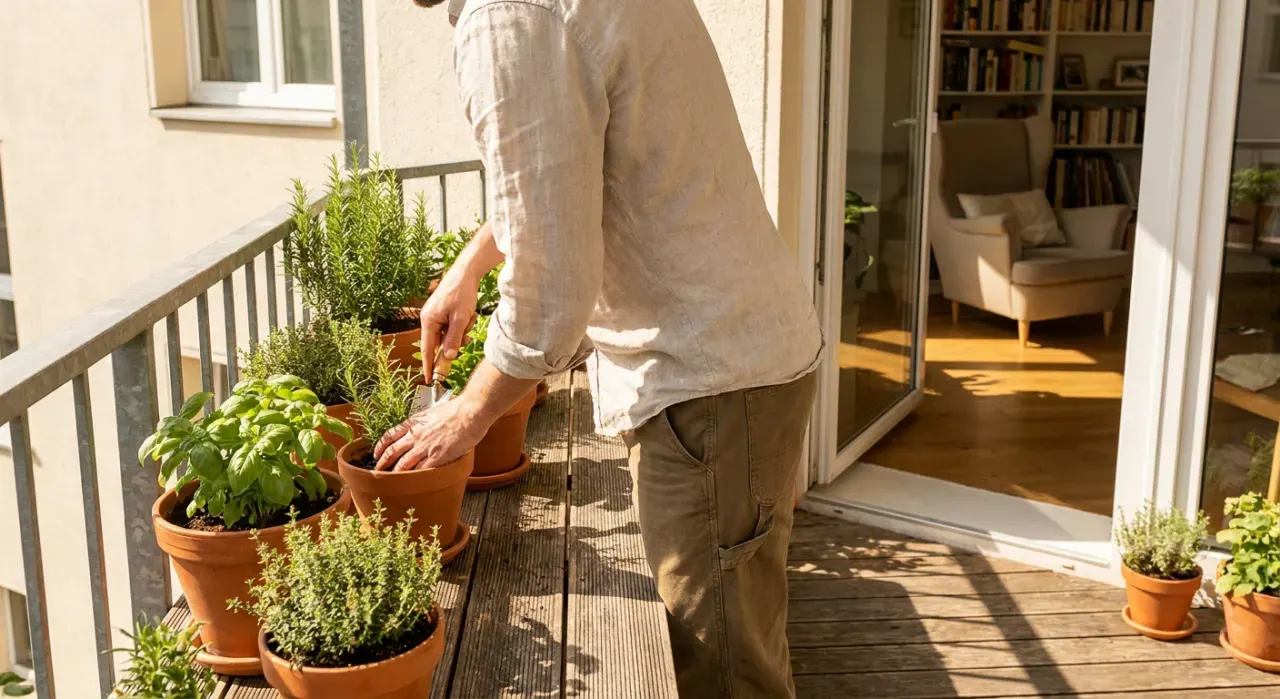
Retail pots are labeled by diameter, seed catalogs talk in gallons, and nurseries use a third system entirely. These are the conversions that matter, for a standard round pot roughly as deep as it is wide:
| Pot diameter | Approx. volume | Typical use |
|---|---|---|
| 6 in. | 0.5 gal | Single herb, seedling nursery |
| 8 in. | 1.5 gal | Herbs, lettuce, radishes |
| 10 in. | 3 gal | Chard, bush beans, compact peppers |
| 12 in. | 5 gal | Bell pepper, eggplant, bush cucumber |
| 14 in. | 8 gal | Determinate tomato, vining cucumber |
| 16 in. | 10–12 gal | Zucchini, potatoes, large tomato |
| 18 in. | 15 gal | Indeterminate tomato |
| 20 in. | 20 gal | Indeterminate tomato, small melon, dwarf fruit |
The trade-gallon trap. Nursery containers labeled #1, #3, #5 and #7 are trade gallons, and they hold less than the number suggests: a #1 is about 0.7 actual gallons, a #3 about 2.3, a #5 about 3.9 and a #7 about 5.8. If you buy a "5-gallon" nursery pot for a tomato, you are getting roughly 4 gallons of soil, not 5. A genuine 5-gallon utility bucket really does hold 5.
Fabric grow bags are labeled honestly by volume, but they are wider and shallower than a rigid pot of the same rating, and they dry out faster because the fabric breathes on all sides. Treat a 10-gallon grow bag as roughly equivalent to a 7-gallon plastic pot in terms of how often you will be watering it.
Why Depth Is a Separate Question From Volume
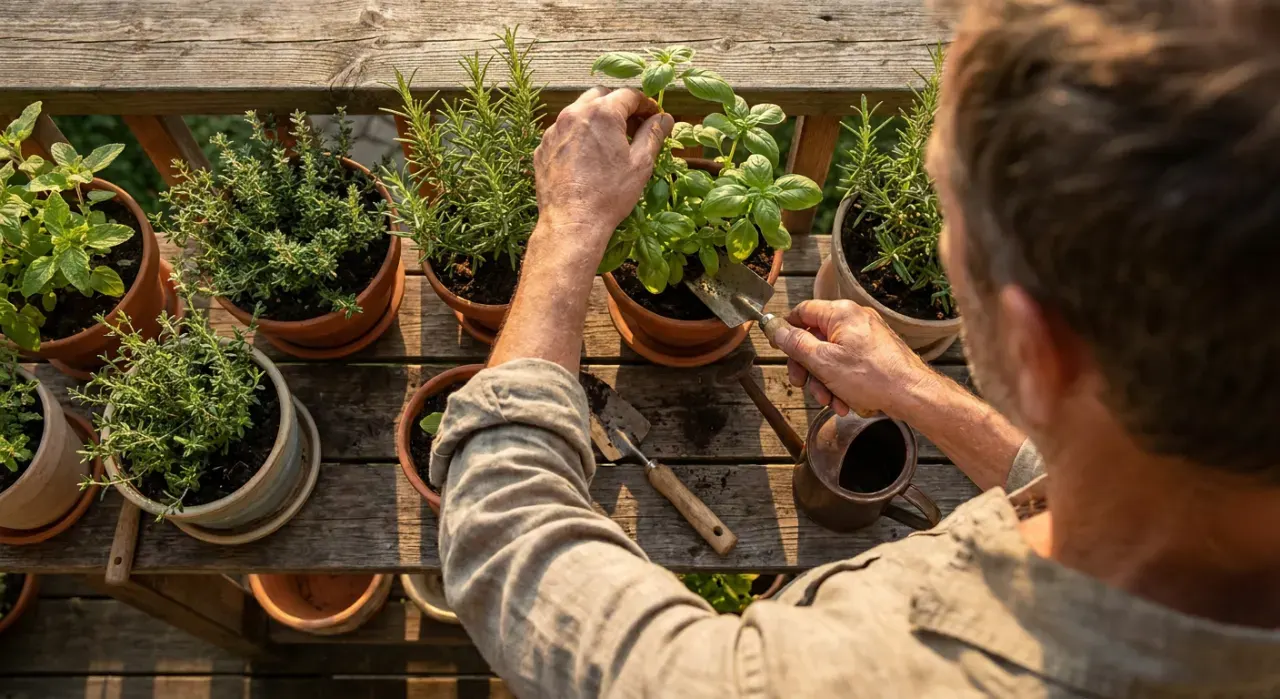
For most crops, total soil volume is what counts and the shape hardly matters. Root crops are the exception, and the rule is blunt: a carrot cannot grow longer than the soil is deep. A 6-inch trough grows round varieties like Paris Market or Thumbelina perfectly well and will never grow a Danvers Half Long, no matter how much surface area you give it. Beets and turnips need 8 to 10 inches, and full-length carrots need 12 or more with loose, stone-free mix — the classic container carrot failure is forking, caused by compacted mix or an obstruction rather than by too little fertilizer.
In the other direction, extra depth beyond what a crop needs is close to wasted. Lettuce roots in the top 6 inches whatever you give it, so a deep pot of salad is mostly a pot of unused mix that stays wet and can sour. Shallow wide troughs genuinely are the better format for greens, and it is one of the few cases where the cheap option is also the right one.
How Much Potting Mix to Buy
One cubic foot of mix fills about 7.5 gallons of container. So a standard 2-cubic-foot bag fills roughly 15 gallons: one big tomato pot, or three 5-gallon containers, or a whole rack of herb pots. Bigger 3-cubic-foot bales run about 22 gallons.
Buy about 10 percent more than the arithmetic says. Peat- and coir-based mixes settle noticeably after the first few deep waterings, and a container that started level will be an inch down within a fortnight. Top it up rather than letting the gap turn into a channel that funnels water down the inside wall of the pot and straight out the bottom.
Two habits save money here. Use bagged potting mix, never garden soil or topsoil — soil compacts into an airless brick in a container and it is the most common reason a first-year container garden disappoints. And reuse last year's mix rather than replacing it, refreshing the top third with fresh mix and compost and adding a slow-release feed; a full replacement every season is expensive and rarely necessary unless something diseased grew in it.
The Sizing Mistakes That Cost You a Harvest
The 5-gallon tomato. It survives, it fruits a little, and it needs watering twice a day in real heat. Ten gallons for a determinate and 15 to 20 for an indeterminate is not a luxury; it is the difference between a plant that coasts through a hot week and one that drops its flowers.
Two heavy feeders in one pot. Two tomatoes in a 15-gallon container yield less between them than one plant would on its own. Shallow-rooted companions like basil or lettuce around the rim are fine because they use soil the main plant barely touches.
Gravel in the bottom "for drainage". It does the opposite. A layer of coarse material under the mix raises the saturated zone rather than lowering it, so you end up with wetter roots and less usable soil. Drainage holes and a good mix are the whole solution.
Ignoring the weight the size implies. A 20-gallon container of wet mix weighs 140 pounds or more, which matters a great deal on a balcony. The numbers and where to place them are in our balcony garden starter guide.
Where to Go Next
Size the container to the crop, then pick crops that genuinely reward pot culture — the honest list is in vegetables that grow well in containers. If the containers you need do not fit the floor space you have, vertical planter vs grow bag vs raised bed compares the formats on soil volume per square foot, and reservoir containers cut the watering load substantially — the field is ranked in best self-watering container pots. More context in the small-space gardening hub, and our ranking method is on how we rank.