 Garden

Affiliate Disclosure
Some links on this page are affiliate links. As an Amazon Associate, we earn from qualifying purchases — at no extra cost to you. We do not buy, test, or physically handle the products we cover; our rankings come from aggregated owner reviews, ratings and expert consensus. Commissions never change our verdicts. How we rank · full disclosure.
Containers dry out in a day because a pot holds a tiny fraction of the water a garden bed does, its sides are heated directly by sun, and wind strips moisture off every exposed surface. The fixes, in order of how much they help: bigger containers, a reservoir or drip system, mulch on the soil surface, and grouping pots together so they shade each other. Watering more often is the last resort, not the first.
Almost every summer container failure is a water failure. Blossom end rot on tomatoes and peppers, split tomato skins, bitter cucumbers, bolted lettuce and peppers that flower and drop are all symptoms of soil that swings between soaked and bone dry. Steady is what matters, not frequent.
Why Pots Dry So Much Faster Than Beds
Four things stack up, and understanding them tells you which fixes are worth the money.
Volume. A square foot of garden bed with 12 inches of usable root depth holds about 7 gallons of soil that the plant can reach, and it draws on the moisture around it besides. A 5-gallon pot holds 5 gallons, full stop, and when that is gone there is nothing beyond it.
Heated sides. A bed loses water from the top only. A pot loses it from the top and from every side wall, and those walls are being warmed directly by the sun. A dark plastic pot in July afternoon sun can exceed 110°F at the inner wall, which both evaporates moisture and damages the fine feeder roots that gather most of the plant's water.
Wind. This is the underrated one, especially on a balcony where wind speeds rise with height. Moving air carries humid air away from leaves and soil surface and replaces it with dry air, and a breezy 80°F day can dry a pot faster than a still 95°F one.
Root density. By midsummer a well-grown container plant has filled its pot with roots, so the ratio of plant to soil is far higher than in a bed. The same tomato that needed a quart a day in June needs three in August, not because the weather changed but because the plant did.
Knowing When a Pot Actually Needs Water
Three checks, in increasing order of reliability.
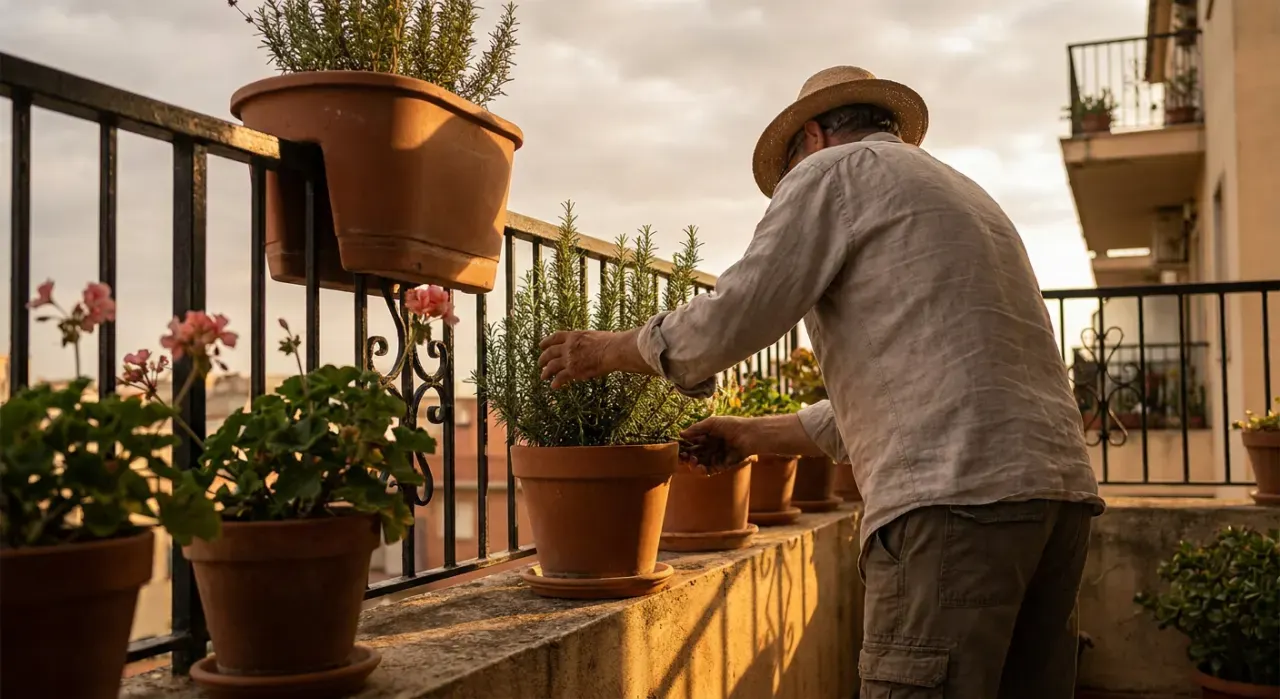
The finger test. Push a finger two inches into the mix — not the surface, which dries within an hour of any watering and tells you nothing. If it is dry at two inches, water. For pots over 10 gallons, go to three inches, or use a wooden chopstick pushed to the bottom and pulled out to see where the damp line sits.
The lift test. The best method once you know a pot. A watered 5-gallon container weighs perhaps 30 pounds; the same pot dry weighs closer to 20. Tilting it an inch tells you instantly, and it reads the whole root ball rather than the top layer. Learn the weight of each pot when it has just drained, and thereafter you can check a whole balcony in a minute.
What wilting does and does not mean. Afternoon wilting in a plant with damp soil that stands back up by evening is normal — transpiration briefly outrunning uptake. Wilting in the morning is real. Wilting in wet soil means the roots are failing, from blocked drainage, a pot standing in its own runoff, or heat damage from a dark container on a hot slab.
Cheap moisture meters are the tool people reach for and the one worth skipping. They read electrical conductivity as much as moisture, so fertilizer salts throw them off badly, and they are consistently outperformed by a finger.
How to Water Properly
The goal is to wet the whole root ball and then let it drain, not to keep the surface damp.
- Water in the early morning where you can — before 9 a.m. The plant fills before the heat, and foliage dries fast.
- Apply in two or three passes. Dry peat- and coir-based mixes are hydrophobic; the first pour largely runs down the gap between soil and pot wall and straight out the bottom, which looks like watering and is not. Give a small amount, wait two minutes, then give the rest.
- Water until about 10 percent runs out of the holes. That runoff is your proof the whole root ball is wetted, and it also flushes accumulated fertilizer salts out of the mix. Roughly a quarter to a third of the pot volume: about 1.5 quarts for a 5-gallon container, 3 to 4 quarts for a 15-gallon one.
- Aim at the soil, not the leaves. Wet foliage in a crowded container is how powdery mildew and blight get started, and leaf water does nothing for the plant.
- Do not leave pots standing in runoff. Empty saucers after heavy rain. A pot sitting in an inch of water for two days has drowned roots and a plant that looks, confusingly, like it needs watering.
If a pot has gone completely dry, mix has shrunk from the walls and normal watering just runs through. Stand the whole container in a bucket or tub of water for 20 to 30 minutes until the surface goes dark, then let it drain. That rehydrates the root ball properly, and it is worth doing once rather than watering ineffectively five times.
The Four Fixes That Actually Reduce the Work
1. Bigger containers. The most effective change available, and the least fashionable. Moving a tomato from 5 gallons to 10 roughly halves the watering frequency, because you have doubled the reservoir. If you find yourself watering twice a day, the honest answer is usually pot size rather than technique — the crop-by-crop minimums are in container sizes by crop.
2. Reservoir or drip. Self-watering containers hold water in a sealed base and wick it upward as the mix dries, which both extends the interval and keeps moisture steady — exactly what prevents blossom end rot and splitting. Designs vary enormously in how well they actually wick, which is what our ranked self-watering container pots are sorted on. If you have a hose bib, a battery timer and a run of quarter-inch drip line with one emitter per pot costs around $30, takes an hour to set up, and removes the daily trip completely.
3. Mulch, in pots too. An inch of bark fines, straw, cocoa hulls or even pebbles on the soil surface cuts evaporation substantially and keeps the top layer of roots cooler. Most people think of mulch as a garden-bed thing; it works just as well on a container, and it is close to free.
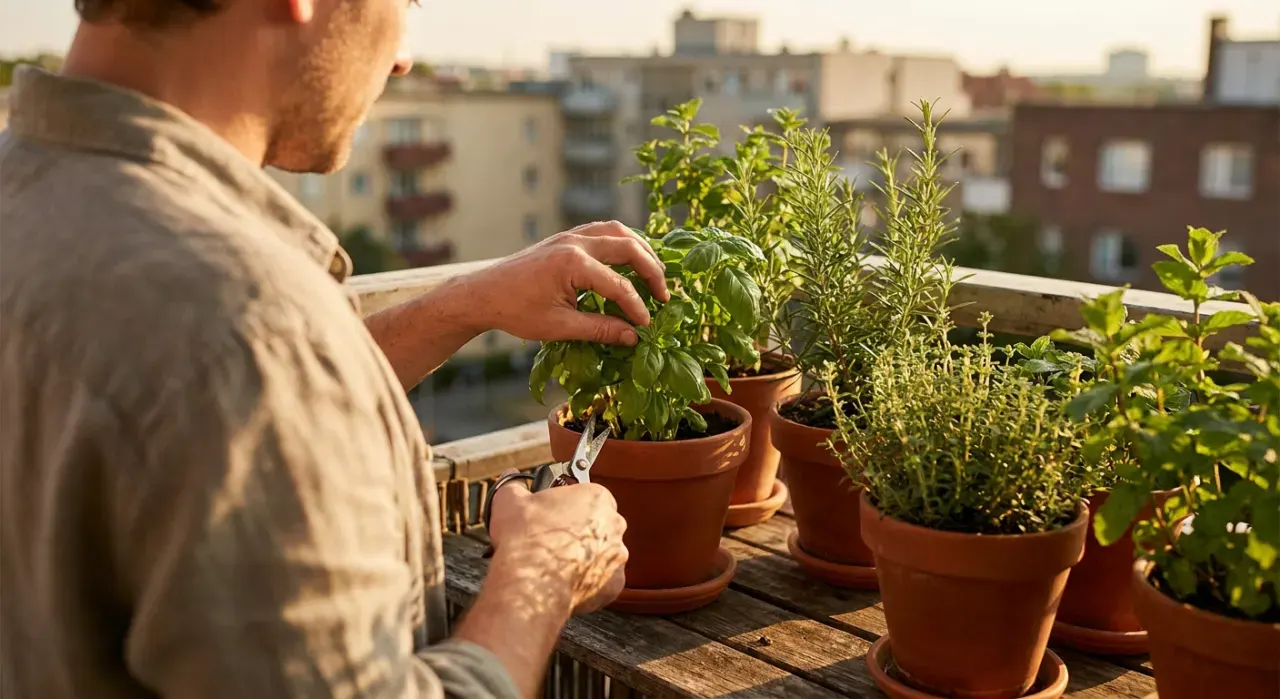
4. Group and shade. Pots standing close together shade each other's sides, raise local humidity and slow the wind between them. Beyond that, four cheap moves make a real difference in a heat wave: use light-colored containers where the sun hits the pot itself, raise pots an inch off hot slab on feet, double-pot heat-sensitive plants by setting one container inside a slightly larger one, and accept afternoon shade above about 95°F — most vegetables shut down photosynthesis in that range anyway, so you lose nothing.
How Container Material Changes the Schedule
| Container | Drying speed | Notes |
|---|---|---|
| Fabric grow bag | Fastest | Breathes on every surface. Great roots, daily watering. Size up one step. |
| Unglazed terra cotta | Fast | Wicks through the wall. Excellent for rosemary and thyme, hard work for tomatoes. |
| Vertical tower / wall pockets | Fast | High surface area per gallon, wind-exposed, drains top to bottom. |
| Wood planter | Moderate | Insulates well; line the inside (not the base) to slow moisture loss. |
| Glazed ceramic | Slow | Sealed wall, heavy, stable. Good for thirsty plants. |
| Plastic / resin | Slow | Cheapest way to hold water — but dark colors overheat in direct sun. |
| Self-watering container | Slowest | Reservoir plus wicking. Two to five days between fills in real heat. |
Watering and Feeding Are the Same Conversation
Every time water runs out of the drainage hole it carries dissolved nutrients with it, so summer watering steadily strips a container of the fertilizer it started with. By six weeks of active growth, most potting mixes are largely exhausted. The standard answer is weakly, weekly — a liquid feed at roughly half the label strength every week through the growing season, rather than a full-strength dose once a month, which produces a spike followed by a slump and contributes to salt buildup.
That salt buildup shows as a white crust on the soil surface or the pot rim, and as brown, crisp leaf edges that look like drought damage on a plant you have been watering diligently. The cure is a flush: water heavily, three times the normal volume, and let it all run out. Doing that once a month through summer keeps things clean, which is another reason to water until runoff rather than sparingly.
Leaving Containers for a Few Days
For two or three days, preparation is enough. Water deeply the morning you go. Move everything into shade — even full-sun crops tolerate three days of shade far better than three days without water. Group the containers tightly. Mulch the surfaces. Stand small pots in a shallow tray with about an inch of water so they can wick from below; do not do this with large pots, which will waterlog.
Beyond three days, improvise less and irrigate properly. A battery hose timer and drip line is the reliable answer. Failing that, wicking systems work genuinely well: a length of cotton rope or a strip of capillary matting running from a bucket of water into the top few inches of each pot will keep a container damp for a week, provided the bucket sits higher than the pots. Test it for two days before you rely on it — this is one of those setups that either works perfectly or does nothing at all, and you want to find out while you are home.
Where to Go Next
If the watering load is genuinely unsustainable, the fix is usually structural rather than behavioral: larger containers sized with container sizes by crop, or a format with more soil buffer — the trade-offs are in vertical planter vs grow bag vs raised bed. For heat and wind management on an exposed space, see the balcony garden starter guide, and the wider picture sits in our small-space gardening hub. Our rankings come from aggregated owner reviews rather than first-hand handling — see how we rank.