 Garden

Affiliate Disclosure
Some links on this page are affiliate links. As an Amazon Associate, we earn from qualifying purchases — at no extra cost to you. We do not buy, test, or physically handle the products we cover; our rankings come from aggregated owner reviews, ratings and expert consensus. Commissions never change our verdicts. How we rank · full disclosure.
The short version: after weighing six popular DIY security kits on sensor coverage, hub reliability, what happens when the internet drops, monitoring cost and what reviews written a year or more later say, our #1 pick is the Ring Alarm 8-Piece Kit (2nd Gen). It combines a genuinely cheap monitoring plan, a Z-Wave sensor mesh that does not clog your Wi-Fi, and the ability to run entirely free if you would rather self-monitor.
This page is about whole systems — hubs, sensors, keypads, sirens and the monitoring plans behind them. If what you actually want is a single camera watching the driveway, our best home security cameras roundup is the right page. A camera tells you what happened; a system tells you the moment a door opened and makes noise about it.
Top Picks at a Glance

Our #1 Pick: Ring Alarm 8-Piece Kit (2nd Gen)
The eight-piece kit is sized for a one or two bedroom home: a base station, a keypad, four contact sensors, one motion detector and a range extender. The base station is the piece that matters. It carries the siren, the battery backup and — on a monitored plan — a cellular radio, so the system keeps working through a power cut and through a broadband outage. The sensors talk to it over Z-Wave rather than Wi-Fi, which means adding twelve sensors does not add twelve devices to your router.
What owners consistently praise is cost. The professional monitoring plan is the cheapest of the mainstream options, it includes cellular backup and unlimited recording for Ring cameras, and it has no contract. Just as importantly, if you decline the plan entirely the system still works: the siren sounds, the app alerts you, and the sensors log every door. Reviewers moving from a legacy contract alarm consistently describe that combination as the reason they switched.
Consensus Score █████████░ 9.0
The complaints are worth taking seriously. It is an Amazon ecosystem product, and reviewers who care about that say so plainly — the app, the cameras and the voice control all assume Alexa. Some features are plan-gated: without a subscription you lose cellular backup and camera recording, which for some buyers changes the math. The contact sensors are large compared to newer designs and look bulky on a modern door frame. And the range extender is often necessary rather than optional in a house with thick walls, so plan on a second one for anything over about 2,000 square feet.
Check price on Amazon → (paid link)
Best DIY Security Systems 2026: The Ranked Field

Best for a 1–2 bedroom home that may grow into a bigger system
- Base station, keypad, 4 contact sensors, motion detector, range extender
- Z-Wave sensor mesh — not Wi-Fi per device
- Optional 24/7 professional monitoring with cellular backup
- Works with Alexa; expands with cameras and doorbells
Why buy it: the widest owner agreement in the category — the sensors are cheap to add, the monitoring plan is the cheapest of the majors, and it self-monitors free if you skip it.

Best for people who want a monitoring center, not a phone alert
- Base station with a loud siren, keypad, entry and motion sensors
- No contract; monitoring month to month
- Cellular and battery backup built into the base
- Encrypted proprietary radio, not Wi-Fi sensors
Why buy it: the monitoring experience owners rate highest — fast operator response, no contract to escape, and a base station that keeps working when the internet does not.
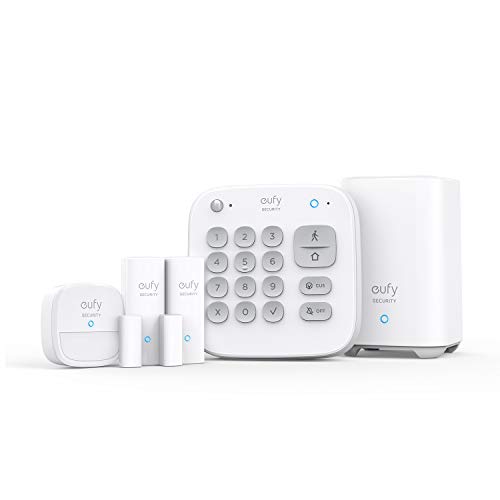
Best for self-monitoring with zero recurring cost
- HomeBase hub, keypad, motion sensor, 2 entry sensors
- No subscription required for any core function
- Links to eufyCam cameras and eufy video doorbells
- Optional 24/7 professional service if you want it later
Why buy it: everything works with no plan at all, which over five years is the difference between a $180 purchase and a $1,000 one.
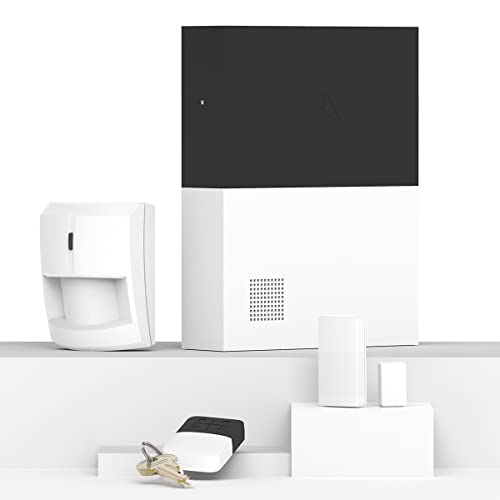
Best for a house already running HomeKit, Z-Wave or Zigbee gear
- Gateway, entry sensors, key fob
- Works with Apple HomeKit, Alexa and Google Assistant
- Built-in Z-Wave and Zigbee radios for third-party devices
- On-demand monitoring by the week or month
Why buy it: the only mainstream DIY system with HomeKit plus Z-Wave and Zigbee radios in the hub — it becomes the smart home controller as well as the alarm.

Best for renters and apartments on a tight budget
- Motion and entry sensors, siren and keypad
- No hub required — sensors talk to Wi-Fi directly
- Free plan covers the core alerts
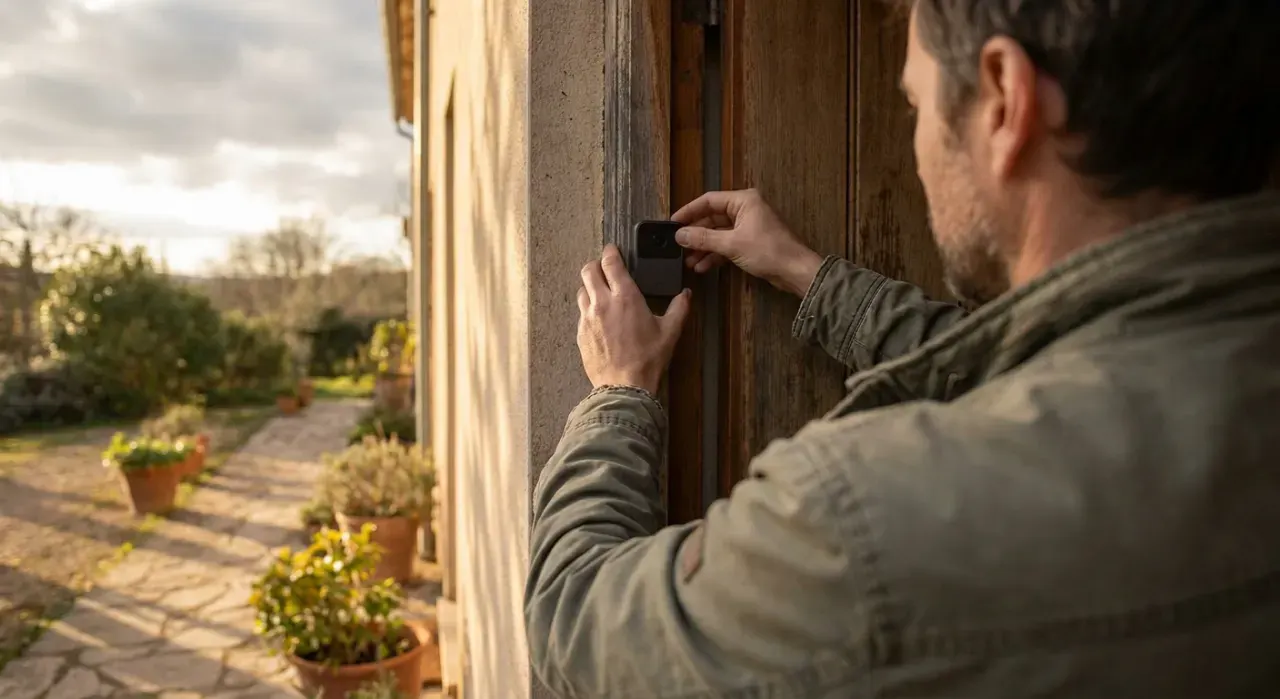
- Adhesive mounting, nothing drilled
Why buy it: the cheapest way to get real door and motion alerts on a phone, with adhesive mounts a landlord will never notice.

Best for wanting verification video with the alarm from day one
- Everything in the 8-piece kit plus an indoor HD camera
- Camera has a privacy shutter that closes when disarmed
- Video verification can speed up dispatch on a monitored plan
- Same no-contract monitoring
Why buy it: sensors tell you something happened; a camera tells you what — and on a monitored plan that verification is what turns an alert into a dispatch.
Quick Comparison
| Product | Best for | Rating | Price | Buy |
|---|---|---|---|---|
| Ring Alarm 8-Piece Kit (2nd Gen) Home Security System | Best Overall | — | Check (paid link) | |
| SimpliSafe 8-Piece Wireless Home Security System | Best Professional Monitoring | — | Check (paid link) | |
| eufy Security 5-Piece Home Alarm Kit with HomeBase | Best No Monthly Fee | — | Check (paid link) | |
| abode 4-Piece Wireless Smart Security System, HomeKit Compatible | Best for Smart Homes | — | Check (paid link) | |
| Kangaroo Home Security System 5-Piece Kit | Best Budget | — | Check (paid link) | |
| SimpliSafe 9-Piece Wireless Home Security System with HD Camera | Best Kit With a Camera | — | Check (paid link) |
Spec Comparison
| System | Pieces | Sensor radio | Works without a plan? | Cellular backup |
|---|---|---|---|---|
| Ring Alarm 8-Piece (2nd Gen) | 8 | Z-Wave | Yes — self-monitored | On paid plan |
| SimpliSafe 8-Piece | 8 | Proprietary encrypted radio | Yes — siren and app | On paid plan |
| eufy 5-Piece Alarm Kit | 5 | Proprietary to HomeBase | Yes — fully | Optional service |
| abode 4-Piece | 4 | Zigbee + Z-Wave + proprietary | Yes — self-monitored | On paid plan |
| Kangaroo 5-Piece | 5 | Wi-Fi direct | Yes — free tier | No |
| SimpliSafe 9-Piece + camera | 9 | Proprietary encrypted radio | Yes — siren and app | On paid plan |
How We Rank
We never buy, install or physically handle the products on this site, and we say so on every ranking page. These rankings come from aggregated owner reviews, star ratings, review volume, manufacturer specifications and expert consensus from established security and smart home publications. For DIY security systems we weight four things: reliability of the hub and sensor link (dropped sensors and false alarms dominate the negative reviews), resilience — what the system does during a power cut, a broadband outage or a cut line, total five-year cost including the monitoring plan rather than the box price, and expandability, because almost every household ends up buying more sensors than the starter kit includes. Full method on how we rank.
The Systems, Reviewed
1. Ring Alarm 8-Piece Kit (2nd Gen) — Best Overall
Covered above. What owners like: the cheapest monitoring of the majors, Z-Wave sensors that stay off the Wi-Fi, cheap add-on sensors, easy setup, and it still works free if you self-monitor. What they complain about: deep Alexa dependence, plan-gated cellular backup and camera recording, bulky contact sensors, and range extenders needed in larger homes. Check price (paid link).
2. SimpliSafe 8-Piece — Best Professional Monitoring
SimpliSafe built its reputation on the monitoring experience rather than the hardware, and the reviews reflect that: what owners praise most is how fast an operator comes on the line and how straightforward it is to cancel a false alarm before anyone is dispatched. The base station carries a genuinely loud siren, battery backup and cellular, and the sensors run an encrypted proprietary radio rather than Wi-Fi — strong encryption being one of the baseline defenses the FTC recommends for connected devices.
Consensus Score ████████░░ 8.8
Recurring complaints: the system is at its weakest without a plan — self-monitoring is functional but noticeably less capable than the paid tiers, and reviewers who bought it expecting full features for free are the most disappointed group. The keypad and sensors are plastic and feel it. Camera integration is more limited than Ring’s. And older units on Wi-Fi-only setups draw more connectivity complaints than the current generation.
3. eufy Security 5-Piece Home Alarm Kit — Best No Monthly Fee
The eufy proposition is simple and, over five years, financially significant: every core function works with no subscription at all. The HomeBase stores footage locally when you add eufy cameras, the app alerts you, the siren sounds, and nothing is held behind a paywall. Professional monitoring exists as an option rather than an assumption.
Consensus Score ████████░░ 8.5
Recurring complaints: five pieces is a small kit and most homes need more sensors, which pushes the real price up. The professional monitoring option is newer and less proven than Ring or SimpliSafe, with fewer reviews describing an actual dispatch. Integration outside eufy’s own ecosystem is limited. And several owners note that the HomeBase must stay wired to the router, which constrains where you can put it.
4. abode 4-Piece Wireless Smart Security System — Best for Smart Homes
The abode gateway has Zigbee and Z-Wave radios alongside its own, plus Apple HomeKit support — a combination nothing else in this field matches. That makes it an alarm system and a smart home hub at once, so a door sensor can arm the alarm and turn on a lamp, and the whole thing appears in the Apple Home app. It also sells monitoring on demand, by the week, which is genuinely useful if you only want cover while traveling.
Consensus Score ███████░░░ 7.9
Recurring complaints: four pieces is the smallest starter kit here and almost everyone adds to it. The app is more capable and less polished than the mass-market alternatives, and reviewers describe a steeper learning curve. Support response draws more criticism than the bigger brands. And the price per sensor is higher than Ring’s.
5. Kangaroo 5-Piece Kit — Best Budget
Kangaroo skips the hub entirely — sensors connect to your Wi-Fi directly and alert the app, with a siren and keypad included. There is a free tier that covers the basic alerts. For a rental apartment where drilling is not allowed and the budget is small, adhesive-mounted sensors that notify a phone are a real improvement over nothing.
Consensus Score ███████░░░ 7.2
Recurring complaints: no hub means no cellular backup and no operation during an internet outage, which is a meaningful limitation for a security product. Wi-Fi-direct sensors draw the most connectivity complaints of any system here. Battery life reports vary widely. And the free tier is deliberately limited, with several useful functions behind a small subscription.
6. SimpliSafe 9-Piece with HD Camera — Best Kit With a Camera
The same eight-piece system with an indoor HD camera added. The camera includes a physical privacy shutter that closes when the system is disarmed, which is the detail owners mention most — it resolves the obvious objection to putting a camera in a living room. On a monitored plan, video verification can also speed up police dispatch.
Consensus Score ████████░░ 8.6
Recurring complaints: the camera is indoor-only and needs a power outlet, which limits placement. Video recording and the verification feature both require a plan. And several reviewers point out that buying the camera separately later often costs little more, so the bundle saving is smaller than it appears.
What Owners Actually Complain About
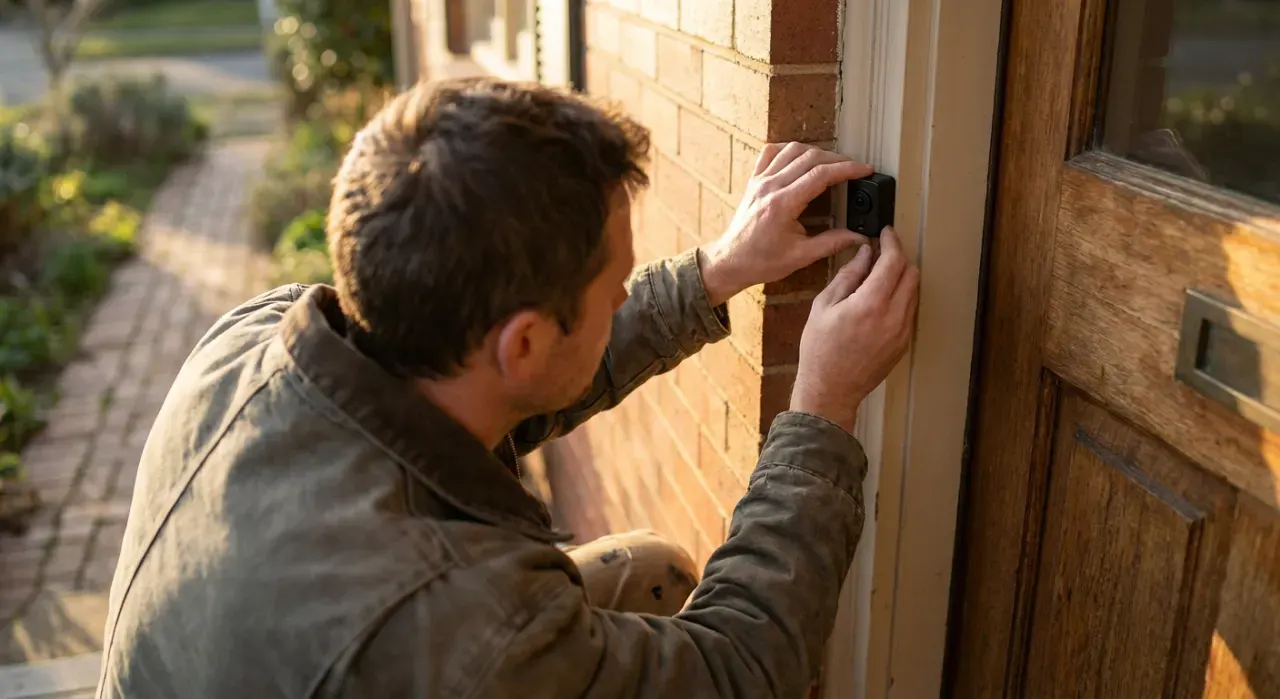
Read enough DIY security system reviews and five themes account for most of the low scores. False alarms are first, and the cause is nearly always a motion detector aimed at a heat vent, a sunlit window or a pet — placement, not hardware. Subscription surprise is second: buyers who did not realize that cellular backup, camera recording or dispatch require a plan write the angriest reviews in the category. Sensor dropouts are third, and they cluster heavily around Wi-Fi-direct systems and around hub-based systems used beyond their range without an extender. Battery life is fourth, with sensor batteries typically lasting one to three years and always seeming to fail at 3 a.m. And adhesive failure is fifth — the supplied double-sided tape struggles on textured, dusty or cold surfaces, and screwing sensors down is the fix experienced owners recommend.
How to Choose a DIY Security System
Answer the monitoring question first, because it drives everything else. Do you want an operator to call the police, or do you want your phone to buzz? If the answer is an operator, price the plan over five years and let that decide the brand — SimpliSafe and Ring are the two with the deepest track record of actual dispatches in reviews. If the answer is your phone, eufy is the honest choice because nothing is paywalled.
Then count your openings. Every exterior door, every reachable ground-floor window that opens, plus a motion detector per main living space. Buy the kit closest to that number and add sensors individually. Finally, check three practicalities: whether your city requires an alarm permit, whether the system keeps working without internet, and where the hub can physically live — most need to be near the router and on power. Whatever hub you buy, NIST publishes a recommended cybersecurity baseline for consumer IoT products like these, a useful reference point when comparing app security claims. Once the alarm is in, the natural next steps are a video doorbell at the front door and a smart lock so you can stop hiding a key under the mat.
The Verdict
For most homes the Ring Alarm 8-Piece Kit is the DIY security system to buy — cheap sensors, the cheapest monitoring of the majors, Z-Wave instead of Wi-Fi, and a system that still functions free if you skip the plan. Choose SimpliSafe if the monitoring center is the point, eufy if you refuse to pay monthly, abode if you want HomeKit and a smart home hub in one, and Kangaroo if it is an apartment and the budget is tight. Check price on Amazon → (paid link)
More from this hub: Smart Home & Security · Best home security cameras · Best video doorbells · Best smart locks · How we rank