 Garden

Affiliate Disclosure
Some links on this page are affiliate links. As an Amazon Associate, we earn from qualifying purchases — at no extra cost to you. We do not buy, test, or physically handle the products we cover; our rankings come from aggregated owner reviews, ratings and expert consensus. Commissions never change our verdicts. How we rank · full disclosure.
The verdict. The Blink Outdoor 4 is the right camera for someone who wants outdoor coverage tonight, with no wiring, no drilling for power and no monthly fee — and who accepts 1080p in an era of 2K. Its 4.2-star average is a fair reading: the battery life and the set-it-and-forget-it install genuinely delight owners, while the short recording delay and the subscription gate on person detection genuinely annoy them. Skip it if you need continuous recording or want to read a license plate.

Best for Alexa households that want cheap, battery-powered coverage without wiring
- 1080p HD day video with infrared night vision
- Two AA lithium cells rated for up to two years
- 143-degree field of view, wider than the Outdoor 3
- Local clip storage on a USB drive via Sync Module 2
- Two-way talk and Alexa voice control
Why buy it: it is the least demanding outdoor camera to live with — no wires, no drilling for power, no monthly fee if you store clips locally — and owners keep it for years on that basis alone.
What owners consistently praise
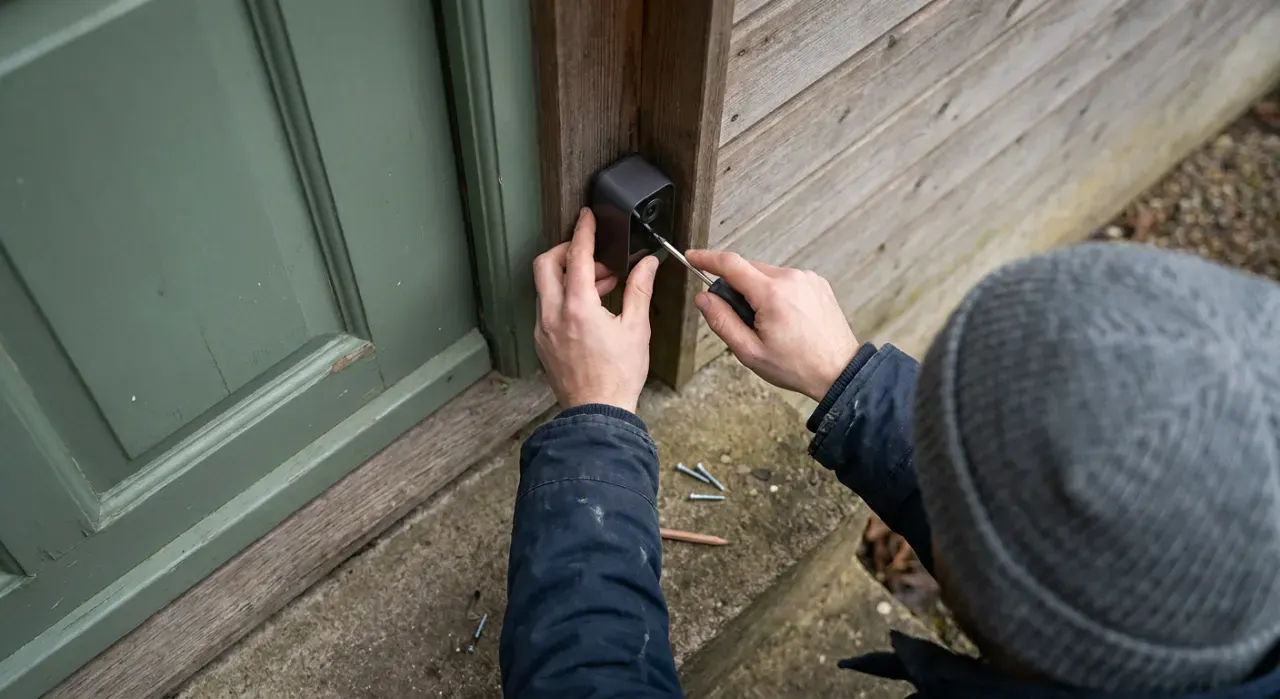
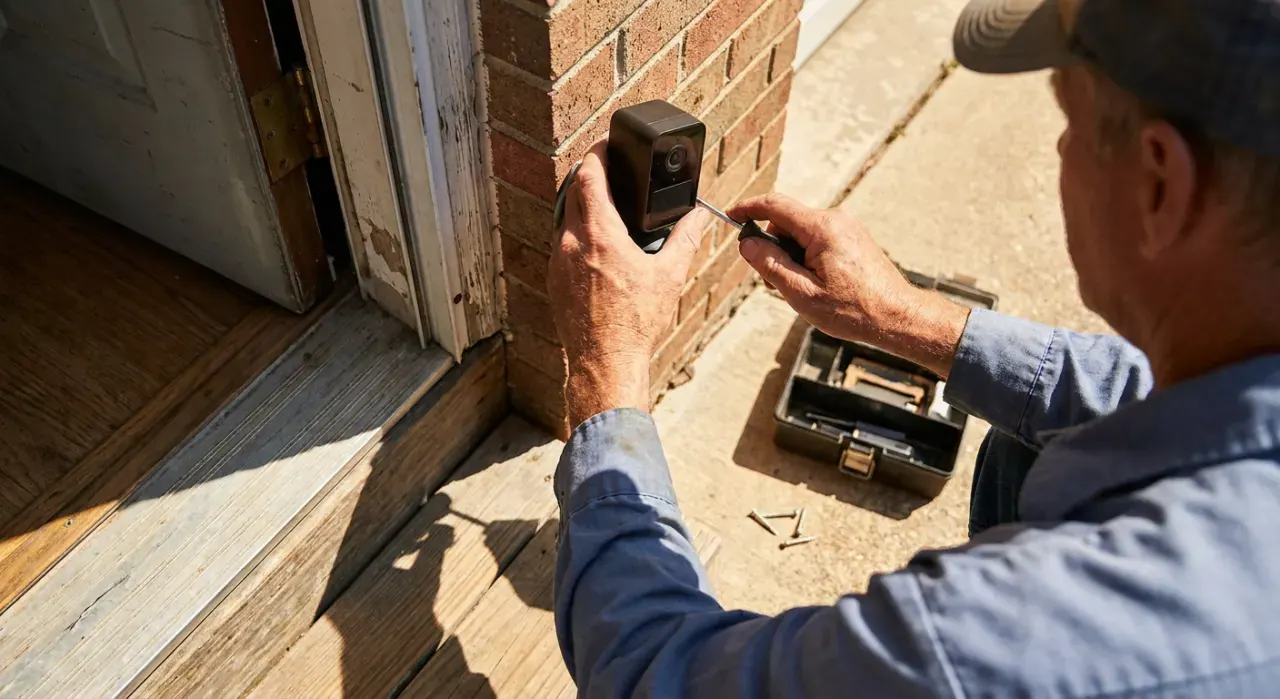
The install. This is the single most repeated positive in the owner record, and it is not a small thing. There is no outlet to find, no cable to route through siding, no low-voltage transformer. You screw a small mount under an eave or onto a fence post, twist the camera into position and finish in the app. Owners who describe themselves as non-technical routinely report having two or three cameras live within an hour, which is a genuinely different experience from a wired system.
Battery life relative to the category. Two AA lithium cells running a camera for the better part of a year is the reason people forgive the rest. Owners in low-traffic locations — a back gate, a side yard, a shed door — commonly report going a full season or more between changes, and the app gives fair warning before cells go flat. Battery-powered rivals that need a proprietary pack and a charging cable feel like a chore by comparison; here you keep a four-pack of lithium AAs in a drawer.
The Alexa integration. In an Echo household this is close to seamless. Asking a Show to pull up the back door feed works reliably, announcements arrive on Echo speakers, and the setup flow assumes you already have an Amazon account. Owners who bought Blink specifically because everything else in the house is Alexa are the most satisfied group in the review record.
Local storage without a fee. Plugging a USB drive into the Sync Module 2 gives you clip storage with no subscription at all. It is not as convenient as cloud, but it removes the recurring cost that makes people resent camera systems eighteen months in — and that removal shows up repeatedly in long-term positive reviews.
What owners actually complain about
This is the section that matters, because the Blink Outdoor 4 has real, repeatable weaknesses rather than vague ones.
The wake-up delay is the number one complaint. A battery camera keeps its radio asleep to survive the year, which means motion has to trigger it, it has to wake, connect and start recording. In practice that costs roughly a second or two — and a second or two is exactly how long it takes for a person to walk from the edge of frame to your front door. The recurring owner story is a clip that begins with a package already on the step and a back turned to the lens. It is not a defect; it is physics, and it applies to every battery camera. But it is the difference between footage that identifies someone and footage that only proves someone was there. Mount the camera to catch the approach path, not the door itself, and this improves substantially.
1080p is now behind the field. Rivals at half the price shoot 2K. At 1080p across a 143-degree field of view, a face at fifteen feet is recognizable if you already know the person and unhelpful if you do not. License plates at driveway distance are essentially unreadable. Owners who bought it expecting evidence-grade footage are the loudest negative voices in the record, and their complaint is legitimate.
Person detection is behind the paywall. Without a subscription every moving thing is a motion alert — headlights sweeping the wall, a branch, a cat, rain in the infrared beam. Owners describe alert fatigue setting in within days and then either paying, or turning notifications off entirely, which defeats the point. Motion zones help but they are coarse compared with the pixel-level masking on some competitors.
Sync Module dependence. The camera does not talk to your router directly; it talks to the Sync Module, which talks to your router. That adds a device that must stay powered and in range, and owners at the far end of a long yard report cameras dropping offline until the module is relocated. It also means a Sync Module failure takes every camera with it.
Night video washout. Infrared illumination close to the lens bounces off nearby surfaces — a porch ceiling, a railing, falling snow — and blows out the near field while leaving the far field dark. Owners solve it by moving the camera away from reflective surfaces or adding ambient porch lighting, but out of the box, night footage is the weakest part of the picture.
Who it suits — and who should buy something else
Buy it if the mounting spot has no power, you are already in the Alexa ecosystem, and you want a general awareness camera: who came to the gate, did the delivery arrive, is the dog in the yard. For that job it is hard to beat on effort-per-dollar.
Buy something else if any of the following is true. If power is available at the mount point, the Wyze Cam v4 gives you 2.5K detail and color night vision for less money — see our Wyze Cam v4 review. If you want no subscription at all with sharper video and onboard storage, a wired camera is the honest answer, and our best home security cameras roundup ranks the full field. If the priority is the front door specifically, a video doorbell covers that approach far better than a camera above it — start with the best video doorbells. And if you need continuous, always-on recording, no battery camera from any brand will do it; read do security cameras record all the time before you buy.
Specifications
| Spec | Blink Outdoor 4 |
|---|---|
| Resolution | 1080p HD |
| Field of view | 143 degrees |
| Power | 2 x AA lithium cells, rated up to 2 years |
| Night vision | Infrared |
| Storage | Cloud with subscription, or USB drive on Sync Module 2 |
| Audio | Two-way talk |
| Weather rating | Weather resistant, rated to roughly -4°F |
| Wi-Fi | 2.4 GHz, via Sync Module 2 |
| Person detection | Subscription only |
| Voice assistants | Alexa |
How we reached this verdict
We never buy, install or physically handle the products on this site, and we say so on every page. This assessment is built from the aggregated owner-review record — star distribution, what the one- and two-star reviews say specifically, what long-term owners report a year on — alongside manufacturer specifications and expert consensus from established smart home publications. For battery cameras we weight four things: recording latency, real-world battery runtime versus the rated figure, what the camera can do without a subscription, and how gracefully it handles cold and poor Wi-Fi. Full method on how we rank.
More from this hub: Smart Home & Security · Best home security cameras · Ring Indoor Cam review · Using a camera without a subscription · How we rank
Check price on Amazon → (paid link)