 Garden

Affiliate Disclosure
Some links on this page are affiliate links. As an Amazon Associate, we earn from qualifying purchases — at no extra cost to you. We do not buy, test, or physically handle the products we cover; our rankings come from aggregated owner reviews, ratings and expert consensus. Commissions never change our verdicts. How we rank · full disclosure.
The temperature printed on a fireproof document bag is not a rating. "2000°F" or "5200°F" describes a property of the fabric — roughly where the silica or fiberglass weave itself starts to give up. It says nothing at all about how hot the inside gets, which is the only number that matters for a birth certificate. And a 5200°F claim should raise an eyebrow immediately, because a residential structure fire runs in the region of 1100 to 1800°F. A number three times higher than any fire is a material spec being used as a marketing headline.
None of which makes these bags useless. They are genuinely good at two things, and one of them is the half of the problem that most people never plan for: water. A zipped, foil-faced bag inside a safe is what keeps documents legible after the fire department has put several hundred gallons through the room. The second thing is portability — a bag is what you can actually grab on the way out of a house.
Top Picks at a Glance
Why a Bag Cannot Do What a Safe Does
This is not a quality argument; it is a thickness argument. A fire safe works by putting an inch or more of insulation — usually a gypsum-type composite that holds water chemically and releases it as steam — between the fire and your paperwork. That mass and that steam are the mechanism. A document bag is a few millimeters of woven fabric with a metallized outer face, and a zipper running down one side.
The consequences are predictable. Heat conducts through millimeters far faster than through inches. The zipper is a thermal and moisture leak path, which is why the better bags put a hook-and-loop storm flap over it. And paper chars at roughly 400 to 450°F, so the interior of a thin bag reaches the point of failure long before the fabric does. The fabric surviving a fire and the contents surviving a fire are two different events.
| Fire-rated safe | Document bag | |
|---|---|---|
| Barrier thickness | 1 in or more of insulation | 2–4 mm of woven fabric |
| Tested standard | UL 72, with a stated class and duration | None comparable; no consumer standard |
| What the number means | Interior stays below 350°F for the rated time | Fabric withstand temperature |
| Water performance | Sometimes rated for submersion | Water resistant; excellent as an inner layer |
| Portable in an evacuation | No | Yes — this is the real advantage |
The standard worth knowing is UL 72, Tests for Fire Resistance of Record Protection Equipment. It classifies by interior temperature ceiling: Class 350 for paper, Class 125 for magnetic and digital media. No document bag carries either classification, and it is worth understanding that the absence is structural rather than an oversight — the test involves a furnace exposure a fabric envelope is not designed for. Our fuller treatment of what those classes mean is in are fireproof safes actually fireproof?
The Right Way to Use One
Used properly, these are one of the best-value purchases in home preparedness. Used as a substitute for a safe, they are a false sense of security.
- Put the bag inside the safe. This is the correct configuration. The safe handles the heat; the bag handles the water and keeps documents sorted. It is a $25 upgrade to a $250 purchase and it addresses the failure mode nobody plans for.
- Keep one packed as a grab bag. Passports, birth certificates, insurance policy numbers, a copy of the deed, a list of account numbers, and enough cash to be useful. Ready.gov's financial preparedness guidance has a sensible checklist of what belongs in it.
- Do not use it as the only container for digital media. Paper is what these protect. Put an encrypted copy of anything digital in a different building or in cloud storage.
- Sort by category, not by size. Three small pouches labeled identity, property and financial beat one large bag you have to empty onto the table.
- Close the storm flap. Where a bag has a flap over the zipper, that flap is doing real work against both heat ingress and water. Owners who leave it open are not getting the product they bought.
Our #1 Pick: 15 x 11 in Two-Pocket Bag
This is the most-owned document bag in the country and it is the right size for the actual job. Legal-size documents lie flat and unfolded — deeds, titles, vehicle paperwork, Social Security cards, birth certificates — and the two internal pockets mean you can separate identity documents from property documents without buying a second bag.
Construction is the standard for the better end of the category: a silicone-coated fiberglass shell with a metallized outer face, a zipper, and a hook-and-loop storm flap over the zipper. That flap is worth looking for; a bare zipper is the weakest point of any of these bags for both heat and water.
The recurring complaints are honest and worth knowing before you order. There is often a chemical smell out of the packaging that fades over a week or two — air it out rather than sealing documents in immediately. And fiberglass fabric can shed: a number of owners report itching after handling, which is a real property of the material rather than a defect. Handle it, wash your hands, and once documents are inside and the bag is in a drawer it is a non-issue. If that concerns you, the small pouch ranked second is specifically marketed as non-itchy, and the difference shows up in its owner reviews.
Check price on Amazon → (paid link)
The Ranked Field

Best for legal-size documents kept flat inside a safe or a filing drawer
- 15 x 11 in — legal-size documents lie flat, unfolded
- Two internal pockets to separate categories
- Silicone-coated fiberglass shell with a foil face
- Zipper plus a hook-and-loop storm flap over it
Why buy it: the most-owned document bag on the US market and the right size for the job most people actually have: deeds, titles, birth certificates and passports, flat and sorted.
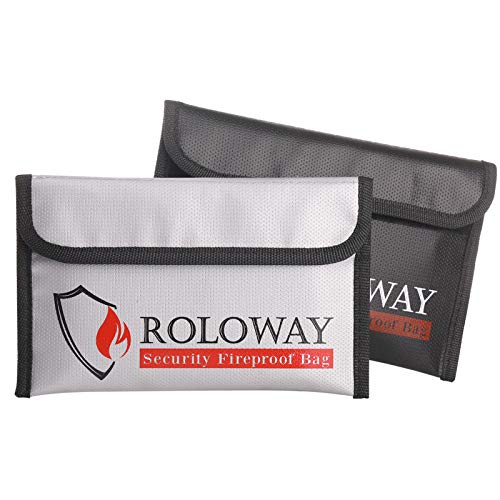
Best for cash, passports, a spare key fob, a USB drive
- 5 x 8 in pouch, fits a passport with room to spare
- Described as non-itchy — a genuine differentiator in this category
- Zip closure
- Small enough to live inside a larger safe or bag
Why buy it: cheap enough to buy three and sort by category, which is how these products stop being a junk drawer and start being useful.
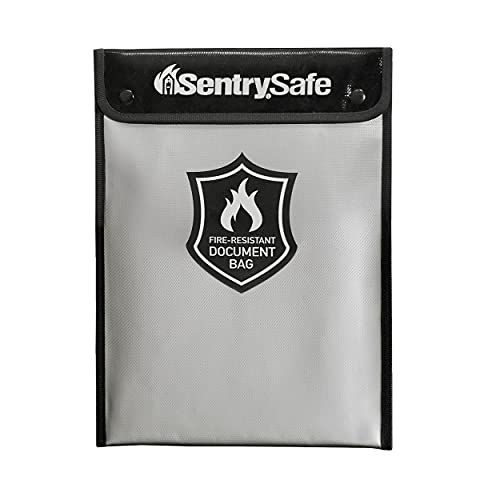
Best for buyers who want a name that also makes rated safes
- Made by an established safe manufacturer
- Zip closure with a full-width pull
- Sized for letter and legal documents
- Designed to sit inside a SentrySafe unit
Why buy it: the same physics as every other bag here, but from a company whose safes carry real third-party listings — which is worth something when the rest of the category is anonymous.

Best for binders, a laptop, a hard drive enclosure and a stack of files together
- 17 x 12 x 5.8 in — a genuine box shape rather than an envelope
- Holds three-ring binders upright
- Foil-faced fiberglass shell with a storm flap
- Carry handles
Why buy it: the only shape here that swallows binders, and binders are where most households actually keep the paperwork they would grieve over.

Best for a first pouch, or one per family member
- 10 x 13 in — letter-size documents flat
- Single compartment, zip closure
- Thin enough to slide into a safe alongside other items
- Lightweight for grab-and-go
Why buy it: the price point where there is no argument for leaving documents loose in a drawer — it costs less than a takeout lunch.

Best for a household that has genuinely lost a document before
- 13-pocket accordion insert inside a fire-resistant shell
- Labeled tabs for categories
- Zip closure with a carry handle
- Letter and legal capacity
Why buy it: the accordion insert is the reason this gets used rather than stuffed — a bag you can find something in is a bag you keep filing into.
Quick Comparison
| Product | Best for | Rating | Price | Buy |
|---|---|---|---|---|
| 2-Pocket Fireproof Document Bag, 15 x 11 in, Fire and Water Resistant | Best Overall | — | Check (paid link) | |
| Small Fireproof Bag, 5 x 8 in, for Cash, Passports and Small Valuables | Best Small | — | Check (paid link) | |
| SentrySafe Fire and Water Resistant Portable Bag with Zipper | Best Brand-Backed | — | Check (paid link) | |
| Large Fireproof Bag, 17 x 12 x 5.8 in, Water Resistant | Best Large | — | Check (paid link) | |
| Fireproof Document Pouch, 10 x 13 in, Zippered Water Resistant | Best Budget | — | Check (paid link) | |
| ENGPOW Fireproof File Organizer Bag with 13 Accordion Pockets | Best Organizer | — | Check (paid link) |
Sizing, Honestly
| Size | Takes | Does not take | Best role |
|---|---|---|---|
| 5 x 8 in | Passports, cash, drives, key fobs | Any unfolded document | Category pouches inside a safe |
| 10 x 13 in | Letter-size flat | Legal-size unfolded, binders | A first bag, one per person |
| 15 x 11 in | Legal-size flat, folders | Three-ring binders | The main household document bag |
| 17 x 12 x 5.8 in | Binders upright, a laptop, files together | Fitting into a small safe | Grab-and-go, or a large safe |
The Field, Reviewed
1. 15 x 11 in Two-Pocket Bag — Best Overall
Covered above. Owners praise: legal-size documents lying flat, the two internal pockets, and the storm flap over the zipper. Owners gripe about: a chemical smell on arrival, fiberglass itch when handling, and a zipper that needs a straight pull to run smoothly. Check price (paid link).
2. Small 5 x 8 in Pouch — Best Small
The highest review volume in the category and the one most owners end up buying multiples of. Specifically marketed as non-itchy, and the owner record supports that — the itch complaints that dominate the segment are largely absent here.
Owners praise: the price, the lack of itch, and that it fits a passport and cash without bulging. Owners gripe about: genuinely small, single compartment, and no storm flap over the zipper. Check price (paid link).
3. SentrySafe Portable Bag — Best Brand-Backed
Physically similar to everything else in the category, but from the manufacturer whose safes carry actual third-party fire and water listings. In a segment where most products are anonymous, that is a reasonable thing to pay a small premium for — and it is sized to sit inside a SentrySafe unit, which is where a bag belongs.
Owners praise: build quality, a smooth full-width zipper, and confidence in the brand. Owners gripe about: the price against generic equivalents, a single compartment, and no accordion or divider structure. Check price (paid link).
4. Large 17 x 12 x 5.8 in Bag — Best Large
The only genuinely box-shaped option here, and that shape is the point: three-ring binders stand up in it. Most households keep their important paperwork in binders, so this is the bag that matches how documents are actually stored rather than how a product designer imagined it.
Owners praise: binder capacity, the carry handles, and that it works as a standalone grab bag. Owners gripe about: too large to fit inside most home safes, heavy once loaded, and the wide zipper takes two hands. Check price (paid link).
5. 10 x 13 in Pouch — Best Budget
Letter-size flat, one compartment, zip closure, and cheap enough that there is no defensible reason to leave documents loose in a filing cabinet. Buy one per family member and label them.
Owners praise: the price, the thin profile that slides into a safe alongside other things, and adequate build for the money. Owners gripe about: legal-size documents must be folded, no internal divisions, and no storm flap. Check price (paid link).
6. ENGPOW 13-Pocket Organizer — Best Organizer
A fire-resistant shell around an accordion file with labeled tabs, which sounds like a small thing and is not. The reason document storage fails is not usually fire; it is that nobody can find the title when they need it, so documents live in three places. An organizer you can file into is one you keep using.
Owners praise: the accordion insert, the labeled tabs, and that it holds letter and legal together. Owners gripe about: the price, bulk when full, and that the accordion insert reduces the effective fire-resistant volume. Check price (paid link).
What Owners Actually Complain About
Fiberglass itch. The signature complaint of the category. Silica and fiberglass weaves shed fine fibers, and handling a new bag leaves some people itching for an hour. It is a property of the material. Handle it, wash your hands, and store it closed.
Chemical smell. Common on arrival and it fades. Air the bag for a week before sealing documents inside, or the smell transfers to the paper.
Zippers. The mechanical weak point on every bag here. Owners report snagging on the flap and on the coated fabric. Pull straight and do not force it.
Sizing surprises. Stated dimensions are usually external. A 15 x 11 in bag does not comfortably take a 15 x 11 in folder. Allow an inch.
Over-trusting the label. The most consequential complaint, and it is not really about the product: buyers who treated a fabric bag as equivalent to a rated safe. It is a layer.
How We Rank
We do not buy or burn these bags. Rankings come from aggregated owner ratings across the most-owned fire-resistant document bags on the US market, weighted toward reviews written after months of use rather than on arrival, and cross-checked against published specifications and the text of UL 72. Four things carry the weight: usable interior size against the documents people actually own; closure design, because a bare zipper is the weak point and a storm flap is a real improvement; material behavior, including the itch and smell issues owners report consistently; and honesty of the claim — a listing quoting 5200°F is telling you how it thinks about evidence. Prices were checked at the time of writing. Full method: how we rank.
The Verdict
Buy the 15 x 11 in two-pocket bag as the household document bag, add a couple of 5 x 8 in pouches to sort cash and passports, and take the 17 x 12 in box bag if your paperwork lives in binders. Then use them the way they work: inside a rated safe, where the safe handles the heat and the bag handles the water and the sorting. And keep an encrypted copy of anything digital at a second address, because no bag on this page is protecting a hard drive from a fire. Check price on Amazon → (paid link)
More from this hub: storage & organization · are fireproof safes actually fireproof? · best fireproof safe · best home safe · how we rank.