 Garden

Affiliate Disclosure
Some links on this page are affiliate links. As an Amazon Associate, we earn from qualifying purchases — at no extra cost to you. We do not buy, test, or physically handle the products we cover; our rankings come from aggregated owner reviews, ratings and expert consensus. Commissions never change our verdicts. How we rank · full disclosure.
No consumer safe is fireproof. The category name is a marketing habit, and it is worth being blunt about it before spending $300: every product on this page is fire resistant for a stated number of minutes at a stated temperature. When that window closes, the inside of the box heads toward the temperature of the fire, and everything in it burns. A "fireproof safe" is really a countdown timer that buys your paperwork somewhere between 20 minutes and an hour.
The second thing worth knowing is that the rating on the carton may not come from anybody but the seller. There is a real standard — UL 72, Tests for Fire Resistance of Record Protection Equipment — and there are laboratories that run it. There are also a great many boxes whose "1700°F for 60 minutes" appears nowhere except the listing. Those two things look identical on Amazon. They are not the same purchase.
Top Picks at a Glance
UL 72: The Classes Nobody Explains
UL 72 does not issue a pass or a fail. It classifies record protection equipment by what survives inside across a stated exposure, and the class is the interior temperature ceiling. That single number is why a safe can be genuinely, verifiably fire rated and still ruin the thing you bought it for.
| UL 72 class | Interior stays below | Protects | Does not protect |
|---|---|---|---|
| Class 350 | 350°F | Paper records — the class almost every consumer safe carries | Hard drives, SSDs, flash media, film, tape |
| Class 150 | 150°F | Microfilm and some photographic media | Modern digital media, marginally |
| Class 125 | 125°F, with humidity controlled | Magnetic and digital media — drives, tape, flash | Nothing relevant; this is the strict class |
Read that once and the whole category clarifies. Class 350 is a paper rating. Paper chars somewhere around 400 to 450°F, so holding the interior under 350°F keeps documents legible. A hard drive does not care that the box stayed under 350°F, because platters, adhesives, solder and flash cells begin failing far lower — which is exactly why UL wrote a separate class at 125°F with a humidity limit attached. Class 125 safes exist, they are heavier and considerably more expensive, and virtually nothing in the consumer aisle is one.
So if the thing you cannot bear to lose is digital — photos, business records, a password vault export — a fireproof safe is not the answer and buying a bigger one does not change that. Encrypt it and put a copy somewhere else, geographically. Use the safe for the birth certificates, the deeds, the titles, the mortgage papers and the passports, which is what it is actually good at.
Listed Rating vs. Marketing Number
This is the distinction that decides whether you got what you paid for, and it takes ten seconds to check.
- A listed rating names the standard and the lab. UL Solutions runs UL 72; Intertek runs an equivalent program under the ETL mark. A listing that says "ETL verified, 1 hour at 1700°F, UL 72 Class 350" is making a checkable claim, and the mark appears physically on the safe.
- A marketing number is a temperature and a duration with nothing attached. "5200°F fireproof" is the tell — no standard tests to 5200°F, because a residential structure fire runs in the neighborhood of 1100 to 1800°F. A number that large describes the melting point of a fabric layer, not a tested performance envelope.
- An unrated box is an unknown, not a bad one. It may perform respectably. Nobody independent has checked, and you will find out at the worst possible moment. That is a legitimate thing to accept at $60 for a document chest. It is a poor thing to accept at $400.
Fire Gets Fought With Water
Half the losses in this category are not burns. A fire department puts hundreds of gallons into a room, sprinklers run until somebody shuts a valve, and the safe sits in the middle of it — often under a collapsed ceiling, often for hours before anyone can retrieve it. A fire rating with no water rating regularly returns an intact steel box full of swollen, illegible paper.
Look for a stated water-resistance rating, and understand what it means: several SentrySafe units are rated for a period of submersion at a stated depth, which is a real specification. "Water resistant" with no qualifier usually means a gasket that keeps out spray. Whichever you buy, seal the contents inside a zip bag or a fire-and-water document pouch as well — it costs almost nothing and it is the layer that actually saves the paperwork. See our fireproof document bag picks for that second layer.
Fire Rating Is Not a Security Rating
These are entirely separate certifications and a safe can hold one without the other. Burglary resistance is tested under UL 1037, Antitheft Alarms and Devices, and the entry-level classification you will see quoted on residential products is RSC — Residential Security Container. RSC is a low bar by design: it represents resistance to a short attack with common hand tools by one person. It is not a vault rating, it is not a TL-15 or TL-30 burglary rating, and a listing that says "RSC certified" is telling you the safe survives minutes, not hours.
Most of the safes on this page carry no burglary rating at all. Their real security value is that they are locked, awkward, and boring to look at — which defeats an opportunist and nothing more. The one modification that changes the math is bolting the thing down, because the standard residential theft of a safe is not a defeated lock. It is the whole safe leaving in the back of a vehicle. Our guide to bolting down a safe covers the anchors and the depths.
Our #1 Pick: SentrySafe SFW123
The SFW123 wins on the one criterion that matters most in a category built on unverifiable claims: its rating traces back to an independent laboratory. A stated one hour at 1700°F, plus a water-submersion rating, plus a Class 350 paper classification, is a specification you can look up rather than a sentence somebody wrote for a product page.
It is not the cheapest way to get 1.23 cubic feet of locked steel, and owners are consistent about what annoys them: the digital keypad is the weak point over a long ownership, batteries need changing on a schedule nobody keeps, and the unit arrives heavy enough to be genuinely awkward to move alone. Several owners note the interior is tighter than the cubic-foot figure implies once the insulation thickness is accounted for, which is true of every fire safe — insulation is most of the wall.
What owners repeatedly praise is the door seal and the sense that the thing is built to a specification. If the keypad worries you, the dial version of the same family is the more durable long-term choice for exactly the reason mechanical locks always are: nothing in it can go flat.
Check price on Amazon → (paid link)
The Ranked Field
Best for the household that wants a rating from a testing lab rather than a marketing department
- 1.23 cu ft interior, roughly a ream of paper plus a few folders
- Manufacturer states a one-hour fire rating at 1700°F, independently verified
- Water-resistance rating for submersion, not just splash
- Four pre-drilled bolt-down holes in the base
Why buy it: the rating actually traces back to a third-party lab test rather than an in-house oven, which is the single thing that separates a real fire safe from a painted steel box.
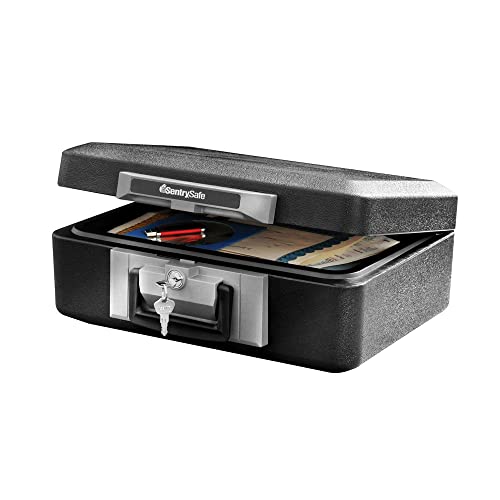
Best for passports, deeds, titles and a backup set of keys
- 0.15 cu ft, sized for legal-size folded documents
- Fire rating stated at 30 minutes, verified by a third-party lab
- Water resistant with a gasketed lid
- Light enough to carry out in an evacuation
Why buy it: the honest use case for a chest this size is grab-and-go, not burglary resistance — it weighs under 20 lbs, which means anybody can walk off with it.

Best for a first safe where price is the deciding factor
- Digital keypad with override key
- Removable interior shelf
- Fire and water resistance claimed by the manufacturer
- Bolt-down holes in the base
Why buy it: by far the most-owned safe in this price band, and the owner record is consistent — but note the fire figure here is a manufacturer claim, not a listed rating.
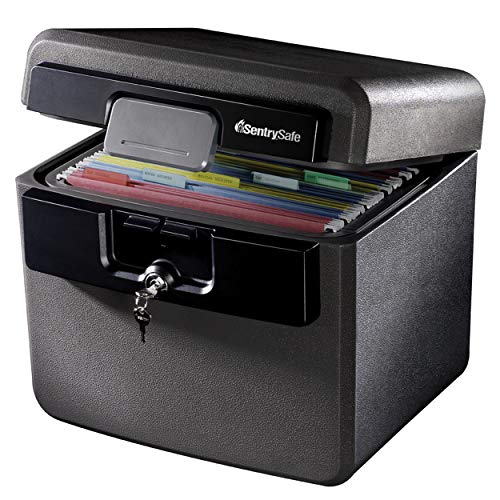
Best for people whose real problem is 200 pages of paperwork, not jewelry
- 14.3 x 15.5 x 13.5 in exterior with a hanging-folder interior
- Fire rating stated at 30 minutes, third-party verified
- Water resistant with a sealed lid
- Key lock rather than a keypad, so no batteries to die
Why buy it: a file box shape beats a cube for documents, because the paperwork stays sorted instead of becoming one compressed brick you have to dig through.
Best for a household consolidating documents, hard drives, cash and small valuables
- 2.05 cu ft interior with an adjustable shelf
- One-hour fire rating stated at 1700°F, verified
- Rated for water submersion
- Mechanical dial lock, no electronics
Why buy it: the mechanical dial is a feature rather than a compromise — a keypad that dies at year six turns a safe into a problem that needs a locksmith.
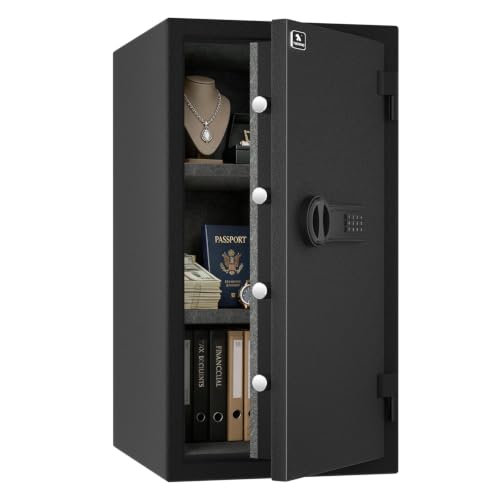
Best for volume — binders, laptops, camera bodies and a lot of paper
- 3.47 cu ft, the largest interior here
- Manufacturer states 30-minute fire protection
- Digital keypad with two override keys
- Heavy steel body with anchor holes
Why buy it: the most interior space per dollar in this list — as long as you read the fire figure as a manufacturer statement rather than a listed classification.
Quick Comparison
| Product | Best for | Rating | Price | Buy |
|---|---|---|---|---|
| SentrySafe SFW123 Fireproof and Waterproof Safe, 1.23 Cu Ft, Digital Keypad | Best Overall | — | Check (paid link) | |
| SentrySafe Fireproof Chest with Key Lock and Carrying Handle, 0.15 Cu Ft | Best Small Chest | — | Check (paid link) | |
| Amazon Basics Fireproof and Waterproof Safe Box with Digital Keypad | Best Budget | — | Check (paid link) | |
| SentrySafe Fireproof and Waterproof File and Document Box with Key Lock | Best for Files | — | Check (paid link) | |
| SentrySafe Fireproof and Waterproof Safe, 2.05 Cu Ft, Dial Combination Lock | Best Larger Capacity | — | Check (paid link) | |
| TIGERKING Fireproof Safe for Home Office, 3.47 Cu Ft Heavy Steel Security Safe | Best Large Cabinet | — | Check (paid link) |
The Field, Reviewed
1. SentrySafe SFW123 — Best Overall
Covered above. Owners praise: the verified rating, the door seal, the bolt-down holes, and that it holds hanging folders without crushing them. Owners gripe about: keypad and battery failures over years of ownership, the weight, and an interior noticeably smaller than the exterior suggests. Check price (paid link).
2. SentrySafe Fireproof Chest — Best Small Chest
The right answer for a specific job: the documents you would want in your hand while standing on the sidewalk. Light, gasketed, verified to a 30-minute rating, and cheap enough that there is no reason to store a passport loose in a drawer.
Owners praise: the price, the handle, and that legal-size documents fold in without creasing badly. Owners gripe about: the key lock has no backup if you lose both keys, the latch feels light, and — correctly — that anyone can pick the whole thing up and walk out with it. Check price (paid link).
3. Amazon Basics Fireproof and Waterproof Safe Box — Best Budget
The most-owned safe in its price band by a wide margin, and the ownership record is genuinely reassuring on the mundane things: the keypad works, the shelf is useful, the door shuts squarely. What it does not have is a rating from anybody except the company selling it. Buy it as a good locked box with insulation, not as a certified fire container.
Owners praise: value, straightforward keypad programming, and that it feels heavier and better made than the price suggests. Owners gripe about: paint chips and dents on arrival, a shallow interior once the shelf is fitted, and battery access that requires opening the door — meaning a flat battery locks you out unless you keep the override key elsewhere. Check price (paid link).
4. SentrySafe File and Document Box — Best for Files
Shape is the whole argument. A cube makes you stack paperwork; a file box lets it hang, which means you will actually keep using it instead of shoving new documents on top of old ones. Key lock, no batteries, verified 30-minute rating, water resistant.
Owners praise: the hanging-folder interior, the lack of electronics, and the size for a closet shelf. Owners gripe about: the lid is heavy and the hinge does not hold it open, capacity is smaller than a full file drawer, and the key is the only way in. Check price (paid link).
5. SentrySafe 2.05 Cu Ft Dial Safe — Best Larger Capacity
The step up in both volume and longevity. A one-hour verified rating, submersion-rated, and a mechanical dial that will still work in 2050. The dial is slower to open than a keypad and that is the trade: convenience against a lock with nothing in it to fail.
Owners praise: genuine capacity, the mechanical lock, and the reassurance of a rating that names a lab. Owners gripe about: the weight makes delivery and placement a two-person job, the dial takes practice, and the shelf spacing wastes height for tall items. Check price (paid link).
6. TIGERKING 3.47 Cu Ft — Best Large Cabinet
The most room here, and a sensible pick if you are consolidating binders, a laptop and camera gear rather than protecting six documents. Read the 30-minute fire figure as a manufacturer statement; the security case rests on the steel body, the anchor holes and the fact that it is too heavy to walk off with casually.
Owners praise: capacity, build weight, keypad reliability and the interior shelving. Owners gripe about: the fire claim being unverifiable, shipping damage on a heavy item, and a keypad that needs its battery tray checked annually. Check price (paid link).
What Owners Actually Complain About
Keypads and batteries, overwhelmingly. This is the number one long-term complaint across every brand and every price. Electronic locks fail, battery contacts corrode, and the override key is in a drawer nobody can remember. Put the override key somewhere outside the safe and write the date of the last battery change inside the door.
Interior smaller than expected. Fire insulation is thick. A 1.23 cu ft safe has a much smaller hole in it than a 1.23 cu ft box would, and buyers are consistently surprised. Measure your tallest document folder before ordering.
Shipping damage. These are heavy, awkward objects handled by parcel carriers. Dents, chipped paint and bent hinge covers are common on arrival. Inspect before the return window closes.
Humidity inside. The insulation that provides fire protection holds moisture by design, and a sealed safe in a damp basement can grow mildew on paper and rust on metal. A desiccant pack, replaced yearly, solves it.
The fire claim itself. Almost nobody reviews their safe after a fire, so owner reviews are effectively silent on the one thing the product exists for. That is why the standard and the lab matter more than the star rating here than in any other category we cover.
How We Rank
We do not buy, burn or attack these safes. Rankings come from aggregated owner ratings across the most-owned fire safes on the US market, weighted toward multi-year ownership reviews where lock and hinge failures appear, and cross-checked against published specifications and the text of the relevant standards. Four things carry the weight: whether the fire rating is independently listed or merely claimed; whether there is a water rating at all; lock longevity, because electronics are the documented failure point; and usable interior volume rather than exterior dimensions. Prices were checked at the time of writing. Full method: how we rank.
The Verdict
Buy the SentrySafe SFW123 if you want a rating that traces to a laboratory, and take the dial version if you plan to own it for decades. Buy the SentrySafe file box if the real problem is paperwork. Buy the Amazon Basics box if the budget is fixed, understanding exactly what you are and are not getting. Then do the two things that matter more than which model you chose: bolt it down, and keep a copy of anything digital somewhere else entirely, because no Class 350 safe on this page will save a hard drive. Check price on Amazon → (paid link)
More from this hub: storage & organization · are fireproof safes actually fireproof? · best home safe · best fireproof document bag · how to bolt down a safe · how we rank.