 Garden

Affiliate Disclosure
Some links on this page are affiliate links. As an Amazon Associate, we earn from qualifying purchases — at no extra cost to you. We do not buy, test, or physically handle the products we cover; our rankings come from aggregated owner reviews, ratings and expert consensus. Commissions never change our verdicts. How we rank · full disclosure.
Garage shelving should be 18 to 24 inches deep for general storage. Eighteen inches is the most useful single figure: it takes a standard 27 gallon tote turned lengthwise, keeps everything within reach, and leaves a wide walkway. Twenty-four inches suits bulk storage, cases of water, coolers and large bins, and it is what most heavy-duty steel racks are built to. Beyond 24 inches the back row becomes unreachable and the shelf starts eating the space a car needs. On a wall you park beside, keep depth to 16 to 18 inches.
What depth for what you are storing?
Depth should be set by the largest container you plan to use, plus an inch. Bins are the real dimension driver in a garage, and most people discover their shelf depth is wrong only after buying totes.
| Use | Shelf depth | Why |
|---|---|---|
| Standard 27 gal totes (about 30 x 20 in) | 20–24 in | Fits front to back; 18 in works turned lengthwise |
| Small 12–18 gal bins | 16–18 in | Two rows deep and still reachable |
| Paint, chemicals, small tools | 12–16 in | Single row keeps labels visible |
| Bulk paper goods, cases of water | 24 in | Full case depth |
| Automotive fluids and car care | 16–18 in | Heavy; keep it shallow and low |
| Sports gear, helmets, bats | 18–24 in | Awkward shapes need depth |
| Workbench upper shelves | 10–12 in | Deeper shadows the bench and hits your head |
| Overhead ceiling racks | Standard 4x8 ft or 4x4 ft | Depth is fixed by the product |
One planning note worth more than any dimension: buy the bins first, then build or buy shelving to fit them. Uniform rigid totes stack, label and slide; mixed cardboard boxes do none of those things. Our storage bin picks cover the sizes that stack reliably.
How does depth interact with parking?
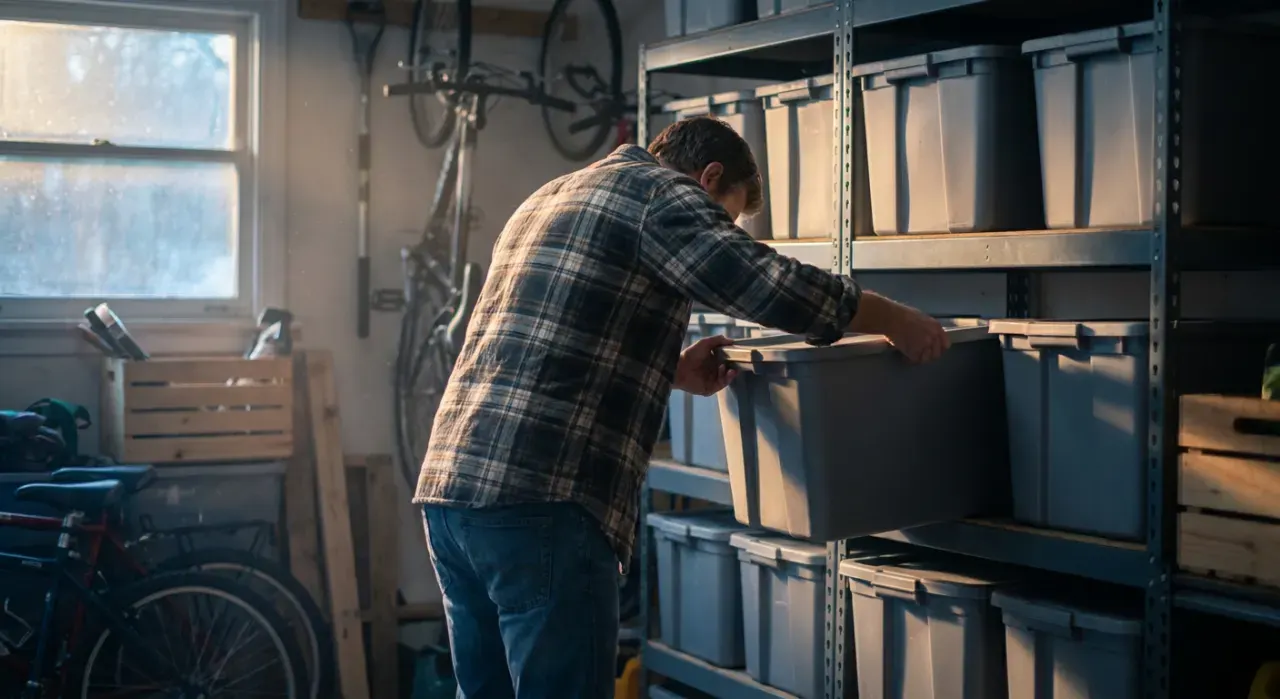
This is the constraint that decides the answer in most garages. Standard US garage interiors run about 20 to 22 feet wide for a two-car and 11 to 12 feet for a single, and a mid-size car is roughly 6 feet wide before mirrors. Work the arithmetic before choosing depth:
| Garage | Interior width | Practical shelf depth on side walls |
|---|---|---|
| Single-car, 12 ft wide | ~11.5 ft | 12–16 in on one wall only |
| Two-car, 20 ft wide | ~19.5 ft | 16–18 in both walls |
| Two-car, 22 ft wide | ~21.5 ft | 18–24 in both walls |
| Three-car or oversized | 30 ft plus | 24 in, plus a workbench run |
| End wall in front of the bumper | Depth of the bay | 24 in — the best deep-shelf location |
Leave 30 inches minimum between the shelf face and the side of a parked car so doors open, and remember that the shelf you can walk past with an armful of groceries is worth more than the extra six inches of depth. The end wall in front of the bumper is nearly always the right place for the deepest shelving.
What about heights and spans?
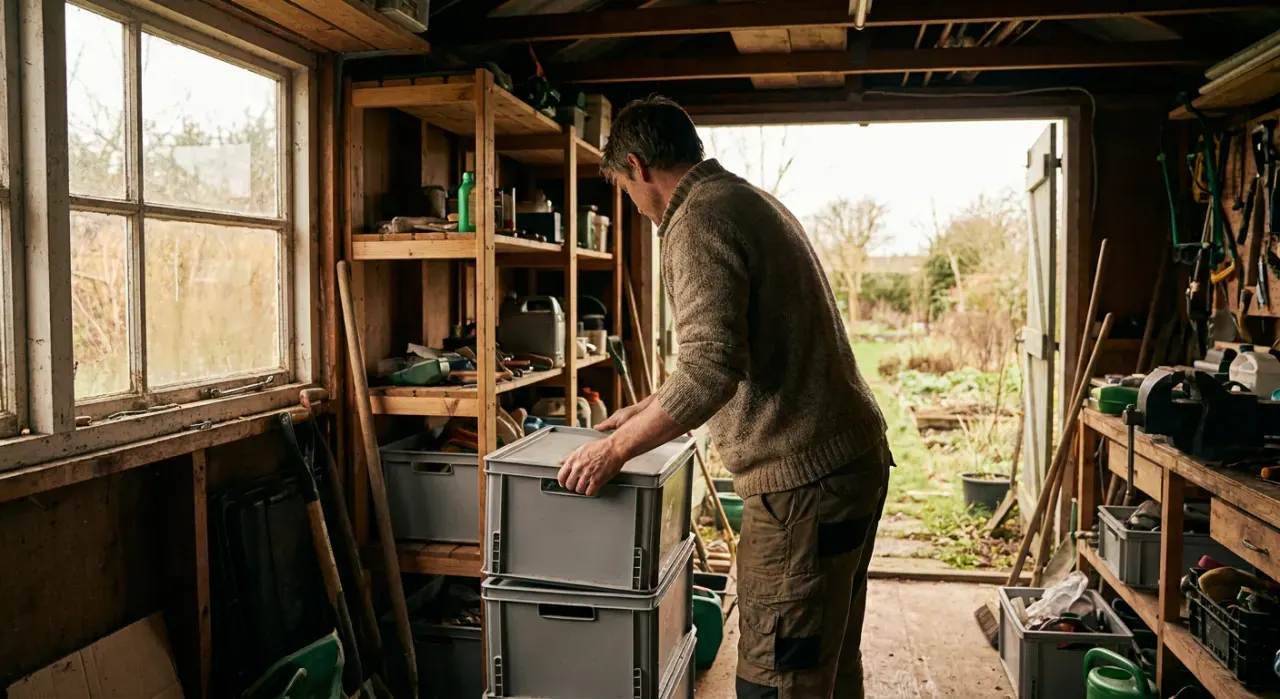
Set the bottom shelf 4 to 12 inches off the floor so water, leaves and a broom can pass under it. Space the working shelves 16 to 24 inches apart, which is what the common tote heights need, and put the least-used items above 6 feet where you need a step stool anyway. Keep the top shelf below about 7 feet unless you are storing genuinely light things.
Span is the other limit. Loaded garage shelves carry more per foot than anything in the house — a case of bottled water is around 30 lb and canned paint about 12 lb a gallon — so 3/4 inch plywood should not span more than about 32 to 36 inches under heavy loads, and 2x4 framing under the front edge is the standard fix for a longer run. Steel racks handle span with their own frames, and their published per-shelf ratings assume the diagonal braces are installed. Leave the braces out and the capacity is a fraction of the number on the box.
What has to be fastened to what?
Three rules, and none of them is optional.
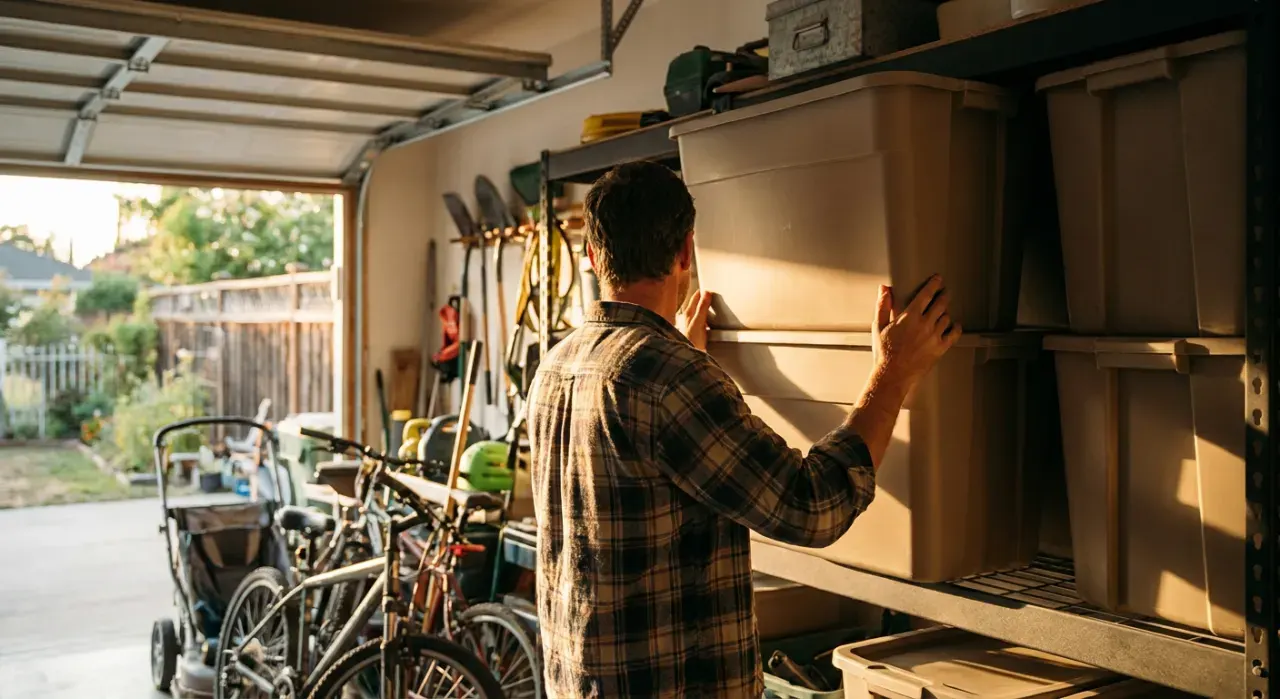
- Wall-mounted shelving goes into studs. Brackets carry a leveraged load, and a garage wall is often 1/2 inch drywall over 2x4 framing at 16 inches on center. Where a stud is not available, use metal strap toggles rather than plastic anchors — see how much weight a drywall anchor holds.
- Freestanding racks get an anti-tip strap into a stud. A loaded rack is top-heavy once the upper shelves fill up, and tip-over is the failure mode that hurts people.
- Overhead racks go into ceiling joists, using the lag screws and joist spacing the manufacturer specifies. Ceiling drywall carries nothing. Check the door track and opener clearance before mounting, and keep the rack clear of the garage door path in the open position. Our overhead garage rack picks cover the ratings and spans.
If the ceiling is framed with engineered trusses rather than solid joists, confirm with the rack manufacturer or a contractor before hanging load from it — trusses are designed for specific load paths, and adding weight in the wrong place is a structural question, not a storage one.
Guidance on this page is practical rather than an engineering specification. Follow the load ratings and installation instructions supplied with your own shelving and fasteners, and consult a qualified contractor for overhead or structural mounting. We never buy or physically handle the products we rank — recommendations come from aggregated owner reviews and published expert consensus. See how we rank.
More from this hub: Storage & Organization · Drywall anchor weight · Storing batteries in a garage · Best garage shelving · How we rank