 Garden

Affiliate Disclosure
Some links on this page are affiliate links. As an Amazon Associate, we earn from qualifying purchases — at no extra cost to you. We do not buy, test, or physically handle the products we cover; our rankings come from aggregated owner reviews, ratings and expert consensus. Commissions never change our verdicts. How we rank · full disclosure.
As of July 2026, a standard 10x10 self-storage unit costs roughly $110 to $190 a month in most of the US, and climate control adds about 25 to 50 percent on top. What you are buying there is humidity control rather than comfort: the EPA puts the target for indoor relative humidity below 60 percent, ideally 30 to 50, and an unconditioned unit will not hold that. Small 5x5 lockers start around $40 to $70, and a 10x20 unit the size of a one-car garage runs about $180 to $340. Location moves those numbers more than anything else — dense coastal metros routinely run two to three times the national figures, while small-town facilities sit below them. Prices below are typical street rates and should be checked against live quotes for your own ZIP code.
What does each size cost, and what fits in it?
Size drives price, but not proportionally — the price per square foot falls as units get larger, which is why renting one 10x15 usually beats renting a 10x10 plus a 5x10. Ranges are national street rates as of July 2026, non-climate-controlled, before fees.
| Unit size | Sq ft | Typical monthly rate | With climate control | Roughly holds |
|---|---|---|---|---|
| 5x5 | 25 | $40–$70 | $55–$95 | A closet: boxes, seasonal items, a bike |
| 5x10 | 50 | $60–$110 | $80–$140 | A studio or one bedroom of furniture |
| 10x10 | 100 | $110–$190 | $140–$250 | A one-bedroom apartment, or two rooms plus boxes |
| 10x15 | 150 | $150–$260 | $190–$330 | A two-bedroom apartment with appliances |
| 10x20 | 200 | $180–$340 | $230–$430 | A two to three bedroom house; a car |
| 10x30 | 300 | $250–$450 | $320–$570 | A four-bedroom house, or a vehicle plus contents |
| Outdoor RV or boat space | Varies | $60–$250 | Covered: $120–$400 | Vehicle only |
Two adjustments to make before budgeting. Drive-up outdoor units generally price below interior units of the same size and are easier to load. Upper-floor interior units price below ground-floor ones at the same facility, sometimes by 10 to 20 percent — worth taking if you will not be visiting often.
How much does location change the price?
More than size does. The same 10x10 that rents for $95 in a small Midwestern city commonly runs $250 to $400 in New York, San Francisco, Los Angeles or Boston, where land cost and occupancy are both high. Prices in Sun Belt metros with heavy recent construction have generally been softer, because supply expanded quickly.
Three local effects are worth checking before you sign. Distance from the city center: a facility 15 to 20 minutes further out often prices 20 to 40 percent lower, which is worth the drive for long-term storage you rarely visit. Season: rates peak between May and August with the moving season and soften from November to February. Competition: where three or four facilities sit within a couple of miles, quoted rates fall and promotions get more aggressive. Always pull quotes from at least three facilities in your ZIP code — the spread between the cheapest and dearest at the same size is routinely 40 percent.
What does the advertised price leave out?
The monthly rate is rarely the whole cost. Budget for the following, all typical as of mid-2026.
| Charge | Typical amount | Notes |
|---|---|---|
| One-time admin fee | $20–$30 | Charged at move-in by most national operators |
| Insurance or protection plan | $10–$30 per month | Often required; existing homeowners or renters coverage may satisfy it |
| Lock | $10–$25 | A disc lock is usually required; you can buy your own |
| Late fee | $15–$25 plus a percentage | Applied fast, typically after 5 to 10 days |
| Rate increase after move-in | 10–25 percent | Common at 4 to 9 months; the biggest real cost |
| Truck rental for move-in | $0 or $19.95 plus mileage | Many facilities offer a free move-in truck; ask |
The rate increase is the line item people miss. A unit taken at a promotional $99 can be $130 within a year and $150 within two, so compare facilities on their standard rate rather than the teaser.
Whatever you choose, clean textiles before they go in and seal them properly — Penn State Extension notes that clothes moths breed happily in stored, soiled woolens, and a year in a unit is long enough for a population to take hold.
Is a storage unit the cheapest option?
Often not, and the alternatives are worth pricing. Portable containers delivered to your driveway run roughly $150 to $300 a month plus delivery and pickup, which makes sense when you are moving rather than storing. Peer-to-peer storage in someone's garage or basement typically runs 30 to 50 percent below commercial rates in the same city, with fewer protections. Doing nothing is the option most people skip: at $150 a month, a unit costs $1,800 a year, which is frequently more than replacing the contents.
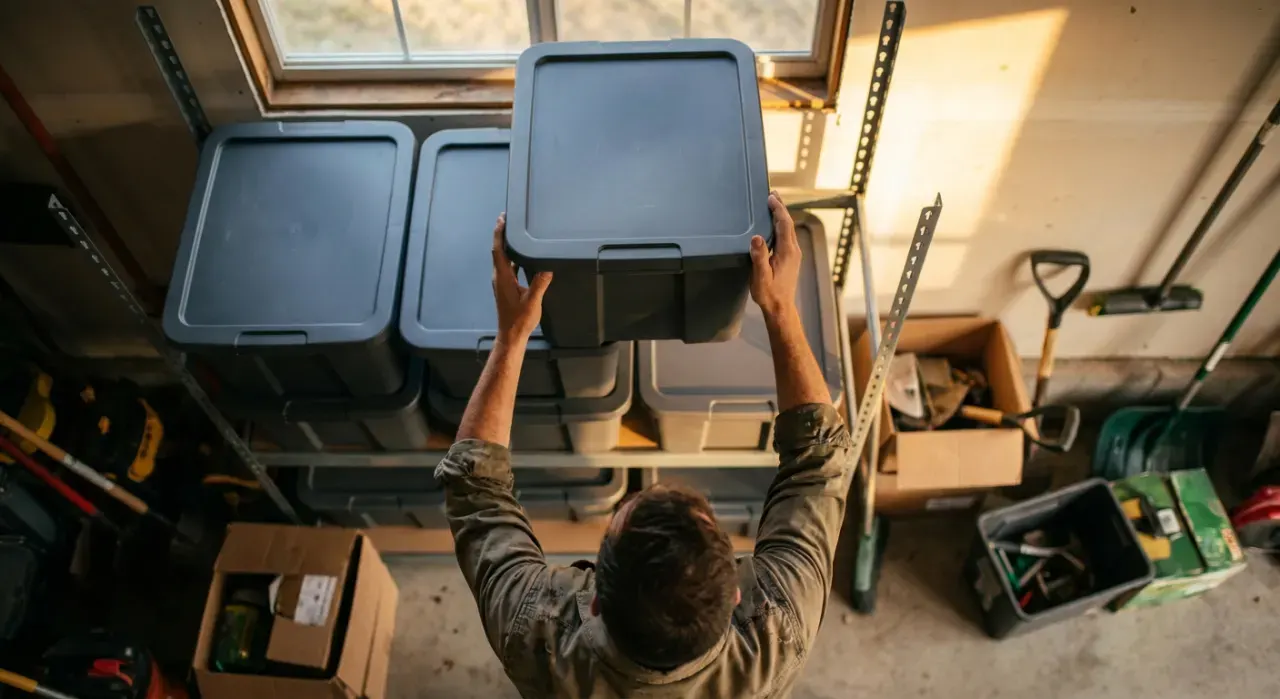
Before renting long term, price the contents honestly. Storing a couch worth $400 for two years costs more than the couch. Where the answer is that you need the space at home rather than off-site, reclaiming vertical space is far cheaper — see our garage shelving picks and overhead garage rack picks, and how deep garage shelving should be for laying it out. A $300 shelving unit pays for itself against two months of storage rent.
Figures on this page are typical US street rates checked in July 2026 and are approximate. Storage pricing is local, changes frequently and is quoted per facility — get live quotes for your own ZIP code before budgeting. We never rent, buy or physically handle the products and services we write about; recommendations are drawn from aggregated owner reviews and published consensus. See how we rank.
More from this hub: Storage & Organization · Custom closet cost · Garage shelving depth · Best storage bins · How we rank