 Garden

Affiliate Disclosure
Some links on this page are affiliate links. As an Amazon Associate, we earn from qualifying purchases — at no extra cost to you. We do not buy, test, or physically handle the products we cover; our rankings come from aggregated owner reviews, ratings and expert consensus. Commissions never change our verdicts. How we rank · full disclosure.
Put it on a concrete floor, in a low-traffic interior room, anchored down and covered by something ordinary — and keep it out of the primary bedroom entirely. The bedroom closet, the nightstand, the dresser and the office desk are the four places searched first, so a safe in any of them is found in the opening minutes. A basement or ground-floor utility area, a laundry room, or the floor of a coat closet under existing storage gives you the strongest anchoring, the coolest position in a fire, and the lowest chance of being found at all.
Why does concealment matter more than the safe itself?
Because most residential burglaries are short and opportunistic rather than patient and targeted. An intruder is working against an unknown clock, so the pattern is a rapid sweep of the places valuables are conventionally kept: bedrooms first, then obvious cabinets, then anything portable near an exit. A safe that is never found is a safe that was never attacked, and no rating on the door achieves that.
It is worth being clear-eyed about the underlying risk too. The Bureau of Justice Statistics reports that the rate of household burglary fell 56% between 1994 and 2011, from 63.4 to 27.6 victimizations per 1,000 households, and among completed burglaries the share involving theft of an electronic device or household appliance rose from 28% in 2001 to 34% in 2011. Burglary is less common than it was and is increasingly about portable electronics — which is another way of saying that portability is what attracts attention. A container that cannot be picked up and is not visible is a poor target on both counts.
Where are the best places to put a safe?
| Location | Why it works | Watch out for |
|---|---|---|
| Basement or ground-floor utility room | Concrete for anchoring, coolest level in a fire, boring room nobody searches | Water intrusion; keep it on a low platform |
| Laundry room, behind or beside appliances | Visually noisy space, low value, often on slab | Humidity from the dryer; use a desiccant |
| Coat or hall closet floor, under existing storage | Not a valuables room; easy to cover convincingly | Floor joists rather than slab on upper levels |
| Inside built-in cabinetry or a base cabinet | Concealed and anchored to structure through the cabinet floor | Cabinet must be fastened to the wall as well |
| Under a stair or in a knee-wall space | Genuinely obscure, often unfinished and never searched | Access is awkward; check for services in the framing |
| Cast into a concrete floor | Only a lid exposed; nothing to carry away or pry against | Retrofit is a real job; lowest point for water |
| In-wall, between studs | Invisible; anchored to two studs by the flange | Only about 3.5 in of usable depth in a 2x4 wall |
The common thread is that the best locations are dull. A safe surrounded by paint cans, a water heater and a laundry basket reads as part of the utility clutter. A safe on a closet floor next to shoes reads as the reason someone came in.
Which places fail, and why?
- Primary bedroom closet. The single most searched location in a house, and the default placement for most safes. Putting one here undoes most of what you paid for.
- Nightstand and dresser. Searched immediately, and light enough that a small safe simply leaves with the drawer contents.
- Home office desk or filing area. The obvious place for documents, therefore the second stop.
- Anywhere visible through a window. A safe seen from outside is reconnaissance you provided for free.
- An open garage bay. Two problems: the garage is where the pry bars, angle grinder and sledgehammer live, and a garage is often the least secure entry point in a house.
- The attic. Weight on ceiling joists that were never designed for it, extreme summer temperatures that cook documents and electronics, and access by ladder means it will not be used.
- An upper floor, for anything heavy. A 300 lb safe on a bedroom floor is a point load on joists sized for furniture. If it must go upstairs, place it over a bearing wall and near a joist end rather than mid-span.
Where does a safe survive a fire best?
Low, and against an interior wall. Fire moves upward and the hottest gases collect at ceiling level, so a basement or ground-floor position sees materially lower temperatures than the same safe on a second story. A lower level also means the safe is less likely to fall through a burning floor, which is a real cause of contents loss — a safe that drops one story lands open or sprung far more often than one that stays put.
The trade is water. Fires are extinguished with water and it all runs downhill, so a basement safe is the most likely one to end up standing in it. That argues for a stated water rating, a small platform to lift the base off the slab, and a sealed pouch around the contents inside the safe. FEMA's US Fire Administration publishes current residential fire statistics if you want the underlying picture, and our explainer on whether fireproof safes are actually fireproof covers what a fire rating does and does not buy you.
How does hiding a safe work together with bolting it down?
They defeat two different stages of the same event, and you want both. Concealment means the safe is not found during a short search. Anchoring means that if it is found, the easiest attack — pick it up and open it elsewhere — is off the table. Skipping either leaves an obvious gap: a hidden unanchored safe is portable the moment a cupboard gets opened, and an anchored safe sitting in plain view invites a sustained attempt with whatever tools are in the garage.
Anchoring also constrains where you can hide it, which is why this decision comes before the purchase rather than after. A slab lets you use 3/8 or 1/2 inch wedge anchors; a wood floor needs lag screws that reach a joist, and a lag into subfloor plywood alone pulls out with modest leverage. Our step-by-step guide to bolting down a safe has the bit sizes, embedment depths and the mistakes that leave an anchor loose, and anchoring into studs and concrete covers fastener selection more generally.
How do you cover a safe convincingly?
The goal is not a trick door. It is that the space reads as uninteresting to someone scanning it in four seconds.
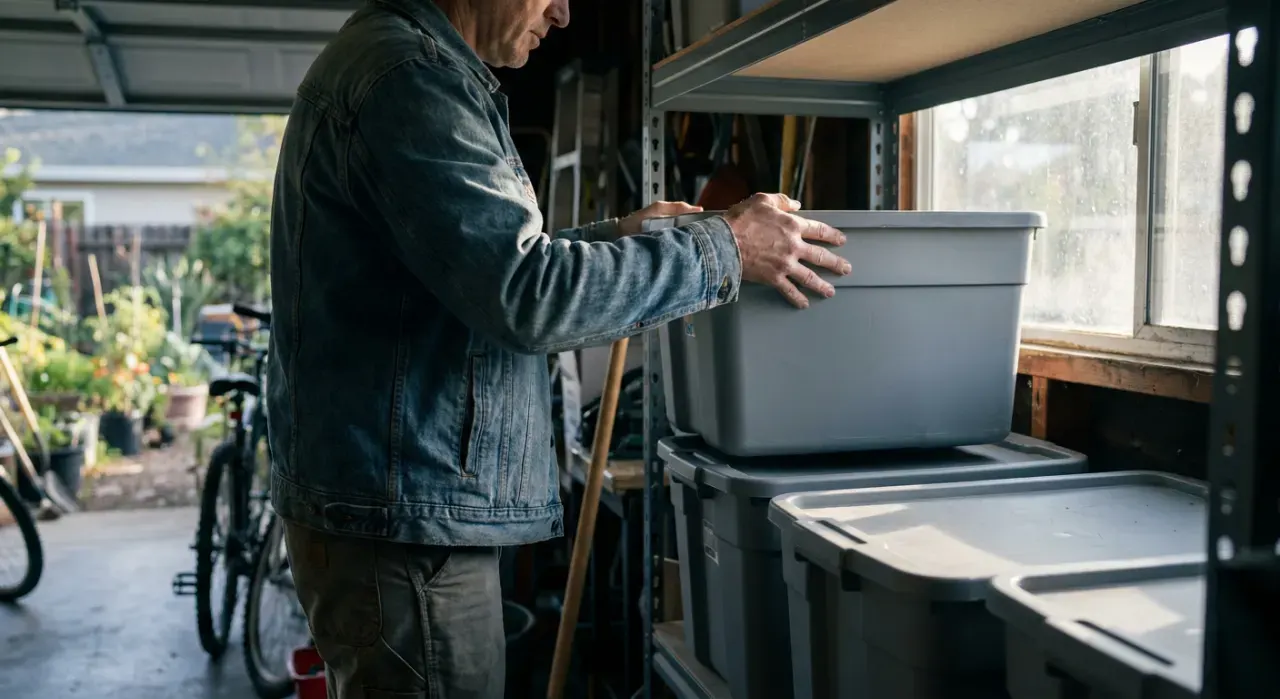
- Put it under something that belongs there. A base cabinet, a bench seat, shelving with storage bins on it. Not a blanket — a shrouded rectangle is more conspicuous than a bare safe.
- Use the existing clutter. Utility rooms and laundry rooms already contain visually complex, low-value objects. Work with that rather than creating a suspiciously tidy corner.
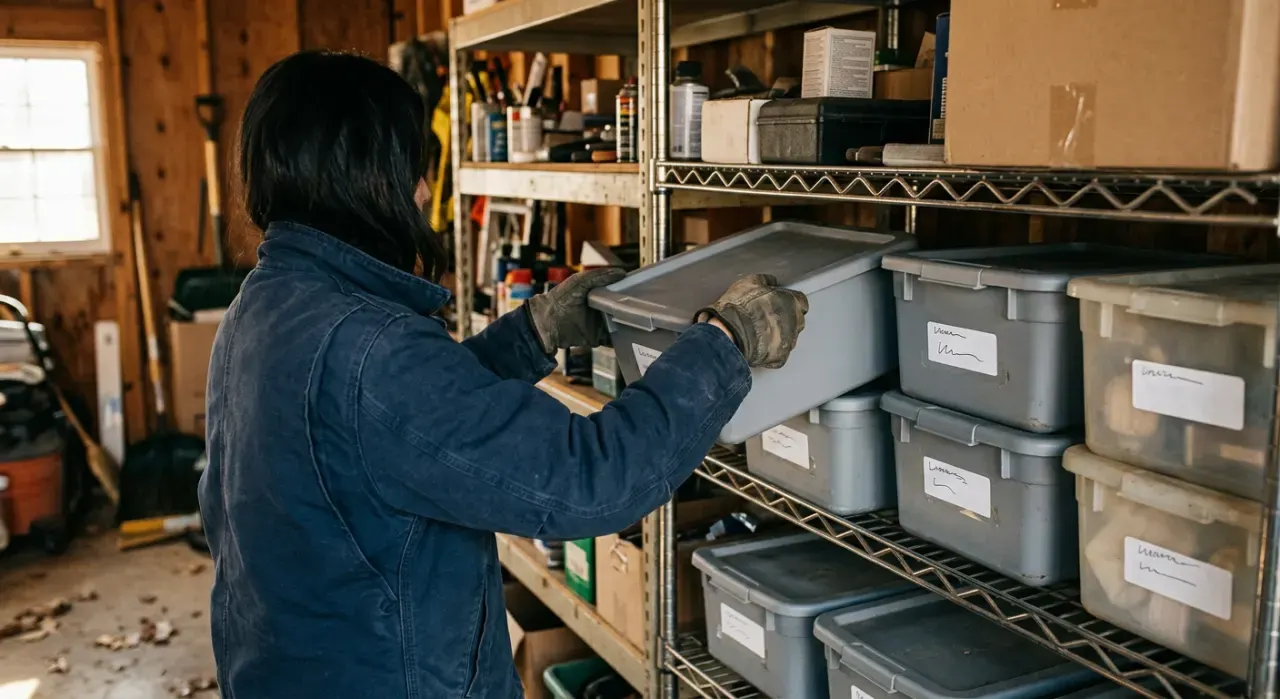
- Do not build a fake wall you cannot open easily. Concealment that makes the safe annoying to reach means you stop using it, and an unused safe protects nothing. Our storage bin picks and garage shelving picks are useful here purely as ordinary-looking cover.
- Consider a decoy. A cheap, obvious lockbox in the bedroom containing a little cash and some old paperwork gives a searcher something to find. It is not a substitute for anything, but it shortens a search.
- Keep the shipping carton off the curb. A branded safe box at the end of the driveway advertises both the purchase and roughly its size. Break it down and put it out flat.
What about the safe you need to reach quickly?
Concealment and speed are in direct conflict, and the answer is usually two containers rather than one compromise. A hidden, anchored safe in a utility room holds the documents, the backup drive and the valuables you touch twice a year. A small quick-access box — bolted to a bed platform or a nightstand frame — holds whatever genuinely needs to be reachable in the dark. Trying to make one safe do both jobs produces a safe that is neither hidden nor fast.
For firearm storage specifically, requirements vary by state and in some places by city, and nothing here is legal advice — check your own state's current statute. Our gun safe picks cover the quick-access and cabinet options and are explicit about what those products are and are not rated for.
The part that has nothing to do with the house
Most safes are found because somebody knew about them. Keep the circle to the adults who need access and whoever is named in your estate documents, and leave a written record of the location and access method with an attorney or in a bank deposit box rather than in a kitchen drawer. Do not write the combination inside a cabinet door. Do not keep the electronic override key in the same room as the safe — a dead keypad battery with the key locked inside is a far more likely bad day than a burglary. And avoid posting about a new safe, a gun collection or a jewelry purchase publicly; it is the cheapest reconnaissance there is.
More from this hub: storage & organization · best home safe · best wall safe · how to bolt down a safe · best fireproof safe · how we rank.