 Garden

Affiliate Disclosure
Some links on this page are affiliate links. As an Amazon Associate, we earn from qualifying purchases — at no extra cost to you. We do not buy, test, or physically handle the products we cover; our rankings come from aggregated owner reviews, ratings and expert consensus. Commissions never change our verdicts. How we rank · full disclosure.
The short version: a small raised bed rewards compact, high-yield crops and punishes sprawlers. Missouri Extension sets out why beds work in the first place — better drainage and root development above compacted or waterlogged ground — and Illinois Extension covers depth and layout — so the best vegetables for one are leaf lettuce, radishes, bush beans, carrots, beets, spinach, kale, garlic, peppers and compact or determinate tomatoes, with herbs filling the gaps. These give a lot of harvest per square foot and stay in bounds. Avoid the space hogs — winter squash, pumpkins, melons and sweet corn — which need far more room than they earn. Grow up rather than out, use the square-foot method, and a single 4-by-4 or 8-by-2 bed can feed a household.
Below: the best small-bed vegetables with spacing, the beds to grow them in, and what to leave out.
The Best Vegetables for a Small Raised Bed
These crops earn their space — high yield for the footprint, and no sprawling. Spacing is given in the square-foot method: how many plants fit in one 1-foot square.
| Vegetable | Per square foot | Why it suits a small bed |
|---|---|---|
| Leaf lettuce & salad greens | 4 | Fast, cut-and-come-again, succession-plant for months of harvest |
| Radishes | 16 | Ready in 25–30 days; fill gaps between slower crops |
| Bush beans | 9 | Heavy yield in a small space, no trellis needed |
| Carrots | 16 | Vertical crop — huge yield per square in a deep bed |
| Beets | 9 | Roots and greens both edible; compact |
| Spinach | 9 | Quick, cool-season, shallow-rooted |
| Kale & chard | 1 | Pick outer leaves for months from one plant |
| Garlic & onions | 9 / 9 | Slim vertical crops; garlic overwinters |
| Peppers | 1 | Compact, upright, heavy-yielding in full sun |
| Bush/cherry tomatoes | 1 (staked) | Determinate types stay compact; grow up a support |
The winning strategy is density plus succession: pack the bed with compact crops, grow the tall ones vertically — Wisconsin Extension notes that going vertical also improves airflow through the plants and reduces disease pressure, and replant fast crops like lettuce and radishes the moment a square opens up.
The Raised Beds to Grow Them In
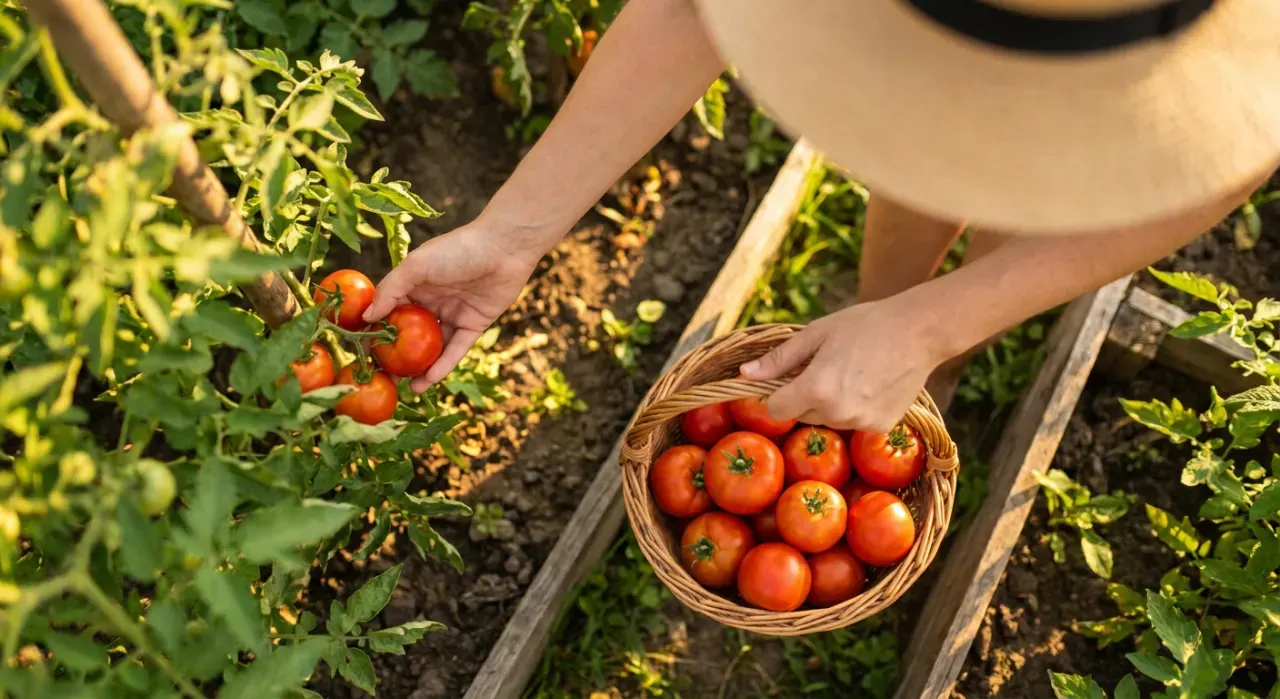
For a small bed, depth matters more than footprint — a deep bed grows shallow crops fine, but a shallow one cannot grow carrots or tomatoes. These are the beds the owner-review record supports.
Our #1 Small Bed: Vego Garden 17 in. 8 x 2 ft
For a small raised bed that can grow the widest range of vegetables, the 8-by-2-foot Vego at 17 inches deep is the sweet spot. The narrow 2-foot width means you reach the whole bed from one side without stepping on the soil, the 8-foot length gives real growing area along a fence or wall, and — the key point — 17 inches of depth handles everything from shallow greens to full-length carrots and deep-rooted tomatoes. It is modular, so you can reconfigure the panels to fit an awkward space, and the corrugated steel lasts many seasons. It is the highest-rated bed in a well-regarded range.
If your space is even tighter, the compact Land Guard 6-by-3 gives 2 feet of depth in a smaller footprint; for the deepest root crops at a no-bending height, the 32-inch Vego; and for a natural square-foot bed, the Greenes cedar 4-by-4. Check price on Amazon → (paid link)
The Raised Beds, Ranked

Best for a productive small bed with all-round depth for most crops
- 17 in. depth suits roots, greens and fruiting crops
- Modular — reconfigure the shape to fit the space
- Corrugated steel lasts many seasons
- Highest-rated bed in the range
Why buy it: the ideal small-bed footprint and depth — 17 inches handles everything from carrots to peppers without wasting space.

Best for a small footprint with real 2 ft depth for deep-rooted crops
- Compact 6 x 3 footprint reaches from both sides
- 2 ft depth for carrots, potatoes and tomatoes
- Galvanized steel build
- Quick bolt-together assembly
Why buy it: the small deep bed — a 6 by 3 you can reach across, with the depth for the root crops shallow beds cannot grow.

Best for deep roots and a no-bending working height
- 32 in. depth for the longest root crops
- Waist-high, no bending to tend
- Modular metal panels
- Excellent for carrots, parsnips and potatoes
Why buy it: the tall bed for serious root crops and easy access — deep enough for full-length carrots and parsnips, high enough to spare your back.

Best for a natural cedar square-foot bed
- Naturally rot-resistant untreated cedar
- 4 x 4 ft — ideal square-foot layout
- No chemicals near edible crops
- Expandable and stackable
Why buy it: the classic 4x4 cedar bed for square-foot gardening — untreated wood, the perfect grid size, easy to reach the middle.
Best for the most growing area with real depth on a budget
- Large 8 x 4 area with 2 ft depth
- Galvanized steel
- Strong value per square foot
- Reach the middle from either long side
Why buy it: the most productive bed per dollar — a full 8 by 4 with 2 ft of depth, if your "small" space can take it.
Best for a cheap, movable bed for a patio or trial plot
- 100-gallon soil volume in a soft-sided bag
- Breathable fabric air-prunes roots
- Folds away at season end
- Lowest-cost way to start
Why buy it: the cheapest, most flexible raised bed — big soil volume, folds flat in winter, and moves wherever the sun is.
Quick Comparison
| Product | Best for | Rating | Price | Buy |
|---|---|---|---|---|
| Vego Garden 17 in. Tall 9-in-1 Metal Raised Bed, 8 x 2 ft | Best for a Small Bed | — | Check (paid link) | |
| Land Guard 6 x 3 x 2 ft Galvanized Metal Raised Garden Bed | Best Compact Deep Bed | — | Check (paid link) | |
| Vego Garden 32 in. Extra Tall Modular Raised Bed Kit | Best for Root Crops | — | Check (paid link) | |
| Greenes Fence Premium Cedar Raised Garden Bed, 4 x 4 ft | Best Untreated Wood | — | Check (paid link) | |
| Land Guard 8 x 4 x 2 ft Galvanized Raised Garden Bed Kit | Best Value Deep Bed | — | Check (paid link) | |
| VIVOSUN 100 Gallon Fabric Raised Bed Grow Bag | Best Budget Grow Bag | — | Check (paid link) |
Vegetables to Leave Out of a Small Bed
These crops give too little harvest for the space they take — grow them only if you have room to spare or can train them vertically.
| Skip (or trellis) | Why it is inefficient |
|---|---|
| Winter squash & pumpkins | Vines cover 15–20 sq ft for a few fruit — trellis or skip |
| Melons | Same sprawling habit; huge space for a modest yield |
| Sweet corn | Needs a block of many plants for pollination; one or two ears each |
| Full-size indeterminate tomatoes | Fine only if staked and pruned vertically, or they smother the bed |
How We Rank
We do not buy or build these beds. We read the owner-review record at volume, weighting reviews on assembly, durability and how well crops grew. For the vegetable picks, we follow established square-foot and intensive-planting guidance on yield per space and root depth. For the beds, four factors carry the weight: usable depth for a range of crops, reach-in footprint, durability, and value per square foot. Prices were checked at the time of writing. Full method on how we rank.
Making the Most of a Small Bed
Three habits multiply a small bed's output. Succession-plant: as soon as a fast crop like lettuce or radishes finishes, replant that square with the next thing, so no soil sits idle. Grow vertically: trellis peas, pole beans, cucumbers and indeterminate tomatoes up the sides to free the ground for compact crops. And interplant: tuck quick radishes between slow carrots, or lettuce in the shade of taller peppers, to use every gap. Fill the bed with a good raised-bed mix, keep it evenly watered, and feed through the season, and a small bed out-produces a much larger patch of ordinary ground.
For companion pairings, see our companion planting chart; for what to sow straight into the bed, our sibling page on the best vegetables to direct sow; and for the full bed range, best raised garden beds.
The Verdict
The best vegetables for a small raised bed are the compact, high-yield ones — lettuce, radishes, bush beans, carrots, beets, greens, garlic, peppers and bush tomatoes — grown densely with succession and vertical training, while the sprawling squash and corn stay out. Grow them in a bed chosen for depth: the Vego 17-inch 8-by-2 for range, the deep Land Guard 6-by-3 for tight spaces, and the Greenes cedar 4-by-4 for a classic square-foot layout. Check price on Amazon → (paid link)
Next: the full vegetable growing hub · best raised garden beds · best vegetables to direct sow · companion planting chart · how we rank.