 Garden
Affiliate Disclosure
Some links on this page are affiliate links. As an Amazon Associate, we earn from qualifying purchases — at no extra cost to you. We do not buy, test, or physically handle the products we cover; our rankings come from aggregated owner reviews, ratings and expert consensus. Commissions never change our verdicts. How we rank · full disclosure.
The short answer: water basil when the top 1 to 2 inches of soil feels dry — for most outdoor basil that is every 2 to 3 days, or about 1 inch of water per week. Basil in small pots or summer heat may need daily watering, while indoor basil usually needs it every 3 to 5 days. The reliable rule is not a fixed schedule but the finger test: push a finger into the soil and water only if it is dry at that depth. Basil likes evenly moist soil but rots quickly in soggy conditions.
Basil is thirsty but hates wet feet, and that tension is where most basil problems start. Underwater it and it wilts and bolts; overwater it and the roots rot. The good news is basil is expressive — it droops when genuinely dry and perks back up fast after a drink, so it tells you what it needs if you learn to read it. This guide gives watering frequency for every situation plus how to tell thirst from rot.
The finger test beats any schedule
Because how fast soil dries depends on heat, wind, pot size, and soil type, no fixed schedule fits every basil plant. The single most reliable method is the finger test: push a finger 1 to 2 inches into the soil near the plant. If it feels dry at that depth, water thoroughly. If it is still moist, wait and check again tomorrow.
When you do water, water deeply until it runs from the drainage holes (in pots) or soaks several inches down (in the ground), then let the top inch or two dry before the next watering. Deep, less frequent watering builds better roots than a daily splash, which keeps the surface wet and the roots shallow.
Watering basil in the ground
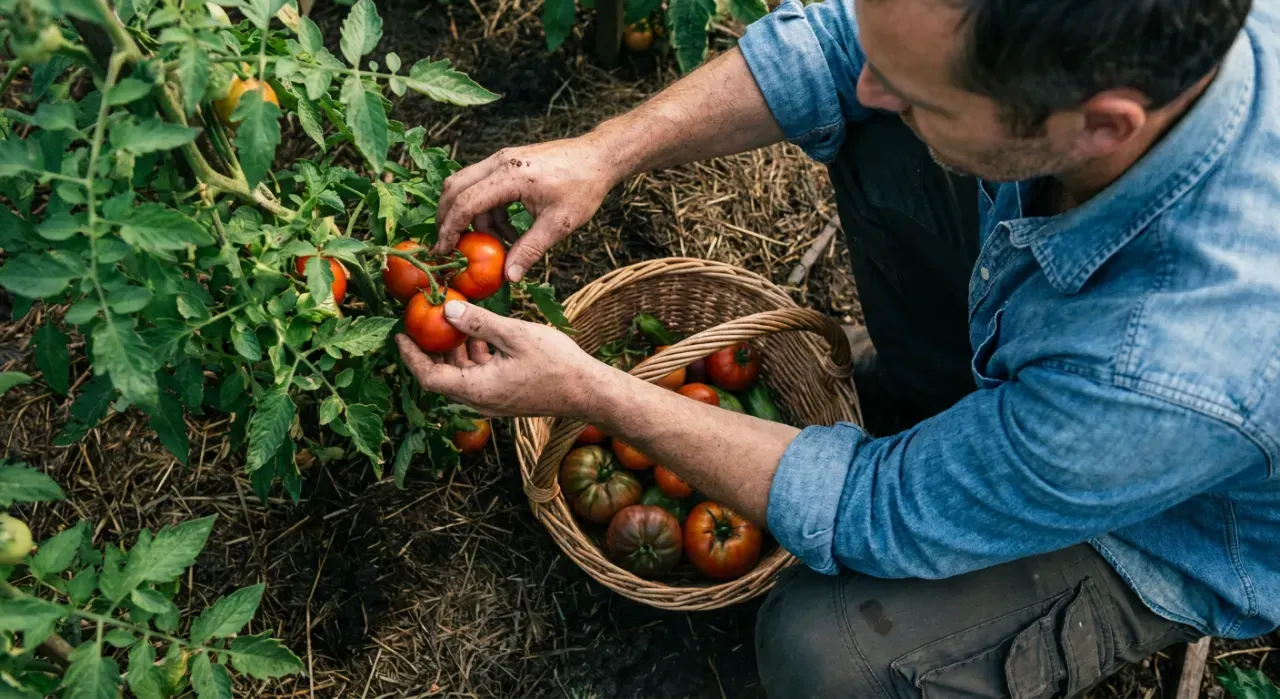
Outdoor basil planted in garden soil generally needs watering every 2 to 3 days, totaling about 1 inch of water per week, more in hot or windy weather and less after rain. Garden soil holds moisture far longer than a pot, so resist watering daily unless a heat wave and the finger test both say so.
Water at the base of the plant, keep the leaves dry to prevent fungal disease, and apply a 1 to 2 inch mulch layer to hold moisture and reduce how often you need to water. See the best mulch for a vegetable garden for options, and for whole-garden timing, how often to water a vegetable garden.
Watering basil in pots
Potted basil dries out fastest and needs the most attention. In summer heat, a small pot or hanging basket may need water every 1 to 2 days, while a larger container or cooler weather stretches it to every 2 to 4 days. Always check with the finger test first.
- Use a pot with drainage holes — non-negotiable. Basil in a container without drainage will drown.
- Empty the saucer after watering; roots sitting in standing water rot.
- Choose a larger pot if you can — more soil volume means steadier moisture and less risk of both drought and overwatering.
- Water until it drains from the bottom, then wait for the top inch to dry.
Watering basil indoors
Indoor basil on a windowsill typically needs water every 3 to 5 days, since indoor conditions are cooler and less windy than outside. The two biggest indoor mistakes are watering on a rigid schedule (overwatering) and low light, which slows growth so the plant uses less water and the soil stays wet longer — a recipe for root rot.
Give indoor basil a bright south- or west-facing window with 6 or more hours of light, use a well-draining pot, and let the top inch dry between waterings. If the leaves are pale and the plant leggy, it needs more light, not more water.
Reading the signs: thirsty vs overwatered
Basil's symptoms for too little and too much water look confusingly similar — both cause wilting — so learn to tell them apart before you reach for the watering can.
| Sign | Underwatered | Overwatered |
|---|---|---|
| Wilting | Perks up within hours of watering | Stays wilted even after watering |
| Soil | Dry 2+ inches down, may pull from pot edge | Constantly wet, may smell sour |
| Leaves | Dry, crisp edges; slow growth | Yellowing lower leaves, soft and limp |
| Stem base | Firm | Mushy, dark, or rotting |
| Fix | Water deeply now, then keep evenly moist | Stop watering, improve drainage, let it dry |
The counterintuitive trap: an overwatered basil wilts because its rotted roots cannot absorb water, which looks exactly like thirst. If watering does not revive a wilted plant within a few hours, assume overwatering and let the soil dry out. Persistent yellowing has its own guide — see why is my basil turning yellow.
Hot weather and afternoon wilt
On a hot afternoon, basil often wilts dramatically even in moist soil — this is normal transpiration outpacing uptake, and the plant recovers on its own by evening. Do not water in response to afternoon wilt alone; check the soil first. Watering a plant that is merely heat-stressed, not dry, pushes it toward overwatering.
In genuine heat waves, morning watering, mulch, and a larger pot all help buffer the swings. If potted basil is in blazing all-day sun, a little afternoon shade reduces both wilting and water demand.
How to water basil correctly
Frequency is only half the story — technique matters just as much for keeping basil healthy and disease-free.
- Water at the base, not the leaves. Basil is prone to fungal diseases like downy mildew, and wet foliage is what spreads them. Aim the water at the soil and keep the leaves dry.
- Water in the morning. This gives the plant moisture for the heat of the day and lets any splashed leaves dry fast. Evening watering leaves foliage damp overnight, inviting fungal problems.
- Water deeply, then wait. A thorough soak that reaches the whole root zone, followed by a dry-down of the top inch, builds deeper roots than frequent shallow sips.
- Match the container to the plant. A pot too large for a small plant holds excess wet soil the roots cannot use, raising rot risk; a pot too small dries out constantly. Size up gradually as the plant grows.
What changes how often basil needs water
No two basil plants dry out at the same rate, so understanding the variables lets you predict when to check rather than guess:
| Factor | Dries faster (water more) | Dries slower (water less) |
|---|---|---|
| Temperature | Hot, above 85°F | Cool, below 65°F |
| Container | Small pot, terracotta, hanging basket | Large pot, glazed, in-ground |
| Light and wind | Full sun, breezy or windy | Part shade, sheltered |
| Stage | Large, leafy, actively growing | Young seedling, dormant |
| Soil | Sandy, fast-draining | Rich, moisture-retentive with mulch |
The single most useful adjustment is mulch on in-ground basil and a large enough pot for container basil — both even out the swings that cause stress and reduce how often you must water. In a heat wave, expect to roughly double your normal frequency; after rain or in cool spells, back off and let the finger test decide.
A simple starting schedule
Use this as a baseline, then adjust with the finger test:
| Situation | Typical frequency | Check |
|---|---|---|
| In-ground, mild weather | Every 2–3 days (~1 in/week) | Top 1–2 in dry |
| In-ground, heat wave | Daily to every other day | Top 1–2 in dry |
| Small pot, summer | Every 1–2 days | Top 1 in dry |
| Large pot | Every 2–4 days | Top 1 in dry |
| Indoors | Every 3–5 days | Top 1 in dry |
Consistent moisture keeps basil lush, tender, and slow to bolt (flower), which is when leaves turn bitter. Combine steady watering with regular pinching of the tips to keep a bushy, productive plant.
Getting basil started right sets up healthy watering — see when to plant basil and the full seeds and vegetable growing hub. Our product recommendations come from aggregated owner reviews and expert consensus, never first-hand testing — see how we rank.