 Garden
Affiliate Disclosure
Some links on this page are affiliate links. As an Amazon Associate, we earn from qualifying purchases — at no extra cost to you. We do not buy, test, or physically handle the products we cover; our rankings come from aggregated owner reviews, ratings and expert consensus. Commissions never change our verdicts. How we rank · full disclosure.
The short version: the best all-round mulch for a vegetable garden is clean processed straw, laid two to three inches deep — University of Wisconsin Extension puts most organic mulches at about 3 inches over the soil, and only about an inch around young transplants. It cuts watering, blocks weeds, stops soil splashing onto lower leaves — which is how early blight reaches a tomato plant — and by the end of the season it has largely broken down into the soil. Our pick is EZ-Straw Just Straw, the plain processed bale rather than the seeding version with tackifier. If you are growing strawberries or blueberries, use pine straw instead; if you are growing peppers or melons in a short northern season, use black plastic.
This page is about mulching food beds specifically, where the rules are different from ornamental landscaping — a vegetable bed is dug, replanted and fed every year, so a mulch that breaks down is a feature rather than a fault. Sit it alongside how often to water a vegetable garden and the best vegetable garden fertilizer; the rest of the hub is at vegetable growing.
Top Picks at a Glance
Our #1 Pick: Clean Processed Straw
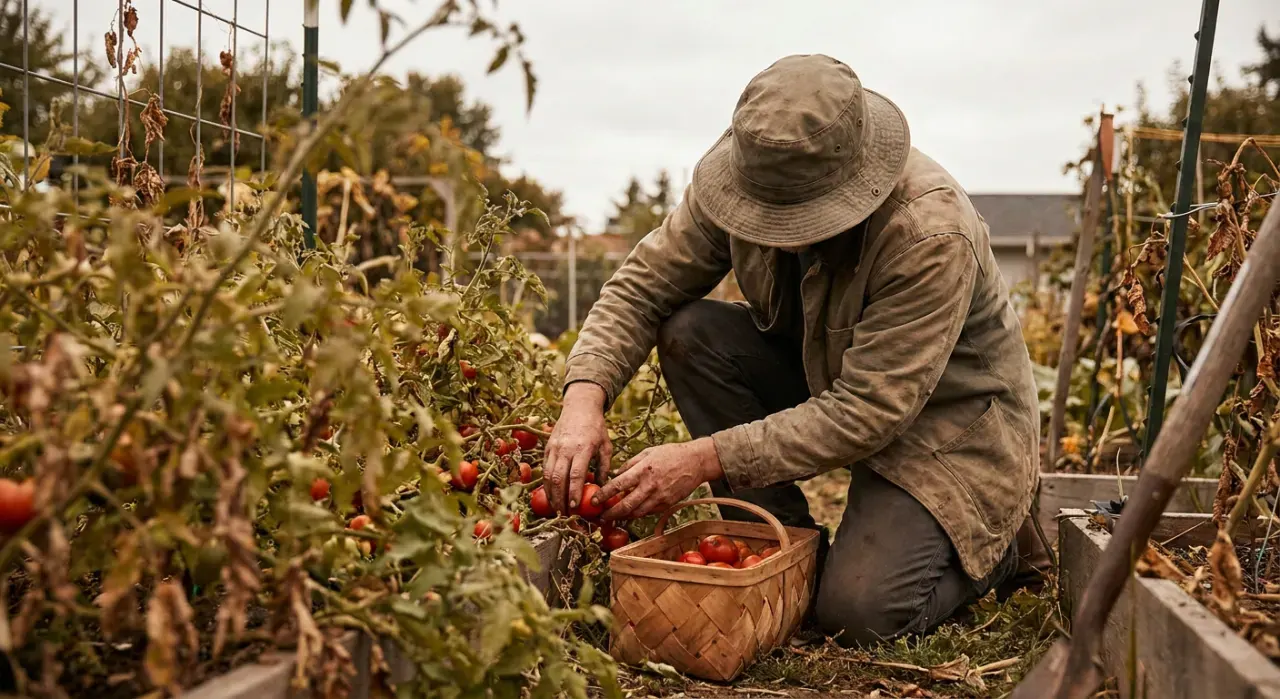
Mulch does four jobs in a vegetable bed and straw does all four better than anything else at a sensible price. It cuts evaporation from the soil surface dramatically, which in a hot July is the difference between watering every day and watering twice a week. It blocks light, which stops annual weed seed germinating. It keeps the soil surface from splashing up onto the lowest leaves in heavy rain, which is the single most common route by which early blight and septoria leaf spot get onto a tomato plant. And it moderates soil temperature, keeping roots cooler in a heatwave.
Consensus Score ████████░░ 8.8 — the mulch most consistently recommended for food beds by extension services — Illinois Extension rates straw well for vegetable beds — and experienced growers alike
The fifth job is the one people forget: by the following spring, a straw mulch has largely become soil. Vegetable beds are disturbed every year, so a mulch that decomposes on the same annual cycle is an advantage, not a defect.
The critical word is straw, not hay. Straw is the hollow stalk left after grain harvest and carries almost no viable seed. Hay is cut whole with seed heads intact, and mulching a bed with hay is effectively sowing a grass crop. Farm-store labeling is notoriously loose about the difference, which is why a bag explicitly sold as clean processed weed-free straw is worth paying for over a cheap field bale of uncertain origin.
Note the product distinction that catches people out: EZ-Straw sells both a plain Just Straw bale and a Seeding Mulch with Tackifier. The tackified version is designed to glue itself down over newly sown seed — genuinely useful over a freshly direct-sown carrot row, but for general bed mulching you want the plain straw, because the tacked version mats together and is harder to pull back.
The honest drawbacks are real. Bagged straw shipped to your door is expensive per cubic foot compared with a farm bale, because you are paying to move air. It blows around in wind until it settles and gets rained on. It provides excellent daytime cover for slugs. And even bags labeled weed-free occasionally produce a few volunteer wheat seedlings, which pull out easily but are annoying.
Check price on Amazon → (paid link)
Best Vegetable Garden Mulches: The Ranked Field

Best for the main mulch layer over an established vegetable bed
- Clean processed wheat straw with no tackifier and no additives
- Advertised as 99% weed free — the key difference from farm-store hay
- Compressed into a UV-protected bag that can be stored outdoors
- Breaks down into the soil over one season and feeds soil life
Why buy it: straw is the mulch that suits a vegetable bed best — it holds moisture, blocks weeds, keeps soil splash off leaves and disappears into the soil by fall.

Best for strawberries, blueberries and any bed you want to keep tidy all season
- Long needle pine straw, harvested and baled in the southern US
- Needles interlock, so it stays put on slopes and in wind
- Lasts noticeably longer than straw before needing topping up
- Slightly acidifying as it breaks down — a plus for berries
Why buy it: the only organic mulch here that reliably stays where you put it, and the traditional bed for strawberries for good reason.
Best for peppers, melons, sweet potatoes and short northern seasons
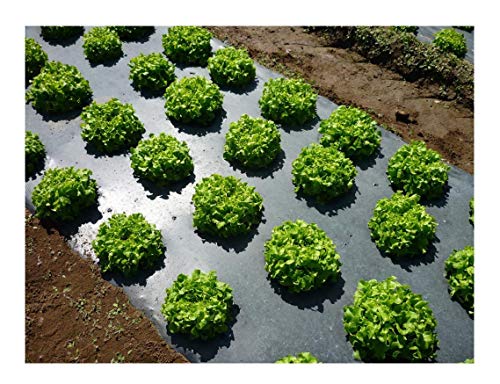
- Raises soil temperature by roughly 5°F at 2 in. depth versus bare soil
- Embossed film hugs the bed contour and resists tearing
- Total weed blackout under the film
- Standard commercial practice for warm-season crops in cool regions
Why buy it: heat-loving crops in a short season are limited by soil temperature, not air temperature, and this is the only mulch here that raises it.

Best for the walkways between beds, not the beds themselves
- 3 oz woven polypropylene, water and air permeable
- Marked with planting guide lines every 12 in.
- UV stabilized for multi-season exposure
- Cuts cleanly and does not fray badly at the edge
Why buy it: perennial weeds in the paths are what actually reinfest a vegetable garden, and this stops them without going anywhere near your soil.

Best for direct-sown carrot, lettuce and bean rows that must not dry out
- Processed straw with a natural biodegradable tackifier
- Tackifier makes the straw clump together so wind does not lift it
- Covers up to 500 sq ft at seeding depth
- Holds surface moisture through the germination window
Why buy it: the top half inch of soil is where direct-sown seed lives or dies, and a light tacked straw layer stops it drying out between waterings.

Best for a fine surface mulch for containers, seed beds and grow bags
- One 11 lb block expands to roughly 2.5 cu ft of moist coir
- Holds many times its own weight in water
- pH neutral and completely weed-free
- Stores as a compact brick rather than a bulky bale
Why buy it: a huge volume of clean, weed-free mulch from a brick you can store on a shelf, and unbeatable for containers where straw looks and behaves badly.
Quick Comparison
| Product | Best for | Rating | Price | Buy |
|---|---|---|---|---|
| EZ-Straw Just Straw Clean Processed Straw, 1 cu. ft. Bale | Best Overall | — | Check (paid link) | |
| Long Needle Pine Straw Mulch, 300 sq. ft. Coverage | Best for Strawberries & Acid Lovers | — | Check (paid link) | |
| Grower’s Solution Black Plastic Mulch, 4 ft. x 100 ft., 1.0 Mil Embossed | Best for Warming Soil | — | Check (paid link) | |
| DeWitt Weed Barrier Pro 3 ft. x 50 ft. Landscape Fabric, Black | Best Weed Barrier for Paths | — | Check (paid link) | |
| EZ-Straw Seeding Mulch with Tackifier, 2.5 cu. ft. Bale | Best for Newly Sown Beds | — | Check (paid link) | |
| Nature’s Premium Coco Coir 11 lb Compressed Block | Best Value Soil Conditioner | — | Check (paid link) |
How We Rank
We do not buy, spread or weather-test these mulches. We rank them by aggregating star ratings and review volume across owner reviews, weighting reports from a full season above first-week impressions, checking coverage claims and material specifications against manufacturer data, and reading negative reviews for the failures that only appear after rain, wind and a summer of use.
Four things determine the order, and they are specific to food growing. Suitability for an annually disturbed bed — a mulch that must be raked off and disposed of every spring is worse here than one that decomposes into the soil. Weed-seed cleanliness, because a contaminated mulch actively creates the problem it is meant to solve. Moisture and temperature behavior, judged against the crop it suits. And owner satisfaction weighted by review count, read carefully for coverage disappointment, shipping damage and pest reports. Full method: how we rank.
The Mulches, Reviewed
1. EZ-Straw Just Straw Clean Processed Straw — Best Overall
Covered above. Consensus Score ████████░░ 8.8. Strengths: the right decomposition rate for an annual bed, near-total weed seed cleanliness compared with farm hay, excellent moisture retention, effective disease barrier against soil splash, and a UV-stable bag you can leave outside. Recurring complaints: cost per cubic foot is high because you are shipping compressed air, coverage is consistently reported as less than expected, it blows around until it settles, occasional volunteer wheat seedlings appear, and it gives slugs somewhere excellent to spend the day.
2. Long Needle Pine Straw — Best for Strawberries & Acid Lovers
Pine straw is the traditional strawberry mulch — the name of the crop in English is very likely a reference to the practice — and it earns the position on more than tradition. Long pine needles interlock into a mat that stays put on a slope and in wind, which no loose straw does. It lasts substantially longer before needing topping up, it looks tidy all season, and it keeps fruit off the soil, which reduces rot and keeps berries clean.
Consensus Score ████████░░ 8.5 — well rated, with coverage expectations the main friction point
Recurring complaints: coverage is the loudest theme by a wide margin — owners consistently report that a set covers considerably less area than the label figure suggests unless laid very thin. Bales arriving compressed and dusty is common. It is slow to break down compared with straw, which is a benefit in a perennial bed and a nuisance in an annual one you want to fork over. And the acidifying effect is modest and slow, so treat it as a mild bonus for berries rather than a substitute for genuinely amending pH.
3. Grower’s Solution Black Plastic Mulch — Best for Warming Soil
The only mulch here that makes the soil warmer rather than cooler, and for heat-loving crops in a short season that is decisive. Peppers, eggplant, melons, okra and sweet potatoes are limited far more by soil temperature than by air temperature, and black film typically lifts soil temperature by around 5°F at two inches. It is also a total weed blackout: nothing germinates under opaque plastic. This is standard commercial practice for exactly these crops, laid over a drip line before planting, with holes cut for each transplant.
Consensus Score ████████░░ 8.4 — strong ratings from serious growers, with real handling drawbacks
Recurring complaints: it is fiddly to lay well. Owners report needing two people and a calm day, and film that is not tucked in tightly at the edges billows and tears. At 1.0 mil it punctures easily on stones and stubble. It must be removed and disposed of at the end of the season — it is a plastic sheet, not a soil amendment. It contributes nothing to organic matter. And in a genuinely hot southern summer it can overheat shallow roots, which is why white-on-black film exists.
4. DeWitt Weed Barrier Pro Landscape Fabric — Best Weed Barrier for Paths
This belongs in the paths, and we want to be unambiguous about that, because landscape fabric laid under a vegetable bed is one of the worst things you can do to a growing bed — it blocks root travel, obstructs worms, clogs with fine soil within a couple of years and becomes impossible to remove. In the walkways between beds it is excellent. Perennial weeds colonizing the paths are what actually reinfest a vegetable garden year after year, and 3 oz woven polypropylene under a layer of wood chips ends that cycle.
Consensus Score ████████░░ 8.6 — a long-established professional product with a large, stable review base
Recurring complaints: weeds eventually root in the debris that accumulates on top of the fabric, which surprises people expecting a permanent fix. It frays at cut edges unless folded or pinned, the staples sold alongside it are consistently reported as too flimsy for heavy soil, and it is unpleasant to remove years later once partly buried and brittle.
5. EZ-Straw Seeding Mulch with Tackifier — Best for Newly Sown Beds
The same processed straw with a natural biodegradable tackifier that makes the pieces cling to each other and to the soil when wet. Over a bed you have just direct-sown, that solves a common failure: carrot, lettuce and spinach seed sits in the top half inch of soil, that half inch dries out in a few hours of sun and wind, and germination fails in patches. A light tacked layer holds surface moisture through the germination window without smothering seedlings.
Consensus Score ████████░░ 8.5 — well rated for its intended job, with coverage the usual complaint
Recurring complaints: coverage again — the stated square footage assumes a thinner layer than most people apply. The tackifier makes it mat together, so it is harder to pull back than plain straw, which is why we do not recommend it as a general bed mulch. Bales arriving wet and partly composted is a recurring shipping complaint.
6. Nature’s Premium Coco Coir Block — Best Value Soil Conditioner
Not a conventional mulch, but a good one where straw behaves badly. An 11 lb compressed block rehydrates into roughly two and a half cubic feet of fine, dark, completely weed-free material that spreads as a surface mulch on containers, grow bags and seed beds where straw would look untidy and blow off. It holds many times its own weight in water, it is pH neutral, and it stores as a brick on a shelf.
Consensus Score ████████░░ 8.7 — strong ratings, with variable quality across brands the known risk
Recurring complaints: rehydrating a full block is a chore — it needs a large tub and a lot of water, and owners consistently underestimate the volume it becomes. Salt content varies by supplier and poorly rinsed coir can harm salt-sensitive seedlings, so look for a low EC claim. And as a surface mulch it is fine enough to crust over in sun until you scratch it up.
How to Choose Mulch for a Vegetable Garden
Start with the crop, because the right answer genuinely differs. General vegetable beds — tomatoes, beans, brassicas, squash, greens — want two to three inches of straw. Strawberries and blueberries want pine straw, for the tidiness, the fruit-off-soil effect and the mild acidity. Heat-lovers in a short season — peppers, melons, sweet potatoes, eggplant — want black plastic laid before planting, ideally over a drip line. Containers and grow bags want coir or fine compost, because loose straw looks wrong and blows off a pot. And paths want fabric under wood chips, never bare fabric and never fabric under a bed.
Get the depth and timing right. Two to three inches settled is the target; more than four inches cools the soil, holds moisture around stems and shelters slugs and voles. Apply after the soil has warmed in spring — mulch insulates in both directions, and a thick March layer delays planting. Leave an inch or two of bare soil at each stem, because mulch heaped against a stem causes rot.
Be careful about two specific sources. Hay instead of straw is the classic error, and it plants a weed crop. And herbicide-contaminated straw or manure is a real, well-documented problem: persistent broadleaf herbicides such as aminopyralid and clopyralid survive an animal's digestive system and composting, and will deform and stunt tomatoes, beans, peas and potatoes at concentrations too low to detect any other way. Sourcing from an unknown farm, the standard precaution is a bioassay — plant a few bean seeds in a pot of the material and watch for twisted, cupped growth before it goes near a bed.
Finally, do not overthink the wood chip question. Fresh chips laid on the surface do not rob a vegetable bed of nitrogen in any way that matters — the interaction happens in the thin contact zone, not at root depth. Tilling fresh chips into a bed does cause a real, visible drawdown for a season. Keep chips for paths and perennials, use straw on the beds, and the question never comes up. Missouri Extension's mulch guide runs through the same material-by-material trade-offs.
What Owners Actually Complain About
Coverage is the number one complaint across every bagged mulch here. Manufacturers calculate square footage at a thinner application than anyone actually spreads, so a bale rated for 500 square feet covers a fraction of that at a real two to three inch depth. Assume roughly twice what the label implies.
Shipping cost and shipping damage are the second theme. Bagged mulch is bulky, low-value freight — you are paying to move compressed air — and owners consistently report bales arriving crushed, split, damp or partly composted. Buying straw locally from a farm store is dramatically cheaper if you can verify it is straw rather than hay.
Slugs, snails and voles come up on every organic mulch. Loose straw is close to a purpose-built slug habitat: dark, damp and cool by day. Keeping mulch pulled back from stems, watering in the morning, and holding depth at two to three inches rather than six all help materially, but the trade-off is genuine and it is not honest to pretend otherwise.
And the quiet one: mulch applied too early delays the season. A thick layer left on through spring keeps the soil cold, and owners regularly report transplants sulking in beds several degrees colder than the bare bed next door. Rake mulch into the paths two to three weeks before planting and pull it back once things are growing.
The Verdict
For a general vegetable bed, buy clean processed straw — EZ-Straw Just Straw — and lay it two to three inches deep once the soil has warmed. For strawberries and blueberries, long needle pine straw is worth the premium for how well it stays put. If you are growing peppers, melons or sweet potatoes in a cool northern garden, black plastic film will do more for your yield than any other single change. Put DeWitt Weed Barrier Pro in the paths and nowhere else. Use the tackified seeding straw over freshly direct-sown rows, and keep a coco coir block on the shelf for containers and seed beds.
Check price on Amazon → (paid link)
Next: pair the mulch with the right watering routine in how often to water a vegetable garden, feed the bed properly with the best vegetable garden fertilizer, put a mulch layer under your berries with the best strawberry planters, and make your own mulch and compost with the best compost bins.