 Garden

Affiliate Disclosure
Some links on this page are affiliate links. As an Amazon Associate, we earn from qualifying purchases — at no extra cost to you. We do not buy, test, or physically handle the products we cover; our rankings come from aggregated owner reviews, ratings and expert consensus. Commissions never change our verdicts. How we rank · full disclosure.
The short version: after weighing six popular stationary composters on owner star ratings, review volume, published capacity and the complaints that recur after a couple of seasons outdoors, our #1 pick is the GEOBIN. It is not the prettiest option and it does not lock, but it holds several times what a tumbler holds, costs less than a tank of gas, and lifts clean off the pile when the compost is ready — which turns out to be the feature that matters most in a bin you never turn.
This page covers stationary composters: bins and wire systems that sit on the ground and work without you doing anything. If you would rather have a sealed barrel you spin every few days, that is a different tool with different strengths — see best compost tumbler, or read the head-to-head in tumbler vs compost bin. For the whole picture on soil and composting, start at the composting and soil hub.
Top Picks at a Glance
Our #1 Pick: GEOBIN Expandable Compost Bin
The GEOBIN is a sheet of perforated recycled plastic that you curl into a cylinder and lock with sliding keys. That is the entire product, and it is the reason it wins. Every other bin here asks you to remove finished compost through a small door at the base, working blind with a trowel while the unfinished material above collapses into the gap. The GEOBIN asks you to unclip two keys and lift the wall away, leaving a free-standing heap you can attack with a fork from any angle.
Consensus Score █████████░ 8.9 — owners consistently rate it among the best-value garden purchases they have made
Capacity is the other argument. Expanded to its full 4 ft diameter it holds up to 246 gallons, which is roughly six times a standard dual-chamber tumbler. That matters because the material that actually fills a composter is not kitchen scraps — it is leaves, clippings, prunings and spent crops, and those arrive in volumes that make a 37-gallon drum irrelevant by mid-October. Contract it down to 3 ft in spring when there is less to compost, or buy two and run a fill-and-finish pair.
Reviewers repeatedly mention two things: the perforations, which give a pile far better airflow than a solid-walled bin, and the fact that it stores flat. The consensus weakness is equally consistent — it is open at the top and bottom, so it will not keep out rain, and it is not the bin to choose if rodents are already a problem where you live.
Check price on Amazon → (paid link)
Best Compost Bins 2026: The Ranked Field
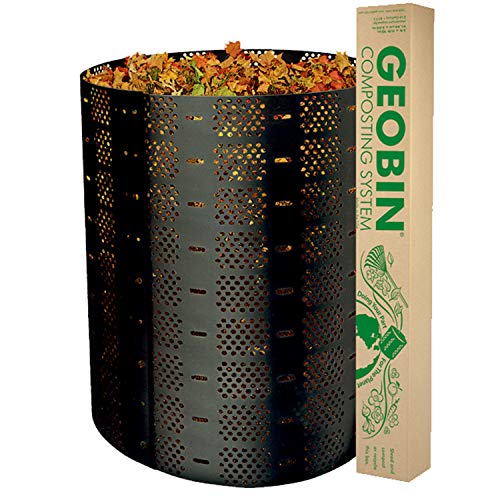
Best for yards that generate leaves, clippings and garden waste by the barrow
- Expands from 3 ft to 4 ft in diameter (up to 246 gallons)
- Perforated recycled plastic sheet — airflow on every side
- Assembles in minutes with sliding keys, no tools
- Lifts straight off the pile to turn or harvest
Why buy it: the most usable volume per dollar in the category, and the only design here that you can simply lift off and re-site when the pile is done.

Best for suburban yards where the bin has to look tidy and stay closed
- Locking lid with a rain-catching self-watering top
- Two sliding harvest doors at the base
- Made from 100% recycled plastic
- Open bottom sits directly on soil
Why buy it: a properly lidded bin that keeps rain, raccoons and neighbors out while worms move in from below.

Best for small yards and a first stationary bin
- 65 gallons in a 26 x 26 in. footprint
- Snap-off lid plus four side access doors
- Vent holes on all four panels
- No-tool assembly, 80% post-consumer material
Why buy it: four harvest doors instead of the usual two, at the price most brands charge for a lidded trash can.

Best for a household composting kitchen scraps and yard waste year-round
- 110 gallons with thick double-wall panels
- Wide hinged lid — easy to tip a full bucket in
- Two large sliding base doors
- Frost-resistant UV-stabilized plastic
Why buy it: the thickest walls here, which is why owners in cold states report it still working in late fall.

Best for leaf piles, spent crops and fall cleanup
- 220 gallons from a single expandable panel
- Ventilated PP sheet with a locking key strip
- Sets up in under 10 minutes
- Rolls flat for winter storage
Why buy it: huge capacity for the price of a bag of soil, and it stores flat in the garage when the leaves are gone.

Best for leaf mold and a permanent open-air pile
- PVC-coated galvanized steel mesh
- About 187 gallons of open volume
- Unhooks into flat panels for turning
- Ground stakes included
Why buy it: maximum airflow and nothing to degrade in the sun — the closest thing to a permanent pile you can buy.
Quick Comparison
| Product | Best for | Rating | Price | Buy |
|---|---|---|---|---|
| GEOBIN Expandable Compost Bin, 246 Gallon | Best Overall | — | Check (paid link) | |
| Algreen Soil Saver Classic Compost Bin, 94 Gallon | Best Enclosed Bin | — | Check (paid link) | |
| Redmon Green Culture Compost Bin, 65 Gallon | Best Value | — | Check (paid link) | |
| Exaco Eco King 110 Gallon Compost Bin | Best Large Enclosed | — | Check (paid link) | |
| VIVOSUN 220 Gallon Expandable Outdoor Compost Bin | Best Big-Volume Value | — | Check (paid link) | |
| MTB Garden Wire Compost Bin, 36 x 36 x 30 in. | Best Wire Bin | — | Check (paid link) |
How We Rank
We do not buy, assemble or physically handle these bins. We rank them by aggregating star ratings and review volume across thousands of verified owner reviews, weighting recent reviews above launch-window ones, checking published capacity, wall thickness and material against manufacturer specifications, and reading the negative reviews closely for the failure patterns that only show up after a winter and a summer outdoors.
Four factors drive the order here. Usable capacity, judged against what a yard actually produces in a fall cleanup rather than what a kitchen produces in a week. Harvest access — how you get finished compost out, which is the single most-complained-about aspect of enclosed bins. Owner satisfaction, weighted by review count. And weather durability, drawn from multi-season reports on UV cracking, door warping and lid hinges. Prices were checked at time of writing and move seasonally. Full method: how we rank.
The Bins, Reviewed
1. GEOBIN 246 Gallon — Best Overall
Covered above. Consensus Score █████████░ 8.9. Strengths: enormous capacity for the money, adjustable diameter, excellent airflow through the perforated sheet, no-tool assembly, stores flat, and the easiest harvest of any bin here because the wall simply comes off. Recurring complaints: the plastic is thinner than photos suggest and owners describe it as flexible rather than rigid — several report bulging under a heavy wet pile and add a stake or two for support. The sliding keys can pop under pressure if you over-fill. It is open-topped, so a rainy week can waterlog the pile, and it offers no meaningful barrier to rodents or raccoons.
2. Algreen Soil Saver Classic — Best Enclosed Bin
The Soil Saver is the classic municipal-program bin: a squat 94-gallon box in 100 percent recycled plastic, with a locking lid that catches rain and drips it back into the pile, two sliding doors at the base for harvesting, and an open bottom so worms and soil organisms move up into the material. If your composter sits where neighbors can see it, or where a dog can get to it, this is the shape to buy.
Consensus Score ████████░░ 8.5 — owners consistently report it lasting a decade or more outdoors
Recurring complaints: harvesting through the base doors is the loudest one — the openings are small, the compost above slumps down as you dig, and most owners eventually admit they lift the whole bin off instead. Assembly draws criticism for panels that need real force to click together, and a few report the lid catching wind. At 94 gallons it also fills faster than people expect once fall leaves start arriving.
3. Redmon Green Culture 65 Gallon — Best Value
Redmon's bin does something the others do not: it puts an access door on all four sides instead of two. For a small bin that is genuinely useful, because you can rotate which face you harvest from and reach most of the base without moving the unit. The snap-off lid comes away entirely, so loading a full wheelbarrow is easy, and the whole thing assembles without tools in about ten minutes.
Consensus Score ████████░░ 8.2 — a consistently well-rated bin with a modest but steady review base
Recurring complaints: 65 gallons is small, and owners composting garden waste as well as scraps say so bluntly. The plastic is thin compared with the Exaco and several reviewers report panels flexing out of their slots when the bin is packed. The doors slide out completely rather than hinging, which is fine until you set one down in long grass. Best understood as a tidy kitchen-scrap bin, not a yard-waste solution.
4. Exaco Eco King 110 Gallon — Best Large Enclosed
The Eco King is what you buy when the Soil Saver is not big enough. The double-wall panels are noticeably thicker than anything else in this roundup, which does two useful things: it holds the shape of a bin under a heavy load, and it slows heat loss from the pile in cold weather. Owners in northern states repeatedly mention it still working into November. The hinged lid opens wide enough to tip a bucket straight in, and the two base doors are larger than the Algreen's.
Consensus Score ████████░░ 8.4 — strong ratings, particularly from cold-climate owners
Recurring complaints: price, first and foremost — it costs roughly three times the GEOBIN for less than half the volume. Assembly is described as stiff and occasionally requiring a rubber mallet. A minority report the lid hinges as the weak point over several years, and as with every enclosed bin, digging finished compost out of the base doors is a chore that nobody enjoys.
5. VIVOSUN 220 Gallon Expandable — Best Big-Volume Value
Effectively a competitor to the GEOBIN at a similar price and a similar concept: a ventilated sheet with a locking key strip, expanding to about 220 gallons. It goes together in minutes, holds an entire fall's leaf drop, and packs flat when the season is done. If the GEOBIN is out of stock, or you want two bins so one can finish while the other fills, this is the sensible second unit.
Consensus Score ████████░░ 8.3 — well rated, with a smaller review base than the GEOBIN
Recurring complaints: the same structural caveat applies — the sheet is flexible and a wet, heavy pile will bow the walls unless you stake it. Some owners report the locking keys being fiddly to align on the first assembly. Being open-topped, it is exposed to rain and offers no pest barrier. And the review base is younger than the GEOBIN's, so the long-term UV durability picture is less settled.
6. MTB Garden Wire Compost Bin — Best Wire Bin
A PVC-coated galvanized steel mesh cage, 36 inches square and 30 inches tall, staked into the ground. There is no plastic to go brittle, no door to warp and no lid to blow off; it will still be standing in ten years. Airflow is effectively unlimited, which makes it the best choice in this roundup for leaf mold and for bulky, slow-rotting garden waste. Unhook the panels and the pile stands free for turning or harvesting.
Consensus Score ███████░░░ 7.9 — well rated as a durable, no-frills structure
Recurring complaints: the openness cuts both ways. A wire bin dries out fast in summer and needs watering in a dry spell, it lets rain straight in, and it offers no protection at all against animals, so it is a poor choice for kitchen scraps. Owners also note that the mesh grabs at the fork when you turn the pile, and that assembly of the corner hooks takes patience. Buy it for leaves and garden waste, not for food.

How to Choose a Compost Bin
Start with what you are actually composting. If the answer is mostly kitchen scraps in a small yard with neighbors close by, buy an enclosed bin with a locking lid — the Algreen or the Exaco — and accept the smaller capacity. If the answer is leaves, clippings, prunings and spent crops, buy the biggest open bin you can site out of sight, because volume is the constraint that bites every autumn and no enclosed bin at a sane price will hold it.
Then think about how you will get the compost out, because this is where owners are most consistently disappointed. Small base doors sound convenient and are miserable in practice: the finished material at the bottom is compacted, the unfinished material above slides into the space you clear, and you end up sieving a mess. Any bin whose wall lifts away — the GEOBIN, the VIVOSUN, the wire bin — sidesteps the problem entirely, which is a bigger deal than the spec sheet suggests.
Size it against a fall, not a week. As a rough guide, a 3 ft cube is around 200 gallons — a cubic yard, and Oregon State Extension puts the volume a well-built pile needs before it will heat up within a week at about half to one cubic yard — so it is the smallest pile that reliably holds its own heat. Below that you are cold composting, which is perfectly fine, just slower. And if you have space for two bins, take it — a fill bin and a finish bin removes the one genuine drawback of a stationary system, which is that adding fresh material to the top keeps resetting the clock on everything below it.
Finally, be honest about pests. A wire or open bin plus kitchen scraps is an invitation in most suburbs. Either restrict open bins to yard waste and run a sealed tumbler or a worm bin for food, or buy a lidded enclosed bin and stay disciplined about covering every deposit of greens with browns.
What Owners Actually Complain About
Five complaints recur across every brand in this roundup. Harvest access leads by a wide margin on enclosed bins — reviewers describe base doors as too small, too low and too easily jammed by compacted material, and a surprising number end up lifting the whole bin off the pile, which is exactly what the open designs let you do by default.
Wall flex on expandable bins is the mirror-image complaint: cheap, light and roomy comes with bowing under a wet load, and the fix is a couple of stakes or a length of rebar. Thin plastic and UV brittleness shows up in multi-season reviews of nearly every plastic bin, with cracking around bolt holes and door tracks the usual failure point. Assembly is a persistent grumble on the enclosed bins, where panels are designed to click together under real force and instructions are described as unhelpful.
And slow or stalled piles generate a lot of one-star reviews that are almost always a recipe problem rather than a product fault — too wet, too green, too dry, or simply too small a heap to hold heat. If that sounds familiar, the diagnosis is in compost not heating up, and the underlying ratio is explained in browns and greens explained.
The Verdict
For most yards the GEOBIN is the stationary composter to buy — the capacity is in a different league from anything enclosed at the price, the airflow is better, and lifting the wall off beats digging through a base door every single time. If the bin has to look tidy and stay shut, the Algreen Soil Saver Classic is the classic answer and the Exaco Eco King is the bigger, thicker-walled upgrade for cold climates. Composting nothing but leaves? The MTB wire bin will outlive all of them.
Check price on Amazon → (paid link)
Next: collect scraps without scenting the kitchen with the best kitchen compost bin, compost indoors year-round with the best worm composting bin, find out what your soil is actually short of with the best soil test kit, or put the finished product to work in the raised beds and planters hub.