 Garden

Affiliate Disclosure
Some links on this page are affiliate links. As an Amazon Associate, we earn from qualifying purchases — at no extra cost to you. We do not buy, test, or physically handle the products we cover; our rankings come from aggregated owner reviews, ratings and expert consensus. Commissions never change our verdicts. How we rank · full disclosure.
The short version: the best all-round vegetable garden fertilizer is Espoma Organic Garden-tone 3-4-4. It is deliberately low in nitrogen relative to phosphorus and potassium, which is exactly what a mixed vegetable bed wants, and it carries 5% calcium — the nutrient that sits behind blossom end rot in tomatoes and peppers, though University of Wisconsin Extension is clear that the soil usually has enough and the real variable is steady watering. It releases slowly, it will not burn a plant, and one bag covers a typical bed for a season. If you garden in containers instead of beds, skip to Osmocote Smart-Release, because pots are a different problem entirely.
This page ranks general-purpose feeds for a mixed vegetable garden. If you are specifically feeding tomatoes and want an organic product, that is a narrower question and we answer it in best organic fertilizer for tomatoes; peppers have their own quirks and get their own page at best fertilizer for pepper plants. Everything else lives at the vegetable growing hub.
Top Picks at a Glance
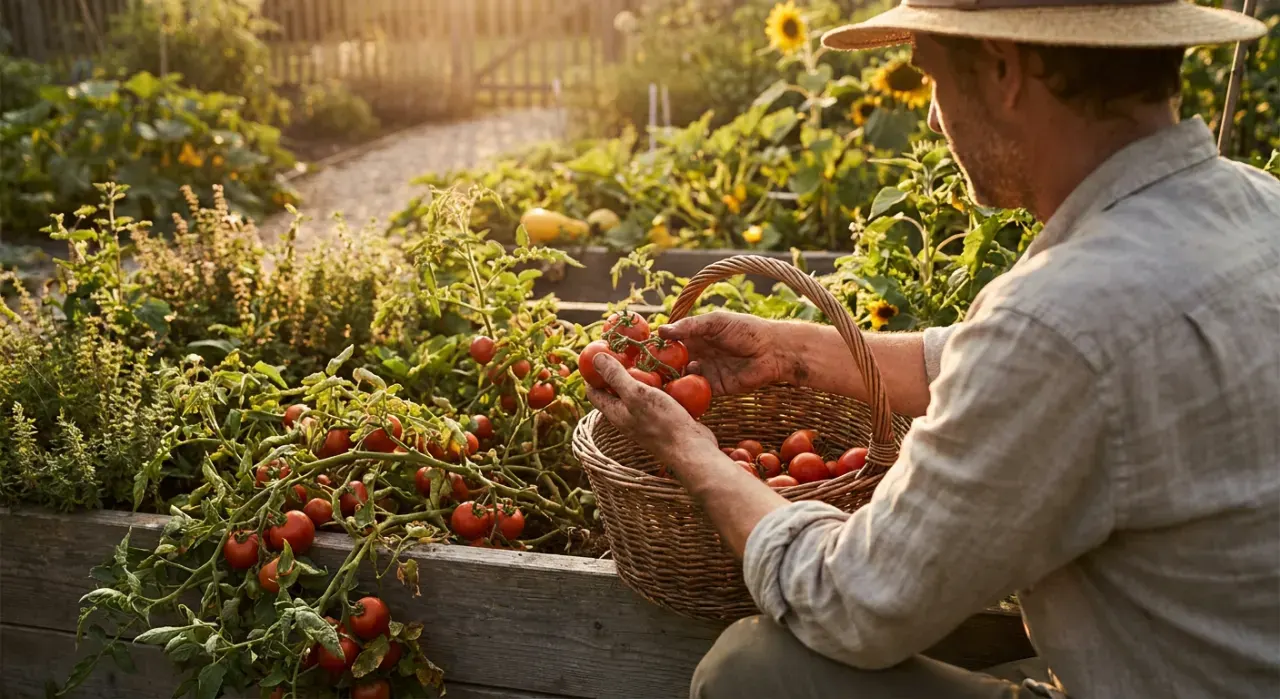
Our #1 Pick: Espoma Organic Garden-tone 3-4-4
Most fertilizer bought for vegetable gardens is the wrong fertilizer, and the reason is a single number. Walk into a hardware store, pick up the biggest, cheapest bag of plant food, and it is very likely to be a lawn-oriented blend with nitrogen in the twenties. Put that on tomatoes and you get a six-foot plant, dark green and beautiful, carrying four tomatoes. Nitrogen builds leaves. Phosphorus and potassium build flowers, fruit and roots.
Consensus Score █████████░ 9.2 — one of the most consistently recommended organic vegetable feeds in the category
Garden-tone is 3-4-4 with 5% calcium, and that shape is why it wins. It has enough nitrogen to build a plant, not enough to drown fruit set, and the potassium is high enough to matter for fruit quality and disease resistance. The calcium is not decoration: blossom end rot in tomatoes, peppers and squash is a calcium delivery failure, driven by uneven watering, and a soil already carrying available calcium is far more forgiving of a dry week in July.
The nitrogen comes from feather meal, poultry manure, bone meal and alfalfa, so it releases as microbes break it down over weeks rather than dumping into the soil at once. In practice that means you cannot burn a seedling with it even if you are careless with the scoop, which is the single most useful property a fertilizer can have for anyone still learning. It also carries Espoma's Bio-tone package of beneficial microbes and mycorrhizal fungi, which owners of poor or newly built beds report as making a visible difference in the second season more than the first.
The consensus criticisms are consistent and fair. It smells strongly of poultry manure for the first two or three days after application, particularly if it rains. Dogs and raccoons are attracted to it, so it needs scratching into the soil surface rather than being left sitting on top. And it is not cheap per pound — a large plot fed at the label rate will get through a bag faster than the price suggests.
Check price on Amazon → (paid link)
Best Vegetable Garden Fertilizers: The Ranked Field
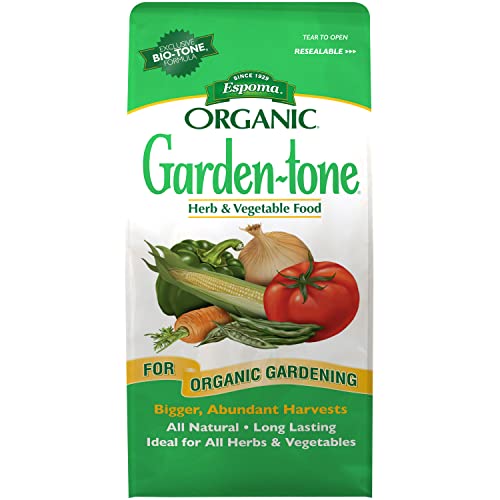
Best for one bag that feeds a whole mixed vegetable bed all season
- 3-4-4 analysis with 5% calcium — low enough in nitrogen not to push leaf at the expense of fruit
- Slow-release organic nitrogen from feather meal, bone meal and alfalfa
- Contains Espoma’s Bio-tone microbe and mycorrhizae package
- Applied monthly; 4 lb treats roughly 40 sq ft of bed
Why buy it: the 3-4-4 ratio is the single most forgiving number in vegetable gardening — it feeds leafy crops and fruiting crops without over-feeding either.

Best for gardeners feeding a large plot who want a real balanced organic blend
- Balanced 4-4-4 from fish bone meal, alfalfa, kelp and langbeinite
- Compostable box, not a plastic sack
- OMRI Listed for certified organic production
- Works as both a pre-plant amendment and a mid-season side-dress
Why buy it: more pounds of a genuinely well-formulated organic blend per dollar than anything else in this field.

Best for people who want to feed once and forget about it for three months
- Feeds for up to three months from a single application
- Includes calcium, which is the nutrient behind blossom end rot
- Contains kelp, earthworm castings and bone meal alongside the synthetic salts
- One 4.5 lb container covers about 128 sq ft
Why buy it: the lowest-effort route to a fed vegetable bed, and the calcium is not a marketing line — it genuinely matters for tomatoes and peppers.

Best for pots, grow bags and anything where nutrients wash straight out the bottom
- Resin-coated prills release on soil temperature, not on watering
- 11 essential nutrients including magnesium, iron and manganese
- Feeds up to six months from one application
- Mixes into potting soil at planting or scratches into the surface later
Why buy it: container soil leaches nutrients every time you water, and a coated slow-release prill is the only thing that keeps up without daily feeding.

Best for correcting a hungry crop fast, and for feeding seedlings and transplants
- Fully water-soluble 20-20-20 with a complete chelated micronutrient package
- Available to roots within days rather than weeks
- Mixes at roughly 1 tablespoon per gallon for general feeding
- A 1.5 lb jar makes a very large number of gallons
Why buy it: when a crop is visibly hungry in July, a granular feed is two weeks too slow — this is the one that fixes it this week.

Best for gentle regular feeding, transplant establishment and foliar sprays
- Cold-processed fish hydrolysate blended with Ascophyllum seaweed
- Mixes at about 1 oz per gallon for outdoor beds
- Can be applied as a soil drench or a foliar feed
- Supplies trace minerals and natural growth compounds alongside NPK
Why buy it: too weak to burn anything and mild enough to use every two weeks, which makes it the safest feed to hand a beginner.
Quick Comparison
| Product | Best for | Rating | Price | Buy |
|---|---|---|---|---|
| Espoma Organic Garden-tone 3-4-4 Organic Fertilizer, 4 lb | Best Overall | — | Check (paid link) | |
| Down to Earth Organic Vegetable Garden Fertilizer 4-4-4, 5 lb | Best Value Organic | — | Check (paid link) | |
| Miracle-Gro Shake ’n Feed Tomato, Fruit & Vegetable Plant Food, 4.5 lb | Best Slow-Release Granular | — | Check (paid link) | |
| Osmocote Smart-Release Plant Food Plus Outdoor & Indoor, 1 lb | Best for Containers | — | Check (paid link) | |
| Jack’s Classic All Purpose 20-20-20 Water Soluble Plant Food, 1.5 lb | Best Water-Soluble Feed | — | Check (paid link) | |
| Neptune’s Harvest Fish & Seaweed Liquid Fertilizer 2-3-1, 36 oz | Best Liquid Organic | — | Check (paid link) |
How We Rank
We do not buy, mix or apply these fertilizers. We rank them by aggregating star ratings and review volume across owner reviews, weighting recent seasons above launch-window reviews, checking the guaranteed analysis and ingredient list on the manufacturer's own label rather than the marketing copy, and reading negative reviews for the failures that only appear after a full season.
Four things drive the order. Whether the NPK ratio actually suits food crops — a high-nitrogen product is disqualified for a fruiting bed no matter how well it is rated. Release behavior, because a feed that works in three days and a feed that works over three months solve different problems. Secondary nutrients, especially calcium and magnesium, which are the two most common deficiencies in productive vegetable soil. And owner satisfaction weighted by review count, read carefully for burn reports, smell, and pest attraction. Full method: how we rank.
The Fertilizers, Reviewed
1. Espoma Organic Garden-tone 3-4-4 — Best Overall
Covered above. Consensus Score █████████░ 9.2. Strengths: the correct ratio for a mixed vegetable bed, 5% calcium, genuinely slow release from meal-based ingredients, effectively impossible to burn a plant with, and a microbial package that pays off in soil built over several seasons. Recurring complaints: the smell in the first few days after application, dogs and wildlife digging at freshly applied granules, cost per pound on a large plot, and — because it depends on microbial activity — noticeably slower results in cold spring soil than a synthetic feed would give.
2. Down to Earth Vegetable Garden 4-4-4 — Best Value Organic
A straight balanced organic blend built from fish bone meal, alfalfa meal, kelp and langbeinite, sold in a compostable box rather than a plastic sack. It is OMRI Listed, so it is legitimate for certified organic growing, and the 4-4-4 shape is close enough to Garden-tone's to be interchangeable in most beds. Where it pulls ahead is quantity: for gardeners feeding a big plot, the cost per pound of a genuinely well-formulated organic blend is the best here.
Consensus Score █████████░ 9.0 — very strong ratings, with a loyal following among market gardeners
Recurring complaints: the cardboard box tears and is useless once it gets damp, so most owners decant it. It has the same manure-adjacent smell as any meal-based organic blend. Some reviewers report the newer boxes arriving compacted into a solid block that needs breaking up. And several owners note that it contains no added calcium, which matters if your soil test already shows calcium low.
3. Miracle-Gro Shake ’n Feed Tomato, Fruit & Vegetable — Best Slow-Release Granular
The mainstream option, and it earns its place. This is a coated slow-release product that feeds for roughly three months from one application, which for a lot of home gardens means feeding twice a season and being done. It includes calcium and blends in kelp, earthworm castings and bone meal alongside the synthetic component, so it is not purely a salt feed. One container covers about 128 square feet.
Consensus Score █████████░ 9.0 — enormous review base with consistently strong ratings
Recurring complaints: the shaker lid is the single most-criticized feature — owners report it jamming, over-dispensing, or splitting at the hinge. Several report caking into a solid mass if the container is stored anywhere damp. And a recurring theme among experienced gardeners is that three months of feeding sounds convenient but leaves you with no way to adjust mid-season if a crop is clearly struggling.
4. Osmocote Smart-Release Plant Food Plus — Best for Containers
Container growing is a different nutritional problem from bed growing, and this is the answer to it. Potting mix has almost no nutrient reserve of its own, and every watering flushes a little more out of the drainage holes. Osmocote's resin-coated prills release based on soil temperature rather than on water, which means they release faster when plants are growing fast and slower when they are not — a much better match to how a plant actually eats than a fixed weekly dose.
Consensus Score ████████░░ 8.9 — long-established product with a very large and stable review base
Recurring complaints: the coated prills look almost exactly like insect eggs, which alarms a surprising number of first-time users. In hot climates the release accelerates and the six-month claim becomes closer to four. Owners in very cool summers report the opposite problem — prills still visibly intact at the end of the season. And it supplies no calcium, so container tomatoes still need a calcium source alongside it.
5. Jack’s Classic All Purpose 20-20-20 — Best Water-Soluble Feed
Every vegetable garden should have a water-soluble feed on the shelf even if the main program is organic, because granular feeds are two weeks too slow when a crop is visibly hungry in the middle of the season. Jack's is the professional greenhouse standard scaled down: a fully soluble 20-20-20 with a complete chelated micronutrient package, mixed at roughly a tablespoon per gallon. It is also the right tool for seedlings and newly potted transplants, at quarter strength.
Consensus Score █████████░ 9.3 — the highest-rated product in this roundup, with a devoted following
Recurring complaints: 20-20-20 is a lot of nitrogen for a fruiting crop, so it is a correction tool rather than a season-long program — used weekly on tomatoes it will produce leaves. Owners report the powder clumping if the jar is opened in humid conditions. And the measuring is genuinely fiddly: there is no scoop in the jar on some listings, and getting the dilution wrong in either direction is easy.
6. Neptune’s Harvest Fish & Seaweed 2-3-1 — Best Liquid Organic
Cold-processed fish hydrolysate blended with Ascophyllum seaweed, mixed at about an ounce per gallon. The analysis is low by design, which is the point: it is too weak to burn anything, so it can be applied every couple of weeks as a soil drench or a foliar feed without any of the arithmetic anxiety that comes with a concentrated synthetic. It is also the standard recommendation for settling transplants in, because the seaweed component supplies trace minerals and natural growth compounds rather than just NPK.
Consensus Score ████████░░ 8.7 — strong ratings with one very well-known drawback
Recurring complaints: the smell, overwhelmingly. It is fish, it smells like fish, and owners consistently report the odor lingering for a day or two and attracting neighborhood cats and raccoons to freshly treated beds. It is also expensive per unit of actual nutrient — you are paying for the trace minerals and biology, not the NPK. Several reviewers report bottles arriving leaking, and the contents separating and needing a vigorous shake every time.
How to Choose a Vegetable Garden Fertilizer
Start with a soil test, not with a product. A $20 mail-in test from a state extension service will tell you your pH, your organic matter percentage and your phosphorus and potassium levels — Missouri Extension makes having the soil tested step one of fertilizing a garden, and Clemson Extension puts the optimum pH for most vegetables at 6.0 to 6.5, and it very often reveals that you do not need what you were about to buy. Phosphorus in particular accumulates in home garden soil that has been fed for years, and adding more does nothing except run off into waterways. Our guide on how to read a soil test walks through the numbers, and the best soil test kits covers the options.
Then match the ratio to what you are growing. Fruiting crops — tomatoes, peppers, eggplant, squash, cucumbers, melons — want moderate nitrogen and good potassium, so 3-4-4 through 5-5-5 and no higher on the first number. Leafy crops — lettuce, spinach, chard, kale, cabbage — genuinely want nitrogen, and a 5-3-3 all-purpose blend or a nitrogen side-dress will visibly improve them. Root crops want the least nitrogen of anything; feed carrots and beets heavily and you get magnificent tops and disappointing roots. Legumes — beans and peas — fix their own nitrogen and need nothing but phosphorus and potassium.
Decide on release speed next, because it is a bigger practical difference than organic versus synthetic. A slow-release granular worked in at planting is the backbone of a low-effort garden and will carry a bed four to six weeks. A water-soluble feed is a correction tool for a crop that is visibly struggling now. A coated prill is for containers. Most well-run vegetable gardens use two of the three: a granular base plus a liquid on hand.
Finally, remember that fertilizer is not compost and does not replace it. A bag of 4-4-4 supplies nutrients; it does nothing for soil structure, water-holding capacity or biology. An inch of finished compost worked into the surface each spring does all three and reduces how much fertilizer the bed needs in the first place — which is a strong argument for the best compost bin or a tumbler if you are not already making your own.
What Owners Actually Complain About
Four complaints recur across nearly every product here. Smell leads by a distance. Meal-based organic granules and fish emulsions both smell strongly for two to four days after application, and owners repeatedly report dogs, cats and raccoons digging at freshly treated beds. Scratching granules into the top inch of soil and watering them in immediately solves most of it.
Packaging failures are the second theme and they are remarkably consistent: shaker lids that jam or split, cardboard boxes that disintegrate when damp, and liquid bottles arriving leaked into the shipping carton. Most experienced owners decant granular products into a lidded bucket on arrival.
Caking and compaction affects every granular product stored in a garage or shed through a humid summer. Once a bag sets solid it is workable but genuinely annoying, and it makes accurate application impossible.
And the quiet one: slower results than expected from organic blends in spring. Organic nitrogen is released by soil microbes, and microbes barely work below about 50°F. A bed fed with an organic granular in cold April soil will look unfed for two or three weeks, and a lot of one-star reviews are really this misunderstanding rather than a bad product.
The Verdict
For a mixed vegetable bed, buy Espoma Organic Garden-tone 3-4-4 — right ratio, calcium included, impossible to burn anything with. If you are feeding a large plot and want more pounds for the money, Down to Earth 4-4-4 is the same idea at better value. If you would rather feed twice a season and forget it, Miracle-Gro Shake ’n Feed does that well. Growing in pots or grow bags? Osmocote, mixed into the medium at planting. Keep Jack’s Classic 20-20-20 on the shelf for the July emergency, and if you want something gentle enough to use every two weeks without thinking, Neptune’s Harvest — just accept the smell.
Check price on Amazon → (paid link)
Next: keep the moisture even so the calcium actually reaches the fruit with how often to water a vegetable garden, hold that moisture in with the best mulch for a vegetable garden, and if blossom end rot has already appeared, read what causes blossom end rot on tomatoes.