 Garden
Affiliate Disclosure
Some links on this page are affiliate links. As an Amazon Associate, we earn from qualifying purchases — at no extra cost to you. We do not buy, test, or physically handle the products we cover; our rankings come from aggregated owner reviews, ratings and expert consensus. Commissions never change our verdicts. How we rank · full disclosure.
The short version: the best organic fertilizer for tomatoes is Espoma Organic Tomato-tone 3-4-6. Two numbers explain why. Nitrogen is only 3, which stops the plant from building a magnificent leafy frame at the expense of fruit; and it carries 8% calcium, the highest here, which is the nutrient sitting behind blossom end rot — although Clemson Extension is blunt that calcium sprays do not fix the problem, because the shortage is in delivery rather than supply. It releases slowly from meal-based ingredients, so it is effectively impossible to burn a plant with it. For container tomatoes, skip to the Jobe’s Organics spikes instead.
This page is specifically about organic tomato feeds. If you want the whole field including synthetics and container products, that is best vegetable garden fertilizer; peppers have a slightly different appetite and get their own page at best fertilizer for pepper plants. Everything else is at the vegetable growing hub.
Top Picks at a Glance
Our #1 Pick: Espoma Organic Tomato-tone 3-4-6
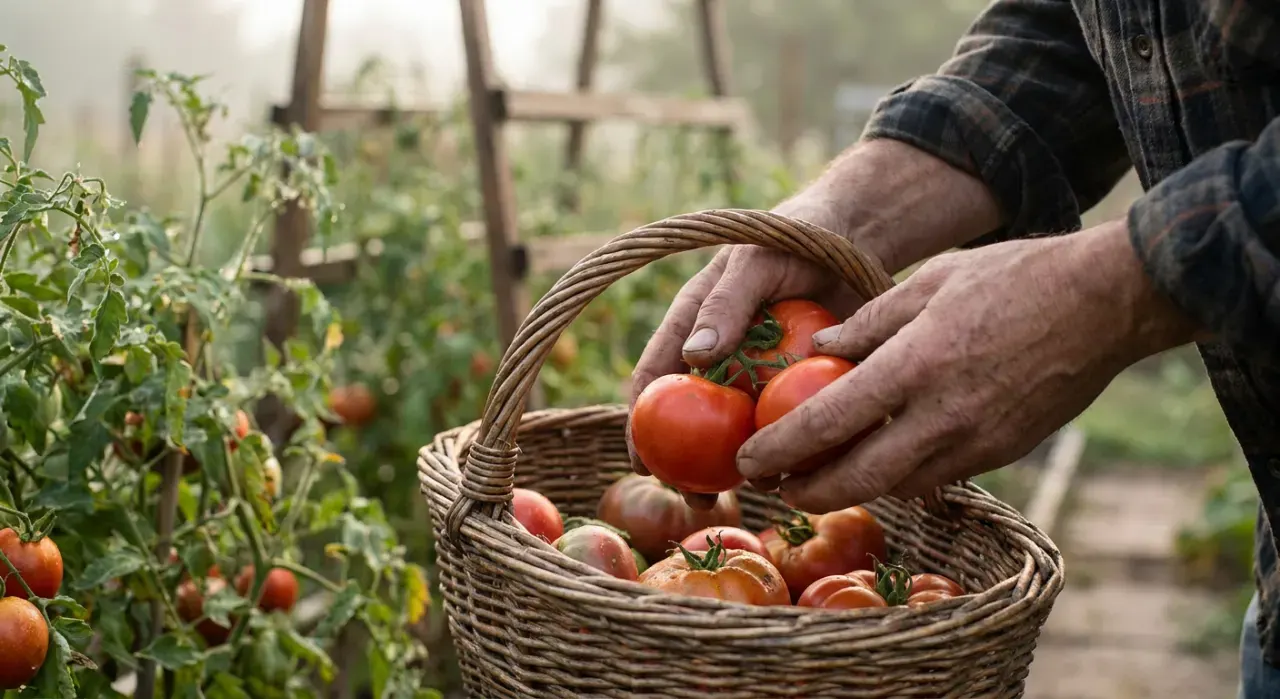
The two ways home tomato crops most commonly disappoint are a huge green plant carrying almost no fruit, and fruit that ripens with a sunken black patch on the bottom. Tomato-tone is formulated squarely against both.
Consensus Score █████████░ 9.3 — the most consistently recommended organic tomato fertilizer in the category
The first problem is nitrogen. Tomatoes respond to nitrogen by building stem and leaf, and a plant given a generic balanced feed will happily put its energy there instead of into flowers. Tomato-tone runs 3-4-6 — nitrogen the smallest number, potassium the largest. Potassium is what drives fruit size, firmness, sugar development and the plant's tolerance of heat and disease, and it is the nutrient home gardens most often run short of by August, because every tomato you carry out of the garden takes potassium with it.
The second problem is calcium, and Tomato-tone carries 8% of it — more than any other product on this page. It is worth being precise about what that does. Blossom end rot is not usually caused by a lack of calcium in the soil; it is caused by calcium failing to reach the growing fruit tip, because calcium travels in the water stream and irregular watering interrupts the delivery. A soil already rich in available calcium is more forgiving of a dry week, which is genuinely useful, but it is a buffer rather than a cure — University of Wisconsin Extension puts uneven soil moisture at the center of blossom end rot. Even watering and a good mulch layer matter more.
Everything else about it is the standard Espoma formula: nitrogen from feather meal, poultry manure, alfalfa and bone meal so release happens over weeks as microbes work; greensand and sulfate of potash for the potassium; and the Bio-tone package of beneficial bacteria and mycorrhizal fungi. Owners of new raised beds consistently report the biological side showing up more in the second season than the first, which fits how mycorrhizal colonization actually works.
The complaints are predictable and honest. It smells of poultry manure for two to four days after application and dogs will dig at it if you leave granules on the surface. It works slowly in cold spring soil — genuinely slowly, as in two to three weeks of looking like nothing happened. And on a plot of a dozen plants fed on the label schedule, an 8 lb bag disappears faster than the price implies.
Check price on Amazon → (paid link)
Best Organic Tomato Fertilizers: The Ranked Field
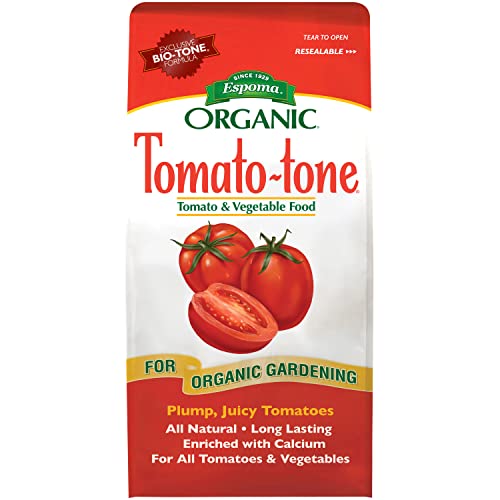
Best for in-ground and raised bed tomatoes from transplant to last harvest
- 3-4-6 analysis — deliberately low nitrogen, high potassium for fruit
- 8% calcium, the highest of any product in this roundup
- Slow release from feather meal, bone meal, alfalfa and greensand
- Bio-tone beneficial microbes and mycorrhizae included
Why buy it: the 3-4-6 ratio and the 8% calcium together address the two things that actually go wrong with home tomatoes: too much leaf, and blossom end rot.

Best for gardeners who want the richest microbial and mycorrhizal package
- 4-6-3 analysis with fish bone meal, kelp, alfalfa and mined potassium sulfate
- TruBiotic package: five soil microbe strains plus endo and ecto mycorrhizae
- No chicken manure, no sewage sludge, no synthetic additives
- OMRI Listed and safe around children and pets once watered in
Why buy it: the most complete biological package here, which shows up most in poor or newly built soil that has no microbial life to start with.

Best for feeding a whole plot of tomatoes without paying tomato-specific prices
- Balanced 4-4-4 from fish bone meal, alfalfa, kelp and langbeinite
- Langbeinite supplies potassium, magnesium and sulfur together
- OMRI Listed, sold in a compostable box
- Works as a pre-plant amendment and a mid-season side-dress
Why buy it: a genuinely well-built organic blend at the lowest cost per pound in this field, which matters when you have twelve plants rather than two.

Best for container tomatoes and gardeners who would rather not measure anything
- 2-7-4 analysis — very low nitrogen, phosphorus-forward for flowering
- Pre-measured spikes push in at the drip line, no scale or scoop
- Biozome microbe package breaks down organic matter at the root
- Feeds below the surface, so nothing washes off in heavy rain
Why buy it: no measuring, no smell on the soil surface, and no runoff — which is why they dominate among container growers.

Best for establishing transplants and gentle feeding every two weeks
- Cold-processed fish hydrolysate blended with Ascophyllum seaweed
- Mixes at roughly 1 oz per gallon for outdoor beds
- Usable as a soil drench or a foliar spray
- Too dilute to burn roots even if you over-measure
Why buy it: the safest thing to pour on a newly planted tomato, and the seaweed component supplies trace minerals a granular blend does not.

Best for a first bag for someone growing tomatoes for the first time
- 3-6-4 analysis with added calcium and minor nutrients
- Feeds for up to three months per application
- OMRI Listed for organic gardening
- Usable at seed starting, transplanting and through the season
Why buy it: a fruit-forward organic ratio at the lowest entry price here, and simple enough to use correctly without reading a soil report first.
Quick Comparison
| Product | Best for | Rating | Price | Buy |
|---|---|---|---|---|
| Espoma Organic Tomato-tone 3-4-6 with 8% Calcium, 8 lb | Best Overall | — | Check (paid link) | |
| Dr. Earth Home Grown Organic Tomato, Vegetable & Herb Fertilizer, 4 lb | Best Premium Organic | — | Check (paid link) | |
| Down to Earth Organic Vegetable Garden Fertilizer 4-4-4, 5 lb | Best Value Organic | — | Check (paid link) | |
| Jobe’s Organics Vegetable & Tomato Fertilizer Spikes 2-7-4, 50 Spikes | Best Low-Effort Option | — | Check (paid link) | |
| Neptune’s Harvest Fish & Seaweed Liquid Fertilizer 2-3-1, 36 oz | Best Liquid Feed | — | Check (paid link) | |
| Burpee Organic Tomato & Vegetable Granular Plant Food 3-6-4, 4 lb | Best Starter Blend | — | Check (paid link) |
How We Rank
We do not buy, mix or apply these fertilizers. We rank them by aggregating star ratings and review volume across owner reviews, weighting recent seasons above launch-window reviews, reading the guaranteed analysis and ingredient panel on each manufacturer's own label rather than the front-of-bag claims, and mining negative reviews for the failures that only appear after a full season of use.
Four criteria set the order, all specific to tomatoes. Nitrogen restraint — anything with a leading number high enough to push foliage over fruit is marked down regardless of ratings. Calcium content, because it is the one secondary nutrient with a direct line to the most common tomato defect. Ingredient honesty — a genuine meal-and-mineral blend rather than a bag of manure with a tomato picture on it. And owner satisfaction weighted by review volume, read for burn reports, odor, pest attraction and what happens in the second season. Full method: how we rank.
The Fertilizers, Reviewed
1. Espoma Organic Tomato-tone 3-4-6 — Best Overall
Covered above. Consensus Score █████████░ 9.3. Strengths: the correct low-nitrogen, high-potassium shape for a fruiting crop; 8% calcium, the highest here; slow, burn-proof release; and a microbial and mycorrhizal package that compounds over seasons. Recurring complaints: the poultry-manure smell in the first few days, dogs and raccoons digging at surface granules, visibly slow action in cold spring soil, and a bag that empties fast on a larger plot.
2. Dr. Earth Home Grown Tomato, Vegetable & Herb — Best Premium Organic
The most biologically loaded product here. Dr. Earth's TruBiotic package adds five strains of beneficial soil bacteria plus both endo and ecto mycorrhizae, on top of a 4-6-3 blend built from fish bone meal, kelp, alfalfa and mined potassium sulfate. Crucially it contains no chicken manure and no sewage sludge, which is why it smells markedly less offensive than most organic granulars and why it is the usual recommendation for gardeners feeding beds close to a patio or a neighbor's fence.
Consensus Score █████████░ 9.0 — excellent ratings, with price the main reservation
Recurring complaints: it is expensive per pound and the 4 lb bag is small for what it costs. Nitrogen at 4 is slightly higher than ideal for a plant already setting fruit, so some owners report leafier growth than they wanted when applying at full label rate. Several reviewers report the bag arriving split, and a minority note white fungal growth appearing on the soil surface after application — which is the mycorrhizal component doing its job, but alarming if you do not know that.
3. Down to Earth Vegetable Garden 4-4-4 — Best Value Organic
Not marketed specifically for tomatoes, and that is exactly why it belongs here: a straight balanced 4-4-4 built from fish bone meal, alfalfa, kelp and langbeinite is a perfectly good tomato feed at a much better cost per pound than the tomato-branded bags. Langbeinite is the detail worth knowing about — it delivers potassium, magnesium and sulfur in one mineral, and magnesium deficiency showing as yellowing between the veins on lower leaves is common in heavily cropped tomato beds.
Consensus Score █████████░ 9.0 — very strong ratings and a following among market growers
Recurring complaints: the compostable cardboard box is a genuine weak point — owners consistently report it tearing, and it turns to pulp if it gets damp in a shed. There is no added calcium, so tomato growers need a separate calcium source if a soil test shows it low. Some reviewers report the contents arriving compacted into a block. And the smell, while milder than manure-based products, is still distinctly fishy for a couple of days.
4. Jobe’s Organics Vegetable & Tomato Spikes 2-7-4 — Best Low-Effort Option
A completely different delivery model, and for container tomatoes it is often the better one. The spikes push into the soil at the drip line and release below the surface, which means nothing sits on top to smell, nothing washes off in a downpour, and there is no measuring at all. The 2-7-4 analysis is the most nitrogen-restrained here, which suits a plant that is already flowering. Jobe's Biozome microbe package works on the surrounding organic matter as the spike breaks down.
Consensus Score ████████░░ 8.6 — well rated, with delivery consistency the recurring reservation
Recurring complaints: the spikes are brittle and owners very consistently report them snapping when pushed into dry or heavy clay soil — watering the spot first largely solves it, but it is a real annoyance. Feeding is localized around each spike rather than spread through the bed, which suits pots more than open ground. Several reviewers report mold appearing on spikes stored in a damp shed. And the coverage is modest: a large plant needs several spikes, so a 50-count package goes less far than it sounds.
5. Neptune’s Harvest Fish & Seaweed 2-3-1 — Best Liquid Feed
The standard recommendation for settling a tomato transplant in, and for anyone who wants to feed little and often rather than heavily and rarely. Cold-processed fish hydrolysate carries the nitrogen and phosphorus; the Ascophyllum seaweed adds trace minerals and natural growth compounds that a granular blend does not supply. The analysis is low by design — it is too dilute to burn roots even if you are heavy-handed with the measuring cup, which makes it the safest liquid to hand a beginner.
Consensus Score ████████░░ 8.7 — strong ratings with one famous drawback
Recurring complaints: the smell, overwhelmingly and universally. It is fish, it smells like fish, and owners consistently report the odor hanging around a day or two and drawing cats and raccoons to treated beds. It is also poor value measured purely in NPK — you are paying for the trace minerals and biology. Bottles arriving leaked in the carton are a recurring shipping complaint, and the contents separate and need shaking hard before every use.
6. Burpee Organic Tomato & Vegetable Granular 3-6-4 — Best Starter Blend
The sensible first bag. A 3-6-4 analysis with added calcium and minor nutrients is a correct fruit-forward shape, it is OMRI Listed, it feeds for up to three months per application, and it is the cheapest entry point here. There is nothing clever about it and that is the appeal — someone growing four tomato plants in their first season does not need a soil report and a mineral strategy, they need a bag with the right numbers on it that will not hurt anything.
Consensus Score ████████░░ 8.5 — good ratings, with a smaller review base than the established brands
Recurring complaints: owners describe results as solid but unremarkable next to Espoma or Dr. Earth, which is a fair reading — it is a competent blend rather than a strong one. The bag is a plain paper sack with no resealable closure, so it needs decanting. Several reviewers report inconsistent granule size making even spreading difficult. And like every meal-based organic, it works slowly in cold soil and attracts animal interest for a day or two after application.
How to Choose an Organic Tomato Fertilizer
Read the first number first. Anything with nitrogen above about 5 is going to encourage leaf, and a tomato that is already flowering does not need more leaf. The ideal shape is nitrogen lowest, potassium highest — 3-4-6 and 2-7-4 are both correct, 10-10-10 is workable but blunt, and a 24-0-6 lawn feed will produce the most impressive non-fruiting tomato plant you have ever grown.
Check whether calcium is on the label. It is worth having, but understand what it buys you: insurance against the supply side of blossom end rot, not a cure for it. If your watering swings from drought to flood, no fertilizer will fix the black patches. Consistent moisture — which in practice means a drip line or a soaker hose plus two to three inches of mulch — does more than any product. Our mulch guide and watering guide both matter more here than the fertilizer choice does.
Match the format to where the plants are growing. In-ground and raised beds: a granular worked into the planting hole and side-dressed monthly is the least work for the best result. Containers and grow bags: spikes or a diluted liquid every one to two weeks, because potting mix holds nothing in reserve and watering flushes nutrients straight out. Newly planted transplants of any kind: a dilute liquid, because a plant with a small root system cannot reach a granular ring yet.
And test the soil before you build a program around guesswork. Phosphorus in particular accumulates in home garden beds fed for years, and adding a phosphorus-forward product to soil that is already high does nothing useful. A mail-in test through a state extension service is inexpensive and settles the question — Missouri Extension makes it the first step of fertilizing a garden at all; how to read a soil test walks through what the numbers mean.
What Owners Actually Complain About
Smell is the number one complaint on every organic product here, without exception. Meal-based granulars smell of poultry manure; fish emulsions smell of fish. Owners consistently report two to four days of odor after application, plus dogs, cats and raccoons digging at fresh granules. Scratching the granules into the top inch of soil and watering them in immediately removes most of both problems.
Slow visible response in cold soil generates a large share of the one-star reviews, and it is usually a misunderstanding rather than a defect. Organic nitrogen has to be mineralized by soil microbes, and those microbes barely function below about 50°F. Fed in cold April soil, an organic granular can look like it did nothing for two or three weeks.
Packaging is a running theme: cardboard boxes that disintegrate when damp, paper sacks with no reseal, bags splitting in transit, and liquid bottles arriving leaked. Most experienced owners decant granular products into a lidded bucket the day they arrive.
And a smaller but persistent one — white mold on the soil surface after applying a mycorrhizal product. It looks alarming and is repeatedly reported as a defect in reviews, but it is normal saprophytic fungal growth on the organic matter and it is harmless.
The Verdict
For tomatoes in beds, buy Espoma Organic Tomato-tone 3-4-6 — the ratio and the 8% calcium are exactly what the crop wants, and it is forgiving of mistakes. If you want the strongest biological package and the least offensive smell, Dr. Earth Home Grown is worth the premium. Feeding a lot of plants on a budget? Down to Earth 4-4-4. Growing in pots? Jobe’s Organics spikes, no question. Keep Neptune’s Harvest for transplants and gentle fortnightly feeding, and if this is your first tomato season, Burpee Organic 3-6-4 is a perfectly sensible first bag.
Check price on Amazon → (paid link)
Next: get the plants supported properly with the best tomato cages, hold moisture steady with the best mulch for a vegetable garden, plan what goes beside them using the best companion plants for tomatoes, and diagnose problems with why are my tomato leaves curling.