 Garden
Affiliate Disclosure
Some links on this page are affiliate links. As an Amazon Associate, we earn from qualifying purchases — at no extra cost to you. We do not buy, test, or physically handle the products we cover; our rankings come from aggregated owner reviews, ratings and expert consensus. Commissions never change our verdicts. How we rank · full disclosure.
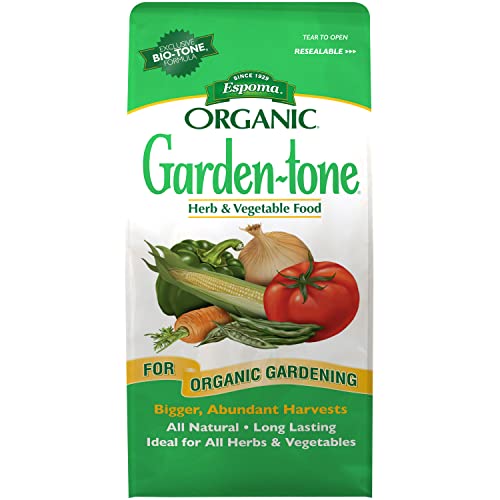
The short version: the best fertilizer for pepper plants is Espoma Organic Garden-tone 3-4-4. Peppers are the crop that punishes excess nitrogen hardest — feed them generously and you get a magnificent glossy green plant that flowers late and drops what it sets. Garden-tone keeps nitrogen at 3, supplies useful potassium and 5% calcium, and releases slowly enough that you cannot overdo it by accident. Growing chilies in pots instead? Go to the Jobe’s Organics 2-7-4 spikes or the FoxFarm trio.
If you are feeding a whole mixed bed rather than peppers specifically, that is best vegetable garden fertilizer; the organic-only tomato equivalent is best organic fertilizer for tomatoes. The rest of the hub is at vegetable growing.
Top Picks at a Glance
Our #1 Pick: Espoma Organic Garden-tone 3-4-4
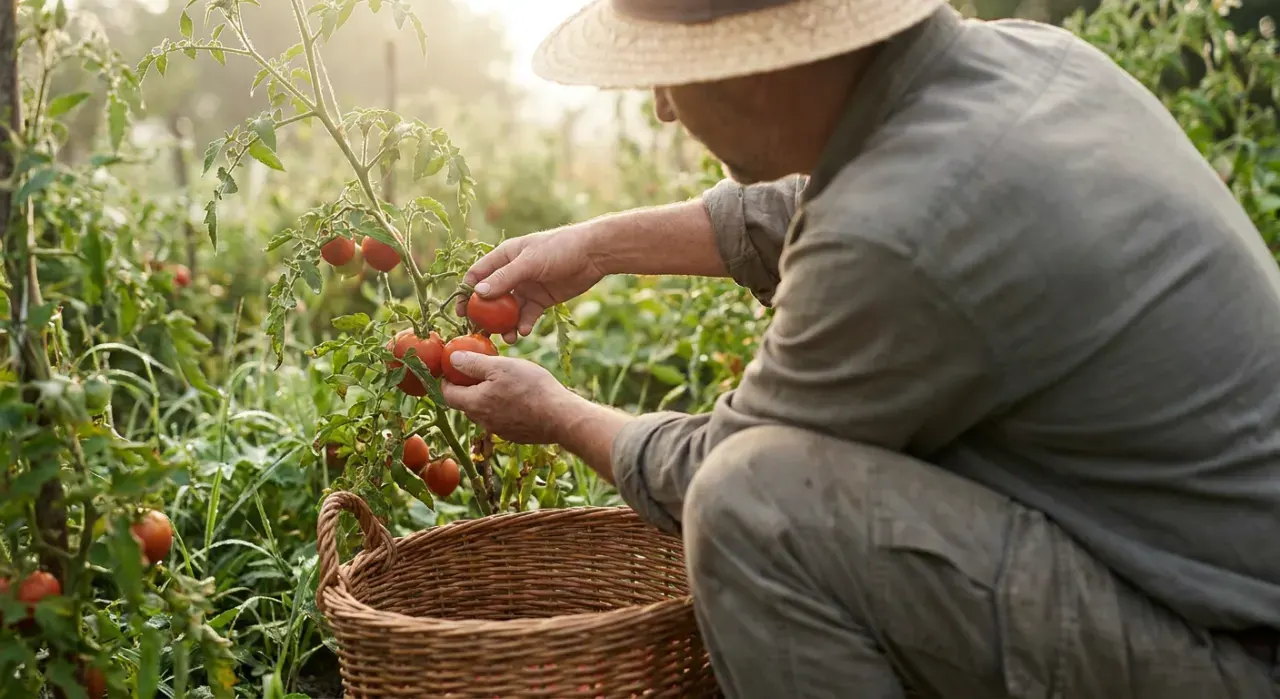
There is a specific, very common failure in home pepper growing, and everyone who has grown peppers has seen it: a beautiful plant. Waist high, dark green, glossy leaves, not a blemish on it — and four peppers. The plant is not sick. It has been fed exactly what it did not need.
Consensus Score █████████░ 9.2 — one of the most consistently recommended organic feeds for nightshade crops
Peppers convert nitrogen into vegetative growth more enthusiastically than almost anything else in the vegetable garden. Give a pepper plant a generous nitrogen supply while it is trying to flower and it will keep building stems and leaves instead, delay flowering, and abort a proportion of the buds it does set. Garden-tone runs 3-4-4 — nitrogen the smallest number, and low enough in absolute terms that it will not tip a plant into leaf mode.
The 5% calcium matters too. Peppers get blossom end rot just as tomatoes do, showing as a sunken tan or blackened patch at the blossom end of the fruit, and the mechanism is the same: University of Wisconsin Extension explains that the soil usually holds plenty of calcium and the problem is getting it into the fruit, because calcium moves in the water stream, so uneven watering starves the growing fruit tip even when the soil holds plenty. A bed already carrying available calcium is more forgiving of a dry spell, though even watering and mulch remain the real fix.
Because the nitrogen comes from feather meal, poultry manure, bone meal and alfalfa, it releases as soil microbes break it down over weeks. That slow release is the safety feature. Peppers dislike being pushed, and a granular you physically cannot overdose is worth a great deal more to most gardeners than a precisely dosed synthetic they might get wrong. Espoma's Bio-tone microbe and mycorrhizae package is the usual bonus, most noticeable in newly built beds by the second season.
The complaints are the standard organic granular ones and worth planning around. It smells of poultry manure for the first two to four days, particularly after rain. Dogs and raccoons will dig at granules left sitting on the surface, so scratch it into the top inch and water it in. And in cold spring soil, below about 50°F, the microbes that release the nitrogen barely work — expect two to three weeks of apparently nothing happening.
Check price on Amazon → (paid link)
Best Pepper Fertilizers: The Ranked Field
Best for bell peppers, chilies and everything in between, in beds or raised beds
- 3-4-4 analysis with 5% calcium — restrained nitrogen, useful potassium
- Slow release from feather meal, bone meal, poultry manure and alfalfa
- Bio-tone microbes and mycorrhizae included
- Monthly application; 4 lb treats roughly 40 sq ft of bed
Why buy it: peppers punish excess nitrogen harder than almost any other crop, and 3-4-4 is the ratio that keeps a plant compact and flowering.

Best for feeding twice a season and getting on with your life
- Feeds for up to three months from one application
- Added calcium — relevant because peppers get blossom end rot too
- Blends kelp, earthworm castings and bone meal with the synthetic component
- One container covers about 128 sq ft
Why buy it: the fastest route from an unfed bed to a fed one, and unlike an organic granular it works in cold spring soil.

Best for potted chilies and anyone who does not want to measure anything
- 2-7-4 — the most nitrogen-restrained analysis in this roundup
- Pre-measured spikes push in at the drip line, no scoop needed
- Feeds below the surface, so nothing washes off or smells on top
- Biozome microbe package works on surrounding organic matter
Why buy it: a 2 on the nitrogen line is exactly right for a flowering pepper, and container growers get zero measuring and zero runoff.

Best for new raised beds and poor soil with no biology of its own
- 4-6-3 from fish bone meal, kelp, alfalfa and mined potassium sulfate
- TruBiotic package: five microbe strains plus endo and ecto mycorrhizae
- No chicken manure and no sewage sludge — noticeably less smell
- OMRI Listed and safe around children and pets once watered in
Why buy it: the strongest biological package here, and the mildest smelling organic granular — which matters if the bed is next to a patio.

Best for container chili growers who want to steer the plant through each stage
- Three bottles for three stages: establishment, vegetative growth, then flowering
- Tiger Bloom is phosphorus-forward for the fruiting phase
- Big Bloom is gentle enough to use at every watering
- Widely used by hot-pepper growers running plants in pots
Why buy it: the only product here that lets you deliberately cut nitrogen the week a plant starts flowering, which is the whole game with peppers.

Best for establishing transplants and gentle fortnightly feeding
- Cold-processed fish hydrolysate blended with Ascophyllum seaweed
- Mixes at roughly 1 oz per gallon outdoors
- Soil drench or foliar spray
- Too dilute to burn roots even if over-measured
Why buy it: peppers hate root disturbance and sulk after transplanting; a weak fish and seaweed drench is the standard way to settle them.
Quick Comparison
| Product | Best for | Rating | Price | Buy |
|---|---|---|---|---|
| Espoma Organic Garden-tone 3-4-4 Organic Fertilizer, 4 lb | Best Overall | — | Check (paid link) | |
| Miracle-Gro Shake ’n Feed Tomato, Fruit & Vegetable Plant Food, 4.5 lb | Best Slow-Release Granular | — | Check (paid link) | |
| Jobe’s Organics Vegetable & Tomato Fertilizer Spikes 2-7-4, 50 Spikes | Best for Containers | — | Check (paid link) | |
| Dr. Earth Home Grown Organic Tomato, Vegetable & Herb Fertilizer, 4 lb | Best Premium Organic | — | Check (paid link) | |
| FoxFarm Liquid Nutrient Trio Soil Formula: Big Bloom, Grow Big, Tiger Bloom, 3 Pint Bottles | Best Liquid Program | — | Check (paid link) | |
| Neptune’s Harvest Fish & Seaweed Liquid Fertilizer 2-3-1, 36 oz | Best Value Liquid | — | Check (paid link) |
How We Rank
We do not buy, mix or apply these fertilizers. We rank them by aggregating star ratings and review volume across owner reviews, weighting recent seasons above launch-window reviews, reading the guaranteed analysis and ingredient panel on the manufacturer's own label rather than the front-of-bag claim, and mining negative reviews for problems that only surface after a full season.
Four criteria drive the order, all specific to peppers. Nitrogen restraint — this is the single biggest determinant of whether a pepper plant fruits, so a high-nitrogen product is marked down regardless of how well it is rated. Calcium and magnesium content, the two secondary nutrients that most often limit a productive pepper bed. Suitability for containers, because a very large share of home peppers are grown in pots where feeding behaves completely differently. And owner satisfaction weighted by review count, read for burn reports, smell and pest attraction. Full method: how we rank.
The Fertilizers, Reviewed
1. Espoma Organic Garden-tone 3-4-4 — Best Overall
Covered above. Consensus Score █████████░ 9.2. Strengths: restrained nitrogen, useful potassium, 5% calcium, genuinely slow meal-based release that cannot burn a plant, and a microbial package that compounds over seasons. Recurring complaints: the poultry-manure smell for two to four days after application, animals digging at surface granules, visibly slow action in cold spring soil, and a bag that empties quickly on a large plot.
2. Miracle-Gro Shake ’n Feed Tomato, Fruit & Vegetable — Best Slow-Release Granular
The mainstream choice, and a legitimate one for peppers. It is a coated slow-release product that feeds for roughly three months from a single application, includes calcium, and blends kelp, earthworm castings and bone meal alongside the synthetic component. Its real advantage over an organic granular is that it works regardless of soil temperature — a meaningful difference in a cold spring, when an organic feed simply sits there waiting for the microbes to wake up.
Consensus Score █████████░ 9.0 — very large review base with consistently strong ratings
Recurring complaints: the shaker lid is the most-criticized element by a distance — jamming, over-dispensing, or splitting at the hinge. Caking into a solid mass if stored anywhere damp is common. And the three-month feed that sounds convenient also removes your ability to dial nitrogen down at first flower, which for peppers specifically is the adjustment that matters most.
3. Jobe’s Organics Vegetable & Tomato Spikes 2-7-4 — Best for Containers
The most nitrogen-restrained analysis on this page, and the format that suits potted peppers best. A 2 on the nitrogen line with a 7 on phosphorus is close to ideal for a plant that is already flowering. The spikes push into the soil at the drip line and release beneath the surface, so nothing sits on top to smell, nothing washes off in a downpour, and there is no measuring at all — which is why they are so heavily represented among chili growers running plants on a balcony.
Consensus Score ████████░░ 8.6 — well rated, with delivery consistency the recurring reservation
Recurring complaints: the spikes are brittle and owners consistently report them snapping when pushed into dry or clay soil — soaking the spot first mostly solves it. Feeding is concentrated around each spike rather than spread evenly, which suits a pot much better than open ground. Mold on spikes stored in a damp shed comes up repeatedly. And a mature plant needs several spikes, so a 50-count package covers fewer plants than it appears to.
4. Dr. Earth Home Grown Tomato, Vegetable & Herb — Best Premium Organic
The most biologically complete product here: five strains of beneficial soil bacteria plus both endo and ecto mycorrhizae, over a 4-6-3 blend of fish bone meal, kelp, alfalfa and mined potassium sulfate. It contains no chicken manure and no sewage sludge, and the practical consequence is that it smells far less than most organic granulars — the usual recommendation when the bed is next to a patio, a doorway or a neighbor's fence.
Consensus Score █████████░ 9.0 — excellent ratings, with price the main reservation
Recurring complaints: expensive per pound, and the 4 lb bag is small for the money. Nitrogen at 4 is a touch higher than ideal for a pepper already in flower, so applying at the top of the label rate can produce more leaf than you wanted. Bags arriving split is a recurring shipping complaint, and a minority of owners report white fungal growth on the soil surface afterwards — that is the mycorrhizal and saprophytic activity doing its job, and it is harmless.
5. FoxFarm Liquid Nutrient Trio — Best Liquid Program
Three bottles rather than one, and that is the point. Grow Big carries the plant through early vegetative growth, Tiger Bloom is phosphorus-forward for the flowering and fruiting phase, and Big Bloom is mild enough to use at every watering throughout. For a container chili grower, the ability to deliberately drop nitrogen the week the first flower buds appear is exactly the lever that determines whether the plant fruits well, and no single-bottle product gives you it.
Consensus Score █████████░ 9.1 — very strong ratings with a large following among pepper and container growers
Recurring complaints: it is complicated. Owners repeatedly describe the feeding chart as intimidating and the three-bottle system as overkill for someone growing four plants in a bed. It is easily the most expensive option here. Tiger Bloom is acidic and concentrated enough to burn if the dilution is wrong, unlike everything else on this page. And counterfeit or repackaged bottles are a real and recurring complaint on third-party listings — buy from a seller you trust.
6. Neptune’s Harvest Fish & Seaweed 2-3-1 — Best Value Liquid
Peppers resent root disturbance and characteristically sulk for a week or two after transplanting, and a weak fish and seaweed drench is the standard way to move them through it. Cold-processed fish hydrolysate supplies the nitrogen and phosphorus; the Ascophyllum seaweed adds trace minerals and natural growth compounds. The analysis is deliberately low, so it cannot burn roots even if you are careless, which makes it the safest liquid to hand a beginner.
Consensus Score ████████░░ 8.7 — strong ratings with one very well-known drawback
Recurring complaints: the smell, universally. It is fish, it smells like fish, and owners report the odor hanging around a day or two and drawing cats and raccoons to treated soil. Measured purely as NPK it is expensive — you are buying the trace minerals and biology. Bottles arriving leaked in the shipping carton is a recurring complaint, and the contents separate and need hard shaking before every use.
How to Choose a Fertilizer for Peppers
Think in two stages, because peppers want different things at different points. Stage one, transplant to first flower bud — roughly three to four weeks — the plant is building the frame that will carry the crop, and a balanced feed around 3-4-4 or 4-4-4 is right. Stage two, first flower bud onward, cut the nitrogen and lean phosphorus and potassium: 2-7-4, 5-10-10 or a bloom-oriented liquid. Most people never make this switch, and it is the single change that most improves a disappointing pepper crop.
Match the format to the growing situation. In beds, a slow-release granular worked into the planting hole and side-dressed monthly is the least work for the best result — Illinois Extension suggests side-dressing once the first peppers have set. In containers, potting mix retains essentially nothing and every watering flushes nutrients out the bottom, so pots need a diluted liquid every one to two weeks or slow-release spikes on the label schedule. Newly transplanted peppers of any kind want a dilute liquid rather than a granular, because a small root system cannot reach a ring of granules yet.
Do not treat Epsom salts as a general tonic. Magnesium sulfate corrects a genuine magnesium deficiency — the tell is yellowing between the veins on older lower leaves while the veins themselves stay green — and does nothing whatever on soil that is not deficient. The same discipline applies to calcium: it helps if supply is genuinely limiting, but blossom end rot is usually a watering problem wearing a nutrient costume. Consistent moisture and two to three inches of mulch fix more pepper problems than any product does. See the best mulch for a vegetable garden and how often to water a vegetable garden.
Finally, rule out the non-nutritional causes before you buy anything. Peppers abort blossoms above roughly 90°F in the day and below roughly 60°F at night; they want six to eight hours of genuine direct sun; and they set poorly in soil that stays cold, which is why black plastic mulch is standard practice for peppers in short-season northern gardens. A soil test through a state extension service settles the nutrient question properly — Clemson Extension calls a soil test the best method of determining a pepper crop's fertilization needs — how to read a soil test explains what comes back.
What Owners Actually Complain About
Smell dominates the negative reviews on every organic product here. Meal-based granulars smell of poultry manure and fish emulsions smell of fish, for two to four days after application, and owners consistently report dogs, cats and raccoons digging at freshly fed beds. Scratching granules into the top inch of soil and watering them in immediately removes most of the problem.
Nothing appears to happen for two to three weeks is the second big theme, and it is nearly always organic granular fed into cold spring soil. The microbes that release organic nitrogen barely function below about 50°F. A lot of one-star reviews are really this, and the same product reviewed in June reads completely differently.
Packaging failures recur across the whole category: shaker lids that jam or split, paper sacks with no reseal, bags splitting in transit, and liquid bottles arriving leaked into the carton. Decanting granular products into a lidded bucket on arrival is the standard owner workaround.
And specific to peppers — owners report feeding correctly and still getting no fruit, then discovering the problem was heat, night temperatures or shade rather than nutrition. Blossom drop in a July heatwave is not a fertilizer failure, and no product will fix it.
The Verdict
For peppers in the ground, Espoma Organic Garden-tone 3-4-4 is the one to buy — the right restraint on nitrogen, useful calcium, and forgiving of mistakes. If you want a feed that works in cold soil and lasts three months, Miracle-Gro Shake ’n Feed. Growing in pots, Jobe’s Organics 2-7-4 spikes are the simplest correct answer, and serious container chili growers should look at the FoxFarm trio for the stage-by-stage control. Dr. Earth is the premium organic if smell matters, and Neptune’s Harvest is what you pour on a newly transplanted seedling.
Check price on Amazon → (paid link)
Next: raise your own plants from seed with the best seed starting mix and how to start seeds indoors, get the timing right using when to start seeds by zone, and keep the soil warm and evenly moist with the best mulch for a vegetable garden.