 Garden
Affiliate Disclosure
Some links on this page are affiliate links. As an Amazon Associate, we earn from qualifying purchases — at no extra cost to you. We do not buy, test, or physically handle the products we cover; our rankings come from aggregated owner reviews, ratings and expert consensus. Commissions never change our verdicts. How we rank · full disclosure.
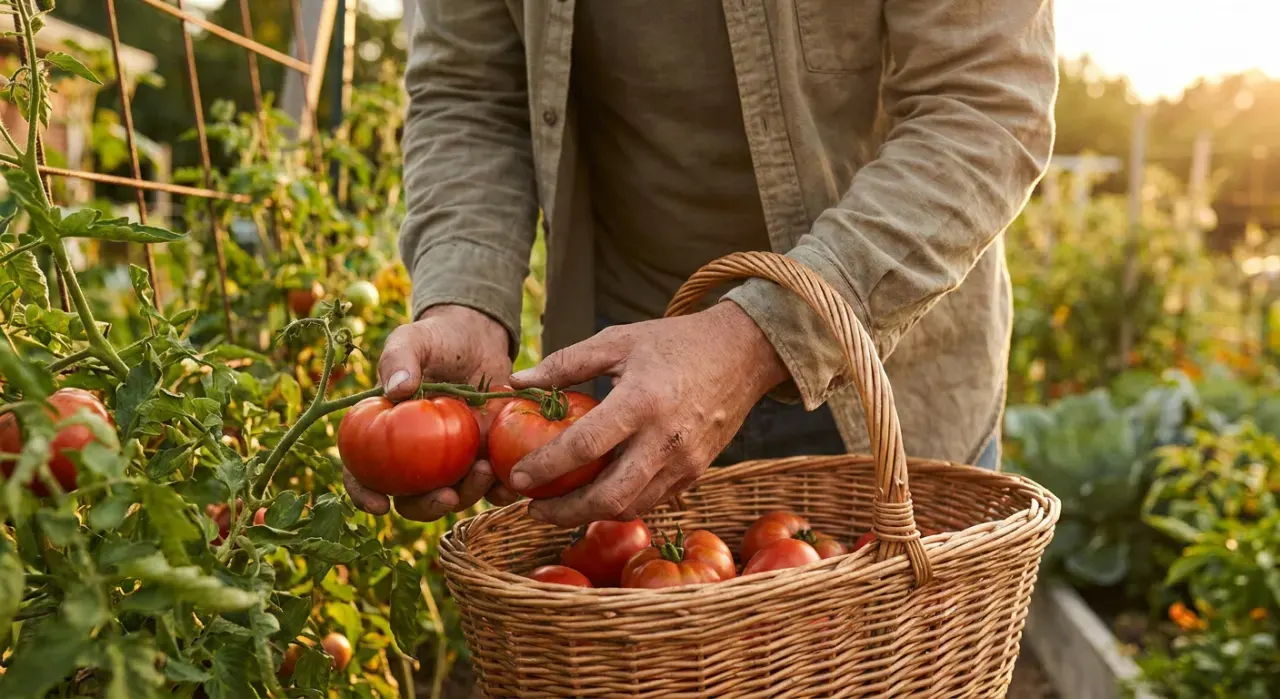
The short answer: the companion plants worth putting next to tomatoes are basil, marigolds, borage, nasturtium, calendula, chives and garlic, and low understory crops like lettuce and spinach that use the shaded ground. Keep potatoes, eggplant, peppers, brassicas, fennel and corn away — the first three share diseases with tomatoes, brassicas compete for the same nutrients, fennel inhibits its neighbors, and corn shares a pest. Space companions 12 to 18 inches from the tomato stem so you do not close up the airflow.
It is also worth saying at the outset that companion planting is a mixture of well-supported science and cheerful folklore, and the two are usually presented together as if they carried equal weight. Below we separate them: what the mechanism actually is, what the evidence supports, and what is simply tradition. The rest of the tomato guidance is at the vegetable growing hub.
The Companion Plants Worth Growing
Basil is the classic, and it earns the place for reasons other than the ones usually given. Its volatile oils interfere with how thrips and whiteflies find host plants by scent, and interplanting trials have shown reduced thrips numbers on neighboring tomatoes. It is shallow-rooted and compact, so it uses ground under a staked tomato that would otherwise sit empty, and it tolerates the partial shade a tall tomato throws. Plant it 12 to 18 inches from the stem. The claim that it improves tomato flavor has no evidence behind it.
Marigolds have the strongest evidence of any companion plant, and also the most misunderstood. French marigold (Tagetes patula) roots release alpha-terthienyl, a thiophene that University of Wisconsin Extension describes as highly toxic to root-knot nematodes and able to stop their eggs hatching; Penn State Extension treats marigolds as a cover crop for nematode reduction rather than a border plant. But the documented effect comes from growing a dense marigold stand across a whole bed for a season as a cover crop — not from a handful of plants around the edge. As a border they still pull in hoverflies and parasitic wasps, which is a real if smaller benefit.
Borage is the pollinator plant. Tomatoes are buzz-pollinated — bumblebees vibrate the flower to release pollen, which is why greenhouse growers buy bumblebee hives — and borage is among the most reliably bee-magnetic plants you can put in a vegetable bed. A bumblebee working borage will work the tomatoes on its way past. It also self-seeds enthusiastically, which is either a feature or a nuisance depending on your temperament.
Nasturtium works by trap cropping, one of the three mechanisms with genuine support. Aphids and flea beetles strongly prefer nasturtium to tomato, so a row of it a few feet away concentrates the infestation somewhere you can deal with it — or simply somewhere you do not care about. Plant it at the bed edge rather than between tomatoes, because it sprawls and will smother the base of a plant if you let it.
Calendula, dill, cilantro and yarrow are insectary plants. Their small open flowers feed the adult hoverflies, lacewings and parasitic wasps whose larvae are voracious aphid and caterpillar predators. This is the mechanism most home gardeners underuse: you are not repelling anything, you are feeding a standing army. Let a few cilantro and dill plants bolt rather than pulling them — the flowers are the point.
Chives, garlic and onions are traditionally credited with repelling aphids, and the evidence is thin but the cost is nothing. They are narrow, shallow-rooted, take up almost no space and compete for very little. Chives in particular make a tidy permanent edging that comes back every year.
Lettuce, spinach, arugula and radishes are the practical companions nobody markets as such. They are shallow-rooted, they mature fast, and they appreciate the partial shade a staked tomato casts by midsummer — which is precisely when they would otherwise bolt in full sun. This is a genuine use of vertical space and it costs the tomatoes nothing.
What to Keep Away From Tomatoes
Potatoes are the important one. Both are nightshades and both host early blight, late blight and verticillium wilt, so growing them adjacent effectively doubles the inoculum and shortens the time before a wet spell turns into an outbreak. Keep them in separate beds and separate rotations, and do not follow tomatoes with potatoes or vice versa.
Eggplant and peppers are the same family and share the same diseases, though less severely than potatoes. In a small garden you will probably grow them anyway — just do not plant them in a continuous run, and rotate the whole nightshade group together on a three to four year cycle.
Brassicas — cabbage, broccoli, cauliflower, kale, Brussels sprouts — are heavy nitrogen feeders that compete directly with tomatoes, and gardeners consistently report both crops doing worse in the same bed. They also want a different soil pH.
Fennel releases root exudates that inhibit the growth of a wide range of neighboring plants, tomatoes included. It is one of the few genuinely antisocial vegetables and belongs in a bed of its own or in a pot.
Corn shares a pest with tomatoes: the corn earworm and the tomato fruitworm are the same insect, Helicoverpa zea. Planting them together concentrates the population and gives it a continuous food supply.
And a site-level one: black walnut. Its roots produce juglone, and University of Wisconsin Extension lists tomato, potato, eggplant and pepper among the plants most sensitive to it, with the strongest effect inside the dripline but damage well past the visible canopy. Tomatoes within the root zone of a mature black walnut wilt and die for no apparent reason. If you have one, grow tomatoes in containers or raised beds with a solid base, well away from it.
How to Lay Out an Interplanted Tomato Bed
The single rule that overrides every companion chart: do not close up the airflow. Tomatoes are lost to fungal disease more often than to anything else in the home garden, and disease pressure is a direct function of how long leaves stay wet. A bed packed edge to edge with companions is a humid, still canopy, and a bed with generous gaps dries out after every rain. If following a companion plan means crowding the plants, ignore the plan.
Practical spacing that works: tomatoes 24 to 36 inches apart depending on whether they are caged or staked — see how far apart should tomato plants be spaced. Basil, parsley and marigolds 12 to 18 inches from the tomato stem, in the gaps between plants rather than in the row. Nasturtium and borage at the bed edge, where they can sprawl without smothering anything. Lettuce and radishes as an understory at 10 to 12 inches, on the shaded side. And keep the bottom 12 inches of every tomato stem completely clear of foliage, both its own and its neighbors', because that gap is what stops rain splashing soil-borne spores up onto the plant.
Two more things matter as much as the plant list. Mulch is the most effective single disease intervention available to a home grower, because it stops the soil splash entirely — see the best mulch for a vegetable garden. And label what you plant: an interplanted bed becomes unreadable by July, and the record of what went where is what lets you make next season better rather than starting over.
What to Buy for a Companion-Planted Tomato Bed
The One to Start With: Genovese Basil
If you only add one companion, make it basil. It has a real, if modest, documented effect on thrips and whitefly host-finding; it occupies otherwise dead ground under a staked tomato; it tolerates the shade a tall plant throws by August; and unlike marigolds or nasturtiums, you eat it. Genovese is the large-leaf culinary type — the one for pesto and for slicing over tomatoes, which is where the whole association came from in the first place.
Consensus Score ████████░░ 8.8 — one of the most consistently well-rated herb seed lines among home gardeners
Sow it after your last frost date directly into the bed, or start it indoors about six weeks earlier — basil is genuinely frost-tender and sulks in cold soil, so there is no advantage in rushing it out. Pinch the growing tip once the plant has four or five leaf pairs and keep pinching flower spikes as they appear; a basil plant that is allowed to flower turns woody and stops producing usable leaf within a few weeks.
The consistent complaint about seed packets in this category, and this one is no exception, is quantity relative to price: these are small home-garden packets rather than bulk seed, and gardeners planting a long row often report needing several. Germination is generally reported as good, and Sow Right's packets carry full sowing and growing instructions on the back, which is more useful to a beginner than it sounds.
Check price on Amazon → (paid link)
The Companion Planting Shortlist

Best for the classic tomato neighbor, and the one you will actually eat
- Non-GMO heirloom Genovese sweet basil, the large-leaf culinary type
- Full planting and growing instructions on the packet
- Direct sow after last frost or start indoors 6 weeks earlier
- Aromatic foliage disrupts thrips and whitefly host-finding
Why buy it: the aromatic oils genuinely confuse pests that locate hosts by smell, and unlike most companion plants you harvest and eat this one all summer.

Best for a border row, and a genuine nematode suppression crop
- Non-GMO heirloom African marigold (Tagetes erecta), tall growing
- Germinates readily and flowers from midsummer through to frost
- Draws hoverflies and parasitic wasps, whose larvae eat aphids and caterpillars
- Note: the documented nematode work is on French marigold (T. patula), not this species
Why buy it: marigolds are the best-studied companion plant there is — as a border they earn their place on predator habitat alone, and they flower until frost.

Best for pulling bumblebees into the bed for better fruit set
- Non-GMO heirloom borage, an annual that self-seeds freely
- Blue star flowers over a very long season
- Among the most attractive plants to bumblebees in a vegetable garden
- Edible flowers and cucumber-flavored young leaves
Why buy it: tomatoes are buzz-pollinated, and a bumblebee working a borage patch next door will work your tomato flowers on the way past.

Best for nasturtium as an aphid trap crop plus calendula for hoverflies
- Seven packets: nasturtium, pansy, lavender, chamomile, calendula, violet and borage
- Nasturtium is the standard aphid trap crop — aphids prefer it to your tomatoes
- Calendula draws hoverflies, whose larvae eat aphids by the hundred
- All non-GMO heirloom, all genuinely edible
Why buy it: covers the two mechanisms that actually work — a trap crop pests prefer, and flowers that feed the predators that eat them.

Best for keeping track of what went where when you interplant
- 100 T-type bamboo labels, roughly 2.4 x 3.9 in.
- Large enough to write a variety name and a sowing date
- Natural bamboo, compostable at end of life
- Push straight into the soil beside each sowing
Why buy it: an interplanted bed is unreadable by July unless you labeled it in May, and that record is what makes next year better than this one.
Quick Comparison
| Product | Best for | Rating | Price | Buy |
|---|---|---|---|---|
| Sow Right Seeds Genovese Sweet Basil Seed for Planting | Best All-Round Companion | — | Check (paid link) | |
| Sow Right Seeds Crackerjack Marigold Seeds for Planting Outdoors | Best Value Pest Deterrent | — | Check (paid link) | |
| Sow Right Seeds Borage Seed to Plant, Non-GMO Heirloom | Best Pollinator Magnet | — | Check (paid link) | |
| Sow Right Seeds Edible Flower Seed Collection, 7 Packets | Best Edible Flower Mix | — | Check (paid link) | |
| ZIQI 100 Pcs Bamboo Plant Labels, T-Type Garden Plant Markers | Best Garden Organizer | — | Check (paid link) |
How We Rank
We do not buy, sow or grow out these seeds. Product placement here comes from aggregating star ratings and review volume across owner reviews, weighting reports from a completed growing season above delivery-day impressions, and reading negative reviews for germination failures, packet quantity and mislabelling. The plant recommendations themselves are separate from the product ratings: they come from university extension guidance — Illinois Extension is candid that much of the popular companion-planting canon is anecdotal rather than tested, and Missouri Extension sets out the pairings that do have support — and the published literature on trap cropping, insectary planting and marigold nematode suppression, and we have tried to say clearly where a claim is supported and where it is tradition. Full method: how we rank.
What Owners Actually Complain About
Packet quantity is the most consistent complaint across every home-garden seed brand, and it is a fair one. These are small packets designed for a household bed, not a market row, and gardeners planting a marigold border along a 20 foot bed routinely report needing three or four packets. Check the seed count before assuming one packet covers a bed.
Germination disappointment is the second theme, and in practice it usually comes down to sowing depth and soil temperature rather than seed quality. Basil and marigold both want warm soil and a very shallow covering — basil in particular needs light to germinate well and fails when buried too deep. Borage is the opposite and wants covering properly.
Self-seeding turning into weeding is the specific complaint about borage and nasturtium, and it is entirely accurate. Both self-sow enthusiastically, and borage in particular will colonize a bed within two seasons if you let the flowers set. Deadheading before seed drop keeps it in bounds.
And the honest one for this whole topic: gardeners report following a companion chart and seeing no difference. That is what you should expect from most specific pairings, because most of them were never tested. The interventions that do reliably help — mulching, spacing for airflow, trap cropping, and feeding predators with flowers — are less charming than a chart but far more effective.
The Verdict
Plant basil in the gaps between tomatoes, marigolds along the border, borage at the bed edge for the bumblebees, and nasturtium a few feet away as an aphid trap. Let some cilantro and dill bolt so the hoverflies have something to eat. Use the shaded ground under staked plants for lettuce and radishes. Keep potatoes, brassicas, fennel and corn in a different bed entirely. And remember that spacing for airflow and a good mulch layer will do more for your tomato crop than any companion plant on this or any other list.
Check price on Amazon → (paid link)
Next: get the spacing right in how far apart should tomato plants be spaced, support the plants with the best tomato cages, feed them using the best organic fertilizer for tomatoes, and see the wider planting plan in the companion planting chart.