 Garden
Affiliate Disclosure
Some links on this page are affiliate links. As an Amazon Associate, we earn from qualifying purchases — at no extra cost to you. We do not buy, test, or physically handle the products we cover; our rankings come from aggregated owner reviews, ratings and expert consensus. Commissions never change our verdicts. How we rank · full disclosure.
The short answer: to prune tomatoes, first identify your type — prune indeterminate (vining) tomatoes by pinching out the suckers that grow between the main stem and leaf branches, keeping the plant to one or two main stems; do not heavily prune determinate (bush) tomatoes, which set all their fruit at once. For every tomato, remove the lowest 6 to 12 inches of leaves to prevent soilborne disease, and top the plant about 4 weeks before your first fall frost to ripen the remaining fruit. Prune on a dry morning with clean hands or sanitized snips.
Pruning tomatoes sounds fussy but comes down to a few simple moves that improve airflow, reduce disease, and channel energy into fruit rather than endless foliage. The one rule you must not get wrong is determinate versus indeterminate — prune a bush tomato the way you would a vining one and you will cut your own harvest. This guide walks through both, step by step.
First, know your tomato type
All pruning decisions flow from this distinction:
| Indeterminate (vining) | Determinate (bush) | |
|---|---|---|
| Growth | Grows and fruits all season, 6+ ft | Grows to a set size, then stops |
| Fruiting | Continuous over months | All at once over 2–3 weeks |
| Prune suckers? | Yes — keeps it manageable, boosts fruit size | No — removes fruiting stems, cuts yield |
| Examples | Sungold, Brandywine, Big Beef, most cherries | Roma, Celebrity, Patio, most paste types |
Check the seed packet or plant tag. "Indeterminate," "vining," or "cordon" means prune. "Determinate," "bush," or "compact" means leave the suckers alone. If in doubt, do only the universal steps below (lower-leaf removal) and skip sucker pruning.
Identify and remove suckers
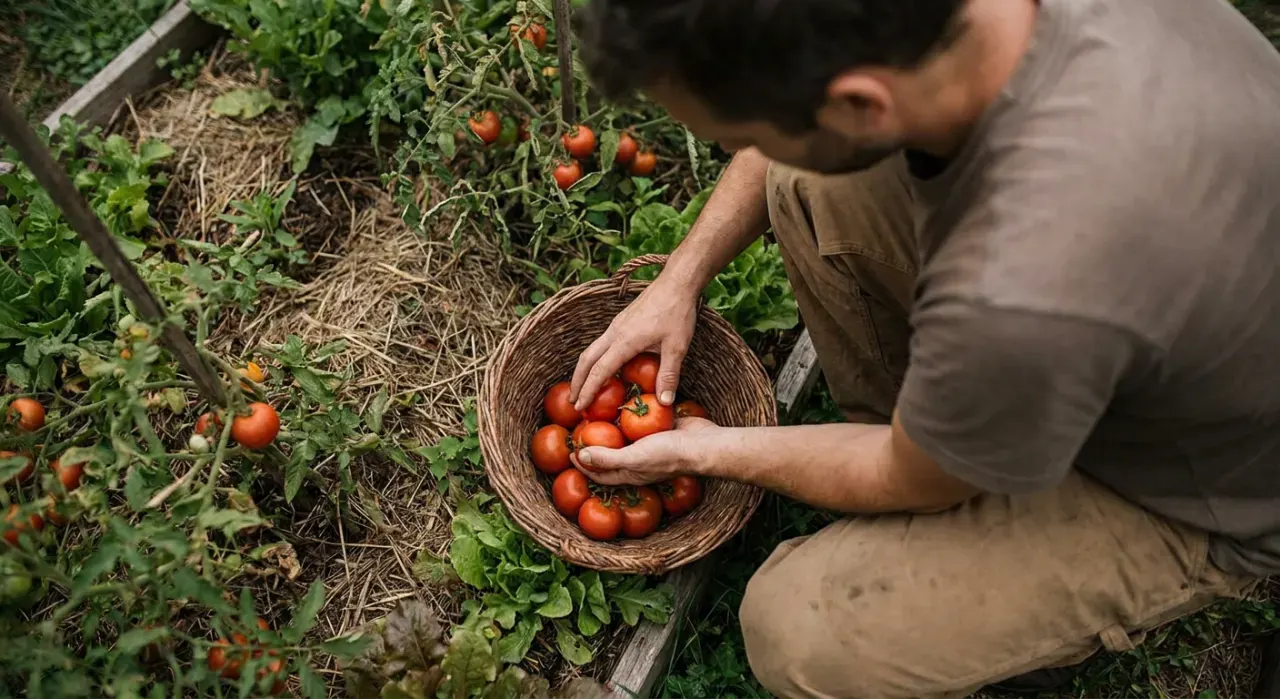
A sucker is a new shoot that grows out of the 45-degree angle where a leaf branch meets the main stem. Left alone, each sucker becomes a full stem with its own leaves, flowers, and more suckers. On an indeterminate plant, removing most suckers keeps it to one or two main stems: more open, better airflow, and energy focused into fewer, larger fruit.
- Find the crotch between the main stem and a leaf branch, and look for the small shoot growing from it.
- Pinch it out young, when it is 2 to 4 inches long, by bending it side to side with your fingers until it snaps. Small wounds heal fast.
- For larger suckers, use clean, sharp snips to avoid tearing the stem.
- Do this weekly during active growth so suckers never get big.
You need not remove every sucker — leaving a few gives more total fruit at the cost of some size, and many gardeners keep the strongest sucker just below the first flower cluster as a second main stem. Never remove flower clusters, which is where the fruit comes from.
Remove the lower leaves (do this on every type)
This is the highest-value pruning step and it applies to all tomatoes, determinate and indeterminate alike. Once the plant is established and about 18 inches tall, strip the leaves off the bottom 6 to 12 inches of the stem.
Those lowest leaves sit near the soil, where rain and irrigation splash up soilborne fungal spores that cause early blight and septoria leaf spot — the diseases behind most "why are my tomato leaves turning yellow and spotty" problems. Removing them creates a clear zone of air at the base and cuts disease dramatically. Keep the base clear as the plant grows, and remove any leaf that yellows or develops spots. For related leaf troubles see why are my tomato leaves curling.
Topping at season's end
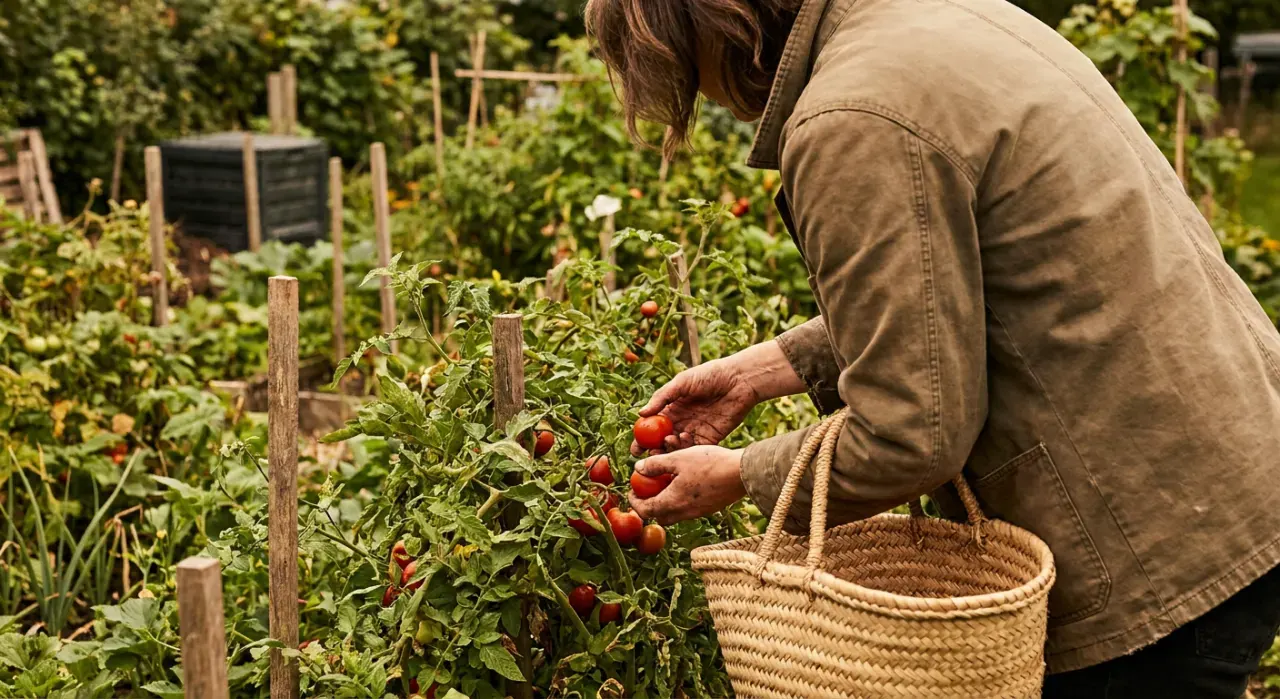
About 4 weeks before your first expected fall frost, "top" indeterminate plants by cutting off the growing tip of each main stem. Late in the season, any new flowers will not have time to ripen fruit before frost, so topping stops the plant chasing new growth and forces its remaining energy into finishing the tomatoes already on the vine. This noticeably speeds up ripening of the final crop. Determinate plants top themselves naturally and do not need this.
How to prune tomatoes cleanly
Tomato diseases spread easily on hands and tools, so technique matters:
- Prune on a dry morning. Wounds seal faster in dry conditions, and dry foliage spreads less disease.
- Sanitize tools with rubbing alcohol or a bleach solution between plants, especially if any plant shows disease.
- Pinch small, cut large. Fingers work for young suckers; use sharp, clean snips for anything woody.
- Do not overdo it. Leaves feed the plant and shade the fruit — strip too many and you get sunscald (pale, blistered patches on fruit) and a weaker plant.
Single-stem vs multi-stem pruning
For indeterminate tomatoes there are two legitimate approaches, and it is worth choosing deliberately rather than pruning at random.
| Single stem | Two to three stems | |
|---|---|---|
| Method | Remove every sucker | Keep 1–2 strong suckers as extra stems |
| Fruit | Fewer, larger, earlier | More fruit, slightly smaller |
| Airflow | Best — very open plant | Good, if well spaced |
| Best for | Staking, tight spacing, humid climates, earliest harvest | Caging, more total yield, drier climates |
Single-stem pruning suits gardeners who stake tightly and want big, early fruit and maximum disease resistance in humid regions. The two-to-three-stem method keeps the strongest sucker just below the first flower cluster as a second leader, trading a little fruit size for a bigger overall harvest. Both work; consistency matters more than which you pick.
Pruning tomatoes to fight disease
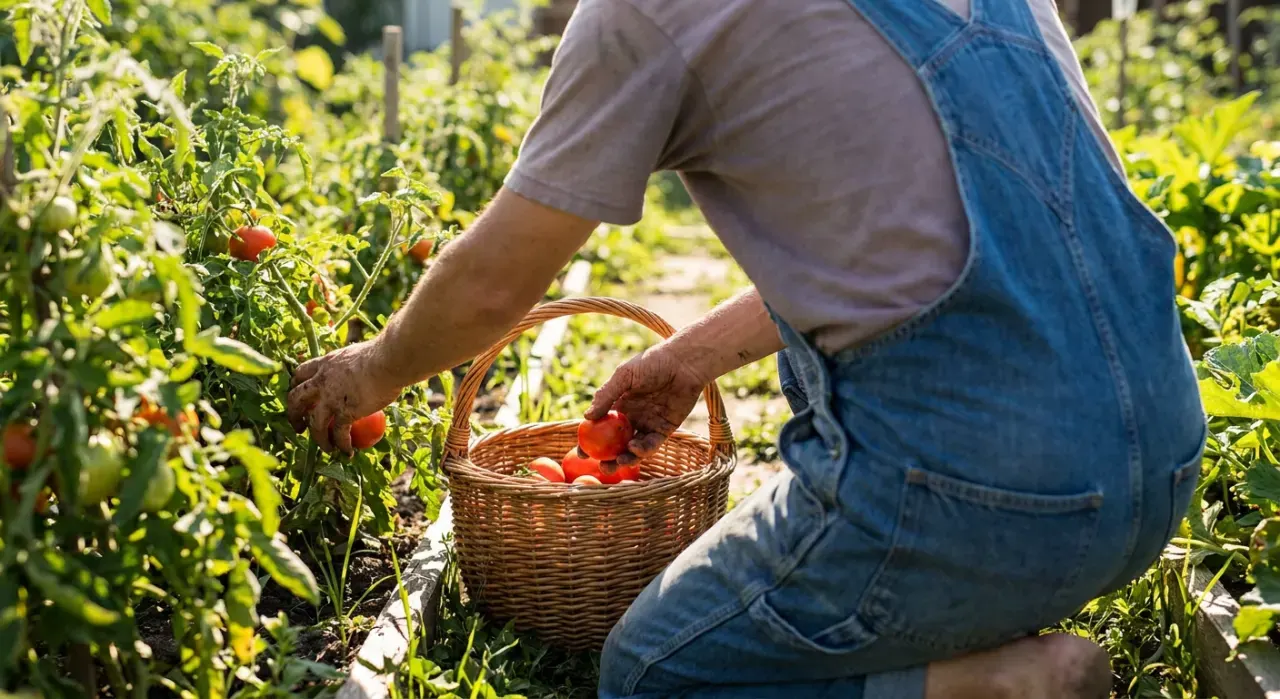
Beyond the routine lower-leaf removal, targeted pruning is one of your best tools against the fungal diseases that plague tomatoes. When you spot the first signs — the concentric brown rings of early blight, the small tan spots of septoria, or any yellowing lower foliage — remove those leaves promptly and completely, cutting back to the main stem. This slows the spread up the plant and buys weeks of productive life.
- Work from the bottom up, since soilborne diseases start low and move upward.
- Never compost diseased foliage — bag it and dispose of it, as spores survive composting.
- Sanitize snips between plants so you do not carry infection from one to the next.
- Keep the base open — a clear, airy lower stem dries fast after rain, and dry foliage resists fungal infection.
Combined with base watering (never overhead) and good spacing, disciplined disease pruning can be the difference between plants that fade by August and plants that produce until frost. Related leaf problems are covered in why are my tomato leaves curling.
Common tomato pruning mistakes
| Mistake | Result | Fix |
|---|---|---|
| Pruning a determinate variety | Removes fruiting stems, cuts yield | Only remove lower/diseased leaves on bush types |
| Over-pruning foliage | Sunscald on exposed fruit; weaker plant | Leave enough leaves to shade fruit |
| Removing flower clusters | Fewer tomatoes | Learn to tell a sucker from a flower stem |
| Pruning wet plants with dirty tools | Spreads blight between plants | Prune dry; sanitize between plants |
| Letting suckers get huge | Big wounds, wasted plant energy | Pinch suckers at 2–4 in |
Pruning works with support and spacing
Pruning and staking go together — a pruned single-stem plant is easy to tie up and keep off the ground, which is the whole point. Set your support at planting and space plants for airflow: crowded, unpruned indeterminate tomatoes are a disease magnet. See how far apart tomato plants should be spaced and the best tomato cages roundup for support that keeps a pruned plant upright and airy.
Pruning is one piece of a healthy tomato season alongside timing, feeding, and watering. See when to plant tomatoes and browse the full seeds and vegetable growing hub. Our product picks come from aggregated owner reviews and expert consensus, never first-hand testing — see how we rank.