 Garden


Affiliate Disclosure
Some links on this page are affiliate links. As an Amazon Associate, we earn from qualifying purchases — at no extra cost to you. We do not buy, test, or physically handle the products we cover; our rankings come from aggregated owner reviews, ratings and expert consensus. Commissions never change our verdicts. How we rank · full disclosure.
The short answer: a hose that leaks where it screws onto the spigot is almost always caused by a worn or missing rubber washer inside the hose coupling, a cross-threaded or loose connection, or damaged threads on the hose or faucet. The rubber washer is the culprit in most cases — it flattens, hardens or cracks with age and stops sealing. The good news is that the fix is usually a few-cent part and takes two minutes: replace the washer, make sure the threads are clean and straight, and hand-tighten firmly.
Overtightening is not the answer and often makes it worse. We do not test hoses on a bench; our hose and fitting rankings come from aggregated owner reviews and expert consensus, described in how we rank. The full picture is at the watering and irrigation hub.
What causes a spigot-connection leak?
Work through the causes in order of likelihood; each has a distinct fix.
| Cause | Sign | Fix |
|---|---|---|
| Worn/missing washer | Leak at the joint even when tight | Replace the rubber washer |
| Cross-threaded | Coupling went on crooked or hard | Unscrew, realign, hand-tighten straight |
| Loose connection | Drips that stop when you snug it | Hand-tighten firmly |
| Damaged threads | Leak persists with new washer | Add thread-seal tape; replace coupling |
| Dented metal coupling | Coupling out of round, won’t seat | Replace the hose end / coupling |
| Faulty spigot | Leak from faucet body, not the joint | Replace faucet washer/valve or spigot |

How do you replace the hose washer?
This single fix solves most leaks and costs almost nothing.
- Unscrew the hose from the spigot and look inside the female coupling at the hose end.
- Pry out the old washer with a small flat screwdriver or your fingernail — it is often flattened, hardened, cracked, or gone.
- Press a new washer of the correct size firmly into the coupling so it sits flat.
- Reconnect and hand-tighten; snug is enough — you should not need pliers.
Keep a small pack of spare washers on hand, since they are the wear part that fails most often. Some washers include a raised O-ring lip for an even better seal, which is worth choosing if leaks recur.
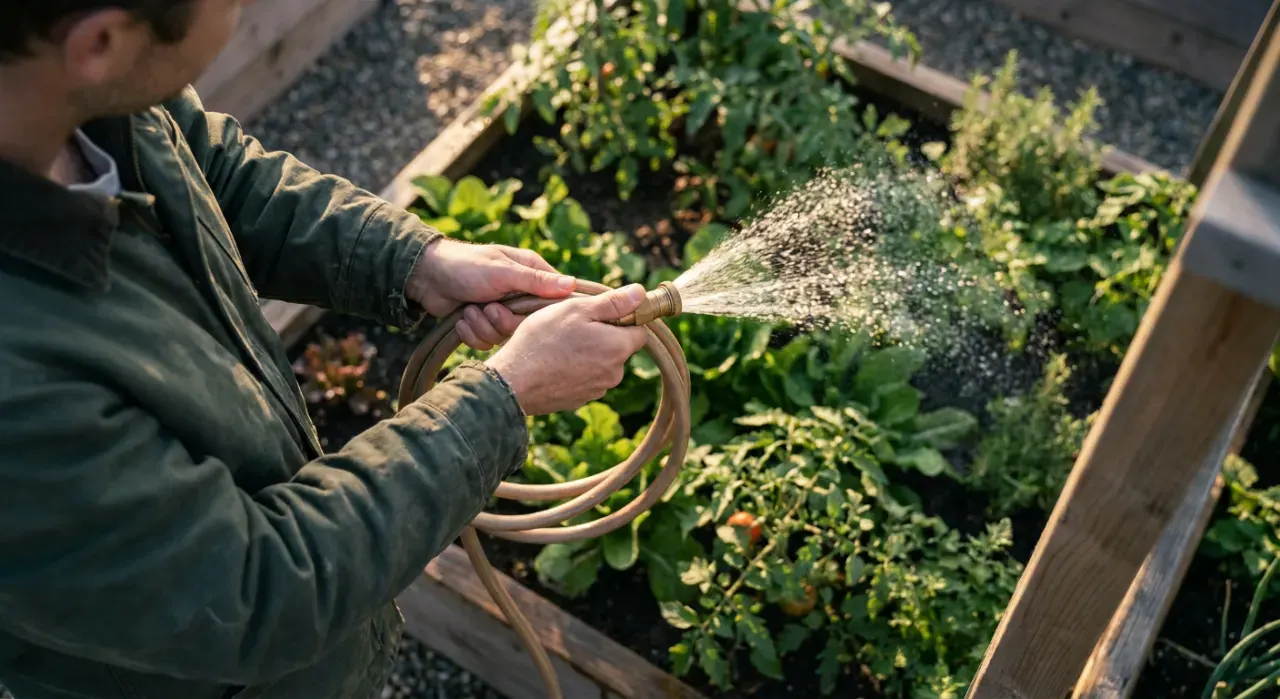
What if a new washer doesn't fix it?
If the leak survives a fresh washer, the problem is in the threads or the metal. First confirm the connection is not cross-threaded: unscrew fully, set the coupling on straight, and turn it by hand — it should thread easily with no grinding. If the faucet's external threads are worn or the leak weeps from the threads themselves, wrap the spigot threads two or three times with PTFE thread-seal tape before reconnecting. A metal hose coupling that has been dented or crushed will not seat flat no matter what; those hose ends can be cut off and replaced with an inexpensive brass repair coupling. Choosing a hose with sturdy brass couplings from the start avoids the crushed-fitting problem, as covered in best garden hoses.
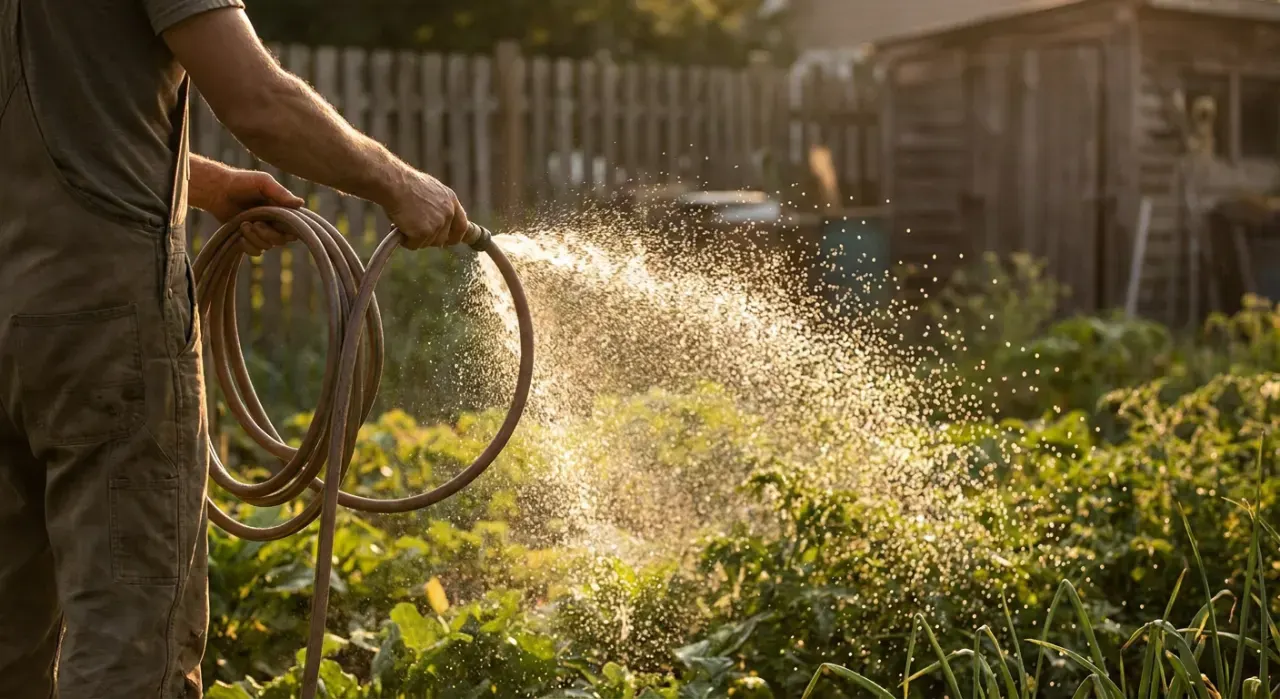
How do you prevent it recurring?
- Do not overtighten. Hand-tight is enough; cranking it down deforms the washer and damages threads.
- Replace washers yearly or whenever you see one flattened or cracked.
- Disconnect hoses before freezing weather. A hose left connected and full can freeze, expand and crack the spigot or the pipe behind it — part of winterizing an irrigation system.
- Store hoses drained and coiled, out of harsh sun, so couplings and washers last longer.
- Choose brass fittings over thin stamped metal, which dents and cross-threads easily.
Nine times out of ten it is the washer, and the fix costs pennies and two minutes. Related questions: how to winterize an irrigation system, do soaker hoses need a regulator?, and hose picks in best garden hoses.