 Garden
Affiliate Disclosure
Some links on this page are affiliate links. As an Amazon Associate, we earn from qualifying purchases — at no extra cost to you. We do not buy, test, or physically handle the products we cover; our rankings come from aggregated owner reviews, ratings and expert consensus. Commissions never change our verdicts. How we rank · full disclosure.
The short answer: buy Coway. It is the only brand here with no weak side — sealed housings that stop air bypassing the filter, replacement media that stays cheap and in stock for years, and the longest tail of owner reports written well after the warranty ran out. Buy Levoit instead if you want a purifier in every bedroom, and Winix if you want the lowest five-year running cost.
This page answers which brand. It does not answer which model. Every entry below names one representative machine to anchor the brand and nothing more — for the model-by-model ranking, go to best air purifier, which is where the actual buying decision gets made. Then narrow by job with best air purifier for a bedroom, best air purifier for dust or best air purifier for wildfire smoke.
Why Brand Is a Different Question From Model
True HEPA is a defined standard — 99.97 percent capture at 0.3 microns — so once a brand uses genuine HEPA media, the filtration itself stops being a meaningful point of difference. Which means choosing a brand is not choosing filtration performance. It is choosing six other things, and these are the axes this page ranks on:
- Consumable cost over five years. Filters routinely cost more than the machine. This is the biggest number in the whole decision and the one buyers check last.
- Filter availability years later. A discontinued proprietary filter turns a working machine into landfill. Large installed bases and third-party media are the insurance.
- Warranty terms as published, including the conditions attached to them.
- Breadth of range. Does the brand cover $60 through $400, or does it sell one price point?
- Support reputation as owners describe it — whether a company answers, and whether it sends parts.
- Ownership and country of manufacture, because a brand that changes hands often changes what a filter costs and how long it stays listed.
The Brands at a Glance
Our #1 Brand: Coway
Coway is a Korean company that has made air and water treatment equipment since 1989, and it wins here on unglamorous consistency rather than on any single headline number.
What it does better than the others. Sealing. A purifier is a fan pulling air through media, and if the body leaks, a share of the air takes the easy route around the filter and comes out unfiltered. A superb filter in a leaky enclosure performs like a mediocre one. Coway bodies are tight, and behind that seal the stack is genuinely multi-stage with a washable mesh pre-filter as the outermost layer — which is also a consumable decision, because the coarse load gets rinsed off rather than bought.
The commercial side is just as sensible. Coway media stays listed for years after a model launches, sells at a mid-market price rather than a captive one, and has a third-party alternative if you want it. That combination is what actually determines whether a household changes filters on time, which in turn determines whether the machine still works in year three.
Consensus Score ██████████░ 9.2 — the longest and most stable owner consensus of any purifier brand in the American market.
Where it is weak. The range is genuinely narrow — three or four machines against Levoit’s dozens — so if your room does not match one of them, Coway has no answer. Prices sit above the budget brands for comparable coverage. Top fan speed is loud. Indicator lights on some units cannot be fully dimmed, which is a real irritation in a bedroom. And warranty terms differ across the range, so the model page is the only place to check them.
Check price on Amazon → (paid link)
The Brands, Ranked

Best for the buyer who wants one brand that gets sealing, filter price and longevity right at once
- Korean manufacturer, in air and water treatment since 1989
- Washable pre-filter cuts the consumable bill
- Filters stocked by Coway and third parties years after launch
- Narrow range — three or four models rather than twenty
Why buy it: Coway is the brand with the fewest weak spots: sealed bodies, sanely priced filters that stay in stock, and an owner record measured in years rather than months.

Best for covering a whole house room by room without the filter bill getting out of hand
- The broadest range here — roughly $60 to $400
- Cheapest widely stocked replacement filters in the category
- AHAM Verifide figures on the larger models
- Two-year cover advertised on most purifiers
Why buy it: Levoit is the brand that made per-room filtration affordable, and its consumables are the cheapest and easiest to find of any name on this page.
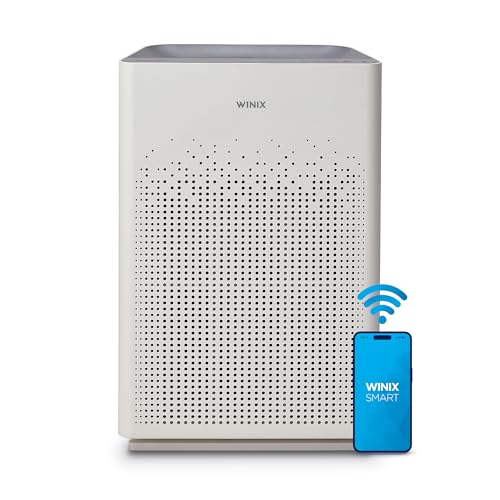
Best for dusty, smoky or pet-heavy homes where the consumable cost decides the five-year total
- Washable mesh pre-filter and washable carbon on most models
- Korean manufacturer, in air treatment since 1973
- Filter sets sold by Winix and by third parties
- Ionizer stage that can be switched off
Why buy it: Winix puts two washable stages in front of the HEPA element, which is the single cheapest way a brand can lower what you spend over five years.

Best for a first purifier at the lowest sensible price, backed by a longer published warranty than the price suggests
- One of the longest published limited warranties in the budget tier
- Very large owner-review base across many years
- Filter B sets are cheap and stocked everywhere
- UV-C bulb is a second consumable on UV models
Why buy it: GermGuardian pairs the cheapest true-HEPA entry point with a longer published warranty than most rivals at twice the money.
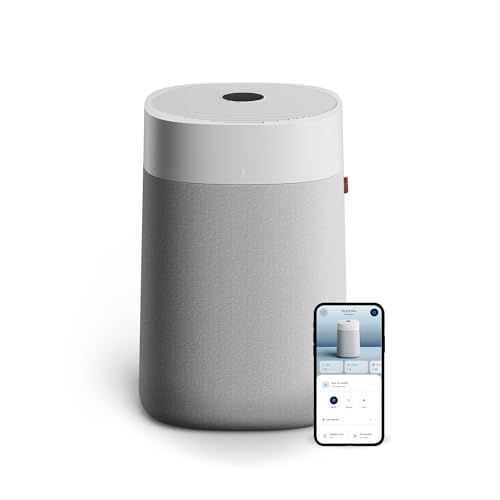
Best for an open-plan room where the machine has to run all day without anyone noticing it
- Swedish brand, owned by Unilever since 2016
- Best airflow-per-decibel figures in the category
- Washable fabric pre-filter
- Proprietary filters at the expensive end
Why buy it: Blueair engineered around noise rather than accepting it, which is why its machines get left switched on instead of quietly turned off.

Best for wildfire smoke, renovation dust or a household where filtration grade is the whole point
- H13 media rated tighter than standard HEPA
- Gasketed housings that limit air bypassing the filter
- US-based company, machines built overseas
- Warranty extension is tied to buying filters from Medify
Why buy it: Medify competes on the two things most brands quietly compromise — media grade and how well the housing seals around it.

Best for buyers who want an American company with a phone number behind the product
- Family-owned American company, trading since 1876
- Established US service and spare-parts operation
- Multi-year limited warranty advertised on air purifiers
- Proprietary filters with a thin third-party market
Why buy it: Bissell brings a real US service organization to a category full of brands that exist only as an Amazon storefront.
Quick Comparison
| Product | Best for | Rating | Price | Buy |
|---|---|---|---|---|
| COWAY Air Purifier for Home with HEPA Filter and Air Quality Monitor | Best Brand Overall — Coway | — | Check (paid link) | |
| LEVOIT Smart Air Purifier for Home Large Room Vital 200S-P with Air Quality Monitor | Best Value Brand — Levoit | — | Check (paid link) | |
| WINIX AM90 Air Purifier for Home Large Room with True HEPA and Washable Carbon Filter | Best Filter Economics Brand — Winix | — | Check (paid link) | |
| GermGuardian HEPA Air Purifier for Large Room Bedroom and Office | Best Long-Warranty Brand — GermGuardian | — | Check (paid link) | |
| BLUEAIR Blue Pure 211i Max Smart Air Purifier for Large Rooms | Best Premium Brand — Blueair | — | Check (paid link) | |
| Medify MA-40 Air Purifier with H13 HEPA Filter for Smoke and Wildfires | Best Filtration-Grade Brand — Medify | — | Check (paid link) | |
| Bissell air320 Smart Air Purifier with HEPA and Carbon Filters for Large Room | Best Support Reputation Brand — Bissell | — | Check (paid link) |
The Number That Decides It: Five Years of Filters
Every brand on this page sells a machine for somewhere between $90 and $400. Every brand also sells you filters for as long as you own it, and across five years that second number is usually the larger one. It is the clearest brand-level difference in the category and the one the marketing never leads with.
| Brand | Consumable position | Washable stages | Third-party media | Extra consumables |
|---|---|---|---|---|
| Levoit | Cheapest in the category | Pre-filter on most models | Widely available | None |
| Winix | Low, and stretched by washables | Mesh pre-filter and carbon | Widely available | None |
| GermGuardian | Low, very widely stocked | Pre-filter on most models | Widely available | UV-C bulb on UV models |
| Coway | Mid, predictable, stays listed | Washable pre-filter | Available | None |
| Medify | High, proprietary | Pre-filter only | Thin | None |
| Blueair | High, proprietary | Washable fabric pre-filter | Thin | None |
| Bissell | High, proprietary | Pre-filter only | Thin | None |
Two things follow from that table. First, a washable stage is worth more than it looks: it is the part of the filtration that never appears on an invoice again. Second, a thin third-party market is a risk rather than a cost — it is fine while the brand keeps the model listed and expensive the moment it stops. Electricity is the smaller half of the bill — ENERGY STAR puts a certified room air cleaner at roughly $18 to $40 a year depending on size. Running costs are broken down further in air purifier running costs and how often to change a HEPA filter.
Warranty, Support and Ownership
| Brand | Origin and ownership | Published warranty position | Support model | Range breadth |
|---|---|---|---|---|
| Coway | Korean manufacturer, founded 1989 | Multi-year on US machines, varies by model | US distributor and manufacturer support | Narrow |
| Levoit | Air-treatment brand of Vesync | Two years advertised on most purifiers | Direct, app-linked, generally responsive | Widest here |
| Winix | Korean, in air treatment since 1973 | Standard limited cover, varies by model | Manufacturer support with US presence | Moderate |
| GermGuardian | Sold by Guardian Technologies | Among the longest published in the budget tier | Direct brand support | Moderate, budget-weighted |
| Blueair | Swedish, Unilever-owned since 2016 | Extendable on registration | Corporate support organization | Moderate, premium-weighted |
| Medify | US company, overseas manufacturing | Extension conditional on buying its filters | Direct brand support | Narrow |
| Bissell | American, family-owned since 1876 | Multi-year advertised on air purifiers | Established US service organization | Narrow in purifiers, wide elsewhere |
Warranty terms and ownership both change. Everything above was accurate to published company material at the time of writing, and the specific listing is always the authority. The pattern worth keeping is structural rather than numerical: the two brands with the longest published cover here are also the two with the most conventional corporate structures behind them, and the brand with the most conditional warranty is the youngest.
How We Rank Brands
We do not buy, test or physically handle air purifiers. On a brand page we weight different evidence from a product roundup. Star ratings are read across a brand’s whole range rather than at its flagship, because a company with one excellent machine and five poor ones is not a safe brand. Published filter prices and replacement intervals are checked directly, along with whether third-party media exists. Warranty documents are read for their conditions, not just their headline term. Long-tail owner reports — the ones written two and three years in — carry more weight than launch-window reviews, because they are the only visible signal of durability. And we check whether a brand submits machines to AHAM for independent CADR verification, since a verified figure can be compared and a marketing coverage claim cannot. Prices were current at the time of writing. Full method on how we rank.
The Brands, Assessed
1. Coway — Best Brand Overall
Covered above. Who it is for: the household buying one machine and wanting no regrets. What it does better: housing sealing, filter economics that stay sane, and a durability record with a genuinely long tail. Where it is weak: a narrow range that simply has no answer for some rooms, prices above the budget field, a loud top speed, indicator lights that will not fully dim, and warranty terms that vary model to model.
2. Levoit — Best Value Brand
Who it is for: anyone filtering more than one room. Levoit changed the economics of this category: before it, a true-HEPA purifier was a single-appliance purchase for the main living area, and per-room filtration behind a closed bedroom door — which is where it helps most — was unaffordable. It also has the broadest range on this page by a distance, roughly $60 to $400, so there is a Levoit for almost any room.
Consumables: the strongest position in the category. Its media is the cheapest widely stocked, sold both by the brand and by third parties, and it stays listed. What it does better: price, range breadth, near-silence in sleep mode, displays that switch fully off, and AHAM Verifide figures on the larger models — which the budget field almost never publishes. Where it is weak: the cheapest models have no particle sensor, so their auto modes are largely decorative; carbon layers on those models are thin and do little for odor; app pairing draws a steady stream of complaints; and the larger bodies are bulky. Unbeatable value, and the wrong brand if odor is your actual problem.
3. Winix — Best Filter Economics Brand
Who it is for: dusty, smoky or pet-heavy homes, where the cost of running the machine matters more than the cost of buying it. Winix has been in air treatment since 1973 and competes on what sits in front of the HEPA element, which is the right place to compete. Most of its machines carry a washable mesh pre-filter and an unusually large washable activated-carbon filter, so the coarse load and much of the odor load are handled by parts you rinse rather than parts you buy.
Consumables: second cheapest on sticker price and arguably cheapest in practice, because the washable stages stretch the interval on the media you do pay for. Third-party sets are easy to find. What it does better: real odor reduction, a responsive sensor and auto mode, strong airflow per dollar, and the lowest genuine five-year running cost here. Where it is weak: the ionizer stage divides opinion, and a minority of owners associate it with a faint smell even though it switches off; the sensor sometimes reads humidity as pollution; it is loud at maximum; and the range is narrower than Levoit’s with less presence at the very cheap end.
4. GermGuardian — Best Long-Warranty Brand
Who it is for: a first purifier, a dorm room, or a house being covered on a tight budget. GermGuardian’s tower purifiers have one of the largest and longest-running owner-review bases in the category, its Filter B sets are cheap and stocked in general retail rather than only online, and its published limited warranty is longer than most rivals charging twice as much.
Consumables: cheap and everywhere — but note the second consumable. Models with a UV-C stage need the bulb replaced periodically as well as the filter, which roughly doubles the maintenance schedule and is not obvious at purchase. What it does better: price, retail availability, published warranty length, and an enormous review base to judge it by. Where it is weak: no particle sensor and no genuine auto mode on most models; carbon is a thin dusted layer rather than a granular filter, so odor performance is limited; housings are lighter and less well sealed than Coway’s; and the UV-C stage is a marketing point whose real-world contribution at these airflow rates is modest.
5. Blueair — Best Premium Brand
Who it is for: a living room or open-plan space where a machine that is too loud simply gets switched off. Blueair is Swedish, has been owned by Unilever since 2016, and is the only major brand to have engineered specifically around noise. Its HEPASilent approach charges particles lightly so they can be caught by a less restrictive filter, letting the fan move a lot of air slowly. The practical result is the best clean-air-per-decibel figures in the market.
Consumables: among the most expensive here. Media is proprietary with a thin third-party market, and that is the ongoing cost of ownership rather than a one-off. What it does better: genuinely quiet operation at useful output, design that does not read as an appliance, effective auto modes, and washable fabric pre-filters. Where it is weak: high purchase price, expensive captive filters, a narrow range concentrated at the top end, and an electrostatic stage some buyers dislike on principle — Blueair states its units meet CARB ozone limits and that the final stage remains mechanical. Worth the premium only when noise is the deciding factor.
6. Medify — Best Filtration-Grade Brand
Who it is for: wildfire smoke, renovation dust, or a severe allergy case where filtration grade is genuinely the point. Medify is a younger US-based company whose machines are built overseas, and it competes on two specifications most manufacturers quietly compromise: media grade and sealing. Its filters use H13 media, a tighter grade than standard HEPA, in a gasketed housing that limits bypass.
Consumables: expensive and proprietary, and this is where the warranty needs reading. Medify advertises an extended warranty that is conditional on buying replacement filters from the company — a legitimate arrangement, but one that ties the headline warranty number to a recurring purchase. Price the filters before you value the warranty. What it does better: rapid knockdown on high, tight sealing, solid build, and clear results during smoke or dust events. Where it is weak: filter cost well above Levoit and Winix, a thin aftermarket, a touch panel that is easy to nudge, a large footprint, a shorter company track record than the Korean and Swedish names here, and a carbon stage smaller than Winix’s. A specialist rather than a generalist.
7. Bissell — Best Support Reputation Brand
Who it is for: buyers who want an American company with a real service organization behind the product rather than a brand that exists only as a marketplace storefront. Bissell has been family-owned since 1876, is best known for floor care, and brings that established US parts-and-service operation to its air purifiers along with a multi-year advertised warranty.
Consumables: proprietary and at the expensive end, with a thin third-party market — the standard trade-off for a smaller purifier range. What it does better: support you can actually reach, a company with a long-term reputation to protect, quiet running, and sensible auto modes. Where it is weak: a very narrow purifier lineup, high filter prices, a much smaller review base than the specialists so the durability picture is thinner, and pricing that sits against Blueair without Blueair’s noise engineering. Buy it for the support model, not for the specification sheet.
The brands just outside this list
Honeywell deserves a mention and does not get a slot here, because it is a model-level recommendation rather than a brand-level one. Its large purifiers deliver more CADR per dollar than almost anything else, but the brand’s consumable position is the worst in the category — its biggest machines take three HEPA filters at once — and it has largely stopped competing on features. If raw airflow in a large room is the requirement, go straight to the model ranking at best air purifier. Beyond that, treat any brand that will not publish a CADR figure, or that advertises HEPA-type or HEPA-like media, as failing the first filter — the terminology traps are explained in true HEPA vs HEPA-type.
What Owners Complain About, Whatever the Badge
Read the critical reviews across all seven brands and five themes repeat regardless of name. Filter cost leads and generates more anger than anything else, particularly where the media is proprietary — which is precisely why it is the top-weighted axis on this page. Noise on high is universal; every purifier here is loud at maximum, which is why sizing up and running on medium is standing advice. Undersizing is third and is almost always a buyer decision driven by a marketing coverage claim rather than a verified CADR figure. Indicator lights that cannot be extinguished are a bedroom-specific grievance. And expectation drift — owners who hoped a purifier would fix a musty smell that was actually a moisture problem, or symptoms caused by allergen embedded in a mattress rather than floating in the air. Air purifier electricity use settles the other recurring question.
How to Choose Between These Brands
One machine, no regrets? Coway. Every bedroom on a real budget? Levoit. Lowest five-year running cost in a dusty or smoky house? Winix. Cheapest sensible entry with a long published warranty? GermGuardian, accepting the UV bulb as a second consumable. Noise decides it? Blueair. Wildfire smoke or renovation dust? Medify. Want a US company you can telephone? Bissell.
Whichever brand you land on, do two things before you pay: size the machine on a verified CADR figure rather than a coverage claim — the EPA puts it simply, the higher the CADR the larger the area a cleaner can serve — and price a full year of filters. Then pick the actual model at best air purifier. Everything else lives in the air quality hub. Nothing on this page is medical advice.
The Verdict
Coway is the air purifier brand we would tell a friend to buy: properly sealed housings, filter prices that stay reasonable and stay listed, and a reliability record long enough to trust. Buy Levoit for per-room coverage and the cheapest consumables, Winix for the lowest running cost, GermGuardian for the cheapest entry with a long published warranty, Blueair for silence, Medify for smoke, and Bissell for support you can reach. Then choose the model in best air purifier. Check the current Coway price on Amazon → (paid link)