 Garden
Affiliate Disclosure
Some links on this page are affiliate links. As an Amazon Associate, we earn from qualifying purchases — at no extra cost to you. We do not buy, test, or physically handle the products we cover; our rankings come from aggregated owner reviews, ratings and expert consensus. Commissions never change our verdicts. How we rank · full disclosure.
The short version: the best air purifier for dust is the Winix 5500-2. Household dust is the easiest thing a HEPA filter has to catch — the particles are large and the capture rate is close to total. So the machine that wins this category is not the one with the fanciest media; it is the one whose pre-filter takes the coarse load and can be rinsed rather than replaced. The Winix has the best pre-filter arrangement per dollar, which is why it stays effective in a dusty house instead of choking within two months. For a large open floor, the Honeywell HPA300 or the LEVOIT Core 600S-P have the airflow.
This page is the dust-specific cut of our main best air purifier ranking. If the reason for buying is seasonal pollen or dust-mite allergen rather than visible dust, best air purifier for allergies weights filter sealing and grade differently. If the machine is going in a bedroom, best air purifier for a bedroom ranks on noise and light instead.
Top Picks at a Glance
Our #1 Pick: Winix 5500-2
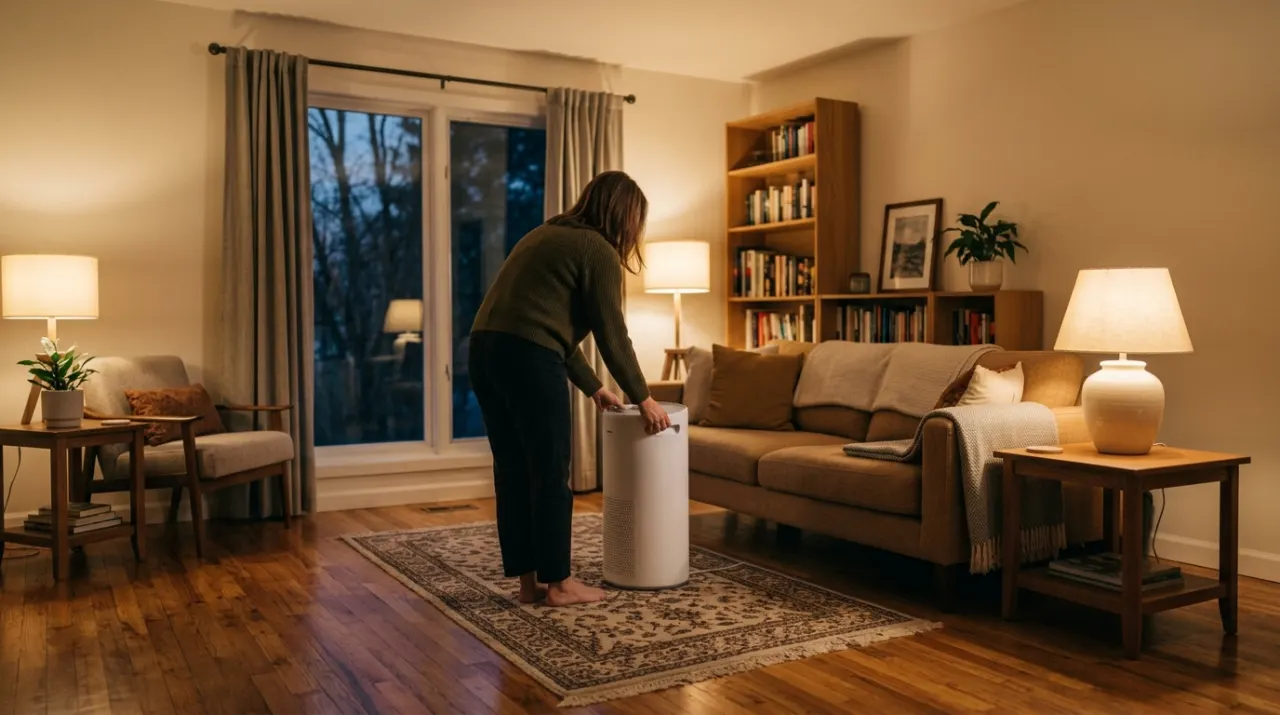
The 5500-2 wins the dust category on the least glamorous part of the machine. In front of its true HEPA element sits a washable mesh pre-filter and an unusually large washable activated-carbon filter. In a dusty house that arrangement is decisive: hair, lint, carpet fibers and the coarse fraction of household dust are caught in stages you can rinse under a tap, so the HEPA element behind them keeps working for its full rated life instead of loading up in six weeks.
Behind that, the specification is straightforward and well-proven. A real particle sensor drives auto mode with a colored air-quality light, so the fan ramps when someone walks across a rug or makes a bed — the two events that produce most of the airborne dust in a home. The PlasmaWave ionizer can be switched off, and we would suggest doing so.
Airflow is respectable for the price, with coverage that suits a normal living room or a large bedroom. Replacement filters are widely stocked and modestly priced, which is what allows a household to actually change them on schedule rather than running a blinded filter for a year.
Consensus Score ██████████░ 9.1 — a deep, stable owner consensus with the washable pre-filter cited more than any other feature.
The honest weaknesses: some owners report a faint smell they attribute to PlasmaWave, though it switches off; the sensor occasionally overreacts to humidity; and it is loud at top speed like everything else here. None of that changes the recommendation for a dusty room.
Check price on Amazon → (paid link)
The Ranked Field

Best for a living room or bedroom where dust settles faster than you can wipe it
- True HEPA behind a large washable carbon filter
- Particle sensor with a visible air-quality light
- Auto mode that ramps when the room is disturbed
- Pre-filter rinses under a tap instead of being replaced
Why buy it: a washable pre-filter and carbon stage means the coarse household dust never reaches the HEPA element — which is exactly why this machine stays effective in a dusty house.

Best for a large living area or an open plan that generates constant dust
- Among the highest CADR figures per dollar
- Three true HEPA filters plus a carbon pre-filter
- Turbo Clean setting for fast turnover
- Mechanical buttons, nothing to pair
Why buy it: raw air movement, which matters more against household dust than any refinement of the filter media.

Best for an open-plan main floor with pets, carpet and foot traffic
- AHAM-verified CADR for honest coverage
- Auto mode driven by a real particle sensor
- Sleep mode quoted near 24 dB
- Cheapest widely-stocked filters in this field
Why buy it: verified airflow high enough to turn a big room over several times an hour, at a filter cost that survives a dusty household.

Best for a mid-sized room where you want no weak point in the design
- Four-stage filtration with sealed true HEPA
- Washable pre-filter catches hair and lint
- Particle sensor drives a real auto mode
- Eco mode stops the fan once the air is clean
Why buy it: the best-sealed filter path here, so the dust it captures actually stays captured rather than leaking around the media.

Best for a workshop-adjacent room or a house under renovation
- H13 media rated down to 0.1 microns
- Gasketed housing limits filter bypass
- Very high top-speed airflow
- Three-stage pre-filter, H13 and carbon
Why buy it: the fastest knockdown in the field when a room has just been disturbed — sanding, sweeping or moving furniture.

Best for a whole open floor rather than a single room
- The highest verified airflow in this ranking
- Real particle sensor and auto mode
- Sleep mode quoted at 26 dB or below
- Same cheap LEVOIT filter ecosystem
Why buy it: the only machine here with enough verified airflow to give a genuinely open floor four or five air changes an hour.
Quick Comparison
| Product | Best for | Rating | Price | Buy |
|---|---|---|---|---|
| Winix 5500-2 Air Purifier with True HEPA and Washable AOC Carbon Filter | Best Overall | — | Check (paid link) | |
| Honeywell HPA300 HEPA Air Purifier for Extra Large Rooms | Best Airflow | — | Check (paid link) | |
| LEVOIT Core 400S-P Smart Air Purifier | Best for Large Rooms | — | Check (paid link) | |
| COWAY Airmega AP-1512HH Air Purifier with True HEPA Filter | Best All-Rounder | — | Check (paid link) | |
| Medify MA-40 Air Purifier with H13 True HEPA Filter | Best H13 Filtration | — | Check (paid link) | |
| LEVOIT Core 600S-P Smart Air Purifier for Large Rooms | Best Very Large Space | — | Check (paid link) |
How We Rank
We do not buy, test or physically handle air purifiers. We rank them on evidence that scales: star ratings weighted by review volume, AHAM-verified CADR figures compared like for like rather than against marketing coverage claims, the recurring complaints that surface in critical reviews, long-term owner reports written after several filter changes, and expert consensus across established outlets as a cross-check. For a dust page we weight three things harder than usual — whether the pre-filter is washable, the dust CADR relative to the claimed coverage, and the real annual filter cost — because a dusty home loads media two to three times faster than a clean apartment. Prices were current at the time of writing. Full method on how we rank.
The Dust Purifiers, Reviewed
1. Winix 5500-2 — Best Overall
Covered above. What owners praise: the washable pre-filter and carbon stage, a responsive auto mode, strong airflow for the money, and filter costs that stay sane in a dusty house. What owners complain about: a faint PlasmaWave smell that bothers a minority, a sensor that sometimes reads humidity as particulate, and noise at maximum. Best value in the category.
2. Honeywell HPA300 — Best Airflow
Against dust, moving air is the mechanism, and the HPA300 moves more of it per dollar than almost anything else on the market. Three true HEPA filters sit behind a carbon pre-filter, and a Turbo Clean setting clears a room fast after vacuuming or a furniture move. Controls are mechanical buttons with nothing to pair, which a lot of owners prefer. What owners praise: raw turnover, quick visible results in a big room, simple operation, and a review history measured in years. What owners complain about: it is loud at anything above the lowest setting, it is large and heavy, and it uses three HEPA filters at once, making it the most expensive machine here to re-filter. Right when the room is big and the priority is turnover.
3. LEVOIT Core 400S-P — Best for Large Rooms
The 400S-P is the sensible large-room answer because its CADR is AHAM verified, which means an independent body measured the airflow rather than a marketing team asserting a coverage figure. In an open-plan main floor with carpet, pets and foot traffic, that verified number is what determines whether the machine keeps up. It keeps LEVOIT’s cheap-filter advantage, which matters most in exactly this scenario. What owners praise: verified airflow, a responsive auto mode, quiet sleep operation for its size, and the lowest running cost here. What owners complain about: a bulky body, a high setting that is loud, a display that cannot always be fully switched off, and occasional app pairing trouble. The best coverage-per-dollar in the ranking.
4. COWAY Airmega AP-1512HH — Best All-Rounder
The Airmega ranks here for its sealing rather than its airflow. A superb filter in a leaky body performs like a mediocre filter, and the Coway’s housing is well enough sealed that air genuinely passes through the HEPA element instead of around it — which in a dusty room is the difference between capturing particles and recirculating them. A washable pre-filter handles hair and lint, and eco mode stops the fan once the room is clean. What owners praise: quiet running on the lower speeds, a visibly responsive auto mode, reasonable filter prices, and a build that survives years of continuous use. What owners complain about: a loud top speed, an indicator light that cannot be fully dimmed on older units, and a price above the Winix for similar coverage. The safest choice if you want no weak axis.
5. Medify MA-40 — Best H13 Filtration
The Medify is the machine for a room that gets genuinely disturbed — a house under renovation, a room next to a workshop, a space where sanding or sweeping happens. Its top-speed airflow is very high, so it clears a loaded room quickly, and the H13 media in a gasketed housing captures the fine fraction that ordinary dust control misses. What owners praise: rapid knockdown on high, solid build, and a noticeable difference after any dusty job. What owners complain about: proprietary filters that cost more than LEVOIT or Winix equivalents, a touch panel that is easy to nudge, a large physical footprint, and filters that load fast in exactly the dusty environments it is bought for. Buy it if the dust arrives in bursts rather than steadily.
6. LEVOIT Core 600S-P — Best Very Large Space
The 600S-P is the answer when the space is a floor rather than a room. Its AHAM-verified CADR is the highest here, enough to give a genuinely open living area four to five air changes an hour rather than the one or two implied by a headline coverage claim. It shares the cheap LEVOIT filter ecosystem, which at this size is a meaningful annual saving over a premium brand. What owners praise: the verified airflow figure, a responsive auto mode, quiet sleep operation for a machine this size, and filter economics. What owners complain about: it is bulky and heavy, high speed is loud, and the display cannot always be turned fully off. The right answer for open-plan spaces where smaller machines simply cannot keep up.
Why the Pre-Filter Decides This Category
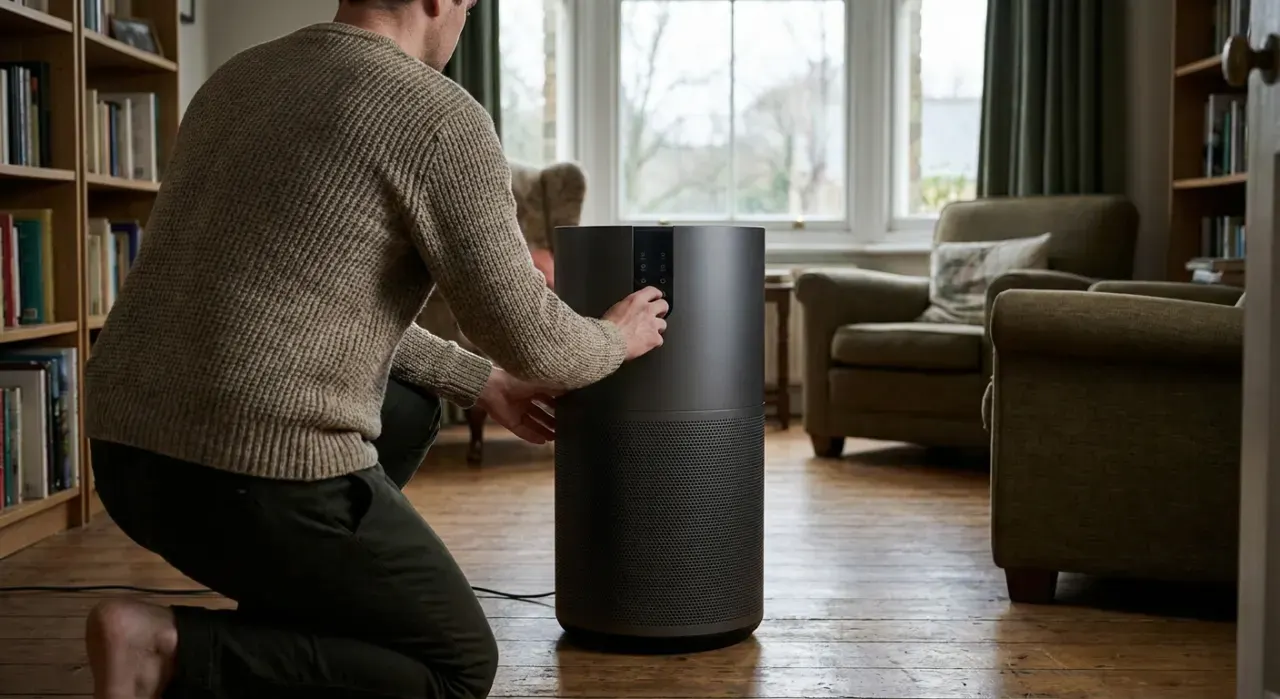
Every machine in this ranking captures dust at essentially the same efficiency, because that is what true HEPA is defined to do. The differences show up over months, and they come down to what happens in front of the HEPA element.
Household dust is a coarse mixture: skin cells, textile fibers, pet hair, soil tracked in on shoes, and the mechanical debris of carpets and upholstery wearing out. Sent straight at a pleated HEPA filter, that material blinds it — airflow drops, the fan works harder, and the machine quietly stops delivering its rated CADR while looking perfectly normal. A washable pre-filter intercepts that fraction and can be rinsed monthly for nothing.
The financial consequence is large. In a dusty home a machine with only a disposable filter stack can need replacement two or three times more often than one with a washable pre-filter, which over three years easily exceeds the difference in purchase price. That is why the Winix ranks above machines with higher headline airflow. Related: do air purifiers help with dust and true HEPA vs HEPA-type.
Sizing for a Dusty Room
Match roughly two-thirds of the room’s square footage in CADR, the 2/3 Rule AHAM publishes with its verified directory — the smoke figure is the most conservative and is a safe number to size on. A 300 square foot living room wants a smoke CADR near 200; a 600 square foot open plan wants nearer 400. Manufacturer coverage claims are typically calculated at one or two air changes an hour, which describes a room as covered without doing much in it.
Two adjustments apply here specifically. A room with carpet, rugs and upholstery holds a much larger reservoir of settled dust than a hard-floored room, so it re-suspends more with every footstep — size up. And a household with pets adds continuous dander and hair to the load; the carbon and pre-filter stages matter more, which is covered in best air purifier for pets.
What Owners Actually Complain About
Read the critical reviews across all six machines and five themes repeat. Expectation drift leads and is specific to this category: owners who expected to stop dusting and found they still dust, just less often. Filter cost is second and hits hardest in exactly the dusty homes these machines are bought for, because media loads faster; the Honeywell and Medify draw this most, the LEVOIT range least. Noise on high is universal. Undersizing is fourth and is usually a buyer decision rather than a machine failure. And sensor behavior — auto modes that ramp on humidity, on cooking steam, or on nothing obvious, which owners read as a fault when it is usually the sensor doing its job on something invisible. Running-cost detail is in air purifier electricity use.
What Actually Reduces Dust in a Home
A purifier is one of four things that work, and on its own it is the weakest of them — the EPA puts it plainly: filtration does not replace controlling the source and ventilating. Run it continuously on a medium setting in the room you occupy most, with the door closed and a foot or two of clearance around the intake.
Then attack the reservoir. Vacuum with a sealed HEPA machine rather than one that exhausts fines back into the room — a leaky vacuum is a dust distributor with a bag. Wipe with a damp cloth or a microfiber rather than a dry duster, which mostly relocates dust into the air. Wash bedding weekly in hot water, since a bed is a large fabric reservoir that gets shaken twice a day. And change your HVAC filter on schedule with a decent MERV rating — the EPA suggests MERV 13 or as high as the fan and filter slot allow, because a forced-air system moves the entire volume of the house through one filter several times an hour — more air than any portable purifier will ever see. How often to change a furnace filter covers that, and where to put an air purifier covers placement. If you want to see the particulate reading rather than judge by eye, a device from best air quality monitor makes the difference visible. Nothing here is medical advice.
How to Choose Between These Six
Normal dusty room, want the best value? The Winix 5500-2. Large living area, want maximum turnover per dollar? The Honeywell HPA300. Open-plan main floor with pets and carpet? The LEVOIT Core 400S-P. Want the best-sealed filter path? The Coway AP-1512HH. Renovation dust or a workshop next door? The Medify MA-40. A whole floor rather than a room? The LEVOIT Core 600S-P. If smoke or cooking odor is the real issue, best air purifier for smoke smell ranks the carbon-heavy field, and everything else lives in the air quality hub.
The Verdict
For most dusty homes the Winix 5500-2 is the machine we would recommend: a washable pre-filter and carbon stage that keep the coarse load off the HEPA element, a sensor-driven auto mode that reacts when a room is disturbed, and running costs low enough to survive a house that genuinely produces dust. Take the Honeywell HPA300 or the LEVOIT 600S-P if the space is large, the Coway if you want the tightest seal, and the Medify if the dust arrives in bursts. Then run it continuously, close the door, and vacuum with something sealed. Check price on Amazon → (paid link)