 Garden
Affiliate Disclosure
Some links on this page are affiliate links. As an Amazon Associate, we earn from qualifying purchases — at no extra cost to you. We do not buy, test, or physically handle the products we cover; our rankings come from aggregated owner reviews, ratings and expert consensus. Commissions never change our verdicts. How we rank · full disclosure.
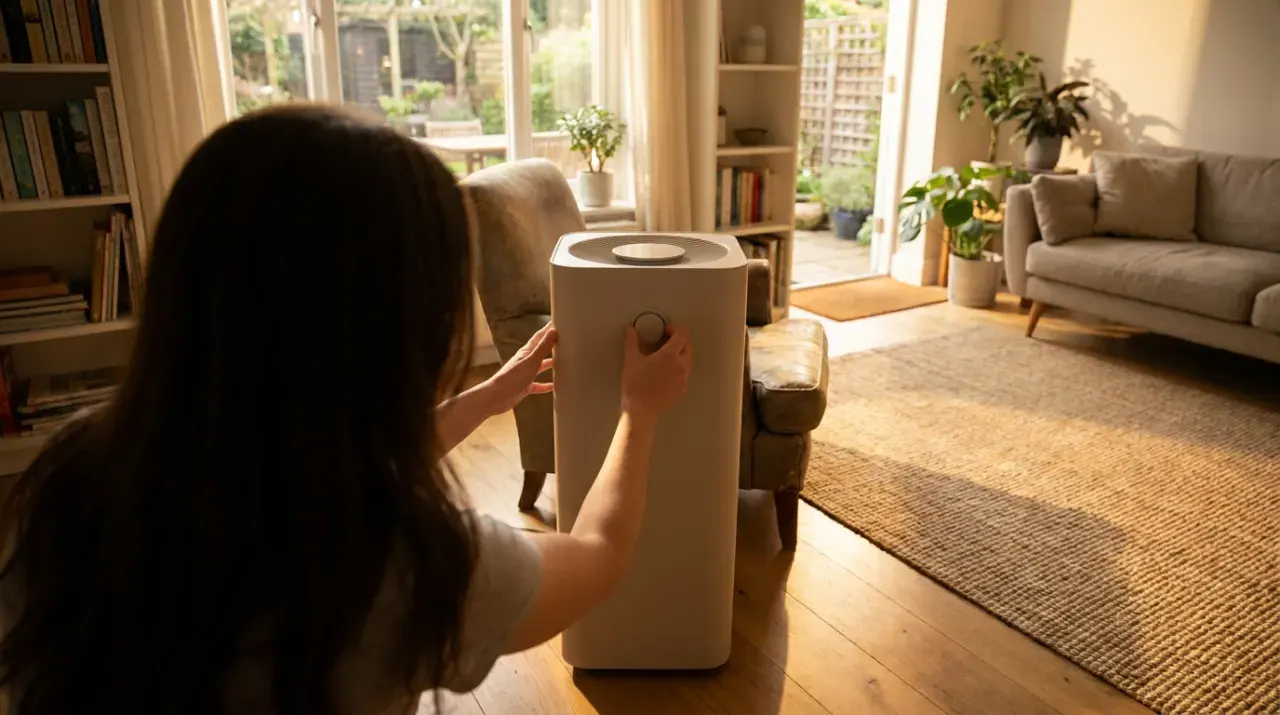
The short answer: put it in the room where you spend the most time, as close to the pollution source as practical, with at least 12 to 24 inches of clearance around the intake and outlet, and preferably raised a foot or two off the floor. For most households that means the bedroom, since eight hours of sleep is the longest continuous exposure anyone has. Avoid corners, alcoves and gaps behind furniture — obstruction is the single biggest cause of a purifier delivering far less clean air than its rating.
We do not buy or physically handle the units we rank; picks come from aggregated owner reviews and expert consensus, described in how we rank. Model shortlists are in best air purifier, inside the air quality hub.
Which room should it go in first?
The bedroom, in almost every case. Exposure is a product of concentration and time, and no other room comes close on the time side — a third of your life, with a closed door and a small volume that a modestly sized unit can genuinely turn over five times an hour. The second unit belongs wherever the source is: the living room if there is a fireplace or a shedding dog, the kitchen if cooking is the trigger, the entry hall in a home where pollen arrives on clothes. Whole-home coverage from a single portable machine is not a thing.
| Priority | Room | Why | Placement note |
|---|---|---|---|
| 1 | Bedroom | 8 hours of continuous exposure | 3 ft from the bed, door closed, low fan speed |
| 2 | Main living room | Largest waking exposure, pets, fireplace | Near the source, clear of walls and drapes |
| 3 | Home office | Long stationary occupancy | Table height, out of the direct airflow path |
| 4 | Nursery | Long occupancy, sensitive occupant | Out of reach, quiet mode, 3 ft from crib |
| 5 | Basement | Musty air, but humidity is the real fix | Pair with a dehumidifier rather than replacing it |
How much clearance does it actually need?
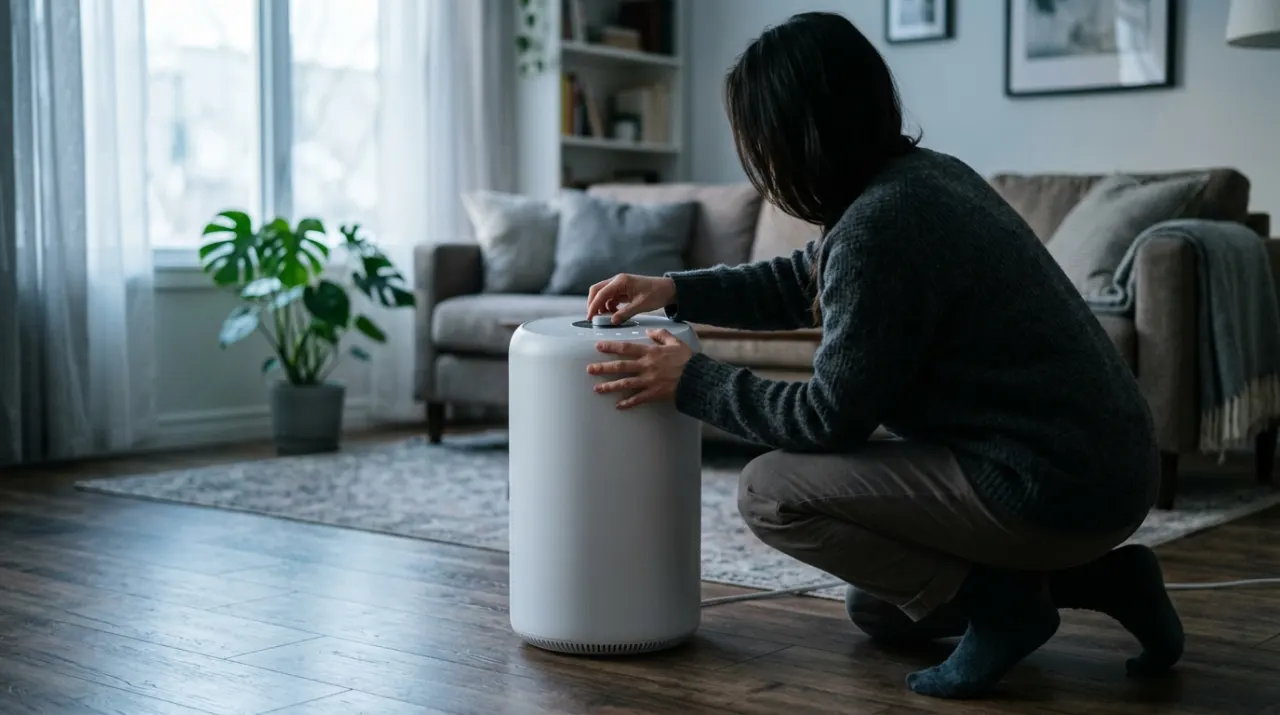
More than most rooms give it. Nearly every manufacturer specifies at least 12 inches, and often 18 to 24, on the intake face and above a top-discharge outlet. The reason is short-circuiting: if the clean outlet air can loop straight back into the intake without mixing into the room, the machine is filtering the same small pocket of air over and over while the rest of the room sits untouched. A purifier wedged behind a sofa or into a corner can deliver a fraction of its AHAM-rated Clean Air Delivery Rate without any change in the noise it makes.
Should it be near the source or near me?
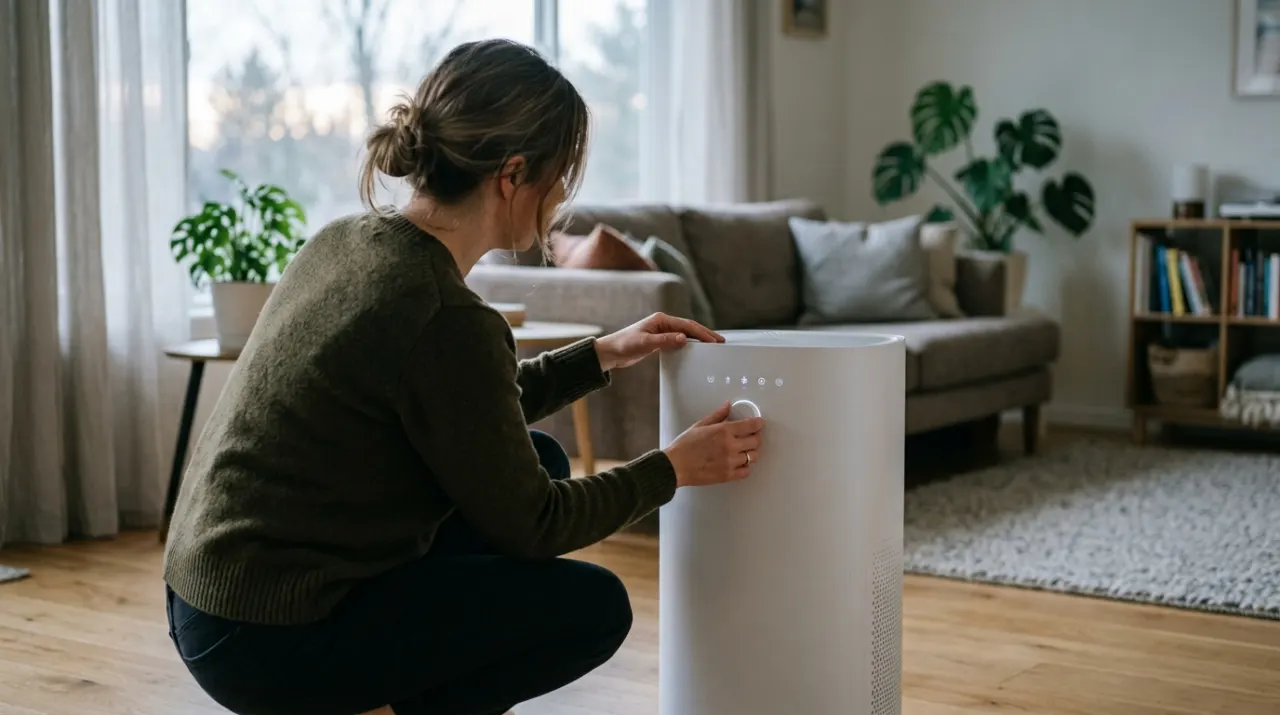
Near the source, when there is an identifiable one. Capturing particles before they distribute is far more efficient than chasing them once they are spread through 2,400 cubic feet. Put it near the litter box, the dog bed, the wood stove, the doorway where outdoor smoke enters, or the hallway that carries cooking air. For allergens with no single origin — dust mite allergen, general pollen infiltration — the room air is uniform enough that placement within the room matters little, so put it where the clearance is good and the noise is tolerable.
Smoke is the clearest case for source placement, and the sizing that goes with it is covered in best air purifier for wildfire smoke and do air purifiers help with smoke smell. Pet dander placement is covered in best air purifier for pets.
Does placement change what size I need?
It changes the volume the unit is serving, which is the same thing. The AHAM two-thirds rule — dust CADR at least two-thirds of the floor area — assumes a closed single room with 8-foot ceilings, giving roughly 4.8 air changes an hour. Open the door onto a hallway and stairwell and that same machine may be serving three times the volume at a third of the air-change rate. In open-plan homes, size to the connected volume, not to the notional room, and accept that two mid-size units placed apart usually outperform one large unit in a corner.
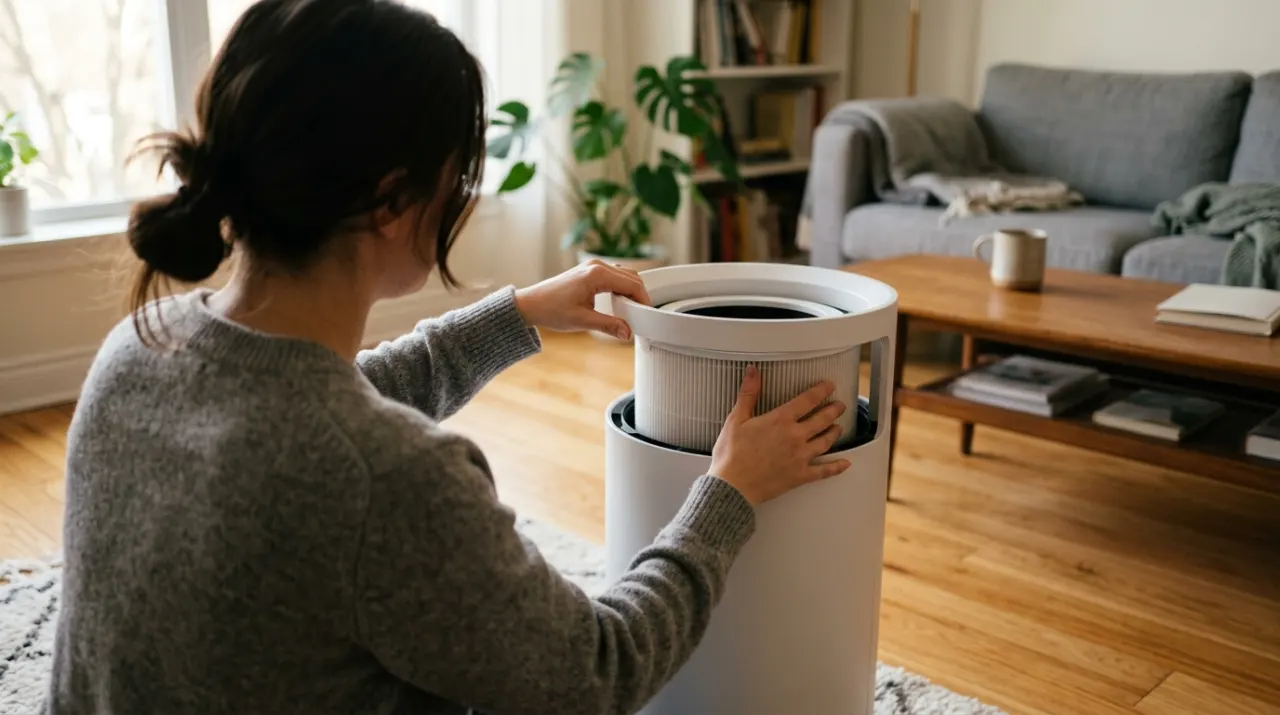
If you want to know whether your placement is working, a particle-sensing air quality monitor set on the far side of the room from the purifier will show whether the count actually falls there within 20 to 30 minutes. And whichever spot you pick, a loaded filter undoes it — restricted media cuts airflow and therefore effective CADR long before an indicator light triggers, which is covered in how to replace an air purifier filter. If the label wording has you unsure whether the numbers even apply, read true HEPA vs HEPA-type.