 Garden
Affiliate Disclosure
Some links on this page are affiliate links. As an Amazon Associate, we earn from qualifying purchases — at no extra cost to you. We do not buy, test, or physically handle the products we cover; our rankings come from aggregated owner reviews, ratings and expert consensus. Commissions never change our verdicts. How we rank · full disclosure.
The short answer: yes for dust that is floating, no for dust that has landed. A true HEPA purifier removes 99.97 percent of 0.3 micron particles in the air passing through it, and household dust runs roughly 1 to 100 microns, so capture is not the problem. The problem is that heavier dust settles out of still air within minutes and never reaches the intake. The EPA states plainly that portable air cleaners reduce airborne particles but do not remove settled dust — you will still be dusting.
We do not buy or physically handle the units we rank; our picks come from aggregated owner reviews and expert consensus, explained in how we rank. Model shortlists live in best air purifier, inside the air quality hub.
How much household dust can a purifier actually capture?
Nearly all of what reaches it. HEPA media is tested at 0.3 micron because that is the most-penetrating particle size — smaller particles are caught by diffusion, larger ones by interception and impaction, so efficiency rises on both sides of the test point. Household dust is a mixture of skin cells, textile fiber, soil tracked in on shoes, pollen and dust mite allergen, and almost all of it is larger than 0.3 micron. A HEPA filter does not struggle with any of it. The constraint is delivery, not filtration: only the air that physically passes through the machine gets cleaned.
Why does dust still settle on my furniture?
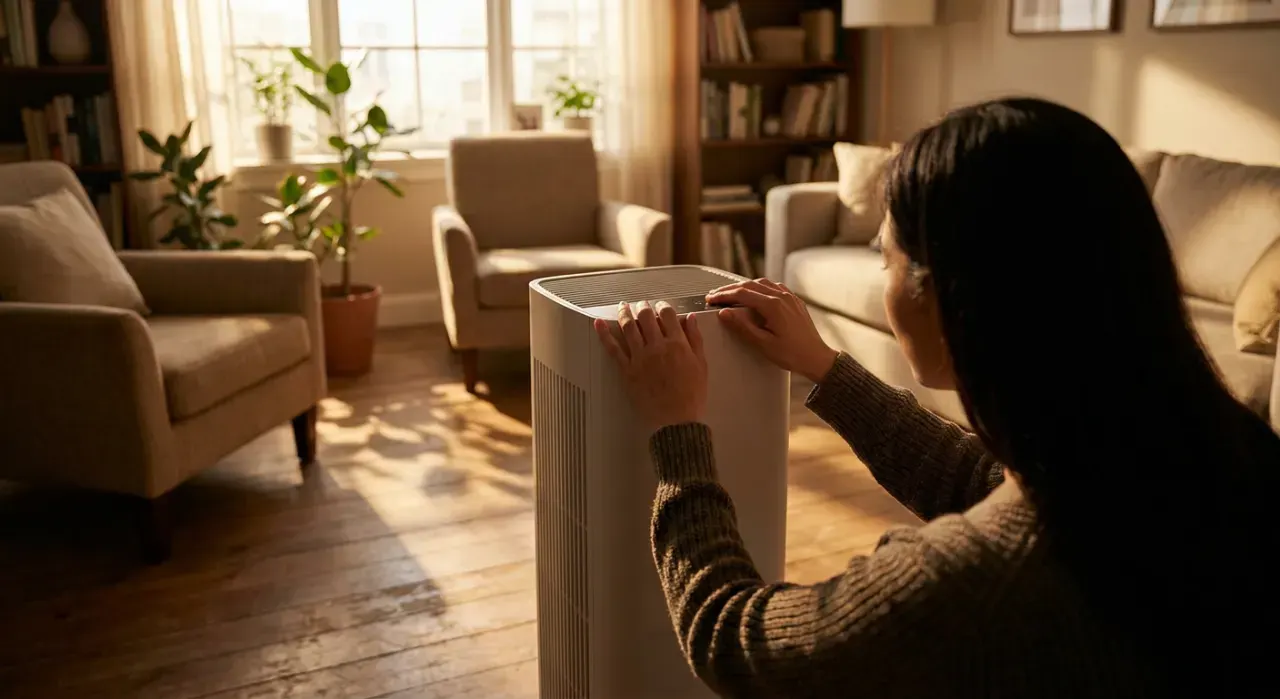
Because gravity beats fan flow for the big stuff. Particles above roughly 10 microns fall out of still indoor air in a matter of minutes, so a large fraction of visible dust lands on horizontal surfaces before any purifier can pull it in. Fine particles below 2.5 microns stay suspended for hours and are exactly what a purifier is good at, but they are also the ones you never see as a gray film. The result reported consistently by owners is that a purifier makes the air feel cleaner and reduces symptoms, while the coffee table still needs a cloth every week.
What CADR and air-change rate do I need?
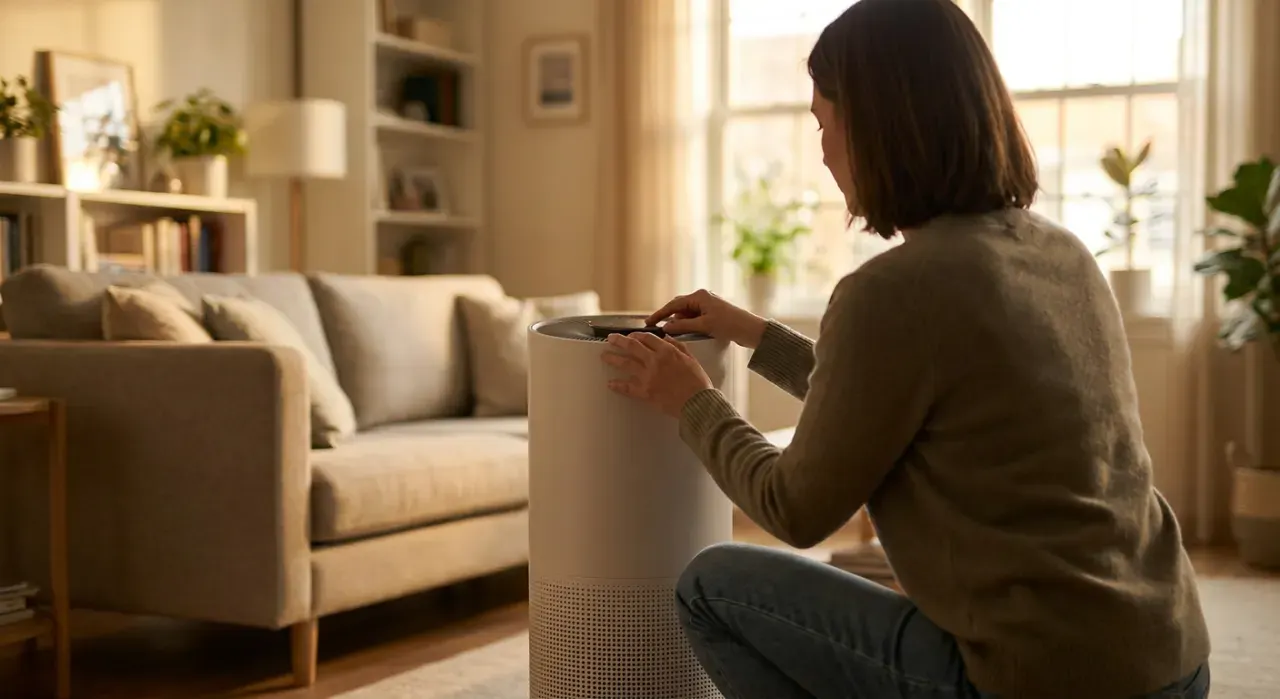
Size to air changes per hour, not to the room-size claim on the carton. AHAM measures Clean Air Delivery Rate under the AC-1 standard for smoke, dust and pollen, and the dust figure is the one to read here. The common two-thirds rule — dust CADR at least two-thirds of the room square footage — works out to roughly 4.8 air changes an hour with 8-foot ceilings. For a genuinely dusty room, size so you can hit that on a mid fan speed, because almost nobody tolerates a purifier at maximum for long.
| Room | Volume (8 ft ceiling) | Dust CADR for 4 ACH | Dust CADR for 5 ACH |
|---|---|---|---|
| Home office, 120 sq ft | 960 cu ft | 64 CFM | 80 CFM |
| Bedroom, 200 sq ft | 1,600 cu ft | 107 CFM | 133 CFM |
| Living room, 350 sq ft | 2,800 cu ft | 187 CFM | 233 CFM |
| Open plan, 600 sq ft | 4,800 cu ft | 320 CFM | 400 CFM |
| Basement rec room, 800 sq ft | 6,400 cu ft | 427 CFM | 533 CFM |
Two practical notes. Doors change everything — a purifier sized for 200 square feet is being asked to clean 900 if the bedroom door stays open onto a hallway. And a filter that is overdue chokes airflow, so real-world CADR drifts below the label figure long before the indicator light complains. Filter timing is covered in how to replace an air purifier filter.
What actually reduces dust in a house?
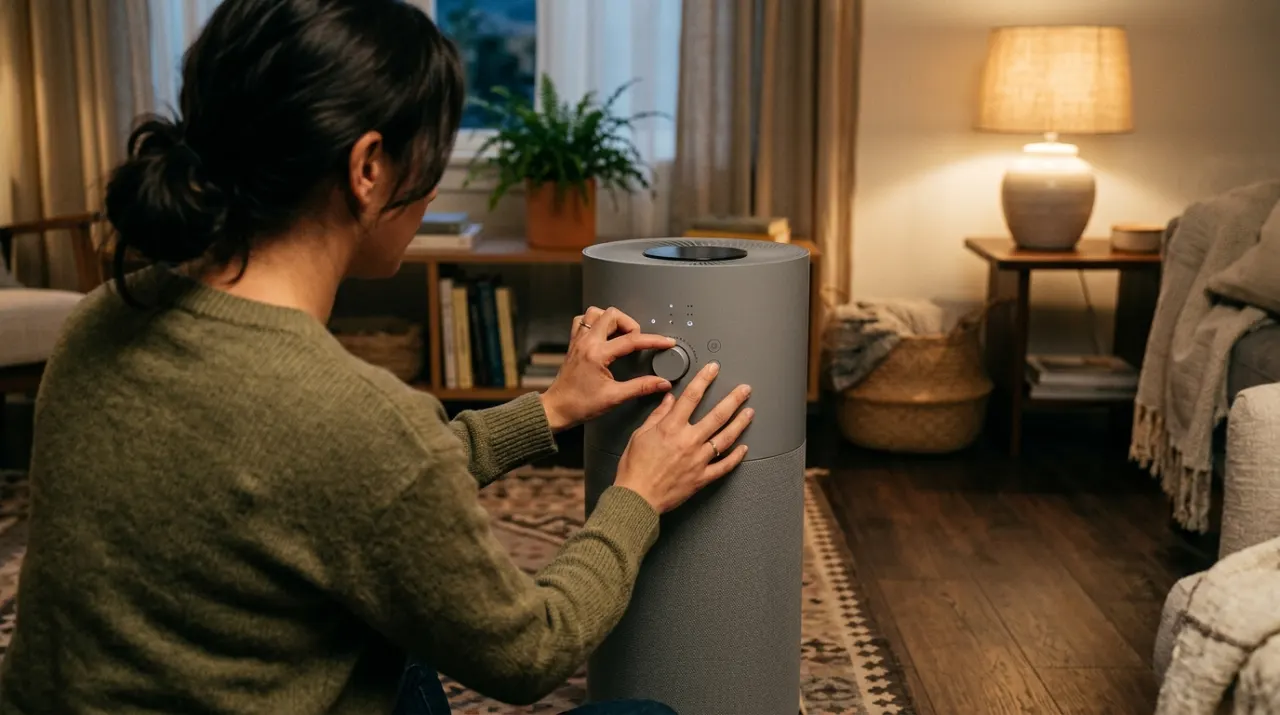
Source control, in roughly this order of payoff. Walk-off mats at every exterior door cut tracked-in soil, which is a large share of household dust by weight. A vacuum with sealed HEPA filtration stops the machine from re-emitting fines, since a leaky vacuum aerosolizes what it picks up. Upgrading the furnace filter to MERV 13 filters the whole house every time the blower runs, which is a far larger volume of air than any portable unit moves — see how often should you change a furnace filter. Keeping relative humidity in the EPA range of 30 to 50 percent suppresses dust mite populations, which need above roughly 50 percent to thrive.
Used that way, a purifier is a good supplement rather than the plan. If allergies are the reason you are shopping, best air purifier for allergies is the more relevant shortlist, and true HEPA vs HEPA-type explains why the wording on the box decides whether any of the numbers above apply. If you also want to know whether the machine is doing anything measurable, an air quality monitor with a particle sensor will show the drop within 20 minutes of switching on.