 Garden


Affiliate Disclosure
Some links on this page are affiliate links. As an Amazon Associate, we earn from qualifying purchases — at no extra cost to you. We do not buy, test, or physically handle the products we cover; our rankings come from aggregated owner reviews, ratings and expert consensus. Commissions never change our verdicts. How we rank · full disclosure.
The short answer: filter depth sets the interval, not the calendar on the box. A 1-inch pleated filter lasts 60 to 90 days, 1-inch fiberglass 30 days, 2-inch pleated 90 days, 4-inch media 6 to 9 months, and 5-inch cabinet filters 9 to 12 months. Halve any of those with shedding pets, a smoker, or active renovation. Check monthly by holding the filter up to a bright light — if you cannot see light through the pleats, replace it whatever the date says.
We do not physically handle the equipment we write about; our product rankings come from aggregated owner reviews and expert consensus, described in how we rank. The category overview is at the air quality hub.
What interval and MERV suits my filter slot?
Media area is what determines both how long a filter lasts and how much it restricts airflow. A 1-inch pleated filter in a 20 × 25 frame presents roughly 5 to 7 square feet of media; a 4-inch cabinet filter in the same footprint presents 30 to 45. That is why depth, not price, is the specification worth paying attention to.
| Filter depth | Safe MERV range | Normal home | Pets or allergies | Cost each |
|---|---|---|---|---|
| 1 in. fiberglass | 1 – 4 | 30 days | 30 days | $2 – $5 |
| 1 in. pleated | 8 – 11 | 60 – 90 days | 30 – 45 days | $8 – $20 |
| 1 in. high-efficiency | 12 – 13, system permitting | 45 – 60 days | 30 days | $15 – $30 |
| 2 in. pleated | 8 – 13 | 90 days | 60 days | $15 – $30 |
| 4 in. media cabinet | 8 – 13 | 6 – 9 months | 4 – 6 months | $30 – $60 |
| 5 in. media cabinet | 11 – 16 | 9 – 12 months | 6 – 9 months | $40 – $80 |
| Washable / permanent | 1 – 4 | Rinse monthly | Rinse every 2 – 3 weeks | One-time $30 – $70 |
How do I tell it is due?
- The light test. Hold the filter up to a bright light or a window. If you cannot see light through the pleats, replace it. This is more reliable than any calendar.
- Weak airflow at the registers. If the vents deliver noticeably less air than usual and the blower sounds normal, the restriction is upstream.
- The system runs longer than it used to to reach the same setpoint.
- Dust settling faster around the house and visible on supply registers.
- Furnace short cycling — heating, stopping early, restarting. Restricted airflow lets the heat exchanger get too hot and the high-limit switch shuts the burner down.
- Ice on the refrigerant line or the indoor coil in summer. Low airflow drops the evaporator below freezing. Switch to fan-only to thaw it, change the filter, and if it recurs get it checked.

Is a higher MERV filter always better?
No, and this is the part most advice skips. MERV, defined in ASHRAE Standard 52.2, measures how much of each particle size a filter captures. Higher numbers capture more — but denser media also resists airflow more, and residential HVAC equipment has very little tolerance for extra resistance. Manufacturers design most systems around a total external static pressure of about 0.5 inches of water column, and field surveys by HVAC training organizations routinely find real houses already running at 0.8 to 1.0 before anyone upgrades a filter.
Drop a restrictive 1-inch filter into a system already at its limit and airflow falls below what the equipment needs — roughly 350 to 400 CFM per ton in cooling. Below about 300 CFM per ton the evaporator coil goes below freezing and ices over, which is the mechanism behind an AC that runs but does not cool. In heating, the same restriction trips the high-limit switch and produces the short cycles described in why does my furnace short cycle.
The EPA’s guidance in its Guide to Air Cleaners in the Home is to use the highest-efficiency filter the system can accommodate — with the emphasis on can accommodate. In practice: MERV 8 to 11 in a 1-inch slot on an older PSC-blower system, MERV 13 only in a 4-inch or deeper cabinet or on a variable-speed ECM blower that can compensate. And a MERV 11 changed on schedule will outperform a MERV 13 left in for a year, because the moment a high-MERV filter loads up it becomes the restriction.
| MERV | Captures | Airflow resistance | Suits |
|---|---|---|---|
| 1 – 4 | Lint, large dust | Very low | Protecting equipment only |
| 5 – 8 | Dust mite debris, mold spores, pollen | Low | Most homes; the safe default |
| 9 – 12 | Fine dust, pet dander, some smoke | Moderate | Pets, mild allergies |
| 13 – 16 | Bacteria, fine smoke particulate | High | Allergies — only with a system that can take it |
Check your furnace documentation for a maximum recommended pressure drop, and if in doubt ask an HVAC technician rather than assuming a higher number is free.
Changing it correctly
Switch the system off at the thermostat first. Find the filter slot — usually in a large return grille in a hallway or ceiling, or in a slot beside the furnace or air handler. Note the size printed on the frame, which is a nominal figure such as 16x25x1 and is slightly larger than the actual measurement; buy by the nominal number.
Slide the old filter out and observe which way the arrow points, then install the new one the same way: the arrow points toward the furnace or air handler and away from the return duct, following the direction air travels. Backward, the pleats load unevenly and the filter can bow or collapse under pressure. Make sure it seats fully in its track with no gap at the edges, because air always takes the easy path around a filter rather than through it — a filter with a half-inch gap at one edge is doing a fraction of its job. Write the date on the frame in marker; it is the simplest reminder system there is.

What makes a filter load faster than the label says?
- Shedding pets — one animal typically cuts the interval by about a third, two or more by half.
- Renovation dust. Drywall sanding destroys a filter in days. Change weekly during work and once more at the end.
- Wildfire smoke or heavy pollen weeks, which can gray a new filter in under a fortnight.
- Fan set to ON rather than AUTO, which filters more air and consumes filter life in proportion.
- Return duct leakage. A return drawing air from a dusty crawlspace or attic loads filters continuously. If yours go black in three weeks with no other explanation, have the return sealed.
- An unusually dusty region or a home near unpaved roads, where 30-day intervals are simply normal.
If I want cleaner air, what should I do instead?
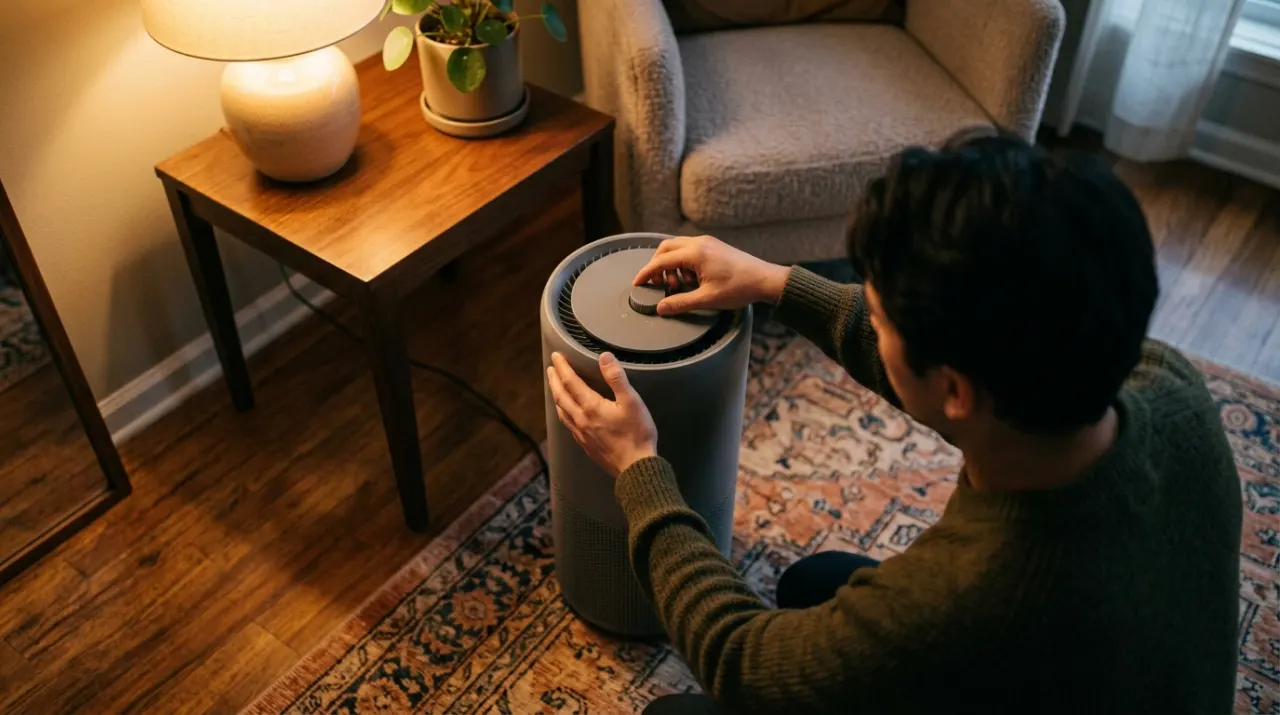
Separate the two goals. The furnace filter’s primary job is protecting the equipment; treating it as an air purifier is what pushes people into filters their systems cannot handle. For genuine indoor air quality — allergens, smoke, fine particulate — a properly sized standalone unit delivers far more clean air per dollar and none of the static pressure risk. The sizing rule from AHAM is a CADR of at least two-thirds of the room’s square footage, and the picks are in best air purifier, with best air purifier for allergies and best air purifier for pets for specific problems.
Humidity is the other half of indoor air quality and the filter does nothing for it — keeping relative humidity in the EPA’s recommended 30 to 50 percent band prevents both dust mites and mold, which is where a dehumidifier earns its place. For the equipment-protection side of the same question, see how often should you change an HVAC filter. Related maintenance sits in the heating and cooling hub: sealing leaky air ducts, cleaning a furnace flame sensor, and best smart thermostats, several of which send filter reminders and track runtime.