 Garden


Affiliate Disclosure
Some links on this page are affiliate links. As an Amazon Associate, we earn from qualifying purchases — at no extra cost to you. We do not buy, test, or physically handle the products we cover; our rankings come from aggregated owner reviews, ratings and expert consensus. Commissions never change our verdicts. How we rank · full disclosure.
The short answer: a furnace should run 10 to 15 minutes per cycle. If yours shuts down sooner, time it — the interval identifies the cause. Flame lights then dies after 3 to 7 seconds and retries: dirty flame sensor. Runs 3 to 5 minutes then the burners cut while the blower keeps going: high-limit trip from restricted airflow, usually a clogged filter. Runs 6 to 9 minutes and satisfies on a mild day: oversized equipment or a badly placed thermostat. Won’t light at all with the inducer running: pressure switch or blocked flue.
We do not physically handle the equipment we write about; product rankings come from aggregated owner reviews and expert consensus, described in how we rank. The category overview is at the heating and cooling hub.
What does the timing tell me?
Short cycling is not one fault, it is a family of faults that all end the same way, and the clock separates them faster than anything else. Stand at the furnace with a phone timer, start it when the burners light and stop it when they go out. Note whether the blower keeps running afterward, because that single detail distinguishes a safety trip from a satisfied thermostat.
| Runs for | Blower behavior | Most likely cause | Fix |
|---|---|---|---|
| 3 – 7 seconds after ignition, retries | Blower may not start | Dirty flame sensor | Technician cleans the rod; common annual maintenance |
| 3 – 5 minutes, repeatedly | Blower keeps running after burners cut | High-limit switch trip — restricted airflow | Replace filter, open all registers, check returns |
| 6 – 9 minutes on a mild day | Normal shutdown sequence | Oversized furnace or thermostat placement | Relocate thermostat; sizing is a replacement decision |
| Never lights, inducer runs then stops | No heat | Pressure switch, blocked flue or condensate drain | Technician — this is a venting fault |
| Random, with a clean filter | Varies | Failing control board or loose thermostat wiring | Technician |
| Short cycles only in very cold weather | Normal | Frozen condensate line on a high-efficiency unit | Technician; insulate or reroute the drain |
Why does restricted airflow shut a furnace down?
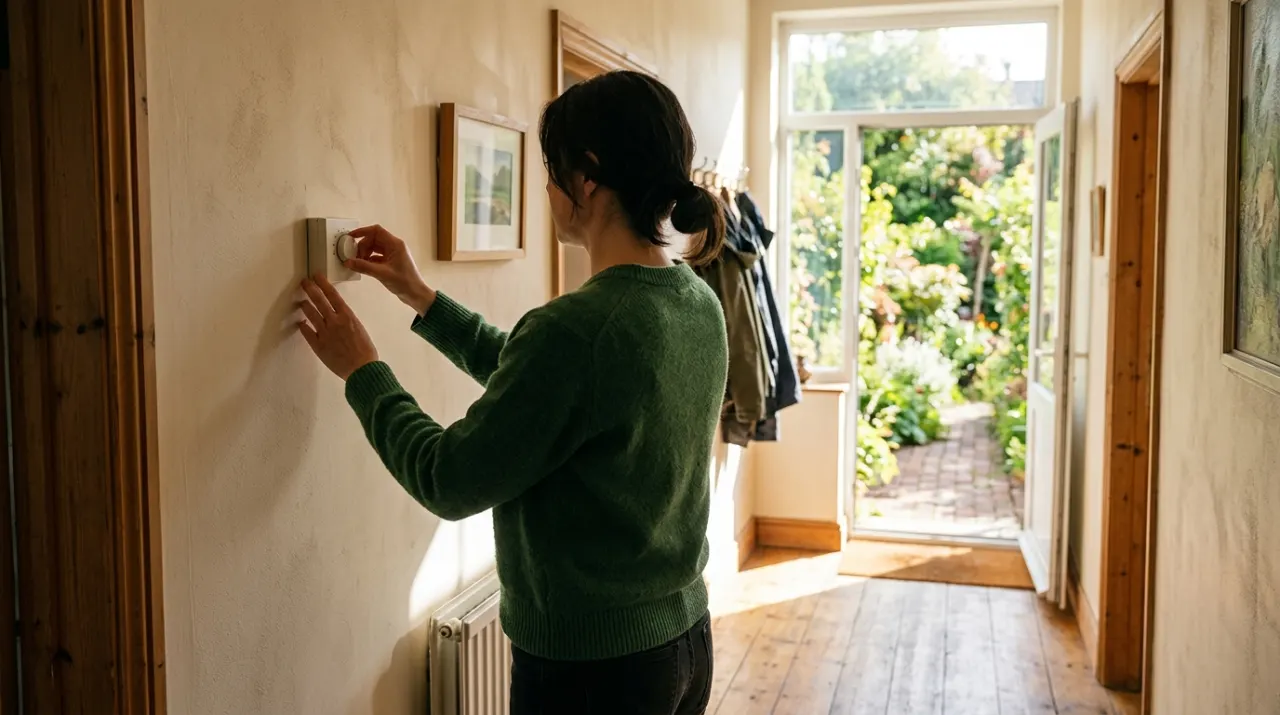
Because the high-limit switch is doing its job. A gas furnace generates a fixed amount of heat at the burners and relies on the blower moving enough air across the heat exchanger to carry it away. Choke that airflow — with a loaded filter, closed registers, a crushed flex duct or a blocked return grille — and the heat exchanger temperature climbs. The limit switch opens at a preset temperature and drops the gas valve while leaving the blower running to purge the heat. Once the metal cools, the switch closes and the burners relight.
That loop is the signature of the most common short-cycling complaint, and the giveaway is the blower continuing after the burners quit. It is also cumulatively destructive: repeated thermal stress is a known contributor to heat exchanger cracking over years. Filter intervals by depth are in how often should you change an HVAC filter, and the closely related MERV trap is covered in how often should you change a furnace filter — fitting a very restrictive filter to an older system creates exactly this problem out of nothing.
What is a flame sensor and why does it fail?
It is a thin metal rod sitting in the burner flame, and it works by flame rectification: the flame conducts a tiny AC current to DC, and the control board measures it in microamps. A healthy signal is roughly 2 to 6 microamps; below about 0.7 the board concludes there is no flame and shuts the gas valve within seconds. That is a safety function working correctly — the board would rather stop than keep a gas valve open with no flame present.
What fails is not the sensor but the film of oxide and combustion residue that builds on it over a season or two, which insulates the rod and drops the signal. The symptom is unmistakable: the igniter glows, you hear the burners light, the flame holds for a few seconds, and everything shuts down and starts over — usually three attempts, then a lockout of about an hour. It is one of the most common no-heat calls in the country and one of the cheapest fixes, but it involves the gas train and the control circuit, so it belongs to a technician rather than a homeowner.
Is my furnace just too big?
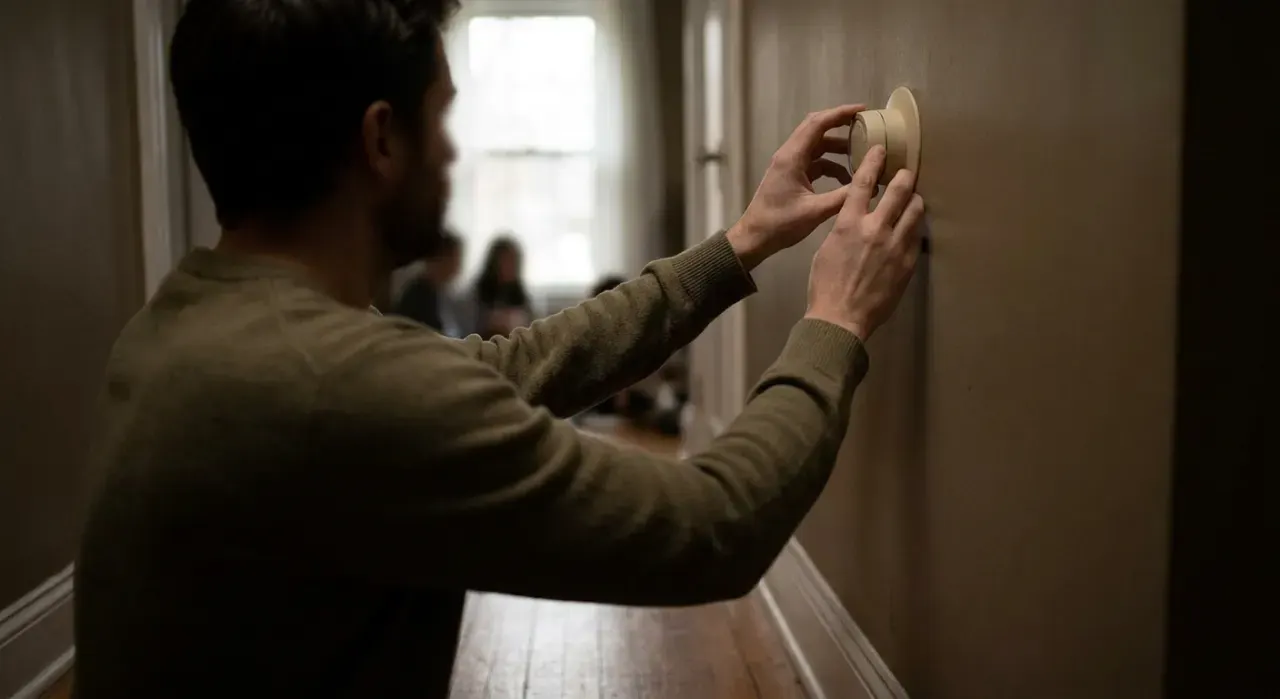
Frequently, and it is the cause nobody wants to hear because the fix is expensive. Rules of thumb and replacement-in-kind sizing have left a large share of US homes with furnaces rated well above their actual heat loss. An oversized furnace blasts the thermostat’s setpoint in a few minutes, shuts off, and leaves the far rooms cold while the hallway is warm — producing short cycles, uneven temperatures and higher standby losses.
You can spot it: short cycles on mild days that lengthen normally in genuine cold, big room-to-room temperature swings, and a nameplate BTU input far above what a load calculation would produce. The proper test is a Manual J calculation from an HVAC contractor. If a replacement is on the horizon anyway, a modulating or two-stage furnace largely solves it, and for a single problem room a ductless unit can be a cheaper answer — installed prices are in how much does it cost to install a mini split. In the meantime, resist the temptation to close registers to balance the house; that raises static pressure and makes the limit-switch cycling worse. And if you are using a space heater to make up the difference in one room, read the circuit and cost math in how much does it cost to run a space heater for 8 hours first.