 Garden

Affiliate Disclosure
Some links on this page are affiliate links. As an Amazon Associate, we earn from qualifying purchases — at no extra cost to you. We do not buy, test, or physically handle the products we cover; our rankings come from aggregated owner reviews, ratings and expert consensus. Commissions never change our verdicts. How we rank · full disclosure.
The short version: after weighing six popular smart thermostats on owner star ratings, review volume, published compatibility and the complaints that recur after a full heating and cooling season, our #1 pick is the Google Nest Learning Thermostat. It wins for a slightly deflating reason: the money in this category comes almost entirely from turning the temperature down when nobody is home, and Nest is the model that does that most reliably without being asked.
Before you choose anything, check two things. First, what is behind your current thermostat — the presence or absence of a C wire decides which of these will even power up. Second, what problem you are solving: a scheduling problem calls for a learning thermostat, an uneven-house problem calls for remote sensors, and a "my bill is high" problem quite often calls for a clean furnace filter and some weatherstripping first. Start from the heating and cooling hub for the wider picture.
Top Picks at a Glance

Our #1 Pick: Google Nest Learning Thermostat (3rd Gen)
Every study of thermostat savings arrives at the same conclusion: the technology matters far less than whether the setback actually happens. A house held at 70°F for twenty-four hours a day costs a great deal more than the same house dropped to 62°F for the eight hours it is empty and the eight hours everyone is asleep. Programmable thermostats have offered that for thirty years, and survey after survey finds most of them running in permanent hold.
Consensus Score █████████░ 8.9 — one of the deepest and most consistently positive review bases in home tech
Nest attacks that behavioral gap rather than the engineering. For the first week you adjust it the way you would any thermostat; it records what you did and when, and then builds and maintains a schedule around it. Home and Away Assist uses your phone's location together with the built-in motion sensor to detect an empty house and back the temperature off without being told. Monthly energy history shows what happened and why, which turns out to be the feature that changes habits.
It is ENERGY STAR certified — a label that requires demonstrated run-time reductions in field data, not just a Wi-Fi radio — works with a wide range of 24-volt systems including heat pumps with auxiliary heat, and on many installations runs without a C wire by drawing small amounts of power from the heating and cooling circuits. It also looks like a piece of hardware someone designed, which matters more than it should for something mounted in a hallway.
The consensus criticisms are consistent: the learning behavior frustrates people who want a fixed schedule and nothing else, power sharing on C-wire-free installs can cause intermittent Wi-Fi dropouts or short-cycling on some systems, and it is one of the most expensive options here.
Check price on Amazon → (paid link)
Best Smart Thermostats 2026: The Ranked Field

Best for a household whose schedule changes week to week
- Builds its own schedule from the first week of adjustments
- Home and Away Assist using phone location and a built-in motion sensor
- ENERGY STAR certified with monthly energy history
- Works without a C wire on many systems using power sharing
Why buy it: it captures the setbacks people never get around to programming, which is where nearly all the actual saving comes from.

Best for houses with a cold bedroom and a hot living room
- Ships with a remote SmartSensor for temperature and occupancy
- Built-in air quality monitor and smoke alarm detection
- Alexa and Siri built in; works with Google Home
- Includes a Power Extender Kit for homes with no C wire
Why buy it: remote sensors mean the thermostat can regulate the room you are actually in, which is the fix for an unevenly heated house.

Best for the cheapest legitimate route to scheduling and remote control
- Built on Honeywell Home thermostat technology
- ENERGY STAR certified
- Alexa Hunches adjust settings automatically
- C wire required; no on-device display controls beyond touch
Why buy it: roughly a third the price of the flagships for most of the saving, because scheduling and setbacks do the heavy lifting.

Best for a straightforward system and someone who prefers a phone app to a dial
- Schedule suggestions rather than full auto-learning
- Soli motion sensing wakes the display as you approach
- Home and Away routines through the Google Home app
- Mirror finish in four colors
Why buy it: the Nest experience at half the price, as long as you are happy setting the schedule in an app instead of on the wall.
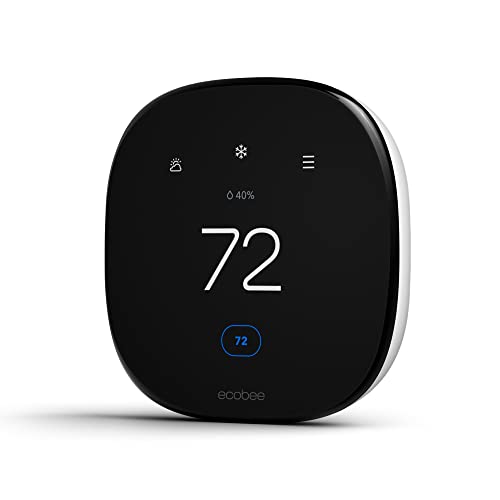
Best for ecobee sensor support without the premium hardware
- Supports ecobee SmartSensors, sold separately
- ENERGY STAR certified with eco+ efficiency features
- Works with Alexa, Siri and Google Assistant
- Power Extender Kit included for C-wire-free installs
Why buy it: the full ecobee ecosystem, including room sensors, at a price much closer to the value models.

Best for homes with two-wire heating or awkward legacy wiring
- Runs without a C wire on most common systems
- Standard rectangular body covers old thermostat marks
- Flexible 7-day scheduling, geofencing and usage reports
- Works with Alexa, Google Assistant and Apple HomeKit
Why buy it: it installs in the awkward old houses where the smart thermostats with big screens simply will not power up.

Quick Comparison
| Product | Best for | Rating | Price | Buy |
|---|---|---|---|---|
| Google Nest Learning Thermostat (3rd Generation) | Best Overall | — | Check (paid link) | |
| ecobee Smart Thermostat Premium | Best Premium | — | Check (paid link) | |
| Amazon Smart Thermostat | Best Value | — | Check (paid link) | |
| Google Nest Thermostat (2020) | Best Simple Nest | — | Check (paid link) | |
| ecobee Smart Thermostat Enhanced | Best Mid-Range with Sensors | — | Check (paid link) | |
| Emerson Sensi Wi-Fi Smart Thermostat (ST55) | Best for Older Wiring | — | Check (paid link) |
How We Rank
We do not buy or install these thermostats. We rank them by aggregating star ratings and review volume across thousands of verified owner reviews, weighting recent reviews above launch-window ones, checking published wiring requirements, HVAC compatibility, sensor support and certification against manufacturer specifications, and reading negative reviews closely — which in this category is unusually revealing, because most one-star reviews are installation and compatibility problems rather than product faults.
Four factors drive the order. Realistic saving mechanism — whether the thermostat actually causes setbacks to happen. Installation compatibility, especially the C wire question, which is the single biggest source of returns. Comfort control, including remote sensors and how well the unit handles heat pumps and multi-stage equipment. And owner satisfaction, weighted by review count and read with attention to reports from the second year, when Wi-Fi and app reliability become the story. Prices were checked at time of writing, and utility rebates frequently change the real cost. Full method: how we rank.
The Thermostats, Reviewed
1. Google Nest Learning Thermostat — Best Overall
Covered above. Consensus Score █████████░ 8.9. Strengths: automatic schedule building, genuinely effective geofencing and occupancy sensing, clear energy history, broad system compatibility including heat pumps with aux heat, and a dial interface that anyone in the house can use without the app. Recurring complaints: the learning can be maddening for people who want a fixed schedule, and turning it fully off takes some digging. On C-wire-free installations owners report intermittent Wi-Fi dropouts, battery warnings and occasional short-cycling of the furnace. Several reviewers note the display finish scratching, and Google account requirements draw persistent grumbles.
2. ecobee Smart Thermostat Premium — Best Premium
ecobee's answer to the same problem is spatial rather than temporal. The Premium ships with a remote SmartSensor that reports temperature and occupancy from another room, so the system can average across rooms, prioritize an occupied bedroom at night, or ignore an empty office. If the complaint in your house is "the upstairs is always hot," this is the product that fixes it. It also has Alexa and Siri built in, monitors indoor air quality, and can listen for smoke alarms.
Consensus Score ████████░░ 8.5 — strong ratings, with the sensor system consistently the most praised feature
Recurring complaints: price, and then complexity — the settings menu is deep and owners describe a genuine learning curve. Some report the built-in Alexa being unreliable enough that they disable it. A number of reviews mention needing the Power Extender Kit and finding the furnace-board wiring step intimidating. And the air quality sensor is treated with some skepticism, with owners noting readings that drift.
3. Amazon Smart Thermostat — Best Value
Built on Honeywell Home hardware, ENERGY STAR certified, and priced at roughly a third of the flagships. It does the thing that produces the savings — schedules, remote control and automatic adjustments through Alexa Hunches — and skips the sensors, the learning and the fancy display. For a straightforward house with a regular routine, that is a very sensible trade.
Consensus Score ████████░░ 8.2 — high ratings for value, with wiring the dominant negative theme
Recurring complaints: the C wire requirement is the big one. It will not run without one, no adapter is included, and a large share of poor reviews are from buyers who discovered that after opening the box — a separate C-wire adapter version exists and is the right purchase if your wall lacks one. Owners also report that scheduling is app-only and that the on-wall controls are minimal, and some dislike that it is tightly bound to the Alexa app.
4. Google Nest Thermostat (2020) — Best Simple Nest
The stripped-back Nest. It suggests schedule changes rather than learning autonomously, moves the controls into the Google Home app, and uses Soli radar to wake the display as you walk up to it. At around half the price of the Learning Thermostat it is a reasonable entry point, particularly in a household that already uses Google Home.
Consensus Score ███████░░░ 7.8 — well rated, with reduced compatibility the recurring reservation
Recurring complaints: compatibility is narrower than the Learning Thermostat — notably weaker support for multi-stage systems and heat pumps with auxiliary heat, and several owners report discovering this at installation. The touch strip on the side draws criticism as fiddly. And because scheduling lives in the app, households where not everyone has the app find it less convenient than a dial on the wall.
5. ecobee Smart Thermostat Enhanced — Best Mid-Range with Sensors
The Enhanced sits between the value tier and the Premium: no built-in air quality monitor, no built-in speaker, but full support for ecobee SmartSensors, the same eco+ efficiency features, and a Power Extender Kit in the box for homes without a C wire. Buy it with one sensor and it does the important part of what the Premium does for meaningfully less.
Consensus Score ████████░░ 8.1 — well rated, and generally recommended over the Premium by owners who do not want the extras
Recurring complaints: sensors are sold separately, which narrows the price gap to the Premium once you buy one or two. The same deep settings menus apply. Owners report occasional Wi-Fi disconnections requiring a reset, and a few describe the display as dimmer and lower contrast than the Premium's.
6. Emerson Sensi ST55 — Best for Older Wiring
The pragmatist's choice. The Sensi runs without a C wire on most common systems, fits a standard rectangular footprint that covers the marks left by an old thermostat, and offers flexible 7-day scheduling, geofencing and usage reports through an app that owners consistently describe as straightforward. It works with Alexa, Google Assistant and Apple HomeKit.
Consensus Score ████████░░ 8.4 — one of the highest-rated thermostats here, largely on installation success
Recurring complaints: it looks like a thermostat from 2012, which some buyers mind and others prefer. There is no learning, no occupancy sensing and no remote sensor support, so it will not fix an unevenly heated house. The screen is not backlit on this model, which owners in dark hallways mention frequently, and a minority report Wi-Fi reconnection issues after a router change.

How to Choose a Smart Thermostat
Start at the wall, not the store. Turn the power off at the breaker, pull the faceplate off your existing thermostat and photograph the wiring. You are looking for a wire in the terminal marked C. If it is there, everything on this page will work. If it is not, you have four options: buy a model that does not need one, use an included adapter, run a spare conductor if the cable has one — very common in cables with four or five wires — or fit an add-a-wire kit at the furnace board. Then run the manufacturer's online compatibility checker with your actual wire list before ordering.
Next, be specific about the problem. If nobody remembers to turn the heat down, buy a learning or geofencing thermostat and let it do it. If the house has a permanently cold bedroom or a hot upstairs, buy an ecobee with remote sensors, because no amount of scheduling fixes a temperature difference between rooms. If you already run a disciplined schedule and just want to change it from your phone, buy the cheapest ENERGY STAR model that fits your wiring and spend the difference on insulation.
Check your equipment type before you commit. Heat pumps with auxiliary or emergency heat, two-stage furnaces, dual-fuel systems and zoned setups all need explicit support, and this is where the budget models thin out. Millivolt systems and 120 or 240-volt electric baseboard heating are not compatible with any of these — those need dedicated line-voltage thermostats.
Finally, look up your utility's rebate program before you buy. Many American electric and gas utilities offer $50 to $100 back on a qualifying smart thermostat, and some hand them out free in exchange for enrolling in a demand-response program that adjusts your setpoint a few times each summer. That single step often matters more to the payback period than which model you choose.
What Owners Actually Complain About
Five complaints recur across every brand here. Wiring surprises lead by a wide margin — a large share of one-star reviews across the category are variations of "there was no C wire behind my old thermostat." That is a house problem rather than a product fault, but it is the single biggest cause of a bad first day.
Wi-Fi dropouts come second and are the most common long-term grievance, particularly on units drawing power from the heating circuit rather than a dedicated C wire. Short cycling and aux-heat misbehavior is a narrower but serious complaint, mostly from heat pump owners whose systems need careful staging configuration.
App and account friction is a steady undercurrent — required accounts, forced app updates, changed interfaces and features moving between tiers. And disappointing savings is the honest recurring theme in second-year reviews: owners who already ran a sensible schedule frequently report no measurable change, which is exactly what you would expect and worth knowing before you spend $250.
The Verdict
For most households the Google Nest Learning Thermostat is the one to buy — it captures the setbacks that produce the saving without needing you to think about it, and it fits the widest range of systems. If your house has hot and cold rooms, buy an ecobee instead: the Premium if you want everything, the Enhanced if you just want the sensors. On a budget with a C wire present, the Amazon Smart Thermostat delivers most of the benefit for a third of the money. And if your wiring is old and awkward, the Emerson Sensi ST55 is the model that will actually install and stay online.
Check price on Amazon → (paid link)
Next: cut the load before you automate it with how often to change a furnace filter, zone a single room instead of the whole house with the best space heater, run the numbers in space heater running costs, or get free cooling out of your ceiling fan with ceiling fan direction by season.