 Garden
Affiliate Disclosure
Some links on this page are affiliate links. As an Amazon Associate, we earn from qualifying purchases — at no extra cost to you. We do not buy, test, or physically handle the products we cover; our rankings come from aggregated owner reviews, ratings and expert consensus. Commissions never change our verdicts. How we rank · full disclosure.
The short version: after weighing the most-reviewed dehumidifiers in the US market on owner ratings, capacity at the current test standard, drainage design and long-term reliability reports, our #1 pick is the Frigidaire FFAD5033W1. It removes 50 pints a day, drains continuously through a hose, holds a humidity setpoint accurately and restarts itself after a power cut — and its reliability record over multiple seasons is the best in a category where two-year failures are distressingly common.
Before you choose, be clear about what a dehumidifier is for. It does not clean air; it removes water. Damp air is what lets mold colonise grout, closets and basement corners, and what allows dust-mite populations to thrive regardless of how often you vacuum — which is why the EPA asks for indoor humidity below 60 percent and ideally between 30 and 50. If your symptoms point at particles rather than moisture, the best air purifier ranking is the right page, and air purifier vs humidifier untangles the two in a few minutes.
Top Picks at a Glance
Our #1 Pick: Frigidaire FFAD5033W1
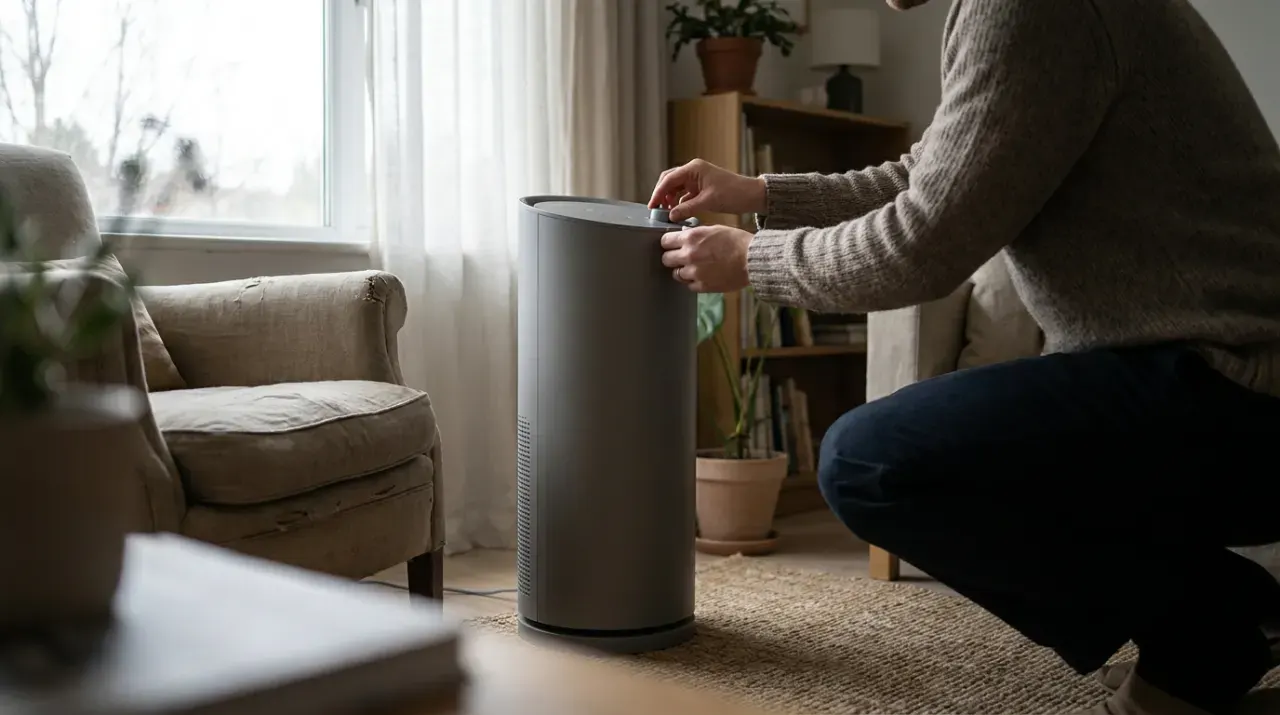
The FFAD5033W1 is the machine we would put in most damp basements. Its 50-pint rating is at the current DOE 65°F standard, which means it is genuinely a large-capacity unit rather than an old 70-pint figure dressed up, and in practice owners report it holding a 50 percent setpoint in a basement that previously smelled of damp within a couple of days.
What separates it from cheaper machines is the boring engineering. The continuous drain port takes an ordinary garden hose, the humidity setpoint is honoured rather than approximated, the filter is washable instead of consumable, and auto-restart brings it back at the same setting after a power cut — the failure mode that quietly ruins a basement while you are away. Frigidaire also has the deepest long-term reliability record in the category, which matters more here than anywhere else in home appliances, because dehumidifiers work harder than almost anything in the house.
Consensus Score █████████░░ 8.8 — owners consistently report multi-season reliability where competitors draw two-year failure complaints.
The honest weaknesses: there is no built-in pump, so gravity drainage needs the machine above the drain; it is heavy to move up stairs; and it is audible in a quiet room, as every compressor dehumidifier is. If your drain is above the unit, buy one of the pump models below instead.
Check price on Amazon → (paid link)
The Ranked Field
Best for a damp basement, laundry room or humid main floor
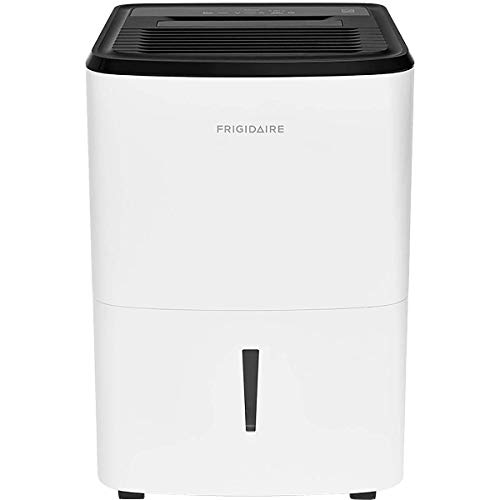
- 50 pints per day at the current DOE test standard
- Continuous drain port for hose operation
- Washable antibacterial filter
- Custom humidity setpoint with auto restart
Why buy it: the most reliable long-run performer in the category, with the drainage and setpoint control that decide whether it stays useful.

Best for a basement where the drain is above the machine
- Built-in condensate pump lifts water upward
- 50-pint capacity for large damp spaces
- Turbo, comfort and continuous modes
- Auto shut-off and auto restart after a power cut
Why buy it: the built-in pump — the one feature that turns a basement dehumidifier from a bucket chore into an appliance.

Best for a bedroom, bathroom or medium room up to about 2,000 sq ft
- 34 pints per day with an Energy Star rating
- Drain hose included for continuous use
- Humidity setpoint from 30 to 80 percent
- Quiet enough for a bedroom on low
Why buy it: genuine capacity and continuous drainage at a price most 50-pint machines cannot approach.
Best for anyone tired of emptying a bucket twice a day
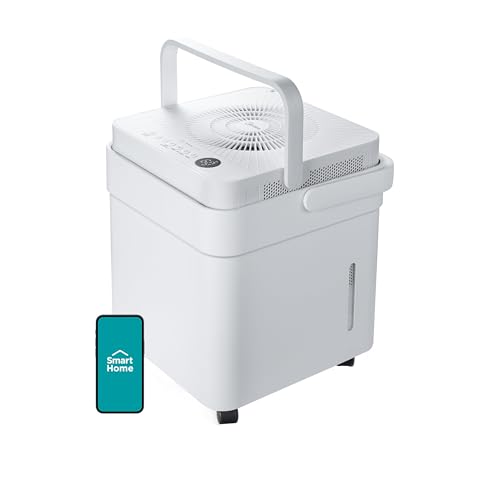
- Lift-and-twist body triples reservoir capacity
- Wi-Fi app with humidity and water-level alerts
- Nests to half height for storage or hose use
- Energy Star rated with washable filters
Why buy it: a tank big enough that emptying becomes a weekly job rather than a daily one, without needing a floor drain.

Best for whole-floor damp control up to about 4,500 sq ft
- Built-in pump for continuous upward drainage
- 1.7 gallon bucket as a fallback
- Coverage rated to roughly 4,500 sq ft
- Washable filter and effortless setpoint control
Why buy it: Frigidaire reliability plus a pump, which is the combination for a large finished basement you actually use.

Best for closets, gun safes, bathrooms, RVs and small utility rooms
- Thermoelectric, so there is no compressor noise
- Around 17 oz per day in a 215 sq ft space
- Auto shut-off when the reservoir fills
- Light enough to move with one hand
Why buy it: the only sensible answer for a small enclosed space where a compressor machine is loud, heavy and wildly oversized.
Quick Comparison
| Product | Best for | Rating | Price | Buy |
|---|---|---|---|---|
| Frigidaire FFAD5033W1 50-Pint Dehumidifier | Best Overall | — | Check (paid link) | |
| hOmeLabs 4,000 Sq. Ft. Dehumidifier with Pump | Best for Basements | — | Check (paid link) | |
| Waykar 34-Pint Energy Star Dehumidifier | Best Value | — | Check (paid link) | |
| Midea Cube 35-Pint Smart Dehumidifier | Best Smart Design | — | Check (paid link) | |
| Frigidaire 50-Pint Dehumidifier with Pump | Best Large Coverage | — | Check (paid link) | |
| Pro Breeze Electric Mini Dehumidifier | Best Compact | — | Check (paid link) |
How We Rank
We do not buy, test or physically handle dehumidifiers. We rank on evidence that scales: star ratings weighted by review volume, capacity figures normalised to the current DOE test standard so old and new listings can be compared honestly, drainage and pump design, the recurring complaints in critical reviews, and — weighted heavily in this category — long-term owner reports at the two and three year mark, because compressor failure is the defining risk here. Prices were current at the time of writing. Full method on how we rank.
The Dehumidifiers, Reviewed
1. Frigidaire FFAD5033W1 — Best Overall
Covered above. What owners praise: multi-season reliability, an accurate setpoint, straightforward hose drainage, and auto restart after outages. What owners complain about: no pump, real weight, and compressor noise in a quiet room. The default recommendation for a basement with a floor drain.
2. hOmeLabs 4,000 Sq. Ft. with Pump — Best for Basements
The same 50-pint class as the Frigidaire, with the feature that solves the most common basement problem: a built-in condensate pump that lifts water up to a sink, a laundry tub or out of a window. Most basements have no floor drain below the machine, and without a pump you are back to a bucket. Turbo, comfort and continuous modes cover the range from a wet spring to steady maintenance. What owners praise: the pump working as advertised, strong extraction, and a clear control panel. What owners complain about: pump noise cycling on and off, a hose that needs securing properly or it works loose, and a mixed long-term reliability record compared with the Frigidaire. Buy it when the drain is above the machine.
3. Waykar 34-Pint — Best Value
The sensible mid-size choice, and the one that suits far more homes than the 50-pint machines everyone reaches for. It removes 34 pints a day, carries an Energy Star rating, ships with a drain hose for continuous operation, and takes a setpoint anywhere from 30 to 80 percent. In a bedroom, a bathroom or a moderately damp basement it will hold 50 percent without running flat out. What owners praise: price relative to capacity, quiet running on low, and included continuous drainage. What owners complain about: a coverage claim quoted generously, a small reservoir if you use bucket mode, and a shorter track record than the established brands. The best value here for a moderately damp space.
4. Midea Cube 35-Pint — Best Smart Design
The most genuinely useful design idea in the category. The body lifts and twists to extend, roughly tripling reservoir volume, so a machine that would otherwise need emptying twice a day can run for the better part of a week without a hose. Nested, it is half the height for storage or hose operation. Wi-Fi adds humidity and water-level alerts, which is exactly the notification you want when you are not in the basement. What owners praise: the tank capacity, app alerts, and Energy Star efficiency. What owners complain about: price, an app-first setup some owners find fussy, and a footprint that is bulky when extended. The answer when there is no drain at all.
5. Frigidaire 50-Pint with Pump — Best Large Coverage
The FFAD5033W1’s bigger brother in practical terms: the same reliability record, the same accurate setpoint control, with a built-in pump and a coverage claim to roughly 4,500 square feet. For a large finished basement or a whole damp floor where you want it set once and forgotten, this is the machine. The 1.7 gallon bucket remains as a fallback if you ever run it without the hose. What owners praise: whole-floor capability, pump convenience, and the brand’s reliability reputation. What owners complain about: price, weight, and the same audible pump cycling every compressor-plus-pump unit produces. Right for large spaces, overkill for one room.
6. Pro Breeze Electric Mini — Best Compact
A completely different machine for a completely different problem. It is thermoelectric rather than compressor-driven, so it is silent, light and small — and its extraction is measured in ounces per day rather than pints. That makes it wrong for a basement and exactly right for a closet, a gun safe, a small bathroom, a boat or an RV, where a compressor unit would be loud, heavy and absurdly oversized. What owners praise: silence, size, and auto shut-off when the small reservoir fills. What owners complain about: owners who expected basement performance from it, slow extraction in genuinely wet conditions, and a reservoir that needs regular emptying. Buy it knowing what it is.
Sizing and the Pint Rating Trap
Two things confuse dehumidifier shopping, and both are fixable in a paragraph. The first is the 2019 DOE test change: capacity is now measured at 65°F instead of 80°F, so a machine once sold as 70 pint is now sold as 50 pint while removing exactly the same water. Comparing an old listing with a new one without accounting for that makes new machines look weak. Check the standard, not the number.
The second is that square footage alone is a poor guide. How wet the space is matters as much as how big it is. A 1,500 square-foot area that merely feels stuffy is a 20 to 30 pint job. A 2,000 square-foot moderately damp basement wants 30 to 35 pints. Anywhere you can see condensation on cold surfaces, smell mustiness, or find damp cardboard is a 50 pint job regardless of the floor area. Oversizing is the safe direction: a larger machine reaches the setpoint and cycles off, which uses less energy and less compressor life than a small one running continuously and never getting there. To compare efficiency directly, use the integrated energy factor in liters per kWh that ENERGY STAR rates on; certified units use about 20 percent less energy than a similarly sized conventional model.
Drainage Decides Whether You Keep Using It
More dehumidifiers are abandoned over drainage than over performance. A 50-pint machine in a wet basement fills a typical bucket twice a day, and nobody keeps that up past the second week. Every machine here has a continuous drain port; use it.
Gravity drainage is the simplest and the most reliable — attach an ordinary garden hose, run it to a floor drain or sump, and keep the whole run sloping downward with no dips where water can sit. It needs the machine higher than the drain, which is why people put units on a low platform or a couple of concrete blocks. When that is impossible, a built-in condensate pump lifts water upward to a sink, a laundry tub or a window, which is what the hOmeLabs and the Frigidaire pump model here are for. Check the hose fitting is properly secured, because a pump hose that works loose empties a full reservoir onto the floor.
Two maintenance jobs keep the machine honest. Rinse the washable filter monthly — a clogged filter reduces airflow, which reduces extraction and makes the compressor work harder for less water. And keep at least a foot of clearance around the intake and exhaust; a dehumidifier pushed against a wall is recycling its own warm dry exhaust and reporting an optimistic humidity figure while doing very little for the room.
What Owners Actually Complain About
Five themes dominate the critical reviews. Failure at the two-year mark is the most serious and the most common across the whole category — compressors and control boards, usually just outside warranty, which is why brand reliability records weigh heavily in this ranking. Noise surprises people: every compressor machine is roughly as loud as a window air conditioner, so a bedroom unit should be a smaller, quieter one. Bucket fatigue accounts for a large share of abandoned machines and is entirely preventable with a hose. Frost-up in cold spaces affects owners running compressor units in unheated garages or crawl spaces below about 41°F, where a desiccant machine is genuinely the right tool. And optimistic coverage claims, which is the sizing problem restated — a unit advertised at 4,500 square feet is describing best-case conditions, not a wet basement in July.
Fix the Water Before You Buy the Machine
A dehumidifier treats the symptom. In a basement, the cause is usually water arriving from outside, and the fixes are cheap, permanent and unglamorous. Grade the soil so it falls away from the foundation for the first several feet. Extend downspouts well clear of the wall rather than letting them dump against it. Clean the gutters, because an overflowing gutter in a storm is effectively a hose aimed at the foundation. Insulate cold water pipes that sweat all summer. In a crawl space, a proper vapour barrier across the earth floor does more than any appliance you can buy.
Indoors, the two habits that matter are running the bathroom fan during and for twenty minutes after every shower, and running the range hood whenever you cook — between them they account for an enormous share of the moisture a household generates. Then keep the setpoint at 45 to 50 percent and verify it with a monitor rather than trusting the machine’s own display; our best air quality monitor ranking covers devices that also read humidity, and the seasonal targets are in ideal indoor humidity levels. And dry any spill or leak within 24 to 48 hours, the window the EPA gives before mold takes hold. If mold has already started, mold and indoor air explains why filtration alone will not end it.
How to Choose Between These Six
Damp basement with a floor drain below the unit? The Frigidaire FFAD5033W1. Basement where the drain is above the machine? The hOmeLabs with pump. Bedroom, bathroom or moderately damp mid-size room? The Waykar 34-pint. No drain at all and tired of emptying? The Midea Cube. Large finished basement or a whole damp floor? The Frigidaire pump model. Closet, safe, boat or RV? The Pro Breeze Mini. If you are chasing a dryness problem rather than a damp one, you want the opposite machine entirely — see best humidifier — and the whole picture is in the air quality hub.
The Verdict
For most damp homes the Frigidaire FFAD5033W1 is the dehumidifier we would buy: honest 50-pint capacity at the current standard, drainage that works, a setpoint it actually holds, and the best long-term reliability record in a category where that is the real risk. Choose the hOmeLabs pump model if your drain sits above the machine, the Waykar if 34 pints is enough, and the Pro Breeze Mini for a closet. Then run a hose, set 45 to 50 percent, and fix the water outside. Check price on Amazon → (paid link)