 Garden

Affiliate Disclosure
Some links on this page are affiliate links. As an Amazon Associate, we earn from qualifying purchases — at no extra cost to you. We do not buy, test, or physically handle the products we cover; our rankings come from aggregated owner reviews, ratings and expert consensus. Commissions never change our verdicts. How we rank · full disclosure.
The short version: start with the AccuStar short-term charcoal kit. It costs about twenty-five dollars, takes 48 to 96 hours, and comes back with a lab-analyzed number. If that number is anywhere near the EPA action level of 4.0 pCi/L, follow it with a long-term alpha track test, because radon swings hugely with weather and season and the annual average is the figure the EPA actually wants you to act on. Buy a continuous monitor like the Ecosense RadonEye if you want to watch levels move, or to confirm a mitigation fan is doing its job.
Radon is a naturally occurring radioactive gas from the decay of uranium in soil and rock. It is colorless and odorless, it enters through foundation cracks, sump pits and slab penetrations, and the EPA attributes about 21,000 lung cancer deaths a year in the United States to it — second only to smoking. There is no visual, structural or geographic shortcut: high-radon homes sit next door to low-radon homes. Testing is the only way to know. We do not test devices first-hand; see how we rank.
Top Picks at a Glance
Our #1 Pick: AccuStar Charcoal Short-Term Kit
This is the right first purchase for almost everyone, and the reason is not the technology — it is the lab. A charcoal canister absorbs radon decay products over a 48 to 96 hour exposure; you seal it, mail it, and a laboratory returns an analyzed result in picocuries per liter. That number is a measurement, not an indication, and it is what a mitigation contractor, a buyer or a seller will actually work from.
The kit needs no power, no app and no configuration. You open it, put it in the lowest regularly occupied room at the right height, close the house up, wait, and mail it back. Owners consistently report that the process is simpler than expected and that the main risk of failure is procedural rather than technical: forgetting to close windows for the 12 hours before the test, or leaving the canister on a shelf for a week before mailing it.
Consensus Score █████████░░ 8.7 — a consistent owner consensus centered on the clarity of the lab report.
The honest weaknesses: a 48 to 96 hour snapshot is exactly that, and a cold windy weekend can read very differently from a mild one, so a short-term result near the action level demands a follow-up rather than a decision. The kit is single-use. Lab turnaround varies. And you must mail it promptly — charcoal kits have a limited window after exposure before the result is no longer valid, which is the most common reason a kit comes back with no usable number.
Check price on Amazon → (paid link)
The Ranked Field

Best for a fast first screen of a basement or lowest lived-in level
- 48 to 96 hour exposure, then mail to the lab
- NRPP-listed laboratory analysis included
- Charcoal canister method, no batteries or setup
- Written report returned by email or mail
Why buy it: the cheapest way to get a lab-analyzed number instead of a guess, and a lab result is what a buyer, a seller or a mitigation contractor will actually accept.

Best for the annual average the EPA actually wants you to act on
- Alpha track detector for 91 days up to 12 months
- Averages across seasons and weather swings
- Lab analysis and report included
- No power, no maintenance during the test
Why buy it: radon swings enormously with weather and season, so a three-month average is a far more honest picture of your exposure than a weekend snapshot.

Best for watching levels change and confirming that mitigation is working
- First reading in about 10 minutes
- Pulsed ion chamber sensor, high counting efficiency
- Bluetooth app with trend charts and history
- Continuous monitoring, no lab fees ever
Why buy it: a lab kit tells you what happened last week; this tells you what is happening now, which is the only way to see whether a mitigation fan is actually working.

Best for a plain digital readout with no phone, no app and no pairing
- Direct pCi/L readout on the device face
- Runs on 3 AAA cells, fully portable
- Short-term, long-term and 1-day averages on screen
- Move it room to room without reconfiguring anything
Why buy it: no app, no account, no pairing — you put it in a room, walk away, and read a number off the screen two days later.
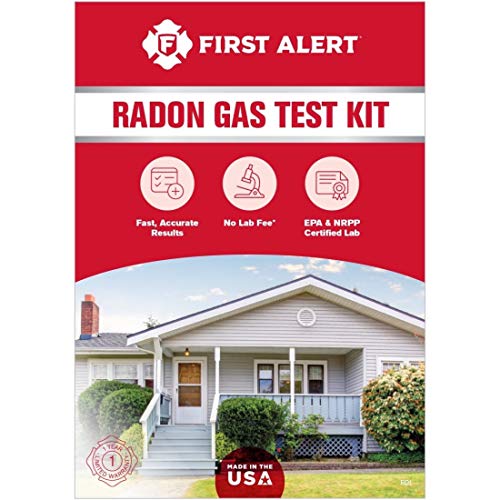
Best for the cheapest legitimate lab-analyzed screen from a familiar brand
- Short-term charcoal test with lab analysis
- Familiar mainstream safety brand
- Simple exposure instructions
- Postage-paid or low-cost return mailer depending on version
Why buy it: the lowest-cost way to find out whether you have a problem at all — and screening is a decision that should never be blocked by twenty dollars.

Best for continuous monitoring at a lower price than the RadonEye
- Displays a new result every 10 minutes
- Short-term and long-term averages
- Same Ecosense sensor family as the RadonEye
- Plug-in operation, no lab fees
Why buy it: most of what the RadonEye does for meaningfully less, which is the right trade if you want ongoing awareness rather than a mitigation diagnostic.
Quick Comparison
| Product | Best for | Rating | Price | Buy |
|---|---|---|---|---|
| AccuStar Charcoal Short-Term Radon Gas Test Kit, 48 to 96 Hour | Best Overall | — | Check (paid link) | |
| AccuStar Alpha Track Long-Term Radon Test Kit, 91 Days to 1 Year | Best Long-Term Kit | — | Check (paid link) | |
| Ecosense RD200 RadonEye Home Digital Radon Detector | Best Continuous Monitor | — | Check (paid link) | |
| Airthings Corentium Home Radon Detector, USA Version in pCi/L | Best Simple Monitor | — | Check (paid link) | |
| First Alert RD1 Radon Gas Test Kit | Best Budget Lab Kit | — | Check (paid link) | |
| Ecosense EB100 EcoBlu Home Radon Detector with 10-Minute Updates | Best Monitor Value | — | Check (paid link) |
How We Rank
We do not buy, expose or physically handle radon test kits. We rank them on evidence that scales: star ratings weighted by review volume, the measurement method and whether laboratory analysis is included in the price, the recurring failure modes that surface in critical reviews, long-term owner reports, and EPA guidance as a cross-check. For radon specifically we weight two things unusually hard — whether lab fees are genuinely included rather than charged on return, and whether the reported result comes with enough context to act on — because a cheap kit with a surprise lab bill and a bare number is worse than no kit. Prices were current at the time of writing. Full method on how we rank.
What the Numbers Mean
| Result (pCi/L) | EPA guidance | What to do |
|---|---|---|
| Below 2.0 | Low | Retest every few years, and after major foundation work |
| 2.0 – 3.9 | Consider mitigating | Confirm with a long-term test; mitigation is reasonable |
| 4.0 – 7.9 | At or above the action level | Confirm with a second test, then mitigate |
| 8.0 – 19.9 | Well above the action level | Short-term confirmation, then mitigate promptly |
| 20.0 and above | Very high | Two short-term tests, mitigate as a priority |
The EPA's position is that there is no known safe level of radon — 4.0 pCi/L is an action threshold, not a safety line. Risk is cumulative over years of exposure and is considerably higher for smokers and former smokers than for people who have never smoked. That is why an annual average from a long-term test carries more weight than a weekend reading, and why nobody should mitigate or relax on the basis of a single short-term number alone.
How to Run the Test Properly
Most bad radon results are procedural, not technical. The protocol matters:
- Test the lowest level you regularly use. A finished basement counts; an unused crawl space does not.
- Height: 20 inches to 6 feet off the floor. Breathing zone, not floor level.
- At least 3 feet from exterior walls, windows and doors, and away from drafts, heaters, fireplaces and humid areas.
- Closed-house conditions: keep windows and exterior doors shut except for normal entry, starting 12 hours before a short-term test and throughout it. Normal HVAC operation is fine; whole-house fans are not.
- Do not test during severe storms or high winds if you can avoid it — pressure swings move radon dramatically.
- Mail a charcoal kit immediately after the exposure window closes. Delay invalidates the result.
Winter results usually run higher than summer results, because a closed, heated house draws soil gas in through the stack effect. That is not an artifact to correct for; it is a real part of your annual exposure, and it is a strong argument for the long-term test.
Lab Kit or Digital Monitor?
They answer different questions, and the honest answer for most households is one of each over time.
| Lab kit | Digital monitor | |
|---|---|---|
| Up-front cost | $16–$35 | $130–$200 |
| Per-test cost after | Another kit each time | None |
| Result type | Lab-analyzed number, documented | Continuous readings and trends |
| Time to first result | Days to a week after mailing | About 10 minutes, useful in 24–48 hours |
| Best for | A defensible one-off measurement | Watching change and verifying mitigation |
| Accepted in a real estate sale | Often, if from a qualified lab | Generally not; a certified measurement is required |
If you are testing once to find out whether you have a problem, buy the kit. If you have already mitigated, are about to, or live somewhere with known high readings, the monitor pays for itself in about six lab tests and tells you things a kit never can — such as the fact that your levels triple every time the wind picks up, or that the mitigation fan stopped working last March.
If the Result Is High
First, confirm it. A single short-term test near or above 4.0 pCi/L should be followed by a second short-term test or, better, a long-term one. If the confirmed average is at or above the action level, the fix is a radon mitigation system — almost always active sub-slab depressurization, which is a sealed suction point under the slab, a pipe routed up through the house or outside, and a continuously running inline fan that vents soil gas above the roofline.
This is not a DIY project. System design depends on your foundation type, sub-slab material and house pressure dynamics, and a badly designed system can make things worse by depressurizing the house and backdrafting combustion appliances. Use a contractor certified through a national radon proficiency program, and check with your state radon office, which often maintains a list and sometimes offers free or discounted test kits. Costs vary widely by region and foundation type; get more than one quote. Requirements for disclosure and testing in real estate transactions are set at state level and differ substantially, so check your state's rules.
One important interaction: if you mitigate, retest afterwards, and keep your CO alarms in good order. Any system that changes house pressure can affect how fuel-burning appliances vent — see where to place a carbon monoxide detector.
What Owners Actually Complain About
Four themes repeat. Surprise lab fees is the largest and the reason listings are worth reading carefully — some cheap kits include the analysis, some charge on return, and buyers who assumed wrong are consistently the angriest reviewers. Result variability between tests confuses people who do not expect radon to swing by a factor of two or three with weather; it does, and that is the nature of the gas rather than a defective kit. Slow lab turnaround is a recurring irritation, particularly around real estate deadlines. And on the digital monitors, calibration drift and app dependence come up: manufacturers generally recommend factory recalibration every couple of years, and a monitor whose app is the only readout is a monitor at the mercy of a software update. The Airthings Corentium Home avoids that last one by putting the number on the device itself.
How to Choose Between These Six
Never tested before? The AccuStar short-term charcoal kit, or the First Alert RD1 if budget is the blocker. Short-term result near 4.0? The AccuStar Alpha Track long-term kit for a real annual average. Mitigation system installed, or about to be? The Ecosense RD200 RadonEye, to confirm it works and keep working. Want a number on a screen with no app? The Airthings Corentium Home. Want continuous monitoring for less? The Ecosense EB100. And if you are dealing with a damp basement alongside this, radon and moisture are separate problems with overlapping fixes — see best dehumidifier for a basement and what causes musty basement smell.
The Verdict
Buy the AccuStar short-term charcoal kit and run it this month. It is twenty-five dollars, it takes a weekend, and it converts an unknown into a number. If that number is near or above 4.0 pCi/L, follow it with the long-term alpha track kit and then talk to a certified mitigation contractor. If radon turns out to be a live issue in your house, the Ecosense RadonEye is the device that keeps you honest afterwards. Radon is one of the few household hazards where a single cheap test genuinely changes the odds, and the only wrong answer is not testing at all. General indoor-air monitoring, which does not include radon on most consumer devices, is covered in best air quality monitor, with everything else in the air quality hub. Check price on Amazon → (paid link)