 Garden
Affiliate Disclosure
Some links on this page are affiliate links. As an Amazon Associate, we earn from qualifying purchases — at no extra cost to you. We do not buy, test, or physically handle the products we cover; our rankings come from aggregated owner reviews, ratings and expert consensus. Commissions never change our verdicts. How we rank · full disclosure.
The short version: the best dehumidifier for a basement is the Midea Cube 35 Pint. A basement machine has a different job from a bedroom one — it runs for months on end in a cool, damp, often unattended space, and the thing that decides whether you keep using it is what happens to the water. The Cube solves that better than anything near its price, with a reservoir that expands to roughly three times a normal bucket and a gravity hose in the box. If your only drain is above the machine, skip straight to a model with a built-in pump: the hOmeLabs 4,000 sq ft or the Frigidaire 50 Pint with Pump.
This page is the basement-specific cut of our main best dehumidifier ranking. If the space is a garage rather than a basement, the cold-tolerance requirements change and best dehumidifier for a garage is the right page. If you want the whole house handled from one machine rather than a portable per floor, read best whole house dehumidifier.
Top Picks at a Glance
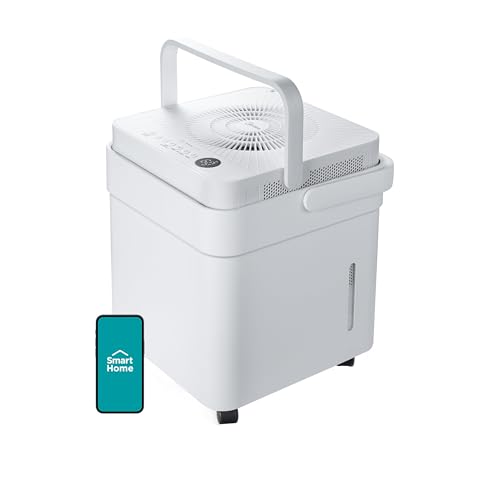
Our #1 Pick: Midea Cube 35 Pint
The Cube wins on the one variable that decides whether a basement dehumidifier stays useful: water handling. Conventional portables give you a bucket of roughly one to one and a half gallons, which in a damp basement fills in well under a day. The Cube’s reservoir telescopes upward into a much larger tank, so it goes considerably longer before it stops. When you are ready to stop emptying it entirely, the included hose runs to a floor drain or sump pit and the machine never shuts off again.
The rest of the specification is sensible rather than showy. It holds a humidity setpoint, restarts automatically after a power cut — which matters in a basement nobody visits daily — and reports its current reading to a phone so you can see what is happening down there without going down there. The filter is washable rather than a consumable.
Consensus Score █████████░░ 8.4 — strong owner consensus, with the reservoir design cited more than any other feature.
The honest weaknesses: it is physically tall in tank mode and needs headroom; the expanding reservoir has more seams than a plain bucket and a minority of owners report drips at the joint; and the app has drawn its share of connectivity complaints. For a basement with a nearby drain, none of that outweighs the water-handling advantage.
Check price on Amazon → (paid link)
The Ranked Field
Best for a typical finished or semi-finished basement up to about 3,500 sq ft
- Expanding reservoir holds far more than a normal bucket
- Continuous gravity drain hose included
- App and Alexa control with humidity setpoint
- Energy Star rated, washable filter
Why buy it: the only basement unit here that lets you skip both the daily bucket and a hose run — the tank expands to roughly three times a conventional one.

Best for an unfinished basement where price matters more than smart features
- Rated for spaces up to 2,000 sq ft
- Continuous drain outlet and hose
- 24-hour timer with auto restart
- Caster wheels and side handles
Why buy it: the highest owner rating in the mainstream basement class, at a price that undercuts the brand names by a clear margin.
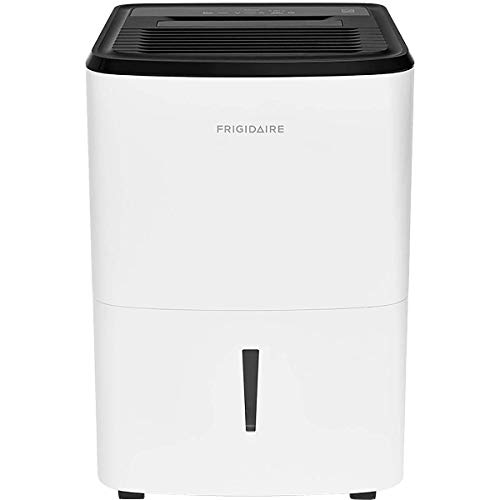
Best for a damp basement that needs raw extraction capacity
- 50 pints per day at current DOE test conditions
- Washable antibacterial filter
- Custom humidity setpoint with auto shut-off
- Continuous drain port on the back
Why buy it: the most extraction capacity per dollar from a brand with a real service network behind it.

Best for a basement where the only drain is above the machine
- Built-in condensate pump lifts water upward
- Rated for spaces up to 4,000 sq ft
- Continuous drain, bucket or pump modes
- Turbo mode for faster knockdown
Why buy it: a pump is the difference between a basement dehumidifier you empty twice a day and one you never touch.

Best for a chronically wet basement with a sink or window well as the only outlet
- 50 pint capacity plus an integrated pump
- Coverage claimed to 4,500 sq ft
- Effortless humidity control and auto restart
- Full-tank alert and washable filter
Why buy it: the combination most damp basements actually need — high extraction and a pump, from a mainstream brand.

Best for a crawl space or basement you want dried permanently and left alone
- 90 pints per day AHAM, 198 pints at saturation
- Condensate pump and long drain line
- Automatic defrost for cold basements
- Rare-earth alloy tube evaporator, 5-year warranty
Why buy it: built to run unattended in a cold, damp space for years — the class of machine a portable unit is imitating.
Quick Comparison
| Product | Best for | Rating | Price | Buy |
|---|---|---|---|---|
| Midea Cube 35 Pint Smart Dehumidifier | Best Overall | — | Check (paid link) | |
| Waykar 34 Pint Energy Star Dehumidifier for 2,000 Sq Ft | Best Value | — | Check (paid link) | |
| Frigidaire FFAD5033W1 50 Pint Dehumidifier | Best Big-Brand Pick | — | Check (paid link) | |
| hOmeLabs 4,000 Sq Ft Dehumidifier with Pump | Best With a Pump | — | Check (paid link) | |
| Frigidaire 50 Pint Dehumidifier with Pump | Best for Deep Damp | — | Check (paid link) | |
| AlorAir Basement and Crawl Space Dehumidifier, 90 Pint AHAM | Best Permanent Install | — | Check (paid link) |
How We Rank
We do not buy, test or physically handle dehumidifiers. We rank them on evidence that scales: star ratings weighted by review volume, DOE-standard pint ratings compared like for like rather than against marketing coverage claims, the recurring failure modes that surface in critical reviews, long-term owner reports written after a second season, and expert consensus across established outlets as a cross-check. For a basement page we weight three things harder than usual — drainage options, low-temperature behavior, and reported second-year reliability — because a basement machine runs cold, runs long, and gets ignored. Prices were current at the time of writing and move constantly. Full method on how we rank.
The Basement Dehumidifiers, Reviewed
1. Midea Cube 35 Pint — Best Overall
Covered above. What owners praise: the expanding reservoir, quiet running for a compressor unit, auto-restart after power loss, and honest energy consumption. What owners complain about: height in tank mode, occasional seepage at the reservoir seam, app pairing trouble, and a defrost cycle that gets busy below about 60°F. The most recommended mainstream basement dehumidifier we can point at.
2. Waykar 34 Pint — Best Value
Waykar is not a household name, and that is exactly why the price is where it is. What the owner record shows is a straightforward, well-rated machine: 34 pints, coverage claimed to 2,000 square feet, a continuous drain outlet, a 24-hour timer and auto restart. It carries the highest star rating of any mainstream unit in this ranking. What owners praise: price against capacity, simple controls with no app required, casters that actually roll, and quiet operation. What owners complain about: a short included hose that most people replace, a bucket that is awkward to carry when full, and thinner build quality than the Frigidaire. If the machine will sit next to a floor drain and run on a setpoint, this is a lot of dehumidifier for the money.
3. Frigidaire FFAD5033W1 50 Pint — Best Big-Brand Pick
Fifty pints is the size most genuinely damp American basements need, and Frigidaire is the brand with the widest parts and service footprint behind it. The specification is unremarkable in a good way: setpoint control, auto shut-off, a washable antibacterial filter and a rear drain port. What owners praise: extraction rate, straightforward controls, and the reassurance of a brand that answers the phone. What owners complain about: noise — a 50 pint compressor is not quiet, and this one is at the louder end of the class; a bucket that fills fast enough that the drain hose is effectively mandatory; and a scattering of reports of compressor failure in the second or third season. Buy it if you need the capacity and want mainstream support.
4. hOmeLabs 4,000 Sq Ft with Pump — Best With a Pump
The pump is the point. If your basement’s only outlet is a laundry sink, a window well or a standpipe above floor level, gravity drainage is impossible and you are back to carrying buckets. A built-in condensate pump pushes water upward through a small-bore line and turns a daily chore into a machine you look at twice a year. This one pairs the pump with high nominal coverage and a turbo mode for fast knockdown after a wet spell. What owners praise: genuinely set-and-forget operation, strong extraction, and the pump doing what it claims. What owners complain about: the lowest star rating in this ranking, driven mainly by reports of pump failures and of units losing performance in the second year; noise on turbo; and a bulky body. It is the right architecture with the weakest reliability record here, so buy it where the pump is essential and check the warranty terms.
5. Frigidaire 50 Pint with Pump — Best for Deep Damp
This is the combination a chronically wet basement usually needs: 50 pints of extraction and a pump so the water leaves without help. Frigidaire adds its usual setpoint control, auto restart and full-tank alerting. What owners praise: extraction capacity, the convenience of the pump, and the brand’s service network. What owners complain about: it carries the lowest rating of the Frigidaire units here, with the pump itself the most cited failure point; it is loud; and it is heavy to reposition. Worth it where damp is severe, but read the recent reviews before committing.
6. AlorAir 90 Pint AHAM — Best Permanent Install
This is a different class of machine, and the price says so. AlorAir builds low-profile units designed to be installed in a crawl space or basement, ducted or free-standing, and then left alone for years. Ninety pints per day AHAM — 198 at saturation conditions — a condensate pump, automatic defrost that lets it keep working at low temperatures, and a corrosion-resistant evaporator. What owners praise: it dries spaces that portables could not touch, runs unattended for seasons, and holds a setpoint in a cold crawl space where consumer units ice up and stall. What owners complain about: the price, a fan that is clearly audible in a finished space, and an installation that many owners hand to a contractor. If your basement or crawl space is a permanent moisture problem rather than a seasonal one, this is the honest answer.
Sizing a Basement Dehumidifier Properly
Capacity ratings changed in 2019, and most sizing advice online still has not caught up. The Department of Energy moved the test condition from 80°F to 65°F, which is much closer to real basement temperatures — and the effect was that the same physical machine now carries a smaller pint number. A modern 35 pint unit removes roughly what a pre-2019 50 pint unit did. If a chart tells you a 1,500 square foot basement needs 70 pints, it is using the old scale.
| Space | Condition | Modern rating to buy |
|---|---|---|
| Up to 1,000 sq ft | Slightly damp, occasional musty smell | 20 pint |
| 1,000–1,500 sq ft | Damp, smell persists in summer | 20–30 pint |
| 1,500–2,500 sq ft | Damp with visible condensation on pipes | 30–35 pint |
| 2,500 sq ft and up | Wet, damp walls, standing water after rain | 50 pint, or a fixed unit |
Buying one size up is the safer error. A larger machine reaches the setpoint faster and then cycles off, which uses less electricity overall than a small one running continuously and never quite getting there. To compare models on efficiency rather than guesswork, ENERGY STAR rates dehumidifiers by integrated energy factor in liters removed per kWh, and certified units use about 20 percent less energy than a similarly sized conventional one. Our full walkthrough is in what size dehumidifier for a basement.
The Cold-Basement Problem
A compressor dehumidifier works by chilling a coil below the dew point so water condenses on it. In a basement that sits at 55 to 60°F, that coil can drop below freezing and ice up, at which point airflow stops and extraction falls to nothing. Better machines detect this and run an automatic defrost cycle; cheaper ones simply run while doing nothing useful, which is the most common cause of the complaint that a dehumidifier stopped collecting water.
If your basement runs below about 60°F for long stretches, insist on stated auto-defrost, or consider a desiccant machine instead — desiccants use a moisture-absorbing wheel rather than a cold coil and are unbothered by low temperatures, at the cost of higher power draw and warm exhaust air. The comparison is set out in desiccant vs compressor dehumidifiers, and why a dehumidifier is not collecting water works through the diagnosis.
What Owners Actually Complain About
Read the critical reviews across all six machines and the same five themes repeat. Second-year failure leads, and it is the defining complaint of the portable dehumidifier category as a whole — compressors and pumps that worked perfectly for a season and then stopped. Pump reliability is a subset of that and lands hardest on the two pump-equipped models here. Noise is universal; every compressor unit in this ranking is clearly audible in a finished basement, and none is suitable directly below a bedroom. Bucket size generates constant irritation among owners who did not run a hose. And icing in cold basements, which owners often report as a fault when it is physics. Running costs, which surprise people the first time, are broken down in how much it costs to run a dehumidifier and do dehumidifiers use a lot of electricity — the per-kWh price to run those numbers against is published by state by the EIA.
Setup That Changes the Result
Position the machine centrally with at least a foot of clearance on all sides, not shoved against a wall behind boxes — these units pull air in and push it out, and a blocked intake halves the output. Close basement windows while it runs; a dehumidifier fighting outdoor air in July is drying the neighborhood. Set it to 45 to 50 percent rather than the lowest number available, and let it cycle.
Then deal with the water source. A dehumidifier is a moisture manager, not a waterproofing system. Check that downspouts discharge at least six feet from the foundation, that grade slopes away from the house, and that the sump pump works before you conclude the machine is undersized. Clean the filter monthly — a clogged filter is the second most common cause of poor performance after icing, and how to clean a dehumidifier covers the routine. If the smell is what brought you here, what causes musty basement smell works through the sources, and where to place a dehumidifier in a basement covers positioning in detail. Holding humidity in the EPA’s recommended range — below 60 percent, ideally 30 to 50 — limits mold and dust-mite growth in a space; that is a statement about the building, not about anyone’s health, and nothing here is medical advice.
How to Choose Between These Six
Typical basement with a floor drain nearby? The Midea Cube 35 Pint. Same job, lower budget? The Waykar 34 Pint. Genuinely wet, want a mainstream brand? The Frigidaire 50 Pint. No drain below the machine? The hOmeLabs or the Frigidaire with a pump, accepting the weaker reliability record that comes with pumps. Crawl space, or a permanent moisture problem you never want to think about again? The AlorAir. If you also need to know how long any of these should last, how long dehumidifiers last sets expectations, and the wider field is in the air quality hub.
The Verdict
For most basements the Midea Cube 35 Pint is the machine we would recommend: enough capacity for a normal damp basement under the current rating scale, the best water handling in its class, a setpoint it actually holds, and remote visibility of a room you rarely visit. Take the Waykar if you want the same job done for less, the Frigidaire 50 Pint if the space is genuinely wet, a pump model if gravity is not on your side, and the AlorAir if the problem is permanent. Whatever you buy, run a hose, set it to 45 to 50 percent, and fix the water getting in before you blame the machine. Check price on Amazon → (paid link)