 Garden
Affiliate Disclosure
Some links on this page are affiliate links. As an Amazon Associate, we earn from qualifying purchases — at no extra cost to you. We do not buy, test, or physically handle the products we cover; our rankings come from aggregated owner reviews, ratings and expert consensus. Commissions never change our verdicts. How we rank · full disclosure.
The short version: the best dehumidifier for a garage is the Waykar 34 Pint if the space is heated or attached, and the AlorAir 90 pint if it is not. That split is the whole story of this category. A garage is colder, dirtier and less air-sealed than any room in the house, and the single question that decides which machine works is temperature: below about 60°F a standard compressor unit ices its coil and stops collecting water, no matter what the pint rating says. Everything else — drainage, filter cleaning, placement — comes second to getting that right.
If the space is actually a basement, the requirements are milder and best dehumidifier for a basement is the right page. If you need the water to go uphill, best dehumidifier with a pump covers that specifically, and best dehumidifier is the general ranking.
Top Picks at a Glance
Our #1 Pick: Waykar 34 Pint
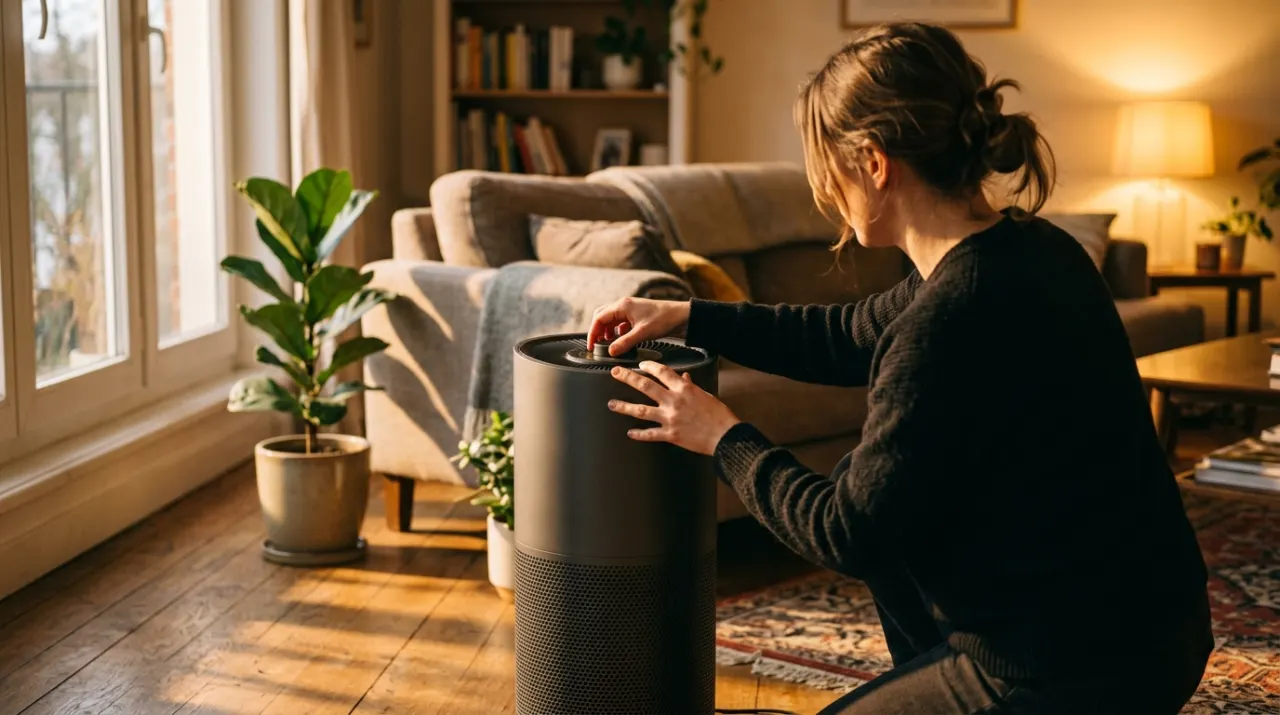
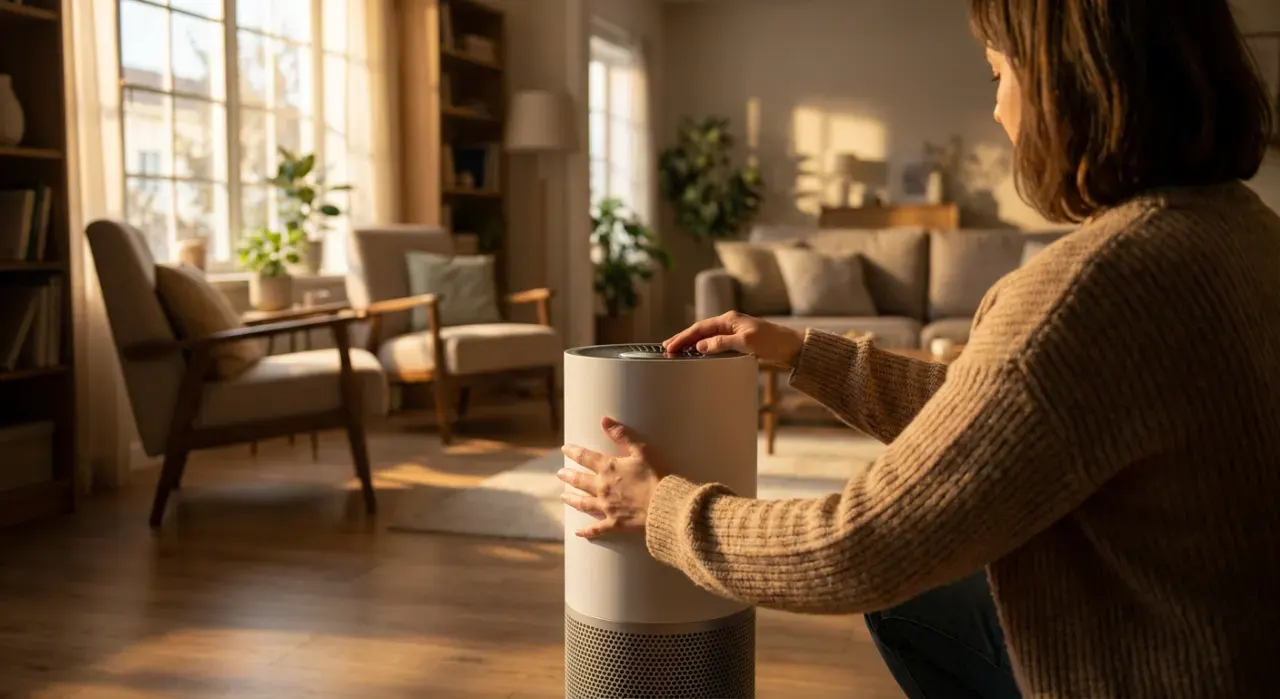
For an attached or heated garage — which is the majority of American garages that people actually want to dry — the Waykar is the sensible purchase. It carries the highest owner rating of any mainstream portable in this ranking, which is a striking result for a brand most buyers have not heard of, and its specification is exactly what a garage needs without paying for features that do not apply there.
Thirty-four pints under the current DOE scale is the equivalent of an old 50 pint machine, which suits a two-car garage. There is a continuous drain outlet, so a hose can run to a floor drain or out through a wall — essential, because a garage machine will fill a bucket far faster than you will remember to empty it. A 24-hour timer and auto restart handle the two things garages do to appliances: getting forgotten, and losing power when a compressor or a saw trips a shared circuit.
Casters and side handles matter more here than elsewhere. A garage dehumidifier gets moved — out of the way of a project, closer to a wet corner, aside when a car comes in.
Consensus Score █████████░░ 8.6 — the highest owner rating of any mainstream portable in this ranking.
The honest weaknesses: no genuine automatic defrost, so it is the wrong machine for an unheated garage in a cold climate; a short included hose most people replace; a bucket awkward to carry when full; thinner build than the Frigidaire; and support that consists of an email address.
Check price on Amazon → (paid link)
The Ranked Field

Best for a heated or attached two-car garage used as a workshop
- Coverage claimed to 2,000 sq ft
- Continuous drain outlet with hose
- 24-hour timer and auto restart after a power cut
- Casters and side handles for repositioning
Why buy it: the best-rated mainstream machine in the class, with auto restart — which matters in a garage on a circuit that trips when the compressor starts.
Best for a damp attached garage that needs real extraction capacity
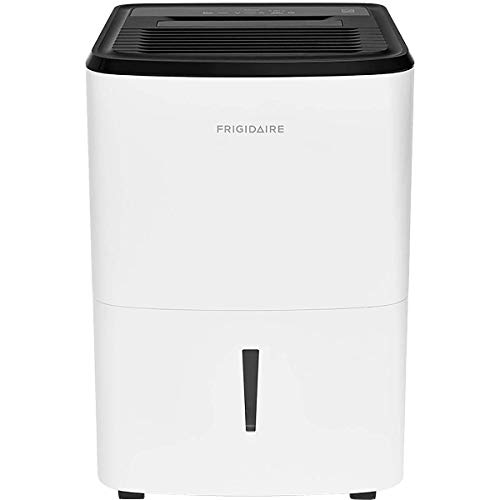
- 50 pints per day under current DOE conditions
- Washable antibacterial filter
- Custom humidity setpoint with auto shut-off
- Rear continuous drain port
Why buy it: more extraction per dollar than anything else here from a brand you can actually get parts for.

Best for an unheated garage or shop that sits below 60 degrees for months
- Automatic defrost keeps it collecting in the cold
- 90 pints per day AHAM, 198 at saturation
- Condensate pump with a long drain line
- Corrosion-resistant evaporator, 5-year warranty
Why buy it: the only machine here that keeps working in an unheated garage — every consumer portable ices up and stops.
Best for a garage you want to monitor from inside the house
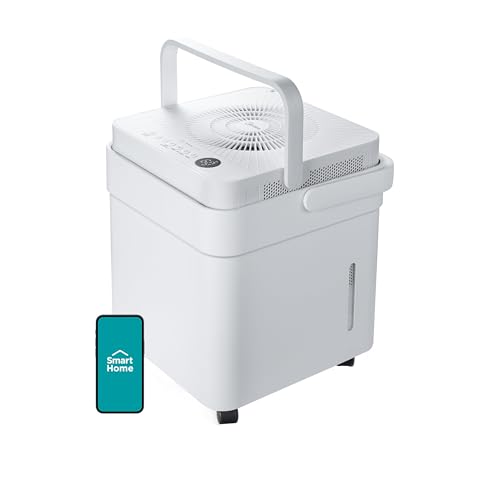
- Expanding reservoir holds roughly three times a normal bucket
- Gravity drain hose included
- App and Alexa control with a setpoint
- Energy Star rated with a washable filter
Why buy it: app reporting from a space you visit twice a day but never check the humidity in, plus a reservoir big enough to forgive a missed emptying.

Best for a three-car garage, a barn or a shop after water intrusion
- 140 pints per day at saturation conditions
- Coverage claimed to 6,000 sq ft
- Continuous drain hose and 2.1 gallon tank
- Roll cage and casters
Why buy it: the extraction rate a genuinely large or wet shop needs, in a body built to be wheeled around and knocked about.

Best for a garage with no floor drain and no way to run a hose downhill
- Built-in condensate pump lifts water upward
- Rated for spaces up to 4,000 sq ft
- Pump, gravity or bucket drainage modes
- Turbo mode for fast knockdown
Why buy it: a pump means the water can go out through a wall or up into a sink, which in most garages is the only route available.
Quick Comparison
| Product | Best for | Rating | Price | Buy |
|---|---|---|---|---|
| Waykar 34 Pint Energy Star Dehumidifier for 2,000 Sq Ft | Best Overall | — | Check (paid link) | |
| Frigidaire FFAD5033W1 50 Pint Dehumidifier | Best Big-Brand Pick | — | Check (paid link) | |
| AlorAir Basement and Crawl Space Dehumidifier, 90 Pint AHAM | Best for Cold Garages | — | Check (paid link) | |
| Midea Cube 35 Pint Smart Dehumidifier | Best Smart Pick | — | Check (paid link) | |
| COLZER 140 Pint Commercial Dehumidifier for Basements and Large Rooms | Best Very Large Space | — | Check (paid link) | |
| hOmeLabs 4,000 Sq Ft Dehumidifier with Pump | Best With a Pump | — | Check (paid link) |

How We Rank
We do not buy, test or physically handle dehumidifiers. We rank them on evidence that scales: star ratings weighted by review volume, DOE-standard pint ratings compared like for like, published low-temperature behavior and drainage options, the recurring failure modes that surface in critical reviews, long-term owner reports written after a second season, and expert consensus across established outlets as a cross-check. For a garage page we weight three things harder than usual — whether automatic defrost is genuinely present, how the machine handles dust and grit, and whether it can drain continuously without supervision — because a garage is cold, dirty and unattended. Prices were current at the time of writing. Full method on how we rank.
The Garage Dehumidifiers, Reviewed
1. Waykar 34 Pint — Best Overall
Covered above. What owners praise: price against capacity, simple controls, casters that roll on a rough slab, quiet running, and auto restart. What owners complain about: no real defrost so it stalls in a cold garage, a short hose, an awkward bucket, thinner build than the legacy brands, and email-only support. The right machine for a heated or attached garage.
2. Frigidaire FFAD5033W1 50 Pint — Best Big-Brand Pick
Fifty pints is the size a genuinely damp garage often needs, and Frigidaire is the brand with the widest parts and service footprint. The specification is conventional and competent: setpoint control, auto shut-off, a washable antibacterial filter and a rear drain port. In a garage the washable filter is a genuine advantage, because a garage loads a filter with sawdust, drywall dust and road grit far faster than a bedroom does. What owners praise: extraction rate, straightforward controls, and a company that answers the phone. What owners complain about: it is at the loud end of the class; the bucket fills fast enough to make a hose mandatory; and there is a recurring thread of second and third-year compressor failures. Buy it when you need capacity and want support.
3. AlorAir 90 Pint AHAM — Best for Cold Garages
If your garage is detached, unheated, and sits at 45 to 55°F for five months of the year, none of the portables above will work properly and this is the honest answer. AlorAir builds for restoration contractors: genuine automatic defrost so the coil clears and the machine keeps collecting, a condensate pump so the water leaves without gravity, a corrosion-resistant evaporator built for dirty wet environments, and a five-year warranty against the one year that is standard. What owners praise: holding a setpoint where portables stall, running unattended for whole seasons, and surviving conditions that kill consumer machines. What owners complain about: the price, a clearly audible fan, an install many owners hand to a contractor, and basic controls. The only correct choice for a cold garage.
4. Midea Cube 35 Pint — Best Smart Pick
A garage is a space you walk through twice a day without ever checking the humidity in it, which is exactly the case for app reporting. The Cube gives you a reading on your phone, a setpoint it holds, auto-restart after a power cut, and an expanding reservoir roughly three times a normal bucket — so a week of forgetting to empty it does not mean a week of the machine being off. Energy Star certification matters for something running most of the year. What owners praise: the reservoir, app visibility, quiet running for a compressor, and efficiency. What owners complain about: height in tank mode; occasional seepage at the reservoir seam; app pairing trouble; and a defrost cycle that gets busy below 60°F, so it is still not a cold-garage machine. Right for an attached garage you want to keep an eye on.
5. COLZER 140 Pint Commercial — Best Very Large Space
For a three-car garage, a workshop, a barn or a space that has taken water, the consumer portables are simply undersized. The Colzer moves a different order of water, comes with a continuous drain hose, and is built in a roll cage on casters so it can be wheeled to the wet corner and knocked about without concern. What owners praise: raw extraction, the roll cage and casters, continuous drainage, and drying spaces nothing else touched. What owners complain about: it is loud, it draws serious power, its coverage figure is measured at saturation and is optimistic for normal conditions, and it is uneconomical as a permanent trickle-duty machine. Buy it for a big shop or a water event.
6. hOmeLabs 4,000 Sq Ft with Pump — Best With a Pump
Most garages have no floor drain, and the slab often does not fall usefully in any direction — which makes gravity drainage impossible and a pump the only route. This unit pushes condensate up and out through a small-bore line, so it can go into a utility sink or through a wall penetration. Three drainage modes mean you are never stuck. What owners praise: genuinely set-and-forget operation, strong extraction, and the price against pumped competition. What owners complain about: the lowest star rating here, driven by pump failures and second-year performance loss; noise on turbo; a bulky body; and no genuine automatic defrost. Buy it where the pump is essential and the garage is heated.
The Cold-Garage Problem
This is the section that decides most garage purchases and it is worth understanding rather than trusting a marketing claim. A compressor dehumidifier pulls air over an evaporator coil chilled below the dew point, so moisture condenses out and drips into the reservoir. The colder the room, the colder that coil has to go — and below roughly 60°F it can drop below freezing.
Once it does, the condensate freezes on the coil instead of draining. Ice builds, airflow through the fins collapses, and the machine keeps running while collecting virtually nothing. Owners describe this as the dehumidifier stopping working, and it looks exactly like a fault: fan running, compressor running, empty bucket.
Two solutions exist. Automatic defrost senses the condition, pauses the compressor and runs the fan until the ice clears, then resumes — standard on commercial units, absent or token on most consumer portables. Desiccant technology avoids the problem entirely by using a moisture-absorbing wheel rather than a cold coil, which makes it excellent in cold spaces at the cost of higher power draw and warm exhaust air. The comparison is in desiccant vs compressor dehumidifiers, and the diagnosis is in why a dehumidifier is not collecting water.
Sizing a Garage Dehumidifier
| Garage | Condition | Modern rating |
|---|---|---|
| Single car, attached | Slightly damp, occasional condensation | 20 pint |
| Two car, attached or heated | Damp, tools showing surface rust | 30–35 pint |
| Two car, detached and unheated | Cold and damp for months | Commercial unit with defrost |
| Three car, shop or barn | Large volume, water intrusion | 50 pint upward, or commercial |
Two garage-specific adjustments. A bare concrete slab with no vapor barrier under it wicks groundwater continuously, and no dehumidifier will win that fight indefinitely — sealing the slab changes the arithmetic more than a bigger machine does. And cars driven in wet or snowy carry gallons of water in with them, releasing it over hours; if that is your pattern, size up. Broader sizing method is in what size dehumidifier for a basement. To compare two candidates on efficiency rather than pint claims, ENERGY STAR rates dehumidifiers by integrated energy factor in liters removed per kWh, and certified units use about 20 percent less energy than a similarly sized conventional model.
What Owners Actually Complain About
Read the critical reviews across all six machines and five themes repeat, and the first is garage-specific. Stopping in cold weather leads by a wide margin, and it is coil icing rather than a defect in almost every case. Filter clogging comes second and hits far harder here than in a house — sawdust, drywall dust and road grit blind a filter in weeks, and a blocked filter halves output. Second-year failure is third and is the defining complaint of the whole portable category. Bucket size irritates anyone who did not run a hose, and a garage fills a bucket fast. And noise, which is usually irrelevant in a garage unless it is attached and shares a wall with a bedroom. Running costs are in how much it costs to run a dehumidifier, and the per-kWh price to run them against is published by state by the EIA.
Setup That Actually Protects Tools and Cars
Raise the machine off the slab on a shelf, a bench or a couple of blocks. The floor is the coldest surface in the garage and the dirtiest, and both work against the appliance. Give it a foot of clearance at the intake and outlet, keep it away from the overhead door where cold outdoor air skews the humidity reading, and run a hose to a drain or through a wall rather than relying on the bucket.
Set it to 45 to 50 percent. Corrosion accelerates sharply above about 60 percent relative humidity, and dramatically faster when road salt is present, so that band is the practical target for protecting tools and a vehicle — and it aligns with the EPA recommendation to keep indoor relative humidity below 60 percent, ideally between 30 and 50, to limit mold and dust-mite growth. Clean the filter monthly rather than seasonally, because a garage loads it several times faster than a bedroom.
Then deal with the water you are not going to out-run. Check that the driveway and grade fall away from the door, that gutters above the garage discharge well clear, and that the door seal actually meets the slab. If the concrete is bare and constantly damp, sealing it does more than any machine. Cleaning routines are in how to clean a dehumidifier, settings in what to set a dehumidifier to, and a hygrometer or a device from best air quality monitor tells you where you actually are. Nothing here is medical advice.
How to Choose Between These Six
Attached or heated two-car garage? The Waykar 34 Pint. Genuinely damp, want mainstream support? The Frigidaire 50 Pint. Detached and unheated in a cold climate? The AlorAir — nothing else here will keep collecting. Want to check the humidity from indoors? The Midea Cube 35 Pint. Three-car garage, barn or after a flood? The Colzer 140 Pint. No drain and no downhill route? The hOmeLabs with a pump. For brand-level context see best dehumidifier brands, and everything else lives in the air quality hub.
The Verdict
For an attached or heated garage the Waykar 34 Pint is the machine we would recommend: the right capacity under the current rating scale, continuous drainage, auto restart after a power interruption, and the highest owner rating in its class. For a detached, unheated garage, buy the AlorAir instead — automatic defrost is not a luxury there, it is the difference between a working machine and an expensive fan. Raise it off the slab, run a hose, set it to 45 to 50 percent, and clean the filter monthly. Check price on Amazon → (paid link)