 Garden

Affiliate Disclosure
Some links on this page are affiliate links. As an Amazon Associate, we earn from qualifying purchases — at no extra cost to you. We do not buy, test, or physically handle the products we cover; our rankings come from aggregated owner reviews, ratings and expert consensus. Commissions never change our verdicts. How we rank · full disclosure.
Nine times out of ten it is the room, not the machine. A compressor dehumidifier condenses water on a cold coil, so if the room is below roughly 65 degrees Fahrenheit, the coil drops below freezing and moisture turns to frost instead of running into the bucket. The next most common causes are equally undramatic: the room has already reached the humidistat setpoint, so the compressor is off while the fan keeps running; or a clogged filter has choked airflow across the coil. Work through temperature, setpoint, filter and frost before assuming the sealed refrigeration system has failed.
We do not buy or physically handle the units we rank; our picks come from aggregated owner reviews and expert consensus, explained in how we rank. Model shortlists are in best dehumidifier, inside the air quality hub.
What should I check first?
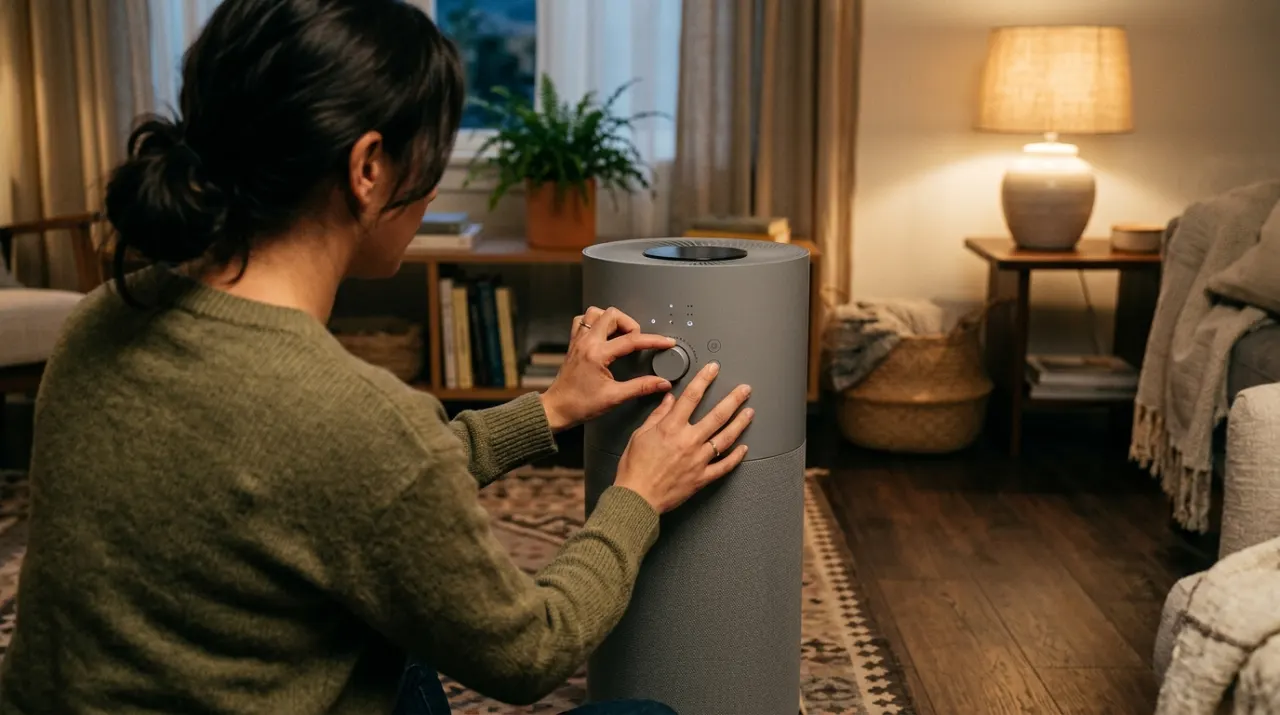
Check in this order, because it runs cheapest and most likely to least likely. Put a thermometer in the room and read the actual air temperature at the unit, not the thermostat upstairs. Then set the humidistat to continuous or its lowest number and give it a full hour before judging anything. Then pull the filter and hold it to a light. Only after those three should you open the grille and look at the coil.
| Symptom | Most likely cause | Fix |
|---|---|---|
| Fan runs, compressor never starts | Room already at setpoint | Set to continuous and retest for one hour |
| Runs constantly, no water, room under 65 °F | Coil frosting in cold air | Warm the space or switch to a desiccant unit |
| Visible white frost or ice on the coil | Restricted airflow or cold room | Thaw fully, clean filter, allow 12 in clearance |
| Weak airflow from the exhaust | Clogged filter or failing fan motor | Wash filter, confirm fan spins on all speeds |
| Shuts off with an empty bucket | Stuck float switch or misseated tank | Reseat the bucket, free the float |
| Water on the floor, none in the bucket | Drain hose fitted but running uphill | Give the hose continuous downhill fall |
| Compressor hums then trips off | Failed start capacitor or overload | Service call, usually not economic |
Why does temperature matter so much?
Because a refrigerant dehumidifier is a condensing machine, and condensation is entirely a function of surface temperature versus dew point. Warm air holds far more water than cold air, so a coil in a 78-degree laundry room is pulling from air loaded with moisture, while the same coil in a 55-degree garage is working on air that carries a fraction as much even at the same relative humidity. Worse, to get below the dew point in that cold room the coil itself must drop below 32 degrees, at which point the condensate freezes onto the fins and blocks airflow entirely. The unit then spends its time in defrost cycles rather than drying.
This is a design limit rather than a fault, and it is why manufacturers publish a minimum operating temperature in the specification sheet, commonly 41 degrees for models with auto-defrost and 65 degrees for basic units. For an unheated space that stays cold, the correct answer is a desiccant machine, which adsorbs moisture onto a rotating wheel and works down near freezing. The tradeoff in energy and heat output is laid out in desiccant vs compressor dehumidifier.
How does a dirty filter stop water collection?
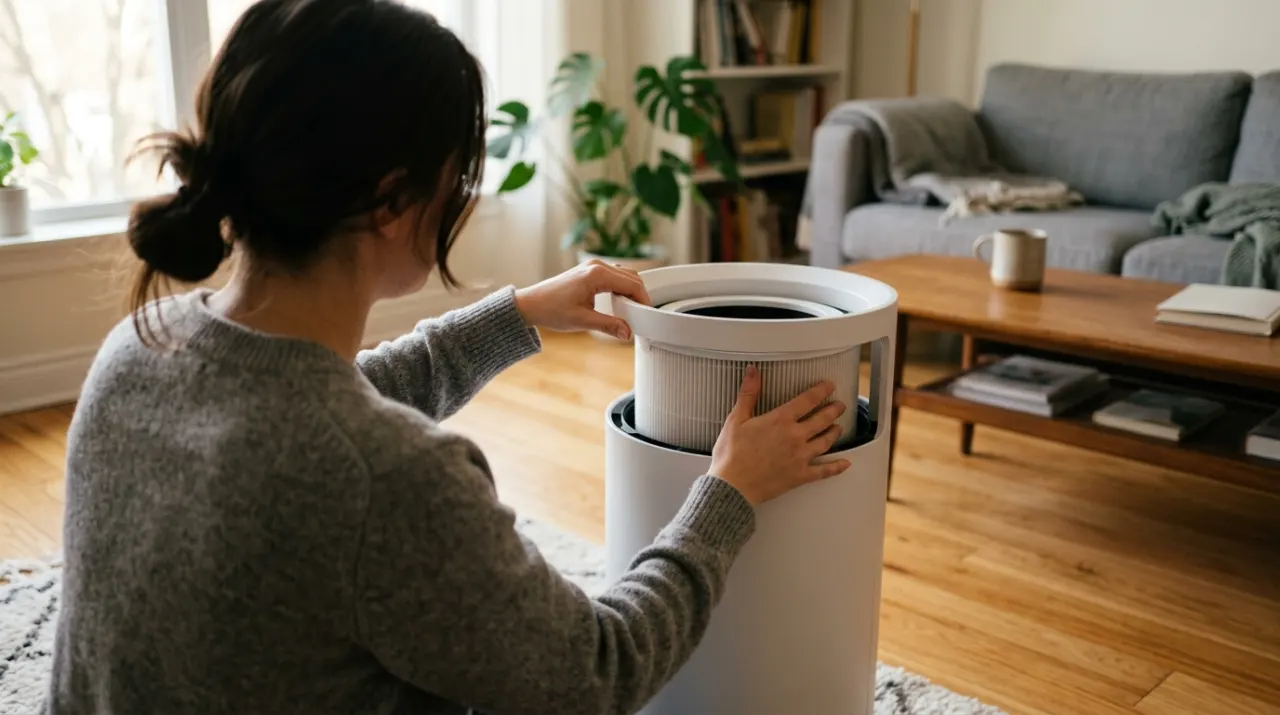
By starving the coil of the warm air it needs. The intake filter on most portables is a washable mesh screen, and in a basement or workshop it loads with lint and dust within weeks. Reduced airflow means the coil gets colder than designed, which is the same failure mode as a cold room: frost forms, the fins block, and collection falls to zero even though the compressor is running normally. Owners consistently report this as the fix that resolved a supposedly dead unit. Rinse the filter in warm water, let it dry completely, and reinstall it. Clearance matters for the same reason, so keep at least 12 inches of open space at the intake and exhaust and do not park the unit in a corner or against stored boxes. Full cleaning steps are in how to clean a dehumidifier.
How do I know the unit is actually fine?
Run the continuous test in the warmest, dampest hour of the day. Set the control to continuous, close the doors and windows to the space, and leave it alone for an hour with the room above 68 degrees. A healthy 50-pint unit in a genuinely damp room should show meaningful water in the bucket in that window. If it does, the earlier no-water period simply meant the room had already hit the target, and the setpoint may be higher than you want. See what should I set my dehumidifier to for the right number by room and season, and how long do dehumidifiers last for when age genuinely is the answer. If the unit fills faster than seems reasonable rather than not at all, that is a different question, covered in why does my dehumidifier fill up so fast.