 Garden
Affiliate Disclosure
Some links on this page are affiliate links. As an Amazon Associate, we earn from qualifying purchases — at no extra cost to you. We do not buy, test, or physically handle the products we cover; our rankings come from aggregated owner reviews, ratings and expert consensus. Commissions never change our verdicts. How we rank · full disclosure.
The short answer: buy Midea. It is one of the world’s largest appliance manufacturers and it sells under its own name, so you get the factory rather than a reseller’s badge — which decides parts and accountability. Buy Frigidaire instead if you want a service network you can actually reach, and AlorAir if the damp is permanent and you want years of warranty rather than months.
This page answers which brand. It does not answer which model. Each entry names one representative machine to anchor the company and nothing more — the model-by-model ranking is at best dehumidifier, which is where the buying decision actually gets made. Then narrow by job with best dehumidifier for a basement, best dehumidifier with a pump or best whole house dehumidifier.
Start Here: Brand Means Less in This Category Than Any Other
A residential dehumidifier is a small refrigeration circuit — compressor, condenser, evaporator, fan, controller — and a handful of large manufacturers build the majority of them for the entire market. Midea is one of the biggest. Many familiar names on American shelves are badges applied to machines from those same factories, sometimes with a different fascia and a different bucket.
That single fact explains three things buyers find baffling. Why units from unrelated brands share a control layout and a bucket profile. Why the same failure modes — second-season compressor loss, pump failure, icing in cold rooms — recur regardless of badge. And why comparing compressor quality between brands is largely a waste of effort.
So the brand-level axes that do differ, and that this page ranks on, are the ones that come into play after the sale:
- Warranty length and what it actually covers — a sealed-system term is not the same as full cover.
- Parts availability years later — whether a failed float, board or fan motor can be ordered at all.
- Support model — a retail service network, a manufacturer, a contractor channel, or an email address.
- Manufacturer or badge — whether the company designed the machine or bought it.
- Breadth of range — from a $20 desiccant tub to a $900 crawl space unit.
- Consumables — small in this category, and that in itself is worth knowing before you compare it with a purifier.
The Brands at a Glance
Our #1 Brand: Midea
Midea is unusual here because it is both an original manufacturer and a consumer brand. It builds compressors and complete units that appear under other names, and it also sells directly — which strips out a layer of margin without stripping out the manufacturer’s own accountability. When something goes wrong you are talking to the company that made it.
What it does better than the others. Design originality, which is rare in a badge-engineered category. Almost every portable dehumidifier uses the same architecture with a one to one-and-a-half gallon bucket. The Cube’s reservoir telescopes upward into a much larger tank, which meaningfully changes ownership: in a damp basement it runs far longer before it stops and waits for you. Add a gravity hose in the box, a pump option, app control with a real setpoint, ENERGY STAR certification — worth about 20 percent less energy than a similarly sized conventional unit — and auto-restart after a power cut, and it is the most thought-through consumer dehumidifier on the mainstream market.
Consensus Score █████████░░ 8.4 — strong owner consensus, with the reservoir design cited more than any other feature.
Where it is weak. Midea is not immune to the category’s second-season failure complaints, and its own star ratings are mid-range rather than class-leading — which is honest evidence that manufacturing the machine does not exempt you from the category’s physics. The tall reservoir needs headroom. The expanding tank has more seams than a plain bucket and a minority of owners report drips. The app draws its share of connectivity criticism. And warranty terms are standard rather than generous: read the distinction between the overall term and the longer sealed-system term, because the parts that usually fail sit outside the sealed system.
Check price on Amazon → (paid link)
The Brands, Ranked

Best for a basement or main floor where you want the manufacturer rather than a badge
- One of the largest appliance manufacturers in the world
- Builds units and compressors that appear under other brand names
- Expanding reservoir holds around three times a normal bucket
- Parts and support handled by the manufacturer, not a reseller
Why buy it: Midea is the rare case where you can buy from the factory rather than from a company that ordered a batch and printed its logo on it.
Best for a damp basement where being able to get a part matters as much as the specification
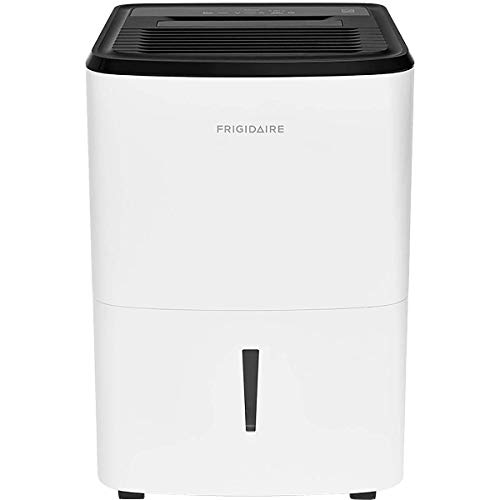
- An Electrolux brand with a long US retail history
- The widest parts and service footprint in this ranking
- Washable filter, so no filter subscription
- Conventional design with nothing unusual to source
Why buy it: Frigidaire sells infrastructure as much as hardware — parts you can order and a company that answers, which is worth real money on a machine that runs eight months a year.

Best for a straightforward basement job at the lowest sensible price, support risk accepted
- Direct-to-marketplace brand with no retail overhead
- The highest owner rating of any mainstream brand here
- Energy Star rated with a continuous drain outlet
- Support is an email address, not a service network
Why buy it: Waykar sells the same commodity refrigeration circuit as the legacy names and skips the retail margin, which is a genuine saving if you can live without a service network.

Best for a crawl space or basement you intend to dry permanently and stop thinking about
- Built for restoration contractors first, homeowners second
- Multi-year limited warranty where one year is the consumer norm
- Automatic defrost so it keeps working in a cold space
- Corrosion-resistant coils and a condensate pump as standard
Why buy it: AlorAir is the only brand here that covers its machines for years rather than months, and the build is the reason it can.

Best for a crawl space job where the specialist price is out of reach
- Commercial-format capability at a clear discount
- Condensate pump and long drain line included
- Humidity control for unattended running
- Shorter company track record than the established specialists
Why buy it: COLZER offers the commercial architecture at a discount, with a thinner support history as the honest trade-off.

Best for a closet, gun safe, boat or stored vehicle with no outlet anywhere near it
- Renewable silica gel — no electricity while working
- No compressor, no filter, no consumables at all
- Color indicator shows when to renew
- Multi-year warranty advertised on a $20 product
Why buy it: the only brand here with genuinely zero running cost and nothing that can fail, because there is nothing in it that moves.
Quick Comparison
| Product | Best for | Rating | Price | Buy |
|---|---|---|---|---|
| Midea Cube Dehumidifier with Pump and Drain Hose, 35 Pint Smart Dehumidifier for Basement | Best Brand Overall — Midea | — | Check (paid link) | |
| Frigidaire FFAD5033W1 Dehumidifier with 50 Pint Capacity and Washable Antibacterial Filter | Best Legacy Brand — Frigidaire | — | Check (paid link) | |
| Waykar 34 Pints Energy Star Dehumidifier for Spaces up to 2,000 Sq Ft with Drain Hose | Best Value Brand — Waykar | — | Check (paid link) | |
| ALORAIR Crawl Space Basement Dehumidifier 70 Pint with Pump and Automatic Defrost | Best Warranty Brand — AlorAir | — | Check (paid link) | |
| COLZER Crawlspace Commercial Dehumidifier with Pump and Drain Hose, 70 Pints AHAM | Best Budget Specialist — COLZER | — | Check (paid link) | |
| Eva-Dry Wireless Mini Dehumidifier E-333 | Best No-Power Brand — Eva-Dry | — | Check (paid link) |
Warranty, Parts and Support Compared
| Brand | What it is | Published warranty position | Parts years later | Range breadth |
|---|---|---|---|---|
| Midea | Original manufacturer selling direct | Standard term, longer on the sealed system | Manufacturer-supported | 20 to 50 pint portables |
| Frigidaire | An Electrolux brand | Standard term, longer on the sealed system | Widest here — retail service channel | Mid-size to large portables |
| Waykar | Direct-to-marketplace brand | Short standard term | Hoses and filters only | Basement portables |
| AlorAir | Restoration equipment specialist | Multi-year limited — longest here | Contractor parts channel | Crawl space and commercial |
| COLZER | Direct-to-marketplace brand | Short standard term | Hoses and filters only | Portable through commercial |
| Eva-Dry | Renewable desiccant specialist | Multi-year advertised on a $20 unit | Nothing to replace | Small enclosed spaces only |
Warranty terms change without notice; confirm on the listing for the specific model rather than trusting a brand-wide claim. The structural pattern is the part worth remembering, and it is consistent: consumer portables are covered for a year, specialist units for several, and that difference tracks how the machines are built and who is expected to install them.
Consumables: The Good News
Unlike air purifiers and coffee makers, dehumidifiers are cheap to keep. Almost every brand here uses a washable filter, so there is no recurring media cost and no filter subscription to price in. What you should budget for instead are the parts that wear:
- Drain hose. The one supplied is usually short and stiff and most owners replace it in the first week. A generic garden hose fits most units.
- Condensate pump. On pump-equipped machines this is the single weakest link across every brand. On Midea and AlorAir it is serviceable; on the direct brands it usually is not.
- Bucket float and control board. The common electrical failures. Frigidaire is the only brand here where ordering one is routine.
- Desiccant renewal. Eva-Dry has no consumable at all — you plug the unit in to dry the beads and reuse it indefinitely.
The upshot is that in this category consumables are not the hidden cost. Replacement machines are. A brand whose $250 unit dies in month fourteen with no parts available has cost you $250 a year; a brand whose $700 unit is repairable for a decade has not. That is the whole argument for weighting warranty and parts as heavily as we do here, and the lifespan picture is set out in how long dehumidifiers last.
How We Rank Brands
We do not buy, test or physically handle dehumidifiers. On a brand page we weight different evidence from a product roundup. Star ratings are read across a brand’s whole range rather than at its best-selling unit. Published warranty documents are read for what they exclude as well as what they cover. Parts and service availability is checked directly, because it is the difference between a repair and a landfill. Long-tail owner reports — the ones written after a second season, when compressors and pumps start to fail — carry far more weight than launch-window reviews. And we note whether a company designs its own machines or badges someone else’s, since that is the clearest predictor of whether anyone can help you in year three. Prices were current at the time of writing. Full method on how we rank.
The Brands, Assessed
1. Midea — Best Brand Overall
Covered above. Who it is for: an ordinary damp basement or main floor, where you want the manufacturer on the hook. What it does better: it designs rather than badges, the Cube reservoir is a genuine improvement on a stale format, and support runs back to the factory. Where it is weak: mid-range star ratings that reflect the category’s real failure rate, height in tank mode, occasional seepage at the reservoir seam, app pairing trouble, a busy defrost cycle in a cold basement, and warranty terms that are standard rather than a selling point.
2. Frigidaire — Best Legacy Brand
Who it is for: the buyer who has been burned by an appliance with nobody behind it. Frigidaire is an Electrolux brand with a long American retail history, and what it actually sells in this category is infrastructure: parts you can order, a service channel that exists, and a company with a reputation to protect. Its machines are conventional, competently built and unremarkable, and its owner ratings are respectable rather than class-leading.
What it does better: parts availability years later, which is the widest of any brand here, plus extraction capacity and simple controls. Where it is weak: noise at the loud end of the class; a bucket that fills fast enough to make a hose effectively mandatory; a recurring thread of second and third-season compressor failures that the brand name does not protect you from; and warranty terms no better than the direct brands, so the value is in the parts channel rather than in the paperwork. Buy it when support matters more than the last ten percent of specification.
3. Waykar — Best Value Brand
Who it is for: a plain basement drying job on a budget, by someone who accepts that a failure means a new machine. Waykar is a direct-to-marketplace brand with no retail presence, and the entire proposition is specification per dollar. Its 34 pint unit carries the highest star rating of any mainstream machine in this ranking, which is a genuinely notable result for a brand most buyers have never heard of.
What it does better: price against capacity, straightforward operation with no app to fight, casters that roll properly, quiet running, and an Energy Star rating. Where it is weak: support is an email address with no service network and no parts beyond hoses and filters; the included hose is short and most owners replace it; the bucket is awkward to carry when full; build quality is thinner than Frigidaire’s; and the warranty is short. Excellent value with the support risk correctly priced in.
4. AlorAir — Best Warranty Brand
Who it is for: a crawl space, an unfinished basement, or any moisture problem you have decided to solve permanently. AlorAir sells to restoration contractors first, and that shapes everything: low-profile bodies designed to fit under a house, automatic defrost so they keep working at low temperatures, corrosion-resistant coils, condensate pumps as standard, and multi-year limited warranties where the consumer norm is one year.
What it does better: warranty cover measured in years, a parts channel aimed at people who repair equipment for a living, and the ability to hold a setpoint in cold spaces where consumer portables ice up and collect nothing. Where it is weak: the price, which is several times a portable; a clearly audible fan that makes it unsuitable for a finished room; an installation many owners hand to a contractor; and a modest review base compared with the mass-market names, so the owner evidence is thinner even though what exists is positive. If the moisture problem is permanent, this is the honest answer.
5. COLZER — Best Budget Specialist
Who it is for: the same crawl space job as AlorAir, at a price that makes it possible. COLZER competes directly with the restoration specialists on format — commercial-style bodies, condensate pumps, long drain lines, humidity control for unattended running — at a clear discount.
What it does better: commercial capability per dollar, and a range that stretches from portables up to very large capacity units, so a buyer can stay in one brand across quite different jobs. Where it is weak: a much shorter company track record than AlorAir, a small review base that makes durability hard to judge, direct-only support with no contractor parts channel, and a short warranty on equipment that is expected to run continuously. The discount is real and so is the reason for it.
6. Eva-Dry — Best No-Power Brand
Who it is for: a closet, a gun safe, a boat, a stored vehicle or an RV in winter — anywhere with no outlet and a small sealed volume. Eva-Dry sells renewable silica gel units rather than refrigeration: no compressor, no fan, no filter, no power while working. When the beads saturate the indicator changes color, you plug the unit into an outlet for a few hours to drive the moisture off, and reuse it indefinitely.
What it does better: zero running cost, nothing that can mechanically fail, a multi-year warranty advertised on a twenty-dollar product, and a genuine answer to a problem no compressor unit can solve. Where it is weak: capacity is tiny and it is completely wrong for a room, let alone a basement; the renewal cycle takes hours during which it does nothing; and in a genuinely damp space the beads saturate quickly. Buy it for what it is, and read desiccant vs compressor before assuming it scales.
The brands just outside this list
Pro Breeze effectively created the mini thermoelectric category and remains the reference for a small powered unit in a closet or bathroom — it is a model-level recommendation, and it is ranked at best dehumidifier and reviewed in our Pro Breeze review. hOmeLabs built its name putting integrated condensate pumps into machines priced against basic units, which is a genuinely useful feature set; it is kept off this list because its owner ratings are the weakest of the mainstream field and its support is direct-only, so it is better chosen as a specific product than as a brand to trust across a range.
What Owners Complain About, Whatever the Badge
Read the critical reviews across every brand and the same five themes repeat. Second-season failure leads and defines the category — and it is the reason warranty and parts sit at the top of our weighting. Noise is universal; every compressor unit here is clearly audible in a finished room. Bucket size irritates anyone who did not run a hose. Icing in cold spaces is reported as a fault when it is usually physics: a coil below freezing stops collecting, which is why automatic defrost matters and why the specialist brands exist. And pump failure, which is the weakest link in every pump-equipped machine on the market regardless of price.
How to Choose Between These Brands
Ordinary basement, want the manufacturer behind it? Midea. Want to be able to order a part in year four? Frigidaire. Lowest price and you accept replacement over repair? Waykar. Permanent crawl space problem, want it warranted for years? AlorAir. Same job, tighter budget? COLZER. Closet, safe, boat or stored vehicle? Eva-Dry.
Then pick the actual machine at best dehumidifier, size it with what size dehumidifier for a basement, and check the running cost in how much it costs to run a dehumidifier against your own state’s residential electricity price from the EIA. Whichever badge you land on, set it to hold the EPA’s band of below 60 percent relative humidity, ideally 30 to 50. Everything else is in the air quality hub.
The Verdict
Midea is the dehumidifier brand we would tell a friend to buy: it manufactures rather than badges, the Cube is the most genuinely improved consumer design in years, and support runs back to the factory. Choose Frigidaire for parts you can order, Waykar to spend less, AlorAir if the problem is permanent, COLZER for the same job cheaper, and Eva-Dry for a closet or a stored vehicle. And keep the underlying reality in view: most of these compressors come from the same few factories, so buy on warranty, parts and drainage, not on the badge. Check the current Midea price on Amazon → (paid link)