 Garden
Affiliate Disclosure
Some links on this page are affiliate links. As an Amazon Associate, we earn from qualifying purchases — at no extra cost to you. We do not buy, test, or physically handle the products we cover; our rankings come from aggregated owner reviews, ratings and expert consensus. Commissions never change our verdicts. How we rank · full disclosure.
The short version: the best whole house dehumidifier is the AlorAir 90 pint AHAM crawl-space unit. The reason to move from a portable to a whole-house machine is almost never capacity alone — it is that portables are built for a season in a warm room, and a whole-house problem means a cold, dirty, unattended space running eight months a year. The features that matter there are automatic defrost, a condensate pump, corrosion resistance and a warranty measured in years. AlorAir has all four. If you want the coverage without a permanent install, the hOmeLabs 4,000 sq ft and the Midea Cube 50 Pint with pump are the credible portable answers.
If the problem is actually one room, do not buy a machine at this price — best dehumidifier for a basement and best dehumidifier for a garage cover the portable field, and best dehumidifier is the general ranking. If drainage is the deciding factor, best dehumidifier with a pump is the closer match.
Top Picks at a Glance
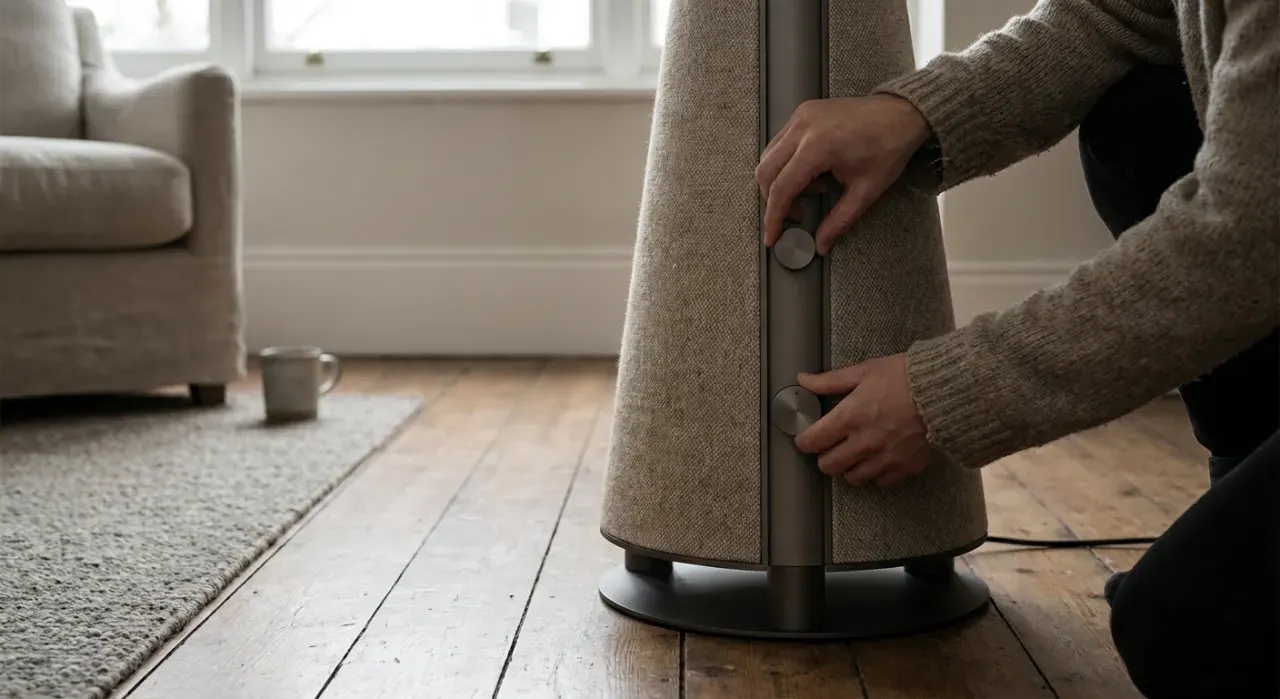
Our #1 Pick: AlorAir 90 Pint AHAM
AlorAir builds for restoration contractors, and that origin explains every design decision. The body is low and wide so it fits under a floor joist in a crawl space. The evaporator is corrosion resistant, because crawl spaces are wet and dirty. The controls are minimal because nobody is going to stand there adjusting them. And the warranty runs to five years, where the consumer portable standard is one.
Two features do the actual work. Automatic defrost lets it keep collecting water at temperatures where a consumer machine ices its coil and runs uselessly — that is the difference between a machine that dries a 55°F crawl space and one that just makes noise in it. A built-in condensate pump with a long line means the water leaves the space without gravity cooperating, which under a house it almost never does.
Rated at 90 pints per day AHAM and 198 at saturation conditions, it will handle a large basement or a full crawl space. Note the two figures — the AHAM number is the honest one, and comparing a competitor’s saturation figure to an AHAM figure is the most common sizing mistake in this category.
Consensus Score █████████░░ 8.9 — the strongest owner consensus of any fixed dehumidifier in this ranking.
The honest weaknesses: the price is several times a portable; the fan is clearly audible if the unit ends up in a finished space; many owners hand the installation to a contractor; and it is heavy and awkward to position alone.
Check price on Amazon → (paid link)
The Ranked Field

Best for a crawl space or basement that should be dried permanently and left alone
- 90 pints per day AHAM, 198 pints at saturation
- Built-in condensate pump with a long drain line
- Automatic defrost keeps it working in cold spaces
- Corrosion-resistant evaporator, 5-year warranty
Why buy it: the machine consumer portables are imitating — low profile, pumped, defrosting, and warranted for five years rather than one.

Best for a smaller crawl space or a targeted install under 1,000 sq ft
- 70 pints per day with automatic defrost
- Condensate pump included
- Memory start after a power interruption
- cETL listed for permanent installation
Why buy it: the same commercial architecture in a smaller, cheaper body — right when 90 pints would be overkill for the volume.

Best for a crawl space job where the AlorAir price is out of reach
- 145 pints per day at saturation, 70 AHAM
- Condensate pump and drain hose included
- Coverage claimed to 6,000 sq ft
- Humidity control with automatic operation
Why buy it: commercial-format capability at a clear discount to the specialists, with a shorter track record as the trade-off.

Best for covering an open floor plan without a permanent installation
- Built-in condensate pump lifts water upward
- Rated for spaces up to 4,000 sq ft
- Pump, gravity or bucket drainage
- Turbo mode for fast knockdown
Why buy it: a fraction of the price of a fixed unit, and for an open floor plan with good air movement it can genuinely serve as a house dehumidifier.
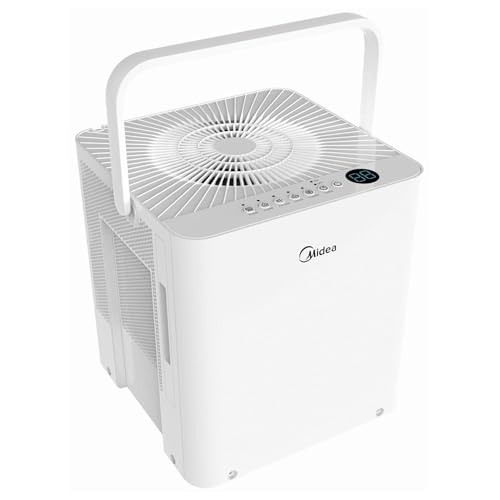
Best for a large main floor where you want app control and no bucket
- Built-in pump plus a 16 ft drain tube
- Expanding reservoir as a fallback
- App and Alexa control with a setpoint
- Energy Star Most Efficient rating
Why buy it: the only unit here you can check and adjust from a phone, which matters for a machine in a basement nobody visits.

Best for a very large basement, workshop or building after water damage
- 140 pints per day at saturation conditions
- Coverage claimed to 6,000 sq ft
- Continuous drain hose and 2.1 gallon tank
- Roll cage and casters for repositioning
Why buy it: the raw extraction rate you need after a flood or in a genuinely large structure, in a form you can wheel where it is needed.
Quick Comparison
| Product | Best for | Rating | Price | Buy |
|---|---|---|---|---|
| AlorAir Basement and Crawl Space Dehumidifier, 90 Pint AHAM | Best Overall | — | Check (paid link) | |
| AlorAir Crawl Space Basement Dehumidifier 70 Pint with Pump | Best Ducted Option | — | Check (paid link) | |
| COLZER Crawlspace Commercial Dehumidifier with Pump, 70 Pint AHAM | Best Value Commercial | — | Check (paid link) | |
| hOmeLabs 4,000 Sq Ft Dehumidifier with Pump | Best Portable Whole-House | — | Check (paid link) | |
| Midea Cube 50 Pint Dehumidifier with Built-in Pump | Best Smart Portable | — | Check (paid link) | |
| COLZER 140 Pint Commercial Dehumidifier for Basements and Large Rooms | Best Very Large Capacity | — | Check (paid link) |
How We Rank
We do not buy, test or physically handle dehumidifiers. We rank them on evidence that scales: star ratings weighted by review volume, AHAM pint ratings compared against each other rather than against saturation figures, published warranty terms, the recurring failure modes that surface in critical reviews, long-term owner reports written after multiple seasons, and expert consensus across established outlets as a cross-check. For a whole-house page we weight three things harder than usual — whether automatic defrost is genuinely present, whether a condensate pump is integrated, and how long the warranty runs — because a fixed unit runs cold, runs long, and is expected to be forgotten. Prices were current at the time of writing. Full method on how we rank.
The Whole House Dehumidifiers, Reviewed
1. AlorAir 90 Pint AHAM — Best Overall
Covered above. What owners praise: drying spaces that portables could not touch, running unattended for seasons, holding a setpoint in a cold crawl space, and a warranty long enough to matter. What owners complain about: the price, a clearly audible fan in a finished space, installation most owners contract out, and a control interface that is basic. The class benchmark.
2. AlorAir 70 Pint with Pump — Best Ducted Option
The 70 pint unit is the same commercial architecture in a smaller body, and for a crawl space under roughly 1,000 square feet it is the more sensible purchase. Automatic defrost, integrated pump, memory start after a power interruption — that last feature is easy to overlook and important in a space nobody checks, because a machine that stays off after a summer storm outage is a machine not working through the wettest month. cETL listing means it is intended for permanent installation rather than being a portable pressed into service. What owners praise: the size-to-capability match for a small crawl space, quiet enough for a basement corner, and the memory start. What owners complain about: still an expensive machine for a small space, a drain line that needs planning, and documentation that assumes contractor knowledge. The right pick where 90 pints would be overkill.
3. COLZER Crawlspace Commercial with Pump — Best Value Commercial
Colzer competes with AlorAir on architecture at a lower price. You get a crawl-space format, a condensate pump, a drain hose and 70 pints AHAM capability with a claimed 6,000 square feet of coverage. What owners praise: capability per dollar, the pump working as described, and a real difference in a previously damp crawl space. What owners complain about: a shorter track record than AlorAir, warranty terms that are less generous, support that is thinner when something goes wrong, and coverage claims that are optimistic relative to AHAM output. Right when the AlorAir price is the obstacle and you accept a shorter proven history.
4. hOmeLabs 4,000 Sq Ft with Pump — Best Portable Whole-House
This is the pragmatic answer for a lot of American homes: an open floor plan, decent circulation, and a portable with a pump doing the whole-house job for a third of the price of a fixed unit. The pump matters most — it turns a machine you empty daily into one you look at twice a year — and turbo mode handles the recovery after a wet spell. What owners praise: genuinely set-and-forget operation, strong extraction, and the price against the alternatives. What owners complain about: the lowest star rating here, driven by pump failures and second-year performance loss; noise on turbo; a bulky body; and no automatic defrost worth the name, so it struggles in a cold crawl space. Right for an open, heated floor plan; wrong for an unheated crawl space.
5. Midea Cube 50 Pint with Pump — Best Smart Portable
The Cube is the most thought-through consumer dehumidifier on the market, and the pump version removes its last real limitation. It combines an integrated pump and a 16 foot drain tube with the expanding reservoir as a fallback, holds a setpoint, restarts after a power cut, and reports its reading to a phone. That last point is genuinely useful for a whole-house setup, because the machine is invariably in a room you never enter. What owners praise: app visibility, the pump, Energy Star efficiency, quiet running for its class, and auto-restart. What owners complain about: 50 pints is less capacity than a fixed unit, so a truly wet whole house will outrun it; tall in reservoir mode; app connectivity issues; and defrost behavior that gets busy below 60°F. The best portable if you want visibility and control.
6. COLZER 140 Pint Commercial — Best Very Large Capacity
This is the machine for the situation rather than the house: a flooded basement, a very large workshop, a building under restoration. At 140 pints per day at saturation with a continuous drain hose and casters, it removes water at a rate none of the others approach, and it can be wheeled to where the problem is. What owners praise: raw extraction after water damage, the roll cage and casters, and continuous drainage. What owners complain about: it is loud, it draws serious power, the coverage claim is measured at saturation and is optimistic for normal conditions, and it is overkill and uneconomical for steady-state household use. Buy or rent it for an event, not as a permanent house dehumidifier.
Fixed, Ducted or Portable
| Format | Typical cost | Best for | Main limitation |
|---|---|---|---|
| Portable with pump | $290–$350 | Open floor plans, heated basements | No real defrost; short warranty |
| Standalone crawl-space unit | $600–$1,000 | Crawl spaces, unheated basements | Needs a drain route and a circuit |
| Ducted whole-house unit | $1,500–$3,500 installed | Whole homes with existing ductwork | Professional install, permits likely |
| Commercial portable | $600–$800 | Flood recovery and restoration | Loud and power-hungry for daily use |
Figures are typical US ranges as of mid-2026 and vary widely by region and by what already exists on site. Electrical and duct work are governed by local code and generally require a permit — check your jurisdiction before planning an install.
Sizing Without Getting Fooled
Two numbers appear on every commercial dehumidifier listing and they are not comparable. Saturation capacity is measured at high temperature and near-total humidity — conditions that exist during flood restoration and essentially never in a house. AHAM capacity is measured at the current DOE test point, which is far closer to a real basement. A unit advertised at 198 pints and one advertised at 90 pints can be the same machine.
Always compare AHAM to AHAM. As a working guide, 70 pints AHAM suits roughly 1,500 to 2,500 square feet of damp crawl space or basement and 90 pints AHAM suits 2,500 to 4,000. Add capacity for standing water, an earth floor without a vapor barrier, or a space that has been wet for years. The same DOE re-rating that confused portable sizing applies here, and older charts overstate what you need — the walkthrough is in what size dehumidifier for a basement.
What Owners Actually Complain About
Read the critical reviews across all six machines and five themes repeat. Pump failure leads, and it is the weakest component in every pumped machine on the market regardless of price. Install complexity is second for the fixed units — drain routing, a dedicated circuit, and manuals written for contractors rather than homeowners. Coverage claims generate the third theme, almost always because a saturation figure was read as an AHAM figure. Noise is universal and is only a problem when a unit intended for a crawl space ends up in a finished basement. And cold performance, where portables without genuine automatic defrost ice up and stop collecting — the diagnosis is in why a dehumidifier is not collecting water, and desiccant vs compressor covers the alternative technology for cold spaces.
Getting a Whole-House Setup Right
Deal with bulk water before you size anything. A crawl space with an earth floor and no vapor barrier is evaporating groundwater continuously, and a dehumidifier fighting that is running a treadmill — a sealed six-mil polyethylene barrier over the soil transforms the numbers and costs far less than a bigger machine. Check that downspouts discharge six feet or more from the foundation and that grade slopes away from the house.
Then set the machine to 45 to 50 percent, the range consistent with the EPA’s recommendation to keep indoor relative humidity below 60 percent and ideally between 30 and 50 percent to limit mold and dust-mite growth. Route the drain line with a continuous fall or use the pump, and check the line annually — a blocked condensate line is the commonest cause of a fixed unit silently failing. Leave interior doors open or run the HVAC fan in circulate mode so the dry air reaches closed rooms, and verify humidity in the far corners rather than only at the machine. A hygrometer or a device from best air quality monitor makes that measurable. Running costs are broken down in how much it costs to run a dehumidifier — and because a fixed unit runs most of the year, efficiency compounds: ENERGY STAR certified dehumidifiers use about 20 percent less energy than a conventional unit of the same size. Nothing here is medical advice.
How to Choose Between These Six
Crawl space or unheated basement, want it done permanently? The AlorAir 90 pint. Smaller crawl space? The AlorAir 70 pint with pump. Same job, tighter budget? The Colzer crawlspace unit. Open heated floor plan, no permanent install? The hOmeLabs 4,000 sq ft. Want app visibility of a room you never enter? The Midea Cube 50 Pint with pump. Flood recovery or a very large structure? The Colzer 140 pint. For brand-level guidance see best dehumidifier brands, and everything else lives in the air quality hub.
The Verdict
For a permanent whole-house moisture problem the AlorAir 90 pint AHAM is the machine we would recommend: automatic defrost that keeps it collecting in a cold crawl space, an integrated pump so the water leaves on its own, a corrosion-resistant coil built for a dirty environment, and a five-year warranty that says the manufacturer expects it to last. Take the 70 pint version for a smaller space, the Colzer if the price is the obstacle, and a pumped portable if the floor plan is open and heated. Then lay a vapor barrier and fix the drainage — that is what makes the machine’s job possible. Check price on Amazon → (paid link)