 Garden
Affiliate Disclosure
Some links on this page are affiliate links. As an Amazon Associate, we earn from qualifying purchases — at no extra cost to you. We do not buy, test, or physically handle the products we cover; our rankings come from aggregated owner reviews, ratings and expert consensus. Commissions never change our verdicts. How we rank · full disclosure.
The short version: the best dehumidifier with a pump is the Midea Cube 50 Pint with a built-in pump. A pump exists to solve exactly one problem — the drain is above the machine — and it is the least reliable component in the entire appliance. So the pumped machine worth buying is the one that fails gracefully. The Cube is the only unit here that keeps a very large expanding reservoir behind the pump, so a pump failure means a bigger bucket rather than a dead machine. For a cold crawl space, no consumer portable is the right answer and the AlorAir 70 pint is.
If gravity does work in your basement, skip this category entirely — a plain hose to a floor drain is simpler and cannot break. Best dehumidifier for a basement covers that field, best whole house dehumidifier covers permanent installs, and best dehumidifier is the general ranking.
Top Picks at a Glance
Our #1 Pick: Midea Cube 50 Pint with Pump
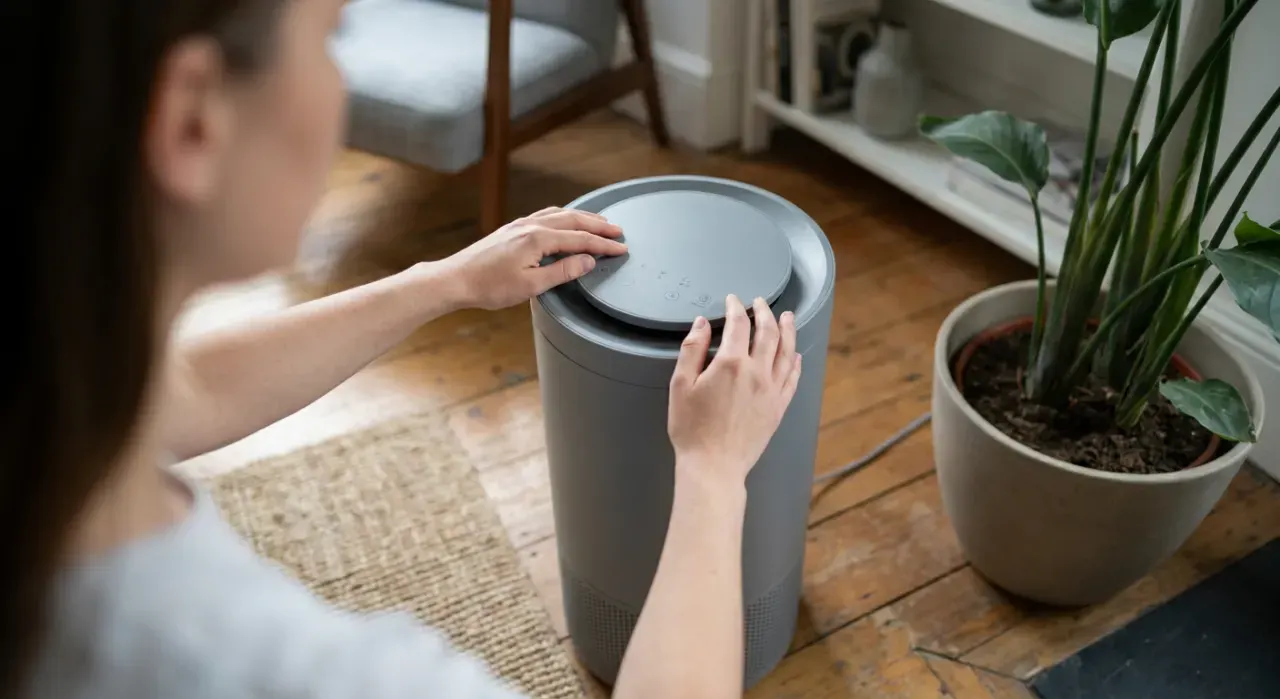
The Cube is the most genuinely rethought consumer dehumidifier on the market, and the pumped version answers its only remaining limitation. You get a real condensate pump with a 16 foot tube, so the water can go up into a laundry sink, out through a rim joist, or across to a distant floor drain without gravity cooperating.
What lifts it above the rest of the field is what happens when that pump stops. On a conventional pumped machine, a pump failure means the reservoir fills, the float trips, and the unit shuts down — often unnoticed for a week in a basement nobody visits. The Cube’s reservoir telescopes upward into a tank roughly three times the volume of a normal bucket, so the same failure produces a machine that keeps working and needs emptying instead of one that has quietly stopped.
Around that sit the features that make it sensible for an unattended space: a humidity setpoint it actually holds, auto-restart after a power cut, ENERGY STAR Most Efficient certification — worth about 20 percent less energy than a similarly sized conventional unit, which compounds on a machine that may run eight months a year — and app reporting so you can check a basement humidity reading from upstairs.
Consensus Score █████████░░ 8.5 — strong owner consensus, with the reservoir and the pump combination cited most often.
The honest weaknesses: it is tall in reservoir mode and needs headroom; the expanding tank has more seams than a plain bucket and a minority report drips; the app draws its share of connectivity complaints; and the defrost cycle gets busy below about 60°F, which is a limitation of every consumer compressor unit.
Check price on Amazon → (paid link)
The Ranked Field
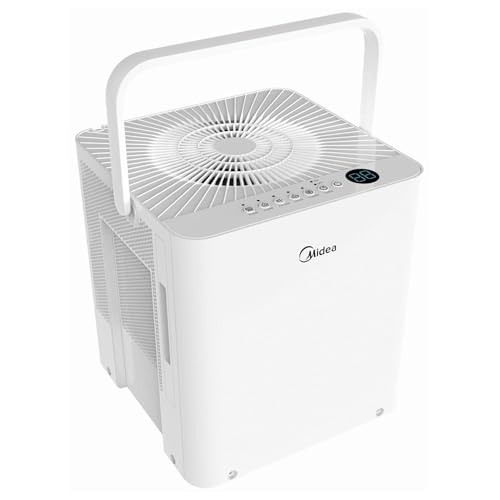
Best for a basement where the only drain is a laundry sink or a window well
- Built-in pump with a 16 ft drain tube
- Expanding reservoir as a fallback if the pump stops
- App and Alexa control with a humidity setpoint
- Energy Star Most Efficient rating
Why buy it: the only pumped unit here with a genuine fallback — if the pump fails you get a very large reservoir rather than a machine that simply shuts off.

Best for a normal damp basement that does not need 50 pints
- 35 pints per day with an integrated pump
- Coverage claimed to 3,500 sq ft
- Timer, humidity control and washable filters
- Energy Star rated
Why buy it: the right capacity for most American basements under the current rating scale, with the pump that makes it hands-free.

Best for a wet basement where parts and service matter
- 50 pint capacity plus an integrated pump
- Coverage claimed to 4,500 sq ft
- Custom humidity control with auto restart
- Full-tank alert and washable filter
Why buy it: the only pumped machine here from a brand with a real service network, which matters when a pump is the part most likely to fail.

Best for a large open basement or floor plan on a budget
- Condensate pump lifts water upward
- Rated for spaces up to 4,000 sq ft
- Pump, gravity or bucket drainage modes
- Turbo mode for fast knockdown
Why buy it: the most claimed coverage per dollar among pumped portables, with three drainage modes so you are never stuck.

Best for a cold crawl space or unheated basement that a portable cannot handle
- 70 pints per day with automatic defrost
- Condensate pump included as standard
- Memory start after a power interruption
- cETL listed for permanent installation
Why buy it: automatic defrost plus a pump, which is the only combination that actually works in a space that sits below 60 degrees.

Best for a crawl space install where the AlorAir price is the obstacle
- 145 pints at saturation, 70 pints AHAM
- Condensate pump and drain hose included
- Humidity control with automatic operation
- Coverage claimed to 6,000 sq ft
Why buy it: commercial pumped capability at a clear discount, with a shorter proven history as the trade-off.
Quick Comparison
| Product | Best for | Rating | Price | Buy |
|---|---|---|---|---|
| Midea Cube 50 Pint Dehumidifier with Built-in Pump | Best Overall | — | Check (paid link) | |
| Midea Cube 35 Pint Smart Dehumidifier with Pump and Drain Hose | Best Mid-Size | — | Check (paid link) | |
| Frigidaire 50 Pint Dehumidifier with Pump | Best Big-Brand Pick | — | Check (paid link) | |
| hOmeLabs 4,000 Sq Ft Dehumidifier with Pump | Best Coverage | — | Check (paid link) | |
| AlorAir Crawl Space Basement Dehumidifier 70 Pint with Pump | Best for Cold Spaces | — | Check (paid link) | |
| COLZER Crawlspace Commercial Dehumidifier with Pump, 70 Pint AHAM | Best Value Commercial | — | Check (paid link) |
How We Rank
We do not buy, test or physically handle dehumidifiers. We rank them on evidence that scales: star ratings weighted by review volume, DOE-standard pint ratings compared like for like, published lift heights and drainage options, the recurring failure modes that surface in critical reviews, long-term owner reports written after a second season, and expert consensus across established outlets as a cross-check. For a pump page we weight three things harder than usual — what happens when the pump fails, whether the machine offers gravity and bucket modes as well, and the frequency of pump complaints in the review record — because the pump is the least reliable part of the appliance and everyone here knows it. Prices were current at the time of writing. Full method on how we rank.
The Pumped Dehumidifiers, Reviewed
1. Midea Cube 50 Pint with Pump — Best Overall
Covered above. What owners praise: the pump plus reservoir combination, app visibility, quiet running for its class, Energy Star efficiency, and auto-restart. What owners complain about: height in reservoir mode, occasional seepage at the reservoir seam, app pairing trouble, and busy defrost cycles in a cold basement. The most complete pumped machine at a consumer price.
2. Midea Cube 35 Pint with Pump — Best Mid-Size
Under the current DOE rating scale a 35 pint machine removes roughly what a pre-2019 50 pint machine did, which means most American basements are correctly served here rather than by the bigger unit. The 35 pint Cube adds the pump and drain hose to that capacity, plus timer and humidity control and washable filters. What owners praise: right-sized capacity, the same expanding reservoir design, Energy Star efficiency, and a lower running cost than the 50 pint. What owners complain about: it is barely cheaper than the 50 pint version, so buyers often size up anyway; the same height and seam issues; and the same cold-basement defrost behavior. Buy this one unless the space is genuinely wet.
3. Frigidaire 50 Pint with Pump — Best Big-Brand Pick
The pump is the component most likely to fail in this category, which is a strong argument for buying from a brand you can actually get parts and service from. Frigidaire is that brand: conventional design, 50 pints, integrated pump, setpoint control, auto restart and full-tank alerting. What owners praise: extraction capacity, the convenience of the pump, straightforward controls, and a service network that exists. What owners complain about: the lowest star rating in this ranking, with pump failures the most cited issue; it is loud; and it is heavy to reposition. Worth it for the support channel, but read the recent reviews before committing.
4. hOmeLabs 4,000 Sq Ft with Pump — Best Coverage
hOmeLabs built its reputation on putting premium features into value-priced machines, and this is the clearest example: an integrated pump, high claimed coverage, three drainage modes and a turbo setting, at a price under the pumped competition. For a large open basement on a budget it is a lot of machine. What owners praise: set-and-forget operation with the pump running, strong extraction, and the price. What owners complain about: pump failures and second-year performance loss are the dominant themes in its critical reviews; noise on turbo; a bulky body; and no genuine automatic defrost, so it struggles below 60°F. Good value with the reliability risk priced in.
5. AlorAir 70 Pint with Pump — Best for Cold Spaces
Every consumer portable in this ranking has the same blind spot: below about 60°F the evaporator ices and extraction collapses. If your space is an unheated crawl space or a cold basement, that is not a corner case — it is most of the year. AlorAir builds for exactly this: genuine automatic defrost, an integrated pump, memory start after a power interruption, cETL listing for permanent installation, and a low-profile body that fits under joists. What owners praise: holding a setpoint where portables stall, running unattended for seasons, and the memory start. What owners complain about: the price, a clearly audible fan in a finished space, installation many owners contract out, and documentation written for trades. The only correct answer for a cold space.
6. COLZER Crawlspace with Pump — Best Value Commercial
Colzer offers the commercial crawl-space format — pump, drain hose, 70 pints AHAM, high claimed coverage — at a meaningful discount to AlorAir. For a homeowner doing a one-off crawl-space install, that gap is worth considering. What owners praise: capability per dollar, the pump working as described, and a real change in a previously damp crawl space. What owners complain about: a shorter track record, less generous warranty terms, thinner support, and coverage claims measured at saturation rather than AHAM. Right when the price gap decides it and you accept the shorter history.
When You Actually Need a Pump
This is worth being blunt about, because a pump adds cost and a failure point. Water flows downhill for free, and a plain gravity hose to a floor drain is silent, unbreakable and included with almost every machine. If that option exists in your basement, take it.
A pump earns its place in four situations. The only outlet is above the machine — a laundry sink, a standpipe, a window well, a walkout that sits higher than the floor. The drain is a long way off and a gravity hose would need a continuous fall across the whole basement. The floor is finished and a hose across it is a trip hazard, where small-bore pump tubing can be run along a baseboard. Or the machine has to move between locations and you want a single tidy line rather than re-planning the fall each time.
If none of those apply, buy the non-pumped version of the same machine and put the difference toward capacity. Placement advice is in where to place a dehumidifier in a basement.
Lift, Run Length and Setup
| Setup detail | What to aim for | Why it matters |
|---|---|---|
| Vertical lift | Well within the stated maximum | Horizontal run also consumes head, so the spec is not all vertical |
| Tube routing | Continuous rise, no dips | A low loop fills and stalls the pump |
| Tube support | Clipped along a wall or joist | Sagging tube creates the dips above |
| Discharge point | Secured into a sink or standpipe | A tube that jumps out empties onto the floor |
| Annual flush | Vinegar solution through the line | Scale and biofilm are the main cause of pump failure |
One more practical point: run the tube where a failure would be visible. A pumped line hidden behind storage that starts leaking will not be noticed until something is ruined, whereas the same line along an open wall gets spotted in days.
What Owners Actually Complain About
Read the critical reviews across all six machines and five themes repeat, and the first one dominates this category. Pump failure is by a wide margin the most common serious complaint on every pumped dehumidifier sold, at every price point. Clogged tubing is the second and is frequently the actual cause of the first — scale and biofilm restricting a small-bore line until the machine trips. Noise is third; the pump itself cycles audibly, which is a new sound in a basement. Second-year decline is fourth and is the defining complaint of the whole portable dehumidifier category. And cold-space icing in machines without genuine automatic defrost, discussed in why a dehumidifier is not collecting water. Expectations on lifespan are set in how long dehumidifiers last.
Maintenance That Keeps a Pump Alive
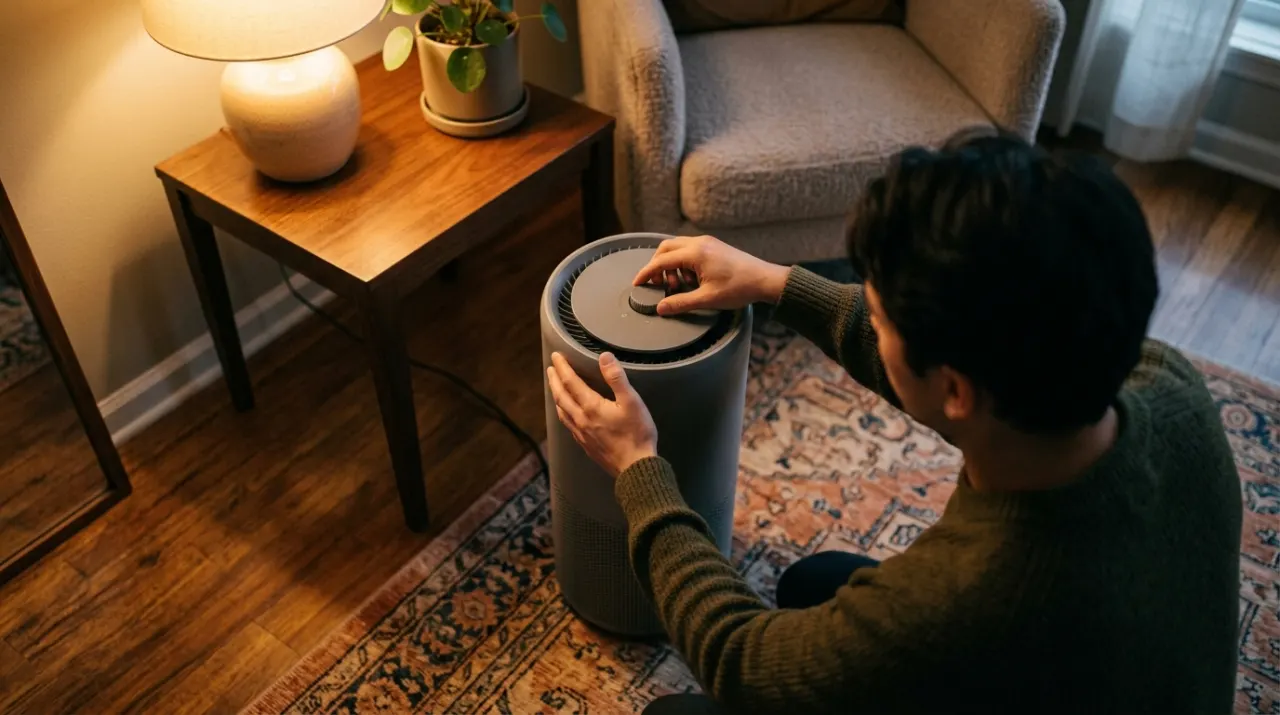
Almost every pump failure in the owner record is preventable, and the prevention takes ten minutes twice a year. Disconnect the discharge tube and flush the line with a solution of white vinegar and water, then flush with clean water — that dissolves the mineral scale and clears the biofilm that gradually chokes a small-bore line. Wipe out the reservoir at the same time, because basement dust settles in it and eventually reaches the impeller.
Between flushes, clean the air filter monthly. A clogged filter reduces airflow, which reduces extraction, which makes the machine run longer for the same result — more hours on the pump for no benefit. Check the discharge point occasionally to confirm water is still arriving where you think it is. And set the machine to 45 to 50 percent rather than the lowest number available, in line with the EPA recommendation to keep indoor relative humidity below 60 percent and ideally between 30 and 50; a lower setpoint means far more run time for a marginal gain. Cleaning routines are in how to clean a dehumidifier, and settings in what to set a dehumidifier to. Nothing here is medical advice.
How to Choose Between These Six
Normal basement, drain above the machine? The Midea Cube 50 Pint with pump. Same job, right-sized capacity? The Midea Cube 35 Pint with pump. Want a brand with service and parts? The Frigidaire 50 Pint with pump. Large open basement, tight budget? The hOmeLabs. Cold crawl space or unheated basement? The AlorAir 70 pint — nothing else here will work properly. Same format for less? The Colzer. For brand-level context see best dehumidifier brands, and everything else lives in the air quality hub.
The Verdict
For most basements needing a pump the Midea Cube 50 Pint with a built-in pump is the machine we would recommend: a real condensate pump and a 16 foot line, a setpoint it holds, app visibility of a room you rarely enter, and — the reason it wins — an oversized reservoir behind the pump so a failure is an inconvenience rather than a stopped machine. Take the 35 pint for a normal basement, the Frigidaire if service matters, and the AlorAir if the space is cold. Then flush the line twice a year; that is what keeps the pump alive. Check price on Amazon → (paid link)