 Garden

Affiliate Disclosure
Some links on this page are affiliate links. As an Amazon Associate, we earn from qualifying purchases — at no extra cost to you. We do not buy, test, or physically handle the products we cover; our rankings come from aggregated owner reviews, ratings and expert consensus. Commissions never change our verdicts. How we rank · full disclosure.
The short version: the best smoke detector for most homes is the Kidde P3010B — a photoelectric alarm with a sealed ten-year lithium battery. The sensor type is the decision almost nobody makes deliberately and it is the one that matters most: photoelectric sensing responds faster to smoldering fires, which are the fires that kill people while they sleep. The sealed battery removes the other classic failure, a dead cell nobody replaced. If you are equipping a whole house rather than replacing one unit, buy the X-Sense XS01-WR wireless interconnected set instead, so every alarm sounds when any one of them detects smoke.
Two facts frame everything below. The National Fire Protection Association reports that almost three of every five home fire deaths occur in homes with no smoke alarms or with alarms that failed to operate. And the U.S. Fire Administration puts working smoke alarms among the most effective single interventions available to a household. This page is about picking the right device; placement and coverage are in how many smoke detectors do I need. Nothing here is a substitute for your local fire code.
Top Picks at a Glance

Our #1 Pick: Kidde P3010B
The P3010B does the two things that separate an alarm that works from one that merely exists. It uses photoelectric sensing, so it responds faster to the large smoke particles produced by a smoldering fire — a cigarette in upholstery, an overheating power strip behind a couch, an electrical fault in a wall cavity. Those fires produce hours of smoke before flame, and they are the ones that fill a bedroom at 3am. And it runs on a sealed lithium cell rated for the full ten-year service life of the alarm, so there is no annual battery ritual to forget and no 9V to pull out at 2am when it chirps.
Owners consistently report that the hush button is the feature they use most: a single press quiets a nuisance alarm for several minutes rather than forcing the choice between listening to it and disabling it. That matters because a disabled alarm is the most common way a household ends up unprotected.
Consensus Score ██████████░ 9.0 — one of the most stable long-run owner consensuses in the category.
The honest weaknesses: it is a single-sensor alarm, so it is slower than an ionization unit on a fast-flaming fire — the NFPA answer to that is to use both types or a dual-sensor model, not to switch. It does not interconnect at all, wired or wireless, so a basement alarm sounding does nothing upstairs. And the sealed battery means the whole unit is disposable at year ten. For a single bedroom or hallway alarm, none of that changes the recommendation.
Check price on Amazon → (paid link)
The Ranked Field

Best for the bedroom-and-hallway alarms that have to catch a smoldering fire at night
- Photoelectric sensor, faster on smoldering fires
- Sealed 10-year lithium battery, no changes ever
- Test and hush button on the face
- 85 dB alarm, UL 217 listed
Why buy it: a photoelectric sensor and a sealed decade-long cell together remove the two things that most often stop a smoke alarm working — the wrong sensor for a night fire, and a battery nobody replaced.
Best for covering a whole house so every alarm sounds when any one detects smoke
- Up to 24 units link wirelessly, no wiring
- Photoelectric sensor in every unit
- Sealed 10-year battery per alarm
- Remote control for whole-house test and silence
Why buy it: interconnection is the upgrade that actually saves lives in a two-story house — a basement fire wakes the upstairs bedrooms instead of burning quietly for ten minutes.

Best for replacing an existing hardwired alarm on a code-required circuit
- 120V hardwired with battery backup
- Wireless interconnect to other OneLink units
- Photoelectric sensing
- Voice location announcement
Why buy it: the drop-in answer when code requires you to keep hardwired alarms, and it adds wireless interconnect without pulling new cable through finished walls.
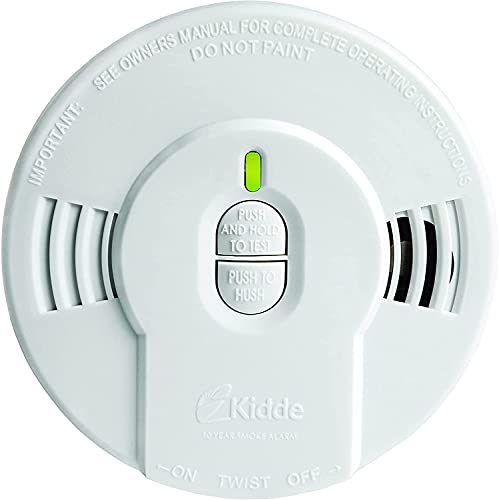
Best for adding alarms to spare rooms, a garage office or a rental on a tight budget
- Sealed 10-year lithium battery
- LED status and replacement-alert indicator
- Test and reset button
- Mounts with two screws, no wiring
Why buy it: the cheapest way to put a sealed ten-year alarm in a room that currently has nothing — and an empty room is the real failure mode, not a mediocre alarm.
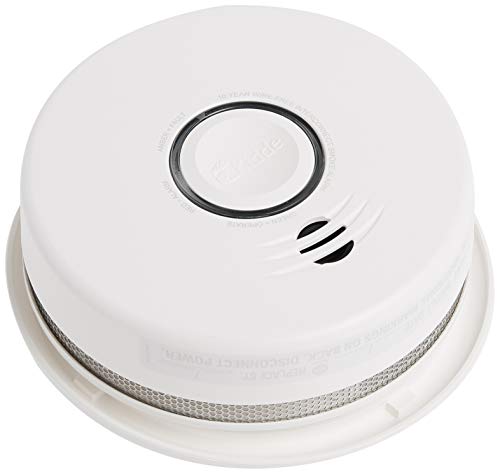
Best for a hardwired house where you want spoken room announcements
- Hardwired with 10-year sealed backup battery
- Wire-free interconnect between units
- Speaks the hazard and location
- Photoelectric sensing
Why buy it: a spoken warning that names the room cuts the confusion that costs the most time in the first sixty seconds of a night fire.
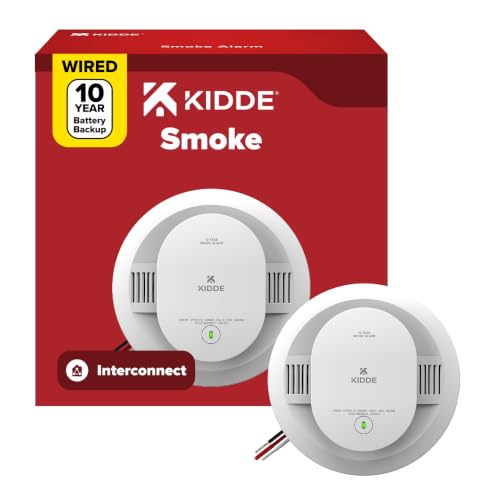
Best for a straight one-for-one swap on an existing interconnected circuit
- 120V hardwired, interconnectable by wire
- 10-year sealed backup battery
- LED status lights
- 85 dB alarm, 5-inch body
Why buy it: no app, no voice, no radio — just a modern sealed-battery alarm that drops onto an old bracket and keeps the wired interconnect the code inspector expects.
Quick Comparison
| Product | Best for | Rating | Price | Buy |
|---|---|---|---|---|
| Kidde P3010B Photoelectric Smoke Detector with 10-Year Sealed Battery | Best Overall | — | Check (paid link) | |
| X-Sense XS01-WR Wireless Interconnected Smoke Alarm, 6-Pack with Remote | Best Wireless Interconnect | — | Check (paid link) | |
| First Alert BRK SA521CN-3ST Hardwired Photoelectric Smoke Alarm with Battery Backup | Best Hardwired Replacement | — | Check (paid link) | |
| Kidde i9010 Smoke Detector with 10-Year Sealed Battery and LED Indicators | Best Budget Sealed Alarm | — | Check (paid link) | |
| Kidde P4010ACS-W Hardwired Photoelectric Smoke Alarm with Wireless Interconnect and Voice | Best Hardwired with Voice | — | Check (paid link) | |
| Kidde 20SA10 Hardwired Smoke Detector with 10-Year Battery Backup | Best Simple Hardwired | — | Check (paid link) |

How We Rank
We do not buy, test or physically handle smoke alarms. We rank them on evidence that scales: star ratings weighted by review volume, published UL 217 listing and sensor type, the recurring failure modes that surface in critical reviews, long-term owner reports written years after installation, and public-safety guidance from the NFPA and the U.S. Fire Administration as a cross-check. For smoke alarms specifically we weight sensor technology, nuisance-alarm reports and interconnect capability harder than price, because an alarm that gets removed from the ceiling after a month of false triggers protects nobody. Prices were current at the time of writing. Full method on how we rank.
The Smoke Alarms, Reviewed
1. Kidde P3010B — Best Overall
Covered above. What owners praise: the sealed ten-year battery, the hush button, low false-alarm rates compared with ionization units, and an install that takes two screws and five minutes. What owners complain about: no interconnect of any kind, a mounting bracket that some find fiddly on an old ceiling box, and end-of-life chirping at year ten that catches people by surprise because they have never replaced a battery on it. The default recommendation for a bedroom or hallway.
2. X-Sense XS01-WR 6-Pack — Best Wireless Interconnect
Interconnection is the single most valuable feature in this entire ranking, and this set delivers it without wiring. Up to 24 alarms link over radio, so any unit that detects smoke triggers every other unit in the house. Each alarm is photoelectric with its own sealed ten-year cell, and the bundled remote lets you test or silence the whole house from the floor rather than from a stepladder. For a two-story house, or any home where a basement, garage or attic is far from the bedrooms, this is the correct purchase. What owners praise: genuinely simple pairing, whole-house test from the remote, strong range through interior walls, and no battery maintenance for a decade. What owners complain about: the up-front cost of a six-pack, a small number of pairing failures that require a full reset of the group, and the usual caution about mixing brands — these link to each other, not to a Kidde or First Alert unit.
3. First Alert BRK SA521CN-3ST — Best Hardwired Replacement
If your house was built with hardwired interconnected alarms, most jurisdictions will not let you replace them with battery-only units, and this is the mainstream answer. It is 120V hardwired with battery backup, photoelectric, and it adds OneLink wireless interconnect so you can extend coverage to a room that has no alarm wiring. Voice location announcement tells you which part of the house triggered. What owners praise: straightforward swap onto existing brackets, the wireless bridge to unwired rooms, and the voice feature. What owners complain about: harness connectors that vary between older BRK generations and occasionally need an adapter plug, a price well above a plain hardwired alarm, and reports of the wireless link needing re-pairing after a power cut. Check your existing connector before ordering.
4. Kidde i9010 — Best Budget Sealed Alarm
The cheapest credible sealed ten-year alarm from a major brand. No interconnect, no voice, no app — a sensor, a horn, a sealed lithium cell and a replacement-alert LED. Its job is to fill the rooms that currently have nothing, and in most American houses that is at least two rooms. What owners praise: the price, the ten-year no-maintenance battery, and simple installation. What owners complain about: a quieter alarm than some competitors through a closed door, no hush on all versions, and the same end-of-life chirp confusion the whole category shares. Note that the i9010 line has shipped with both ionization and photoelectric sensing depending on the version — check the listing text if sensor type is the reason you are buying.
5. Kidde P4010ACS-W — Best Hardwired with Voice
A hardwired photoelectric alarm with a sealed ten-year backup battery and wire-free interconnect, which is an unusual and useful combination: it satisfies a hardwired requirement while linking to units in rooms that have no wiring. The voice announcement names the hazard and the location, which cuts the seconds people lose working out where a beeping is coming from. What owners praise: the combination of wired power and wireless linking, the sealed backup battery, and clear voice alerts. What owners complain about: price, occasional voice-volume complaints, and setup that is more involved than a plain swap. Best in a larger house being re-alarmed room by room.
6. Kidde 20SA10 — Best Simple Hardwired
The unglamorous, correct choice for a straight replacement. Hardwired, wire-interconnectable to the rest of an existing circuit, with a ten-year sealed backup battery and LED status lights. No radio, no speech, nothing to pair. What owners praise: a genuinely quick swap, the sealed backup that ends the annual 9V change on a whole house, and the price when bought in multipacks. What owners complain about: the connector again — older homes may need an adapter — and no hush on some versions. If a contractor is replacing a full circuit of alarms, this is the one that costs least per unit.
Photoelectric, Ionization, or Both?
This is the decision that changes outcomes, and it is almost never explained at the point of sale. The two sensor technologies detect different physical signatures, and each is meaningfully faster on one class of fire.
| Photoelectric | Ionization | |
|---|---|---|
| How it senses | Light scattered by smoke particles | Ionized air current disrupted by particles |
| Faster on | Smoldering fires (bedding, upholstery, wiring) | Fast-flaming fires (grease, paper, solvents) |
| Nuisance alarms | Fewer near kitchens; more from steam | Many more from cooking smoke |
| Best location | Bedrooms, hallways, living areas | Kitchens at distance, garages, workshops |
| NFPA position | Use both types, or dual-sensor alarms, for the fullest protection | |
The practical reading: put photoelectric alarms where people sleep, because smoldering fires produce hours of smoke before flame and that is what kills at night. Where you want flaming-fire speed as well, use a dual-sensor unit or add a second alarm of the other type. The NFPA is explicit that both technologies have a role and that the safest household uses both. The full comparison is in ionization vs photoelectric smoke detector.
Placement, Briefly
NFPA guidance is one alarm inside every bedroom, one outside each separate sleeping area, and at least one on every level including the basement. Mount on the ceiling where possible, or high on a wall no more than 12 inches from the ceiling. Keep alarms at least 10 feet from a cooking appliance — nuisance alarms from cooking are the leading cause of alarms being disabled — and out of the direct path of a bathroom door, where steam causes the same problem. Avoid dead-air corners, unconditioned attics and garages, and the direct blast of a supply vent or ceiling fan. Room-by-room counts are in how many smoke detectors do I need.
What Owners Actually Complain About
Across all six units, five themes repeat in the critical reviews. Nuisance alarms dominate, and nearly all of them trace to an alarm within 10 feet of a stove or across from a bathroom door rather than to a defective unit. End-of-life chirping is second, and most of it is confusion — the year-ten chirp is a replacement signal, not a battery request, which is why it cannot be silenced. Interconnect pairing problems come third on the wireless sets, usually fixed by a full group reset. Mounting bracket mismatches irritate anyone replacing an alarm from a different brand or generation. And alarm volume through a closed bedroom door is a recurring complaint that no single alarm can solve; interconnection is the answer, not a louder unit.
How to Choose Between These Six
Replacing one bedroom alarm? The Kidde P3010B. Equipping a whole house from scratch? The X-Sense XS01-WR set. Hardwired circuit you must keep? The First Alert SA521CN-3ST, or the Kidde 20SA10 if you want the cheapest compliant swap. Want spoken room announcements on a wired system? The Kidde P4010ACS-W. Filling empty rooms on a budget? The Kidde i9010. If you would rather run one device for both hazards, the field is ranked in best combination smoke and carbon monoxide detector — and note that combining sensors ties both replacement clocks together. Standalone CO alarms are in best carbon monoxide detector.
The Verdict
For most homes the Kidde P3010B is the smoke alarm we would recommend: photoelectric sensing for the fires that start slowly at night, a sealed ten-year battery so there is nothing to maintain, and a hush button so a burnt dinner does not end with an alarm in a drawer. Buy the X-Sense XS01-WR set instead if you are covering a whole house and want every alarm to sound together. Then do the two things the devices cannot do for you: put an alarm inside every bedroom and on every level, and replace every unit ten years from its date of manufacture. Keep a fire extinguisher near the kitchen too — the field is ranked in best fire extinguisher for home. Check price on Amazon → (paid link)